AI Transition Guide for Programmers: Learning Order from AI Coding to Agents
In the AI era, the key to programmers' transition is the learning order: tools first, then Agents, then models.
Based on a Bilibili creator's observations, this article outlines the knowledge-update path for programmers in the AI era. It argues that programmers should shift their mindset and proactively use AI tools, covering levels from daily chat and side projects to Agent development and model fine-tuning. Project-driven PBL learning is replacing process-driven study, lowering entry barriers while pushing junior and mid-level roles to move up toward architecture and Agent development. The suggested order: build a feel, learn Agents, then go deep into models.
AI is reshaping the tech industry at an unprecedented pace, and programmers feel it most acutely. But the more technologies there are to learn, the blurrier the direction of transition becomes—the problem often isn't that you haven't learned enough, but that you're learning in the wrong order. A Bilibili creator, drawing on his own observations, shared a knowledge-update path for programmers in the AI era: from a mindset shift to tool usage, then to Agent development and model fine-tuning, ultimately pointing to a new project-driven learning paradigm.
Embracing AI: Shift Your Mindset First, Then Talk Tech
The creator emphasized at the outset that when facing an obvious trend like AI, your first reaction shouldn't be resistance or seeking a "safe haven." Using the US-China AI competition as an example, he noted that AI's impact has spread from the information industry to agriculture, manufacturing, and even the entire industrial chain of power, new energy, and chemical mining—like an upgraded version of the old "Internet + everything," now it's "AI transforming everything."
For programmers, this impact has already become apparent in a short time. The creator mentioned that his team's sense of the industry shift "became obvious in about two months." Conservatives see a threat; those willing to embrace it see opportunity. He suggests that no matter how conservative your mindset, you should proactively use AI tools—even if it's just daily conversation, that counts as a first step.
Levels of Embrace: From Chatting to Model Creation
Embracing AI isn't limited to "deeply studying algorithms." The creator breaks it down into multiple levels: the shallowest is using AI tools for chatting and daily assistance; further up is using AI for side hustles, such as self-media content or comic-drama creation; deeper still is learning Agent development; and above that is model fine-tuning, secondary model modification, and ultimately model creation and AI algorithm research.
He stressed that embracing is all-encompassing—you don't have to force yourself into the algorithmic depths right away. Even using AI to learn a field you're not good at—say, starting with smart switches to do home automation upgrades—is an effective way to embrace it. The key is to enter the ecosystem first, then go deeper layer by layer according to your interests and career needs.
Agent (intelligent agent) is one of the core concepts in current AI application development. Unlike a large model in single-turn conversation, an Agent refers to a system that can autonomously plan, call tools, execute multi-step tasks, and observe results. It usually consists of a large model as the "brain," combined with memory modules, tool-calling interfaces (such as search, code execution, API requests), and a task-planning loop. When programmers learn Agent development, the focus isn't on training models but on designing prompt workflows, orchestrating toolchains, and handling exceptions and state management—essentially engineering AI capabilities. This is why the original article places Agent development after "using tools" and before "modifying models": it bridges the two, requiring engineering thinking without needing to go deep into algorithms.
How AI Changes Learning: From Process-Driven to Project-Driven
AI's most direct impact on programmers shows up in how they learn. The creator pointed out that in the past, learning a new language or fixing a bug required step-by-step debugging and line-by-line tweaking; now many people are used to throwing code directly at a large model to help find errors, explain the logic, draw flowcharts, or even generate animations.
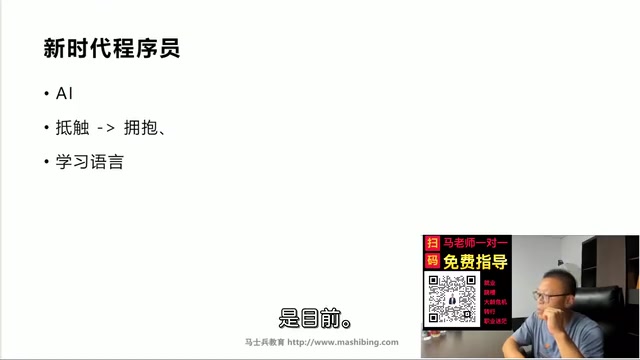
This brings a key change: learning new things has become easier. You no longer need to agonize over punctuation in config files, deployment scripts can be generated by AI, and if you don't understand an algorithm, AI can explain it step by step. The traditional process-driven learning of "from parts to components to the whole vehicle" is being replaced by project-driven learning: "first think about building a car, then work backward to figure out what you need to learn."
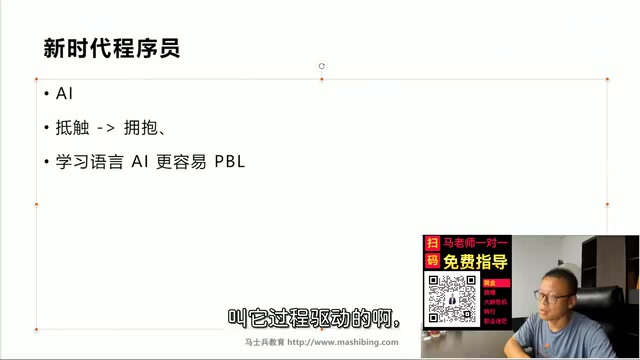
The creator borrows the popular education concept of PBL (Project Based Learning) to illustrate: the old way was to learn every part in detail first, then assemble components and core parts, and finally build the whole vehicle; the new way starts from a project goal, and when you hit a detail problem, you let AI explain it, and when something goes wrong in operation, you let AI troubleshoot it. This backward-reasoning learning significantly lowers the entry barrier.
PBL (Project Based Learning) is an educational method centered on real projects: learners work around a clear output goal and actively acquire the knowledge they need while solving practical problems, rather than systematically finishing theory first and then applying it. Its theoretical roots trace back to Dewey's pragmatic educational philosophy of "learning by doing," and it is widely used in engineering and medical education. Compared with traditional "bottom-up" disciplinary learning, PBL emphasizes driving questions, sustained inquiry, and a final product. In the AI era, large models act as an on-call "knowledge explainer," allowing learners to get instant answers when they hit detailed obstacles in a project, greatly reducing PBL's dependence on mentors and prerequisite knowledge—this is precisely the technical precondition that makes the "backward-reasoning learning" described in the original article possible.
The Barrier to Entry Is Shifting Down: Junior and Mid-Level Roles Face Restructuring
Changes in learning methods directly impact the barrier structure of technical roles. The creator judges that for junior and mid-level technical positions—not just programmers, but also testing, hardware, and all technical roles—the technical barrier will be "much, much lower."
In the past, learning a programming language or embedded development required a very clear understanding of various interfaces and details before you could write programs and build products. Now, with AI assistance, as long as you understand the general framework, a program can be completed even if the details aren't clear. This means that junior and mid-level competitiveness built on memorizing details and proficiency is being weakened, and programmers need to shift their learning focus toward higher-level areas such as architecture design, Agent development, and model application.
Model fine-tuning refers to continuing to train a pretrained large model with data from a specific domain or task so that its output better fits business needs. Common approaches include full-parameter fine-tuning and parameter-efficient fine-tuning (such as LoRA and Adapter); the latter trains only a small number of additional parameters, with low cost and fast iteration. Related approaches include prompt engineering and retrieval-augmented generation (RAG)—the former guides the model by designing inputs, while the latter supplements facts via an external knowledge base. Understanding the division of labor among these three is key: prompt engineering has the lowest barrier, RAG suits knowledge-intensive scenarios, and fine-tuning is used to change model style or solidify specialized capabilities. The original article places fine-tuning after Agent development precisely because fine-tuning requires engineering support such as data preparation, evaluation, and deployment, making it a higher-level capability.
Suggested Learning Order: First Learn to Use, Then Learn to Build
Combining the creator's sharing, the learning order for programmers transitioning to AI can be summarized as follows: first shift your mindset and proactively use AI tools; then use AI to assist with side projects or cross-domain learning, building a feel for "what AI can do for me"; next, learn Agent development and understand how to let models autonomously complete multi-step tasks; once you have engineering capability, go deeper into model fine-tuning and secondary modification according to your interests; and only last comes research and creation at the algorithm level.
The core logic of this path is: don't dive straight into algorithmic details, and don't stay at the shallow level of "chatting with AI." Anchor your learning in concrete projects, let AI become the engine for backward-reasoning learning, and fill in details as you do—rather than learning all the details before you start. For programmers still searching for a transition direction, getting the order right matters more than learning a few extra knowledge points.
One-line Summary
In the AI era, the key to programmers' transition isn't how much you learn, but the order: use tools first, then learn Agents, and finally go deep into models.
Paragraph Summary
Based on a Bilibili creator's observations, this article outlines the knowledge-update path for programmers in the AI era. The author notes that as AI spreads from the information industry to the entire industrial chain, programmers should first shift their mindset and proactively use AI tools rather than resist. Embracing AI has multiple levels: daily chat assistance, side-hustle creation, Agent development, model fine-tuning, and algorithm research. AI is changing how people learn—traditional process-driven learning "from parts to the whole vehicle" is being replaced by backward-reasoning PBL learning that starts from a project goal, significantly lowering the entry barrier. This also causes the barrier for junior and mid-level technical roles to drop sharply, requiring programmers to move toward higher-level areas such as architecture design and Agent development. The article concludes with a suggested learning order: build a feel first, then learn Agents, and finally go deep into the model layer.
Related articles
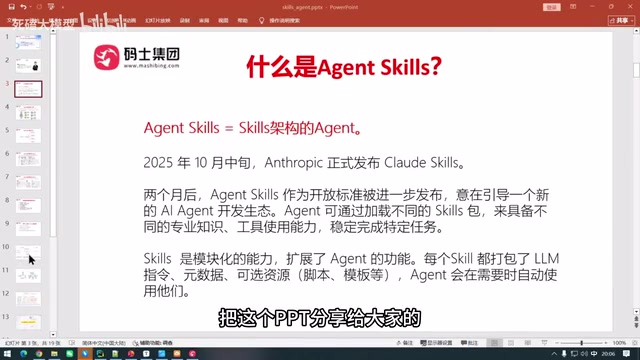
Agent Skills Architecture Explained: From Concepts to Practice, a Must-Read for Interviews and Development
What are Agent Skills? Based on a Bilibili course, this article explains the Agent Skills architecture, modular dynamic loading, differences from Workflow, and enterprise selection value—ideal for agent development and interview preparation.

Tech Giants Pour Money Into Politics: Even Wilder Election Spending in 2028
The Vergecast talks with Molly White: AI and crypto spent big on elections and lost—New York's 12th District backfired, crypto burned $64M—yet both plan to spend more in 2028.

Former Mafia Member Reveals How New York Gangs Make Money: Gambling, Loan Sharking, and the Underground Economy
Former Gambino family member Larry Lawton reveals on the Lex Fridman podcast how the New York Mafia profits from underground gambling, loan sharking, and robbery, and reflects on how the U.S. justice system creates more criminals.