AI Won't Replace Senior Developers — It Will Push Their Value Upstream

AI won't replace skilled developers — it shifts their value toward architecture, judgment, and strategy.
Drawing on analogies from radiology and the horse-to-automobile transition, this article argues that AI doesn't eliminate developers but pushes their value upstream in the value chain. As AI handles routine coding tasks, engineers must evolve from code writers to system architects — focusing on complex judgment, strategic trade-offs, and product quality that AI can't replicate.
AI Isn't a Replacement — It's a Value Chain Catalyst
The debate over whether AI will replace technical talent never stops. But in a YouTube interview, a tech practitioner offered a far more incisive perspective: AI won't necessarily replace skilled developers — it simply pushes their value upstream along the value chain.
The "value chain" concept was originally introduced by Harvard Business School professor Michael Porter in 1985 to describe the value created at each stage from raw materials to final product delivery. In the context of professional skills, "moving upstream in the value chain" means shifting from standardized, quantifiable execution work toward planning, decision-making, and strategic work that demands higher cognitive complexity. The automation substitution theory in economics also points out that the easiest tasks to automate are "routine cognitive tasks" and "routine manual tasks," while "non-routine cognitive tasks" — such as creative problem-solving, complex communication, and strategic judgment — are far harder to replace and tend to generate higher economic value.
This perspective breaks free from the black-and-white "replacement narrative" and instead focuses on a deeper pattern in technological evolution — advances in tools change how humans work, not the fundamental value humans provide.
Starting with a Real-World Case: Radiologists
The interviewer shared a compelling personal experience. His radiologic technologist admitted candidly: when it comes to reading X-ray images, AI can do more than any single radiologist — and far faster.
"What takes a human about five years of experience to accumulate, AI can absorb and accomplish in roughly a week."
This is a staggering efficiency gap. Radiology AI primarily relies on Convolutional Neural Networks (CNNs) in deep learning, trained on hundreds of thousands or even millions of annotated medical images to identify abnormalities like tumors, fractures, and pulmonary nodules. For example, Google Health's breast cancer screening AI has demonstrated sensitivity and specificity surpassing human radiologists in certain studies. The idea of "absorbing five years of experience in one week" essentially means AI can traverse massive volumes of historical case data in a very short time and build pattern recognition capabilities at a statistical level. But this capability is fundamentally different from the comprehensive judgment that human doctors develop through clinical practice — the latter includes holistic understanding of patient histories, intuitive judgment on rare cases, and decision-making under incomplete information.
Yet the technologist's conclusion wasn't "I'm going to lose my job." Instead, it was: this doesn't mean AI will replace radiologists — it means the value of these professions is migrating upstream in the value chain.
Efficiency Dominance ≠ Professional Extinction
The critical distinction here is that AI's superhuman performance on a specific task and its ability to shoulder the full responsibilities of an entire profession are two entirely different things. Radiology work extends far beyond reading images — it includes communicating with patients, making judgments informed by clinical context, handling complex and rare cases, and bearing ultimate responsibility for medical decisions.
AI excels at the parts that can be "absorbed" and "standardized" — not the higher-order work that requires comprehensive judgment.
The Horse-and-Buggy Metaphor: How Technology Reshapes Professional Skills
To illustrate this pattern, the interviewer invoked a classic and vivid analogy — the historical transition from horse-drawn carriages to automobiles.

He pointed out that people once relied on horse-drawn carriages for transportation. You had to know how to feed horses and replace wooden wheels — these were essential skills for getting around.
This transition actually happened in history, and at a staggering scale. In 1900, there were still over 3 million working horses in American cities, with the entire supply chain encompassing dozens of related occupations — coachmen, blacksmiths, carriage manufacturers, feed suppliers, and more. By the 1920s, Ford's Model T assembly line had driven car prices down to levels affordable for ordinary workers, and the entire horse-drawn carriage industry chain essentially disappeared within a single generation. But it's worth noting that the automotive industry created far more jobs than the carriage industry ever had — from mechanical engineers and gas station attendants to highway construction workers and auto insurance professionals. Technological substitution has never been a zero-sum game; it's a comprehensive restructuring of how value is created.
And today, we all drive cars we have absolutely no idea how to repair.

"Many of us simply don't have these skills. I can probably change a tire, and that's about it."
Even more interesting, the interviewer added: he doesn't even own a car anymore, because he gets everywhere by Uber.

This choice itself reflects the deeper trends of the sharing economy and "as-a-Service" models. Just as cloud computing freed businesses from building their own data centers, Mobility as a Service (MaaS) frees individuals from owning and maintaining vehicles. This shift from "owning assets" to "consuming services" is a manifestation of technology continuously liberating users from low-level operations. Mapped to the software development world, an increasing number of infrastructure capabilities — databases, authentication, payment processing — are being packaged as API services, shifting developers' focus from "building everything" to "orchestrating and integrating."
The Fundamental Utility of Technology Never Changes
This metaphor reveals a pattern that runs through the entire history of technology:
- Surface-level skills get obsoleted: Feeding horses, fixing wagon wheels, even driving yourself — none are necessities anymore
- Fundamental utility endures: From horse-drawn carriages to cars to Uber, the form changes, but the core need for "transportation" remains constant
"The specific things you do with technology will change, but the fundamental utility of technology won't." This statement cuts to the essence. People always need to get from point A to point B — only the means of doing so keeps upgrading.
How the Core Value of Software Engineers Will Evolve
Applying this logic to software development yields an equally clear conclusion. What is the fundamental utility of software engineering? The interviewer offered a precise definition:
"It's creating robust, scalable, usable, and delightful software."
This fundamental goal won't vanish because of AI. What changes is only the specific role software engineers play in the process.
From Code Writer to System Architect
When AI can efficiently handle large volumes of repetitive coding work, engineers' value naturally migrates upstream:
- From "how to write code" to "what to build": Requirements understanding, architectural design, system trade-offs
- From executor to decision-maker: Judging which solutions are robust and scalable
- From technical implementation to product experience: Ensuring software is "usable and delightful"
The history of software engineering is itself a story of continuous upward abstraction. From machine code in the 1950s, to assembly language, to high-level languages like C and Java — each level of abstraction freed developers from low-level details so they could focus on higher-level logic and architecture. Today, AI coding assistants (such as GitHub Copilot, Cursor, etc.) are ushering in a new wave of abstraction — from "line-by-line coding" to "intent-driven development." System architecture skills are difficult for AI to replace because they require developers to make trade-offs under uncertainty: balancing performance against cost, choosing between consistency and availability (the classic CAP theorem in distributed systems), and negotiating between technical debt and delivery speed. These decisions are highly dependent on context, business understanding, and experience-based judgment — far beyond what pattern matching can cover.
Just as today's developers don't need to manually manage memory or write machine code, tomorrow's developers may not need to type out boilerplate code line by line. But the ability to maintain oversight of overall system quality and exercise judgment on complex problems will become even scarcer and more valuable.
Practical Strategies for Developers Facing the AI Wave
This discussion has real-world implications for every tech professional. When facing the AI wave, rather than agonizing over "Will I be replaced?" it's better to ask "Where should my value migrate?"
The core strategy is to proactively move upstream in the value chain:
- Deepen capabilities that AI struggles to replace: Complex judgment, cross-domain integration, accountability, interpersonal collaboration
- Treat AI as leverage, not a threat: Use AI to handle standardized work so you can invest your energy in higher-value creative tasks
- Redefine your role: Shift from executing details to commanding the big picture
Just as the evolution from feeding horses to taking Uber shows, technological progress has never truly eliminated the need for "transportation" — it has only kept freeing humans from tedious, low-level labor. Radiologists, software engineers, and all skilled professionals will not see their core value disappear — it will be repositioned to higher, more leveraged levels.
The ones who truly get left behind are never those who grasp the fundamental utility — they're the ones who refuse to evolve their role as technology advances.
Related articles
Why Nintendo Isn't Afraid of GTA VI: The Confidence Behind Differentiation and Its Industry Lessons
Facing GTA VI's gravitational pull, Nintendo stays unfazed with exclusive IPs, an independent hardware ecosystem, and a differentiation strategy. A deep dive into the logic and industry lessons.
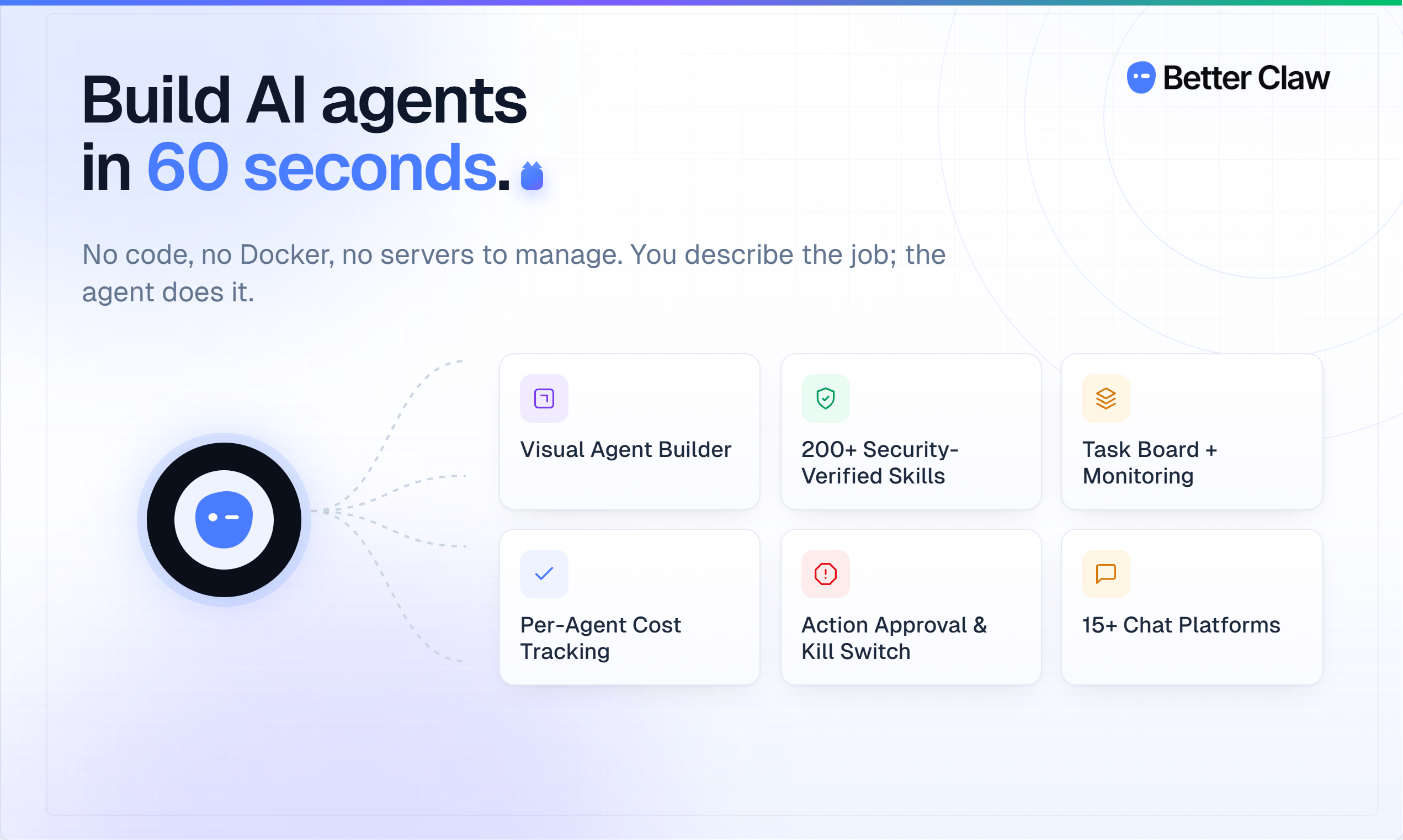
BetterClaw: Deploy AI Agents for Free in 60 Seconds — A No-Code Automation Assistant
BetterClaw is a no-code AI agent platform with 60-second deployment and BYOK model for free usage. Connect Gmail, Slack, and Telegram to automate inbox sorting, briefings, and monitoring tasks.

Google Astra vs. Unlimited GPT: Which Direction Do AI Users Want Most?
Reddit debates Google Project Astra's multimodal AI assistant vs. unlimited GPT access. Explore Astra's real-time perception, GPT quota pain points, and the competition logic behind both paths.