AIFlowy: A Java-Based Alternative to Dify for Enterprise AI Application Development

AIFlowy is a Java-based enterprise AI application development platform benchmarked against Dify and Coze.
AIFlowy is an open-source AI application development platform built with Java, positioning itself against Python-based Dify and Coze to address the technology stack mismatch enterprises face when adopting AI capabilities. It offers visual workflow orchestration, multi-model integration, RAG, and Agent features that seamlessly embed into existing Java microservice architectures, reducing operations and integration costs. While still in early stages with a noticeable gap in community size and feature completeness compared to Dify, its precise market positioning makes it worth watching for Java-centric enterprise teams.
Project Overview: An AI Application Development Platform for the Java Camp
AIFlowy is an enterprise-grade AI application development platform built on the Java technology stack, positioning itself as a direct competitor to mainstream products like Dify and Coze. The project has already earned 847 stars on GitHub, uses Vue for the frontend, and has 129 forks, with community attention growing rapidly.
In the AI application development platform space, Dify (Python-based) and Coze (by ByteDance) have already captured significant market share. Dify is one of the most popular open-source AI application development platforms, built on Python, offering a full suite of capabilities from Prompt orchestration to RAG and Agents, with over 50K GitHub stars and an active global community behind it. Coze is ByteDance's AI Bot development platform, leveraging ByteDance's cloud infrastructure and Doubao large model ecosystem, focusing on low-code/no-code intelligent agent building experiences and rapidly penetrating the Chinese market. These two represent the open-source community-driven and big-tech commercial-driven paths respectively, together defining the current feature baseline for AI application development platforms. AIFlowy chose to enter this space with Java, targeting the massive Java developer community in the enterprise market — a segment largely overlooked by existing platforms.
Why Enterprises Need a Java-Based AI Development Platform
Real Pain Points from Technology Stack Mismatch
In the enterprise software development landscape, Java remains the undisputed workhorse language. Multiple industry surveys show that over 60% of enterprise backend systems globally are built on Java. Yet the reality is that the current mainstream AI application development platforms — Dify, LangChain, LlamaIndex — are almost exclusively built on the Python technology stack.
Among these, LangChain is the most popular LLM application development framework in the Python ecosystem, providing core abstractions like chain calls (Chain), Agents, and memory management to help developers quickly build complex LLM applications. LlamaIndex (formerly GPT Index) focuses on the data connection layer, specializing in transforming enterprise private data (documents, databases, APIs) into indexable structures for large models, serving as core infrastructure for RAG scenarios. These two frameworks have essentially monopolized the Python AI application development toolchain, but their Java equivalents either don't exist or are severely lagging in functionality — this is precisely the ecosystem dilemma facing enterprise Java teams.
This technology stack mismatch creates a series of practical problems for enterprises:
- Operations teams need to maintain both Java and Python technology ecosystems simultaneously
- Deployment complexity multiplies, with CI/CD pipelines requiring additional configuration
- Hiring costs increase, as engineers proficient in both Java and the Python AI ecosystem are rare
- System integration requires additional adaptation layers, adding architectural complexity
Regarding CI/CD complexity, it's worth elaborating: CI/CD (Continuous Integration/Continuous Deployment) is a core practice in modern software engineering, with typical toolchains including Jenkins, GitLab CI, GitHub Actions, etc. When enterprises maintain both Java and Python technology stacks simultaneously, CI/CD pipeline complexity rises significantly — Java projects require Maven/Gradle builds and JDK version management; Python projects need pip/conda dependency management and virtual environment isolation, and their Docker image build strategies, dependency caching mechanisms, and security scanning tools are completely different. In production environments, operations teams also need to master JVM monitoring (e.g., Prometheus + JMX Exporter) and Python process monitoring (e.g., Gunicorn + Celery) methodologies separately. Unifying the technology stack can reduce these costs by 40%-60%, which is AIFlowy's most direct value proposition for enterprise operations teams.
AIFlowy emerged precisely to solve this pain point, enabling Java technology teams to complete the full development lifecycle of AI applications within their familiar technology stack, without needing to introduce an entirely unfamiliar technology ecosystem just to integrate AI capabilities.
Java's Natural Advantages in Enterprise Scenarios
Choosing Java as the underlying technology stack for an AI development platform isn't just about catering to developer preferences — Java genuinely has irreplaceable advantages in enterprise scenarios:
- High concurrency handling: Java's multithreading model and mature concurrency frameworks perform more stably when large numbers of users simultaneously call AI services
- Distributed deployment maturity: Microservice frameworks like Spring Cloud and Dubbo have been validated through years of production use. Spring Cloud, built on Spring Boot, provides a complete set of microservice governance components including service discovery (Eureka/Nacos), configuration center (Config/Nacos), gateway (Gateway), and circuit breakers (Resilience4j), making it the most widely used Java microservice solution globally. Dubbo, open-sourced by Alibaba, excels in high-performance RPC communication with deep adoption in large Chinese internet companies, and has evolved into a cloud-native microservice framework supporting the Triple protocol (gRPC-compatible). AIFlowy being built on Java means it can naturally integrate into these microservice ecosystems validated by billions of requests, without enterprises needing to build a separate service governance architecture for AI services
- JVM performance tuning: JIT compilation and rich GC strategies make Java excel in long-running services. Specifically, the JVM (Java Virtual Machine) is the core engine for running Java programs, and the JIT (Just-In-Time) compiler can compile hot code into native machine code at runtime, bringing Java program performance close to or even matching C++ in long-running scenarios. For GC (Garbage Collection) strategies, from the classic CMS to modern ZGC and Shenandoah, the JVM provides multiple garbage collectors for different scenarios — ZGC can keep pause times at the millisecond level, which is crucial for AI services requiring low-latency responses. Additionally, the JVM's mature monitoring toolchain (JMX, Arthas, SkyWalking, etc.) enables operations teams to precisely pinpoint performance bottlenecks, something difficult to achieve at the same level with the Python runtime
- Security compliance toolchain: The Java ecosystem has more comprehensive support for enterprise security auditing and compliance
AIFlowy Core Features and Technical Architecture
Feature Matrix Benchmarked Against Dify
AIFlowy positions itself as a peer-level alternative to Dify and Coze, needing to cover the following core capabilities at the feature level:
| Feature Module | Description |
|---|---|
| Visual Workflow Orchestration | Build AI application processing flows through drag-and-drop, lowering the development barrier |
| Unified Multi-Model Access | Supports multiple large models including OpenAI, Claude, Tongyi Qianwen, ERNIE Bot, etc. |
| RAG (Retrieval-Augmented Generation) | Built-in knowledge base management and vector search capabilities for more accurate AI responses |
| Agent | Supports tool calling, multi-step reasoning, and other complex intelligent agent functions |
| One-Click API Publishing | Directly publish built AI applications as RESTful API services |
Among these, RAG (Retrieval-Augmented Generation) is one of the most critical technical paradigms in enterprise AI applications today. Its core idea is: before the large model generates an answer, first retrieve the most relevant document fragments from the enterprise knowledge base, inject these fragments as context into the Prompt, allowing the model to generate answers based on real data rather than relying solely on knowledge memorized during training. A typical RAG pipeline includes five stages: document chunking, vectorization (Embedding), vector database storage, semantic retrieval, and context assembly. This approach effectively addresses the "hallucination" problem and knowledge timeliness issues of large models, and is the standard solution for enterprises combining private data such as internal documents, FAQs, and product manuals with large models.
Agent (intelligent agent) represents the advanced form of large model applications, granting LLMs the ability to make autonomous decisions and take actions. Unlike simple Q&A, Agents can automatically decompose tasks based on user intent, select appropriate tools (such as search engines, database queries, code executors), perform multi-step reasoning, and dynamically adjust strategies based on intermediate results. A typical Agent architecture includes a Planning module, Tool Use module, and Memory module. OpenAI's Function Calling, Anthropic's Tool Use, and the open-source community's ReAct framework are all technical foundations for Agent implementation. In enterprise scenarios, Agents can accomplish complex tasks such as automated data analysis, intelligent customer service upgrades, and cross-system workflow orchestration.
Frontend-Backend Separation Architecture
AIFlowy adopts a classic frontend-backend separation architecture: the backend is built on Java (most likely using the Spring Boot framework), with the frontend using the Vue framework. This architectural choice fully conforms to enterprise application development standards, facilitating team division of labor and independent deployment.
For enterprises with existing Java microservice architectures, AIFlowy can be embedded directly into existing systems as an independent service, completing integration through internal API calls without needing to set up a Python runtime environment or deal with cross-language communication issues.
AIFlowy vs. Dify: Advantages and Gaps
AIFlowy's Differentiating Advantages
Compared to Python-stack competitors like Dify, AIFlowy's core competitiveness lies in several areas:
- Seamless integration with existing enterprise systems: Directly embeds into Java microservice architectures without cross-language adaptation
- Lower operations costs: Enterprise operations teams don't need to learn additional Python ecosystem deployment and monitoring tools
- Better production performance: Java offers stronger stability in high-load, long-running scenarios
- Team reuse: Existing Java development teams can maintain and customize the platform without building a separate Python team
Gaps That Must Be Acknowledged
Objectively, AIFlowy currently faces significant challenges:
- Obvious community size gap: 847 stars compared to Dify's 50K+ stars means ecosystem maturity and community activity have a long way to go
- Feature completeness to be validated: As an early-stage project, the stability and completeness of some features need more production environment validation
- AI ecosystem follow-up speed: New tools and frameworks in the Python ecosystem iterate extremely fast, and the Java version may lag in keeping up with the latest AI technologies
- Limited community contributors: The long-term development of open-source projects depends on active community contributions, which takes time to build
Use Cases and Getting Started Recommendations
Which Teams Should Pay Attention to AIFlowy
AIFlowy is most suitable for the following types of teams and scenarios:
- Enterprise development teams primarily using Java, wanting to build AI applications without introducing the Python ecosystem
- Enterprises with mature Java microservice architectures, needing to integrate AI capabilities into existing business systems
- Organizations with strict deployment and operations requirements, wanting to unify the technology stack to reduce operational complexity
- Teams with customization needs, requiring deep customization based on an open-source platform
Evaluation Recommendations
If your team is considering adopting an AI application development platform, here are recommended dimensions for evaluating AIFlowy:
- Deploy and test in a staging environment first to verify whether core features meet business requirements
- Monitor the project's GitHub update frequency and Issue response speed to assess project activity
- Evaluate integration costs with existing systems, particularly compatibility with middleware like databases and message queues
- Compare feature differences with competitors like Dify to clarify which features are immediately necessary and which can be followed up later
Conclusion
AIFlowy fills an important gap in the Java technology stack's AI application development platform landscape. For enterprise teams whose primary technology stack is Java, it offers a path to embrace AI without crossing a technology chasm.
Although the project is still in its early stages, with community scale and feature completeness lagging behind mature products like Dify, its precise market positioning and clear technical roadmap give it the potential for sustained growth. If your team is looking for a Java-native AI application development platform, AIFlowy deserves a spot on your technology evaluation shortlist.
Related articles
 Product Reviews
The Programmer's Desk Setup Guide: Building a Workspace That Feels Like Home
Discover how programmers build productive, comfortable workspaces. From multi-monitor setups to ergonomic design, explore the desk philosophy that drives focus and flow.
 Product Reviews
Qoder vs Cursor Real-World Comparison: Which $20/Month AI IDE Is Better?
Hands-on comparison of Qoder vs Cursor AI IDEs: Agent autonomy, human interaction count, and architecture decisions. Qoder needed only 2 interactions vs Cursor's 8.
 Product Reviews
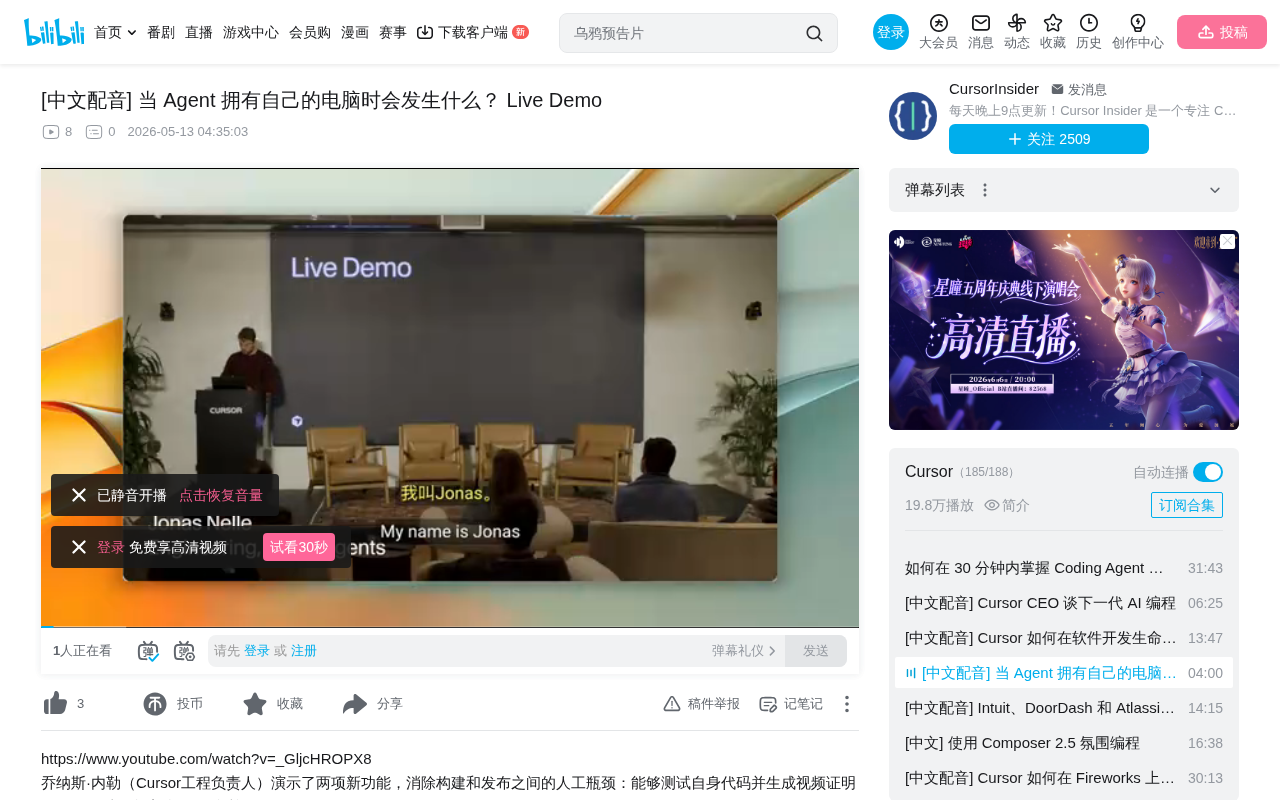
Cursor Cloud Agent Demo: Eliminating Bottlenecks Across the Entire Software Development Lifecycle
Deep analysis of Cursor's Cloud Agent demo showing how cloud VMs, automated test artifacts, and a full-chain control plane systematically eliminate human bottlenecks across the software development lifecycle.