AIGC-Claw: The AI Creative Employee That Generates a Complete Video from a Single Sentence
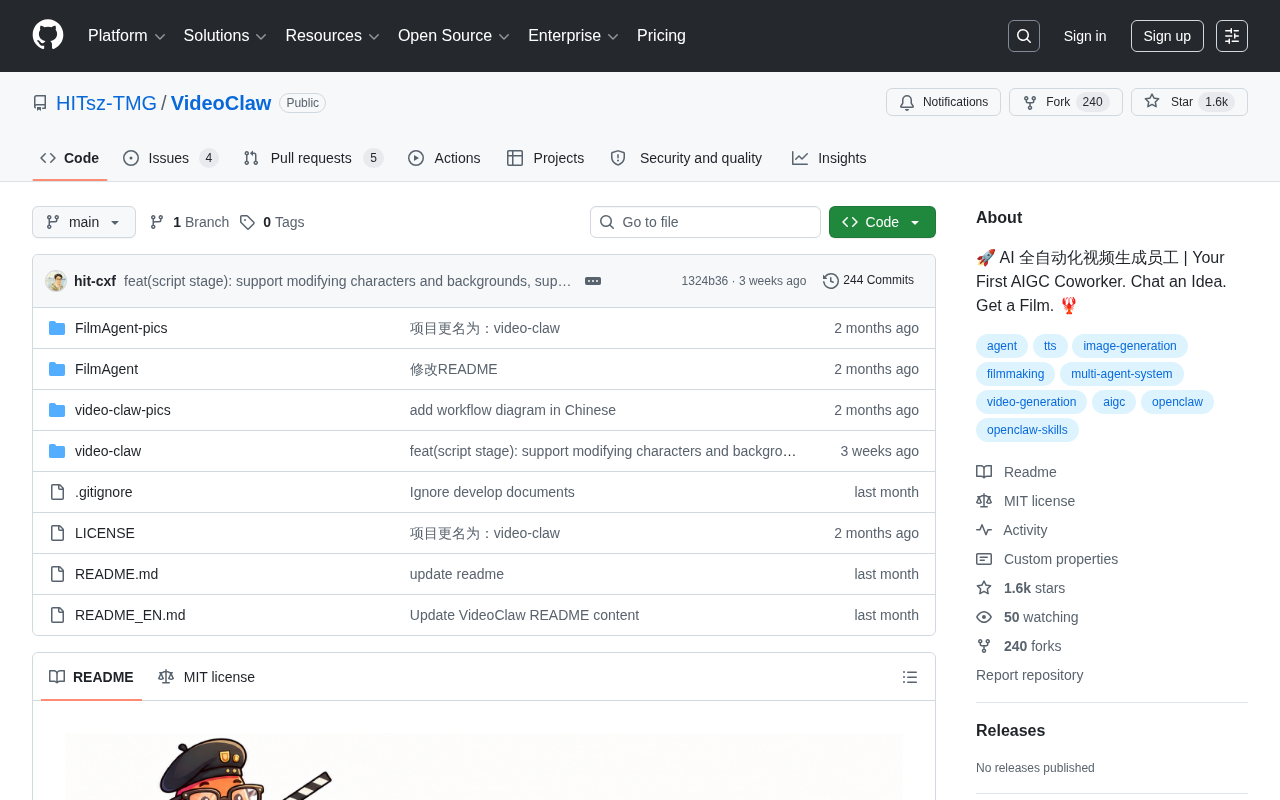
HIT Shenzhen's AIGC-Claw uses an Agent framework to turn a single idea into a complete video automatically.
AIGC-Claw is an open-source AI video generation project from Harbin Institute of Technology (Shenzhen)'s TMG team, taglined "Chat an Idea, Get a Film." Rather than a standalone model, it positions itself as a fully automated AI video employee, using an Agent-style framework to automatically chain together ideation, scripting, storyboarding, asset generation, and editing. With ~1,188 GitHub Stars and 160 Forks, community interest is growing rapidly. The project represents a broader shift from AI as a tool to AI as a workforce, though real-world generation quality and compute requirements still await community validation.
AIGC-Claw: The AI Creative Employee That Generates a Complete Video from a Single Sentence
Video generation is evolving from "single-shot models" toward "end-to-end automation." The AIGC-Claw project, open-sourced by the TMG team at Harbin Institute of Technology (Shenzhen), pushes this trend into a new form — it's not just a model, but is positioned as an "AI fully automated video generation employee." The project's tagline says it all: Chat an Idea. Get a Film.
The project has already earned around 1,188 Stars and 160 Forks on GitHub, developed primarily in Python, with rapidly growing momentum — reflecting strong developer community interest in the direction of end-to-end video generation.
From "Model" to "Employee": A Shift in Positioning
Over the past year, most attention in the AI video space has focused on generative models themselves — metrics like image clarity, duration, and motion consistency. AIGC-Claw takes a different narrative approach: framing itself as a "Coworker," with an emphasis on workflow completeness rather than any single capability.
The logic behind this positioning is straightforward: real video production has never been something a single model outputting a few frames can accomplish. It involves creative ideation, script breakdown, storyboard design, asset generation, editing, and synthesis — among many other steps. AIGC-Claw's goal is to let users simply chat an idea, and have the system automatically chain together all these steps to deliver a finished film.
For content creators, marketing teams, and individual users alike, this "input an idea, get a finished video" model means dramatically lowering the technical barrier and time cost of video production.
The Value of an Automated Video Pipeline
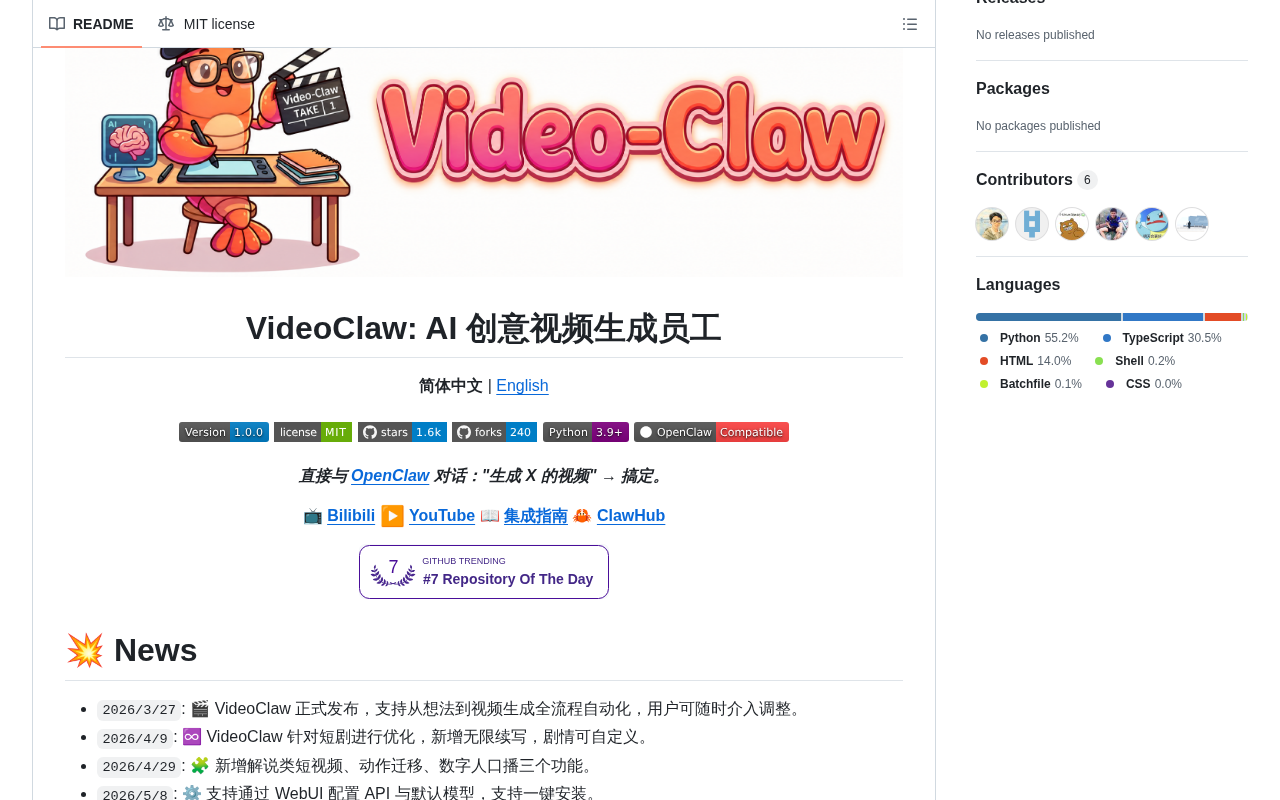
Thinking of video generation as an automated pipeline is the core insight that makes AIGC-Claw worth watching. Traditionally, even with powerful text-to-video models, creators still had to do a lot of "assembly" work themselves: writing scripts, designing prompts for each shot, generating segments one by one, and manually editing them together.
AIGC-Claw attempts to use an Agent-style framework to automatically orchestrate these tedious steps. Users provide a high-level "idea," and the system breaks it down layer by layer into executable generation tasks, then integrates the results. This aligns closely with the industry trend of "AI Agents orchestrating multimodal tool chains" — using a central agent to schedule multiple specialized models to complete complex tasks that would otherwise require human coordination.
The significance of this kind of end-to-end solution is that it transfers the cognitive burden of "using AI" from the creator to the system itself. Users no longer need to understand storyboarding, prompt engineering, or editing software — they just need to express their intent.
"AI Agent orchestrating multimodal tool chains" has become an important paradigm for deploying large model applications in recent years. The core idea is this: a central Agent with planning and decision-making capabilities (typically built on a large language model) understands user intent and decomposes task goals, then dynamically invokes multiple specialized tools or sub-models — such as text generation, text-to-image, text-to-video, and speech synthesis models — to complete sub-tasks sequentially or in parallel, and finally integrates the outputs. The technical foundation typically includes Chain-of-Thought reasoning, function calling, and structured output parsing. Compared to having a single model handle everything end-to-end, multi-Agent orchestration offers the advantage of flexibly swapping in the best model for each stage, and enabling local retries on failure without rerunning the entire pipeline. In the context of video generation, this means scriptwriting, storyboarding, individual shot generation, music selection, and editing can each be handled independently by the most suitable model, with a central Agent coordinating the handoffs.
The Possibilities Unlocked by Open Source
AIGC-Claw's open-source release is particularly significant for the developer community. Its Python-based tech stack means a relatively low barrier to entry and secondary development — developers can swap out the underlying generation models, extend new processing nodes, or integrate it into their own product workflows.
Open source also means transparency. Compared to closed-source commercial "AI video factories," AIGC-Claw allows users to see exactly how the entire pipeline operates, making it easier to audit, customize, and optimize. The 160 Forks also suggest that a significant number of developers are already experimenting with modifications and adaptations.
That said, based solely on the project homepage, it's not yet possible to evaluate the actual quality of generated videos, their controllability, or the compute resources required. These are critical factors in determining whether a tool like this can truly be used in production environments, and are key areas for interested users to validate before deployment.
Evaluating the practical value of an "end-to-end AI video generation" system typically requires attention to several dimensions: generation quality (image clarity, temporal consistency, character coherence), controllability (how much users can intervene in storyboarding or style), inference cost (GPU memory and time required per video), and failure rate (the probability of errors at each stage in a long pipeline and the recovery mechanisms). Video generation models typically demand an order of magnitude more compute than image generation, and the cumulative overhead of a full pipeline can be substantial. This is also the most common bottleneck these open-source projects hit when moving from demo prototype to production-ready. Developers are advised to consult existing community benchmark reports and hardware requirement documentation before attempting local deployment or integration.
A Direction Worth Watching
AIGC-Claw represents one exploration of AI video generation's evolution from "tool" to "workforce." As model capabilities continue to mature, organizing those capabilities into complete, reliable, and easy-to-use workflows is becoming the new competitive frontier.
For teams looking to reduce video production costs, or developers interested in researching multimodal Agent orchestration, this project offers a valuable open-source reference. Whether it can achieve the level of reliable delivery one would expect from "hiring an employee" remains to be seen — and will ultimately be judged by real-world usage and community feedback.
Project URL: Search GitHub for
HITsz-TMG/AIGC-Claw
Related articles
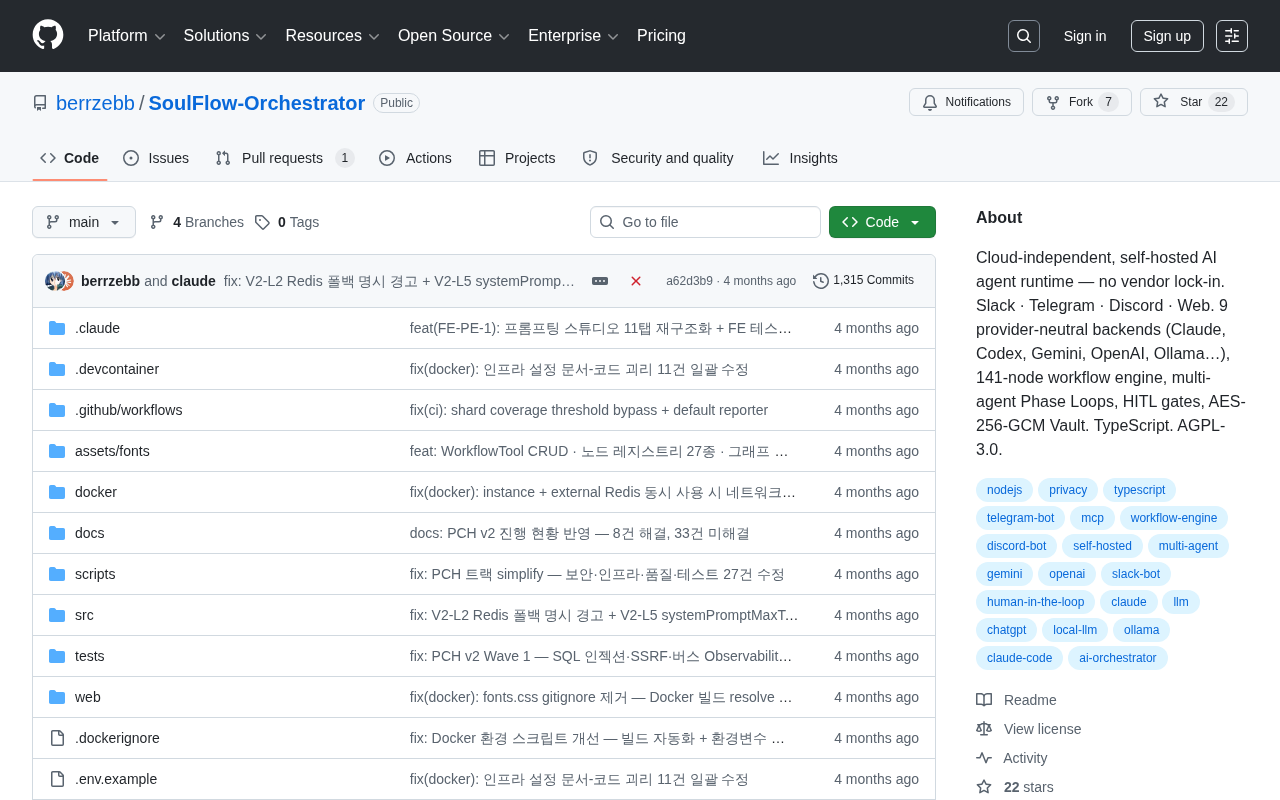
SoulFlow-Orchestrator: A Self-Hosted, Vendor-Lock-In-Free AI Agent Runtime
SoulFlow-Orchestrator is an open-source, self-hosted AI agent runtime with no vendor lock-in. Supports 9 neutral backends (Claude, OpenAI, Ollama), 141-node workflow engine, multi-agent loops, and HITL gates.
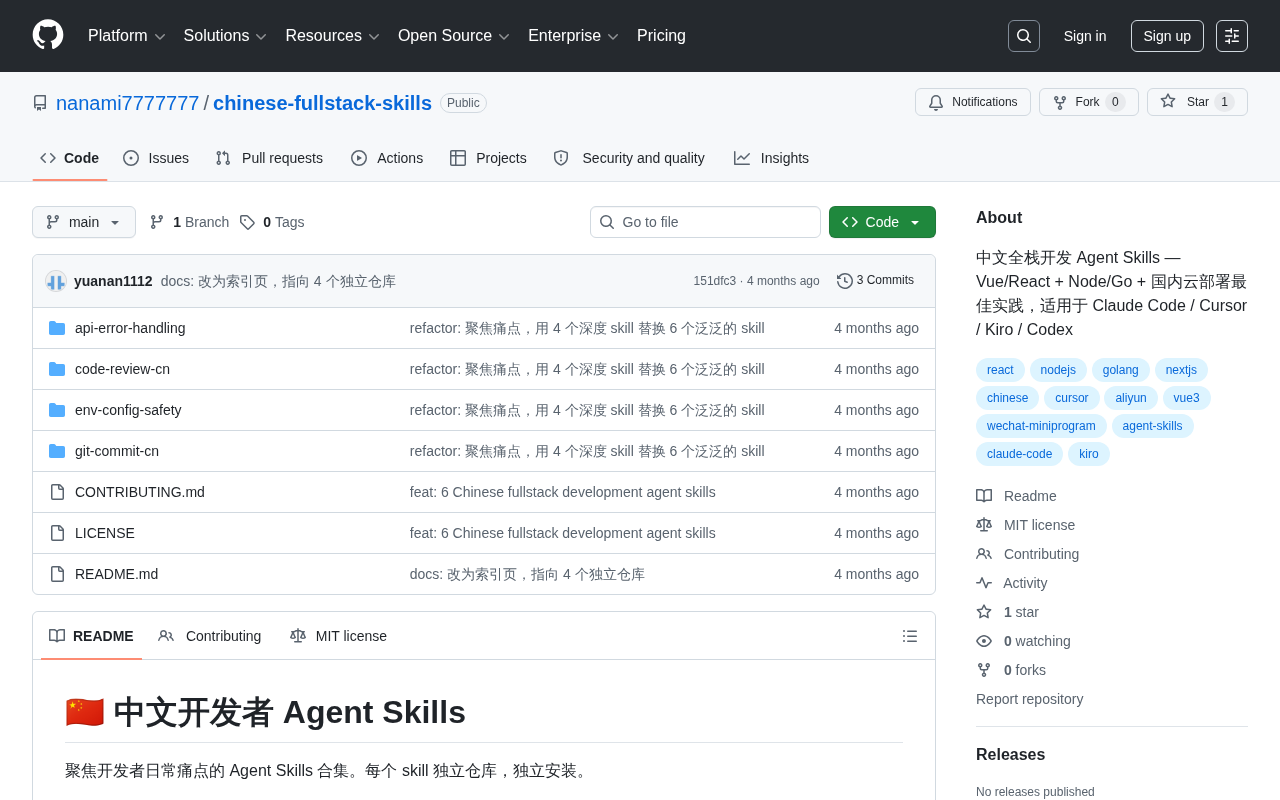
Chinese Full-Stack Agent Skills: A Skill Library Tailored for Domestic AI-Assisted Development
chinese-fullstack-skills is an Agent Skills library for Chinese full-stack development, covering Vue/React, Node/Go, and domestic cloud deployment best practices. Compatible with Claude Code, Cursor, Kiro, and Codex.
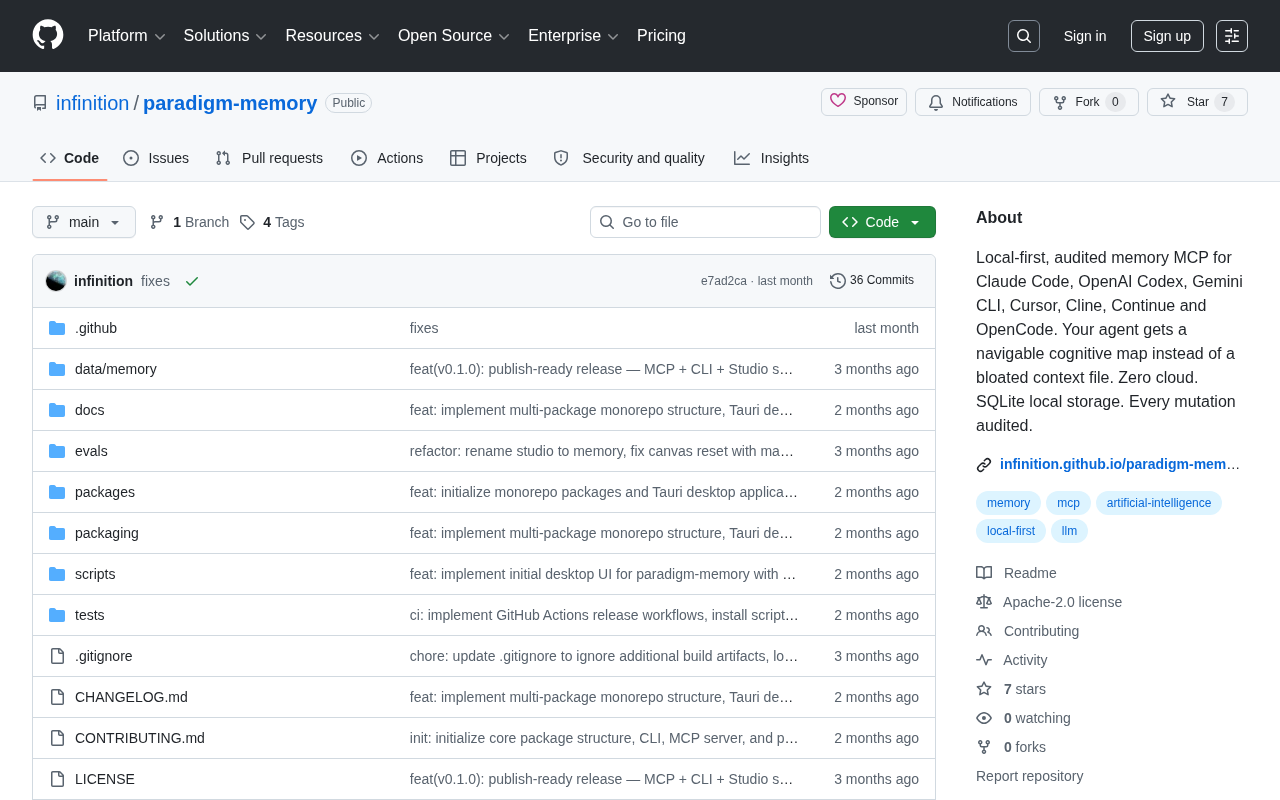
Paradigm Memory: A Local-First Memory System for AI Coding Assistants
paradigm-memory is a local MCP memory tool for Claude Code, Cursor, and Cline. It uses SQLite local storage, zero cloud, full audit trails, and a navigable cognitive map instead of bloated context files.