ajisai: A Preset Management Tool for Unifying Rules and Prompts Across AI Coding Assistants
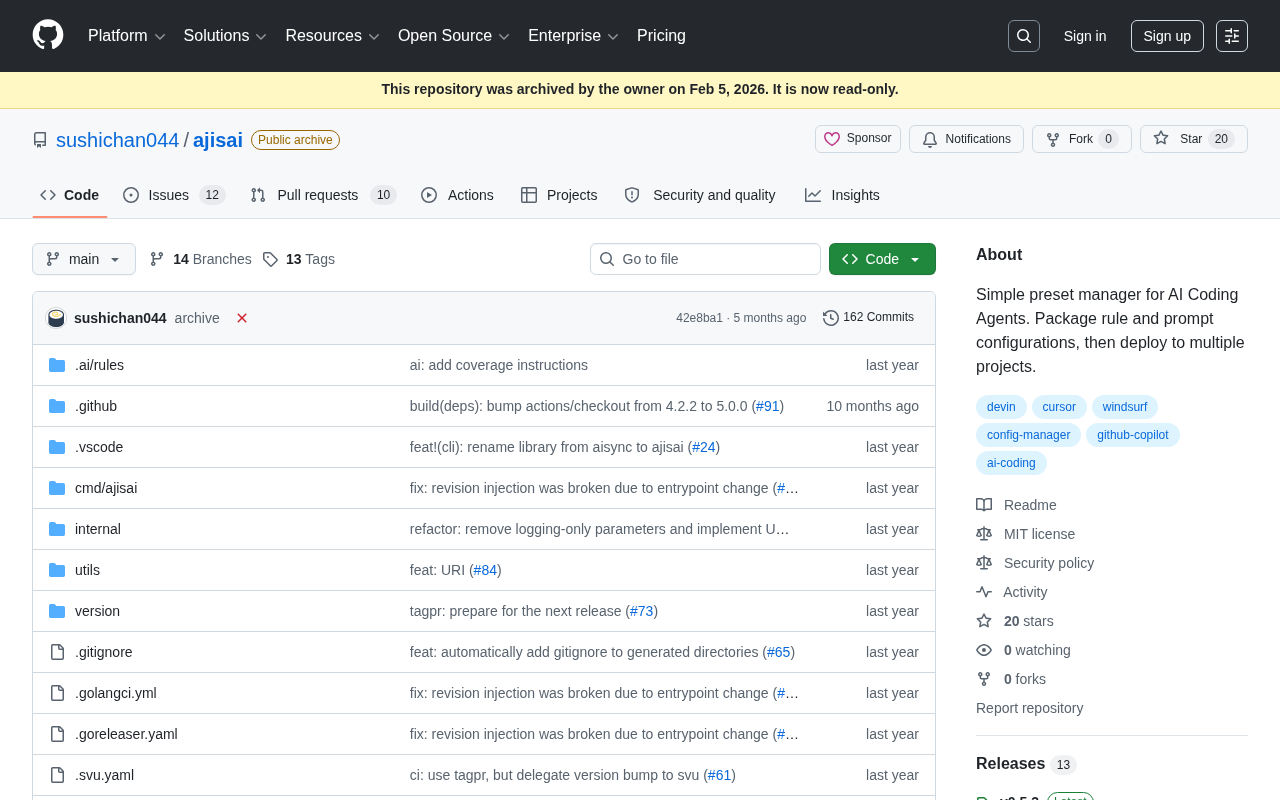
ajisai is a Go-based preset manager that unifies AI coding assistant rules and prompts across multiple projects.
As AI coding assistants like Cursor, GitHub Copilot, and Claude Code become standard development tools, managing their fragmented rule and prompt configurations across projects has become a real burden. ajisai is an open-source preset manager that abstracts these configurations into packageable units, enabling a single-source, multi-project deployment workflow. Built in Go for a lightweight, dependency-free CLI experience, the project is still very early-stage (20 Stars) but represents a broader trend: AI prompts and configs are evolving into versioned, team-shared engineering assets.
The Pain Point: AI Coding Assistant Configurations Are Becoming Fragmented
More and more developers are using multiple AI coding assistants in their daily work — Cursor, GitHub Copilot, Claude Code, Cline, and others keep emerging. Each tool has its own format for rule files and prompt configurations, scattered across different directories in different projects. When a team needs to maintain consistent coding standards and AI interaction patterns across multiple projects, manually copying, pasting, and maintaining these configurations becomes both tedious and error-prone.
The open-source project sushichan044/ajisai targets exactly this pain point. It positions itself as a "Simple preset manager for AI Coding Agents" — the core idea being: package rules and prompt configurations into presets, then deploy them to multiple projects with a single command.
What ajisai Does
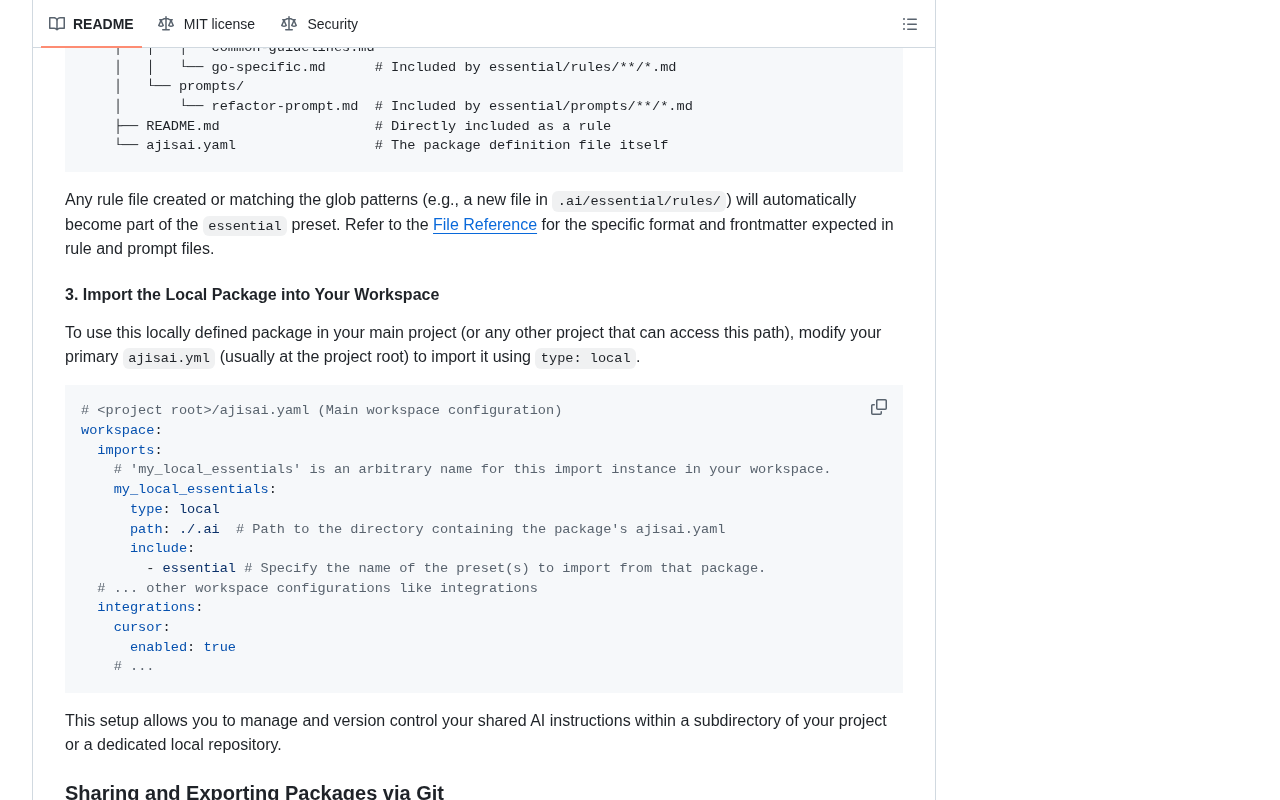
From a product positioning standpoint, ajisai solves the problem of configuration reuse and distribution. It abstracts the rules and prompts required by AI coding assistants into packageable configuration units. Developers only need to maintain one "source," which can then be deployed to multiple target projects. This means that when you update your team's coding standards or refine a prompt, you don't have to manually sync each project one by one — the tool handles the distribution centrally.
This "package and distribute" model essentially draws on the mature ideas of dependency management and configuration management from software engineering, just applied to AI assistant rules and prompts. For scenarios involving multiple repositories or enforcing unified AI usage standards across a team, the value of such a tool grows as the number of projects increases.
Why Go?
ajisai is written in Go. This technology choice makes perfect sense: Go compiles to a single static binary, making cross-platform distribution straightforward with no runtime dependencies — ideal for a CLI tool. For a configuration management tool that needs to run on different developers' machines and in various CI environments, the "download and run" experience significantly lowers the barrier to entry.
Go has a deep track record in the CLI tooling ecosystem, with numerous success stories ranging from container tools to developer productivity utilities. Choosing Go means ajisai has a natural advantage in installation experience and runtime performance, and it's easy to integrate into automated workflows.
An Honest Assessment: Still an Early-Stage Project
It's worth being transparent: based on public data, ajisai is still at a very early stage — 20 Stars and 0 Forks. This scale means it has yet to be validated by a large community, and its feature completeness, documentation maturity, and long-term maintenance are all yet to be seen.
For developers with similar needs, it's better suited as a tool worth watching and experimenting with in limited scope, rather than a mature solution ready to be dropped into critical production workflows. If you're struggling with syncing AI configurations across multiple projects, it's worth following its development. If stability is your priority, it may be wise to watch the community grow first.
The Industry Trend This Tool Reflects
Beyond the project itself, the emergence of ajisai reflects a trend that's taking shape: as AI coding assistants evolve from "novelty" to "everyday production tools," the engineering infrastructure surrounding them is beginning to materialize. Prompts are no longer one-off text snippets — they're "assets" that need to be versioned, reused, and shared across teams. Rule configurations similarly need to be managed and distributed with the same rigor as coding standards.
It's reasonable to expect that "prompt engineering" and "AI configuration management" will become new niches within the developer toolchain. Tools like ajisai are early explorers in this space, and whether they break through will depend on how well they can iterate on multi-tool compatibility, usability, and ecosystem integration.
Summary
ajisai addresses a real pain point — the fragmentation of AI coding assistant configurations — with a clear value proposition: package rules and prompts into presets, then deploy them uniformly across multiple projects. Its Go implementation ensures a lightweight, easily distributable binary. While the project is still in its early stages with a limited community, the "AI configuration as engineering" philosophy it represents offers meaningful reference value for developers and teams that rely heavily on multiple AI coding tools.
Related articles
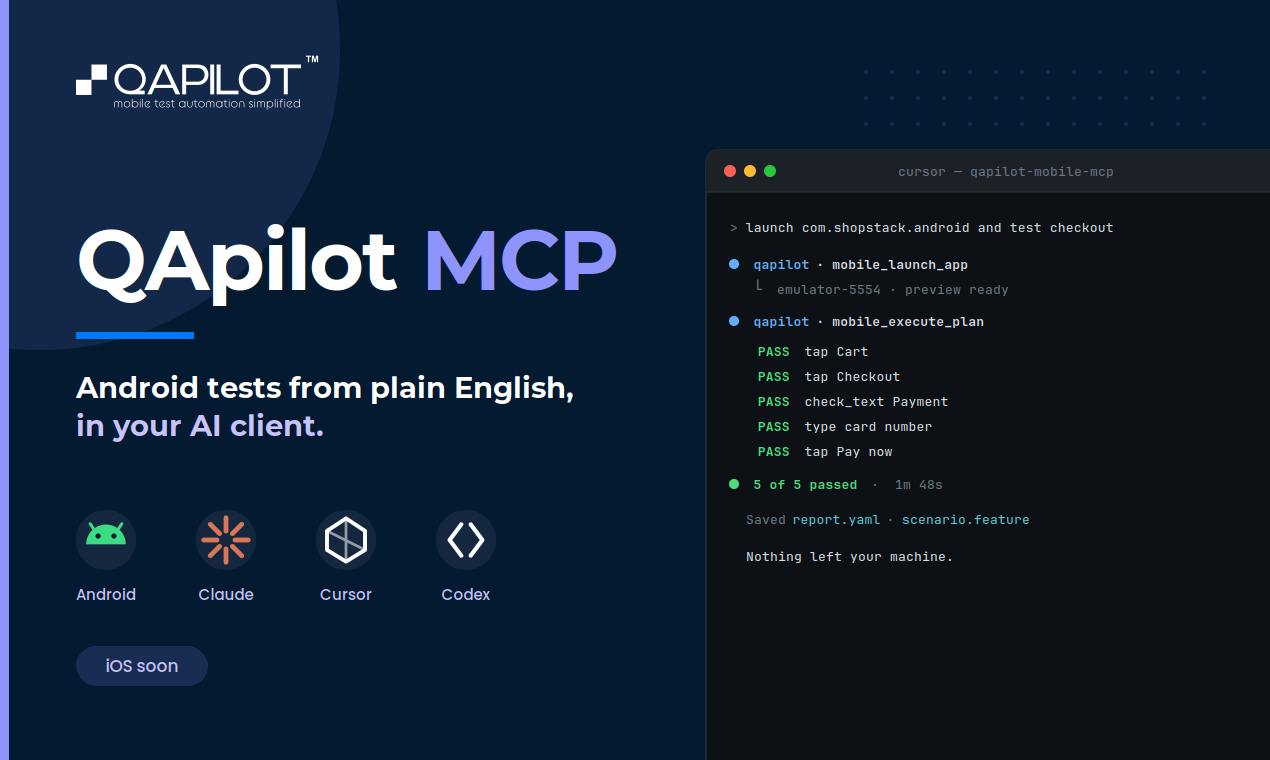
QApilot MCP: Test Android Apps in Natural Language Inside Your AI Coding Assistant
QApilot MCP lets developers test Android apps in natural language inside Claude, Cursor, and Codex — no Appium code needed. Auto-generates reusable Gherkin test cases.
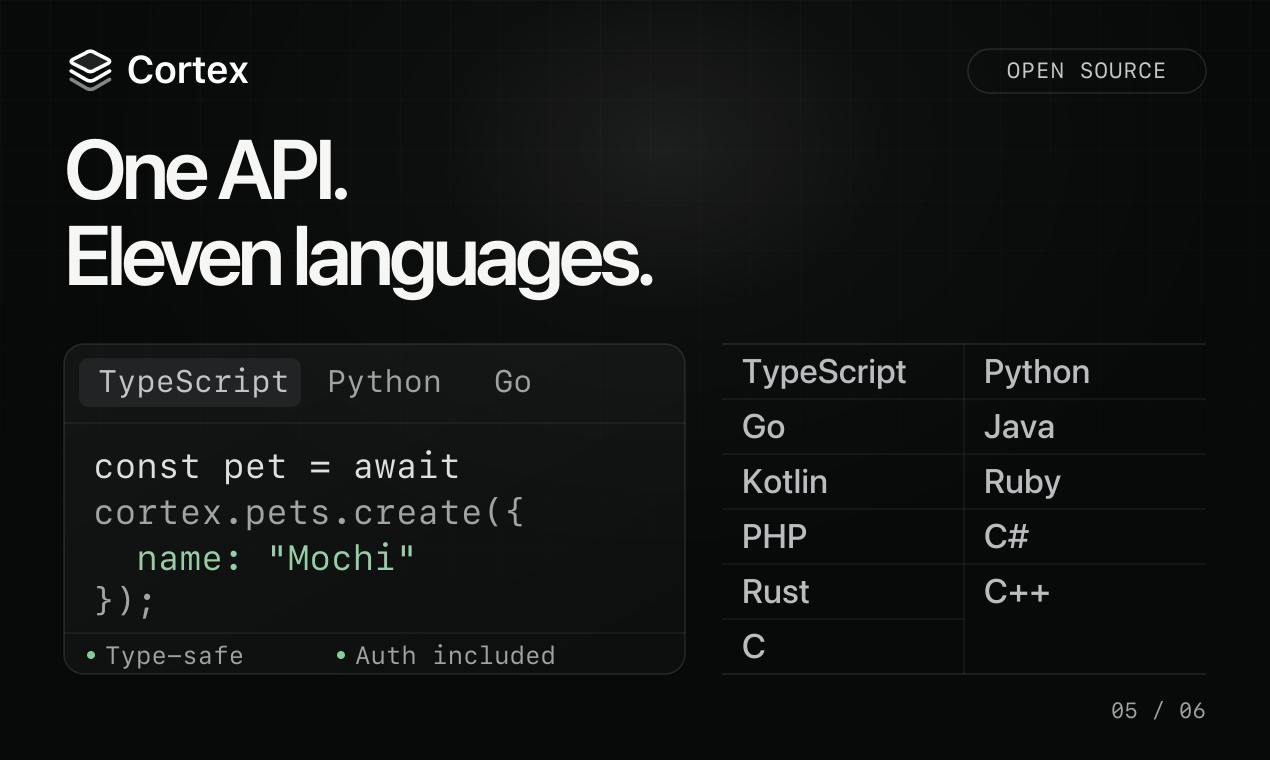
Cortex: Convert API Specs into Docs, SDKs, and MCP Servers in One Click
Cortex is an open-source tool that converts OpenAPI, GraphQL, gRPC and more into interactive docs, typed SDKs in 11 languages, and MCP servers for AI agents.
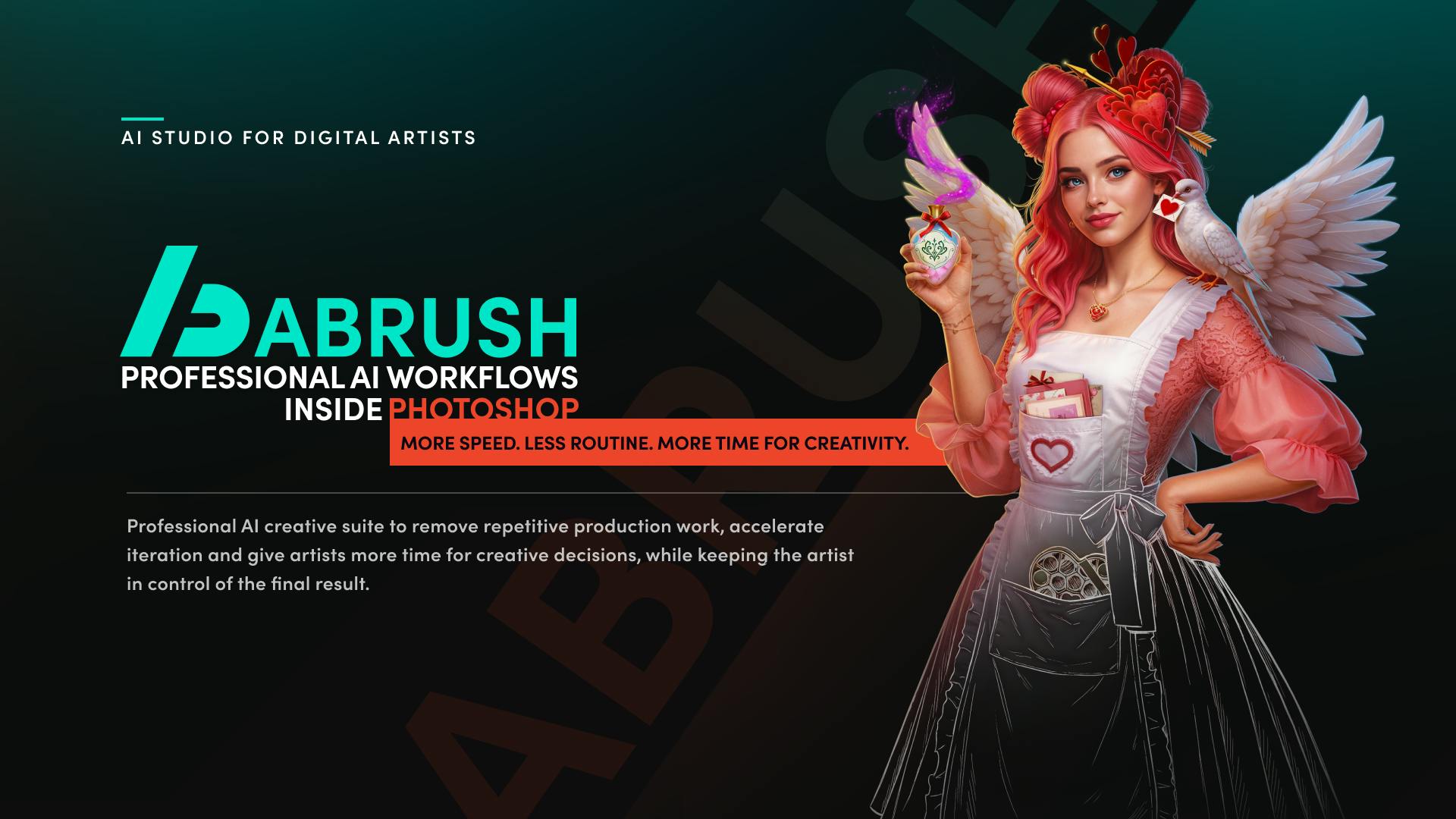
ABrush: An AI Studio Built for Digital Artists
ABrush is an AI studio for digital artists, ranked #4 on Product Hunt. It embeds leading AI models into existing workflows to remove repetitive tasks, speed up iteration, and keep artists in control.