Alibaba Plans to Ban Claude Code: The Battle Between Backdoor Risks and Enterprise AI Security

Alibaba's reported Claude Code ban highlights the growing tension between AI productivity and enterprise security.
Alibaba is reportedly planning to ban Anthropic's Claude Code internally, citing backdoor and data leakage risks. The move reflects broader enterprise AI governance challenges — from prompt injection threats in agentic AI to software supply chain concerns and geopolitical data compliance pressures. It also signals that AI vendors must prioritize trust and private deployment options to win large enterprise customers.
Overview
According to sources familiar with the matter, Alibaba is planning to ban the use of Anthropic's AI coding assistant Claude Code within its internal work environment, citing potential "backdoor risks." The decision has yet to receive official confirmation, but it has already sparked widespread discussion in developer communities and enterprise security circles.
Claude Code, with its powerful code comprehension and generation capabilities, has become an essential tool for many engineering teams. When a tech giant considers shutting it out on security grounds, the situation reflects not just a dispute over one product's trustworthiness, but a deeper trust crisis that AI tools face in enterprise-level adoption.
What Are "Backdoor Risks"?
In cybersecurity, a "backdoor" typically refers to a covert channel that bypasses normal authentication mechanisms and allows unauthorized system access. It's worth noting that backdoors as a security concept date back to early computer systems in the 1960s. In the modern sense, they fall into two categories: "intentionally planted" ones, actively embedded by developers or attackers, and "unintentionally introduced" ones, arising from code defects or third-party dependency vulnerabilities. For AI coding tools, the security community is more concerned with "functional data leakage" — where a tool sends user data to third-party servers during normal operation. This may not constitute a traditional "backdoor" in the legal sense, but from a data sovereignty perspective, its harm is comparable. For AI coding assistants like Claude Code, potential backdoor risks primarily stem from the following dimensions:
Code and Data Exfiltration
AI coding tools typically need to read a developer's local codebase, context files, and even the complete project structure during operation, sending all of this to cloud-based models for processing. For enterprises like Alibaba that hold vast amounts of core business code and sensitive data, uploading internal code to third-party servers constitutes a data leakage risk that cannot be ignored.
Autonomous Execution Capabilities
Claude Code is an AI coding assistant launched by Anthropic in 2025. Its core distinction from traditional code completion tools (such as early GitHub Copilot) lies in its "Agentic" workflow. The core architecture of Agentic AI borrows the "Perception-Decision-Action Loop" from reinforcement learning. Claude Code connects large language models with external tools via the MCP (Model Context Protocol), where the model outputs structured "tool-calling instructions" and the runtime environment handles actual execution before returning results to the model. Unlike traditional automation scripts, the execution path of Agentic AI is dynamically generated by the model, making it impossible to enumerate all possible behavioral combinations in advance — presenting a fundamental challenge to traditional rule-based security frameworks. In this mode, the model can not only generate code snippets but also understand the structure of entire code repositories, autonomously plan multi-step tasks, and complete end-to-end development work by invoking shell commands, reading and writing the file system, and running test scripts.
It's worth understanding in depth that the Agentic architecture used by Claude Code is built on Anthropic's Tool Use API, allowing the model to repeatedly call external tools within a conversation loop and dynamically adjust its action plan based on returned results. This is fundamentally different from traditional RAG (Retrieval-Augmented Generation) or single-pass completion: in Agent mode, the model has a complete closed-loop capability of "perception-planning-execution" and can complete dozens of steps without human intervention.
From a security perspective, this introduces a serious prompt injection threat. Prompt injection attacks are divided into "direct injection" and "indirect injection": direct injection involves users actively constructing malicious instructions; more dangerous is indirect injection, where attackers pre-embed instructions in external data that the AI tool will read (such as code comments, documentation, or web content). When the AI tool processes this data, the malicious instructions are executed as legitimate directives. For example, an attacker could embed hidden instructions in the README of an open-source repository, tricking a running Claude Code instance into sending SSH private keys to the attacker's server. Stanford University research from 2023 showed that the defense success rate of mainstream LLMs against indirect prompt injection was generally below 30%, and Agentic mode exponentially expands the damage radius when an attack succeeds. OWASP has ranked prompt injection as the top security threat for LLM applications, and the emergence of Agentic AI has elevated the severity of this threat even further.
The key feature that distinguishes Claude Code from ordinary code completion tools is precisely this "Agent" capability — the ability to autonomously execute commands, modify files, and run scripts. This deep level of system access, once an undiscovered vulnerability exists or is maliciously exploited, could become an entry point for attackers to infiltrate a corporate intranet. This system-level depth of privilege dramatically expands the potential security attack surface even as it enables efficiency gains.
Software Supply Chain Trust
Software supply chain security has become a core issue in enterprise security governance in recent years. The concept entered the mainstream after the 2020 SolarWinds incident: attackers infiltrated a software vendor's CI/CD build pipeline and injected malicious code at the compilation stage in a way that couldn't be detected by source code audits. Approximately 18,000 customers unknowingly installed update packages containing backdoors, with victims including the U.S. Treasury Department, Department of Defense, and several Fortune 500 companies. The U.S. government subsequently issued Executive Order 14028 in 2021, requiring federal suppliers to provide a Software Bill of Materials (SBOM). The 2021 Codecov incident and the 2022 PyPI malicious package poisoning incident further demonstrated that software supply chains have become a preferred attack vector for nation-state and criminal actors.
The introduction of AI coding tools adds an entirely new risk dimension to the supply chain: beyond auditing code dependencies, organizations must also audit the provenance and integrity of model weights, the legitimacy of fine-tuning datasets, the access controls of inference endpoints, and the behavioral consistency of models under different inputs — all of which fall outside the coverage of traditional SBOM frameworks, profoundly revealing the systemic risks of third-party AI tools.
For Chinese tech companies, this issue is compounded by a geopolitical dimension. China's Data Security Law (2021) established a tiered data classification and protection system, categorizing data related to national security and the national economy as "important data" requiring domestic storage, processing, and security assessment before any cross-border transfer. Meanwhile, the U.S. Clarifying Lawful Overseas Use of Data Act (CLOUD Act, 2018) allows U.S. law enforcement agencies to compel U.S. companies to provide data stored anywhere in the world through legal proceedings. This legal framework means that when Chinese companies use U.S. AI cloud services, their data may simultaneously fall under the jurisdiction of both Chinese and U.S. law, creating a "dual compliance bind" where regulatory requirements from either side may conflict with the other. Against this backdrop, Alibaba and similar enterprises maintaining caution toward external AI tools is both a security instinct and a practical requirement for regulatory compliance.
Why Alibaba?
Alibaba is itself a significant player in China's AI landscape, with its own Qwen (Tongyi Qianwen) series of large language models and accompanying coding tools. It's worth noting that Alibaba's in-house AI development extends well beyond LLMs — the Qwen series has grown into a complete model family covering parameter scales from 0.5B to 720B (with the largest scale using a Mixture of Experts, or MoE architecture), released in open-source form on platforms like Hugging Face. The Qwen series also includes visual language models (Qwen-VL), audio models (Qwen-Audio), and code-focused variants like Qwen-Coder, which are specifically optimized for tasks such as code completion, code explanation, and unit test generation, with standout performance on benchmarks like HumanEval and MBPP. Alibaba has also released an AI coding plugin called "Lingma" (通义灵码) for the VS Code and JetBrains ecosystems, supporting private deployment mode that allows enterprises to run the model on their own servers, keeping code data entirely within the corporate intranet — which directly addresses the core security concerns around external AI tools.
From a strategic perspective, banning external AI coding tools while promoting in-house products is a classic "internal market cultivation" strategy — converting the daily programming workload of more than 30,000 internal engineers into real-world stress tests for Qwen-Coder, continuously collecting feedback and fixing defects in the most competitive application scenarios, and forming a positive flywheel effect of "internal use → data feedback → model iteration." This mirrors the logic used by Google with Gemini for internal inference and Meta with Llama for internal R&D, and aligns with the internal-first strategies of Huawei HarmonyOS, ByteDance Doubao, and others.
Banning external competitors while supporting in-house solutions is both a natural extension of security considerations and consistent with Alibaba's long-term goal of technological self-reliance.
This is not an isolated case. In recent years, a growing number of large enterprises have started establishing strict usage policies for third-party AI tools. The Samsung ChatGPT leakage incident, which came to light between March and April 2023, became a landmark case in enterprise AI governance: employees at Samsung's semiconductor division, while using ChatGPT for work assistance, uploaded sensitive content including chip yield measurement data (containing core source code), internal meeting recordings, and competitive analysis reports to a public AI service. Under OpenAI's terms of service at the time, conversation inputs from users could by default be used for model training, meaning Samsung's core trade secrets had effectively entered OpenAI's training data pool.
The deeper lesson of the Samsung incident was how it exposed the severity of "Shadow AI" — employees spontaneously using public AI services without IT department approval. A 2023 Gartner survey found that over 55% of employees admitted to using AI tools at work without enterprise approval. After the incident came to light, Samsung urgently limited single inputs to 1,024 bytes and began deploying an internal private LLM. Samsung's response has become a reference model for many enterprises formulating AI usage policies: a more effective strategy is not outright prohibition, but rather "replacing non-compliant usage with compliant tools" — providing employees with internal AI tools of equivalent functionality but with controllable data flows. This incident brought the data security risks of AI tools from theoretical to real, prompting many global enterprises to elevate AI usage policy to a board-level strategic issue, and directly driving an explosive growth in demand for "enterprise private deployment." Alibaba's move can be seen as yet another example of the tightening trend in enterprise AI governance.
The Dilemma of Enterprise AI Tool Governance
This incident reveals the core tension enterprises face when embracing AI productivity tools:
Efficiency vs. Security: AI coding tools can significantly boost development efficiency — a fact validated by extensive real-world practice. But the price of that efficiency is allowing external systems to deeply penetrate the enterprise's core assets. How to strike a balance between the two is an unavoidable challenge for every technology decision-maker.
Open Source vs. Closed Source: The black-box nature of closed-source AI tools makes enterprise security auditing nearly impossible, which is why more and more enterprises are gravitating toward open-source or in-house solutions that support local deployment and auditability. For Alibaba, replacing an external black box with a self-controlled solution is a commercially logical choice.
Building Trust: In response to the security challenges posed by AI tools, the industry is gradually forming a systematic enterprise AI governance framework. The main approaches include: "sandbox isolation," running AI tools in network-isolated environments with restricted access to production databases and core code repositories; "private deployment," deploying AI models on the enterprise's own infrastructure or private cloud so data never leaves the domain; "behavioral auditing," logging every file access and command execution by AI tools to ensure post-hoc traceability; and "access whitelisting," allowing only AI tools that have passed security assessments to enter the development environment.
On the external regulatory front, major global regulators show a clear divergence in the pace of AI governance legislation. The NIST AI Risk Management Framework (AI RMF 1.0), formally published in January 2023, proposes four core functions — Govern, Map, Measure, and Manage — and has been adopted by multiple federal agencies as a procurement reference standard. The EU AI Act officially took effect in August 2024, adopting a risk-tiered regulatory model that requires high-risk AI systems to maintain mandatory technical documentation, implement human oversight, and register with regulatory authorities, with penalties for non-compliance reaching up to 7% of global annual revenue. In China, the Interim Measures for the Management of Generative Artificial Intelligence Services came into effect in August 2023, requiring generative AI service providers to take responsibility for training data sources and content safety; additional specific regulations on algorithmic recommendations (2022) and deep synthesis (2022) together form a scenario-specific regulatory framework.
For multinational enterprises, this "regulatory fragmentation" means that AI tool compliance costs will rise linearly as the business expands geographically, giving unified internal private deployment solutions a natural compliance simplification advantage. These external regulatory pressures are further accelerating enterprises' efforts to establish internal AI governance systems, and elevating "AI compliance" from a technical matter for IT departments to a cross-functional strategic issue jointly involving legal, compliance, and risk management teams.
For AI vendors hoping to win the enterprise market, powerful features alone are far from sufficient — they must also provide concrete guarantees in areas such as data privacy protection, on-premises private deployment, and security transparency. Companies like Anthropic may need to accelerate the rollout of enterprise private deployment solutions to truly alleviate the concerns of major clients.
A Balanced View: Risk Assessment Still Awaits Official Response
It is important to emphasize that current reports stem from a single anonymous source and have not been officially confirmed by either Alibaba or Anthropic. Whether the so-called "backdoor risk" refers to the discovery of substantive security vulnerabilities or simply represents a general precaution against data exfiltration remains unclear.
In an era when AI tool security topics are easily amplified and misread, caution is warranted — it is important to avoid making overly definitive judgments about specific products without underlying technical details. What truly deserves continued attention is the industry trend this incident reflects: as AI tools become more deeply embedded in enterprise core workflows, security and trust are becoming the critical variables that determine whether they can be widely adopted.
Conclusion
Regardless of whether Alibaba ultimately formalizes this ban, the incident serves as a warning bell for the entire industry. For AI tool vendors, beyond functional innovation, building a trustworthy, controllable, and auditable product framework will be the next core competitive dimension in the battle for enterprise markets. For enterprise users, establishing comprehensive AI tool usage policies and data security boundaries is no longer optional — it is a required course.
Key Takeaways
Related articles
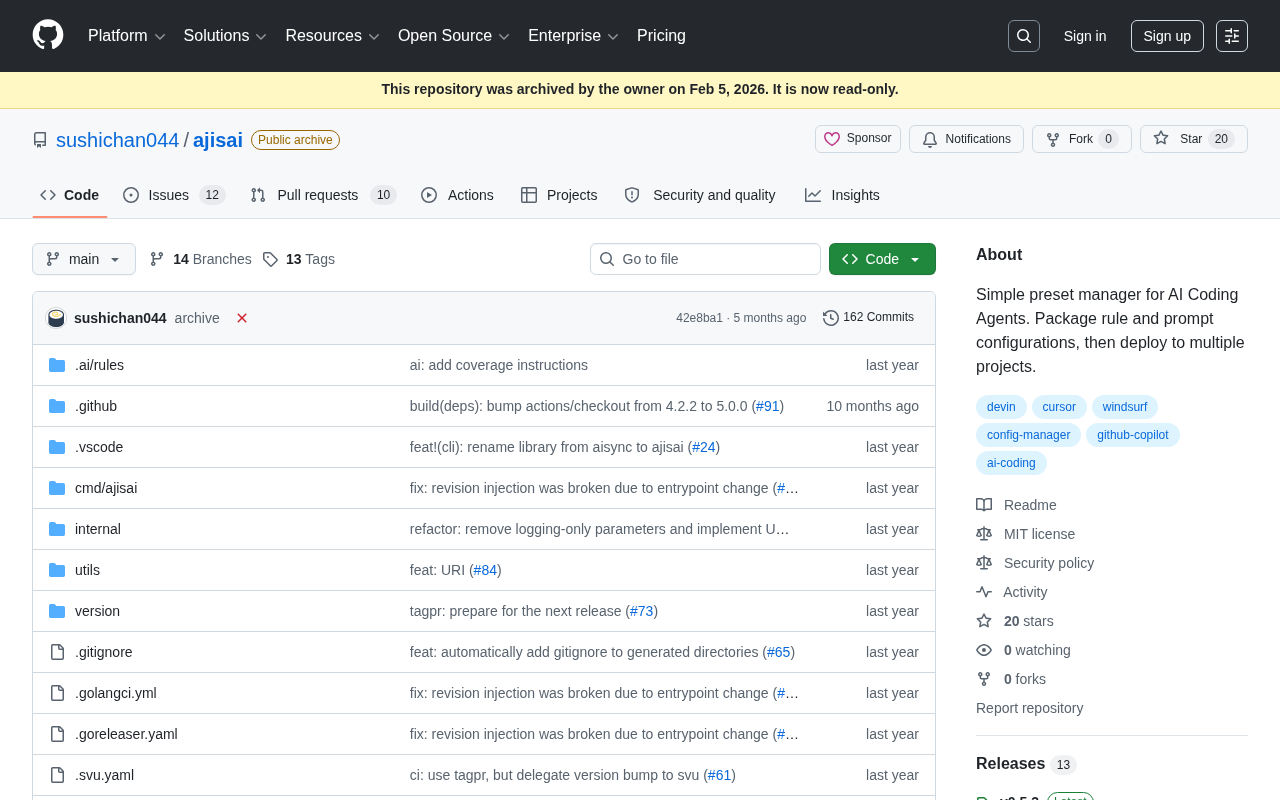
ajisai: A Preset Management Tool for Unifying Rules and Prompts Across AI Coding Assistants
ajisai is a Go-based preset manager for AI coding assistants like Cursor and Claude Code. Package rules and prompts once, deploy everywhere. Early-stage but promising.
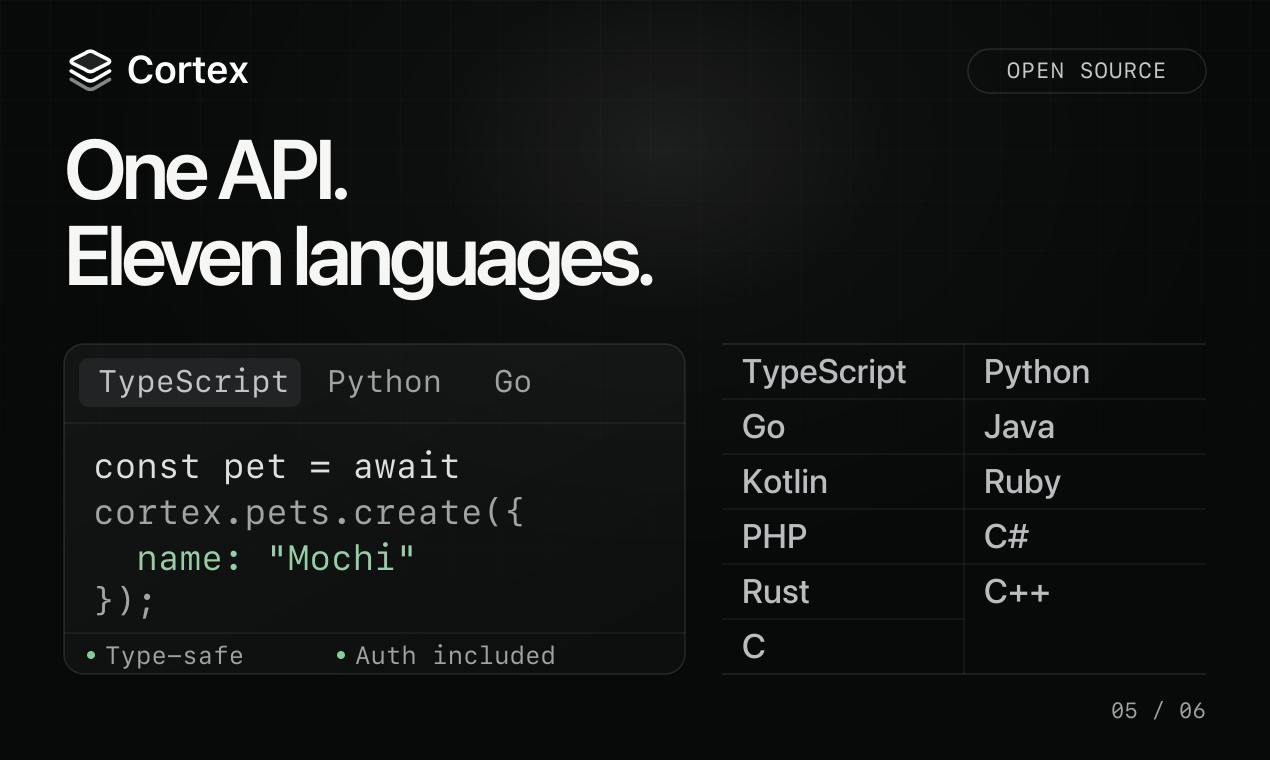
Cortex: Convert API Specs into Docs, SDKs, and MCP Servers in One Click
Cortex is an open-source tool that converts OpenAPI, GraphQL, gRPC and more into interactive docs, typed SDKs in 11 languages, and MCP servers for AI agents.
ABrush: An AI Studio Built for Digital Artists
ABrush is an AI studio for digital artists, ranked #4 on Product Hunt. It embeds leading AI models into existing workflows to remove repetitive tasks, speed up iteration, and keep artists in control.