Alienware Brand Dilution: From Never Compromise to Budget Gaming Laptops — Where Did Dell Go Wrong?
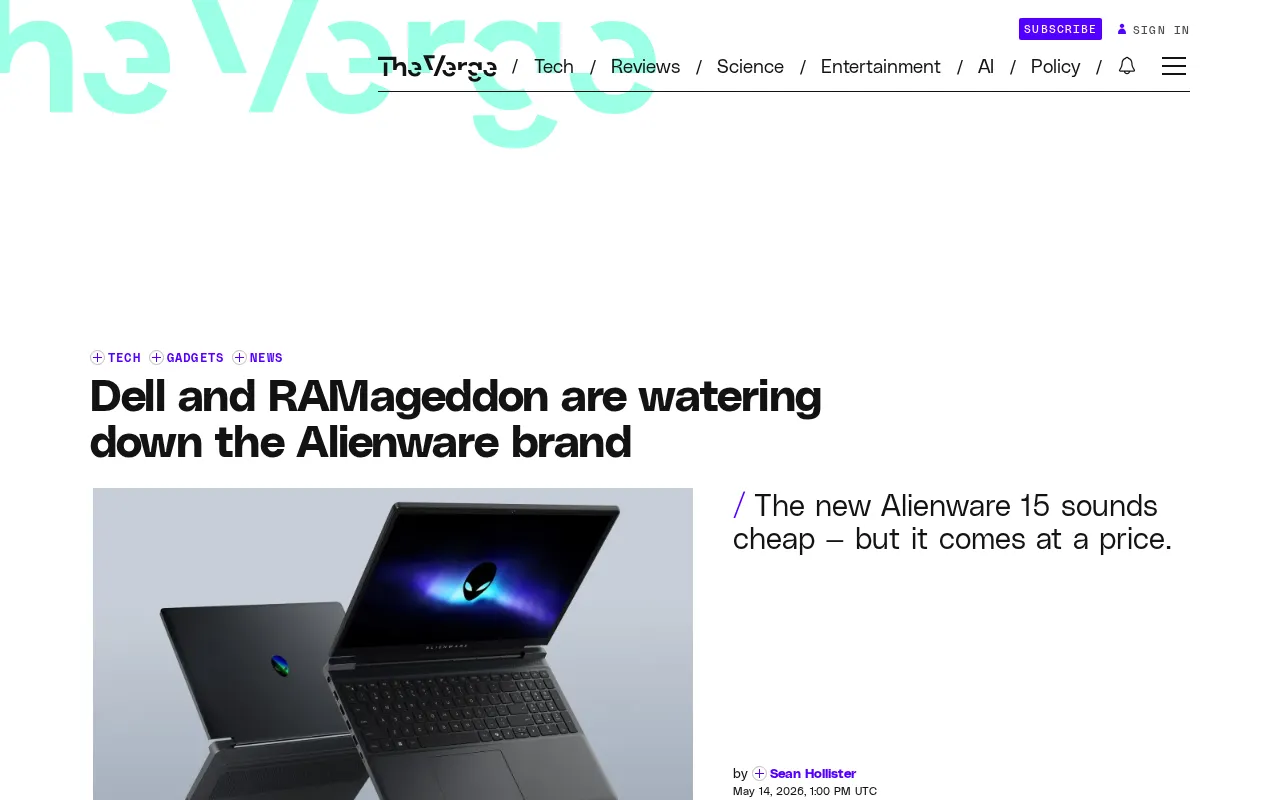
Alienware's launch of budget products raises brand dilution concerns among core gamers.
Once celebrated for uncompromising performance, Alienware now offers a budget gaming laptop — the Alienware 15 — creating a stark disconnect with its premium brand identity. Under dual pressures from the RAMageddon memory crisis and fierce market competition, Dell chose to push Alienware downmarket, but this approach risks brand dilution, eroding consumer trust in the "never compromise" promise, with long-term costs potentially far exceeding short-term sales gains.
The Alienware That Was: An Uncompromising Performance Creed
In the world of PC gaming hardware, Alienware was once synonymous with peak performance and zero compromise. This was a brand that once refused to make thinner laptops for a simple reason — they would never make concessions on product quality. For hardcore gamers, Alienware meant "performance above all": thick chassis, aggressive cooling designs, and top-tier hardware configurations were baked into the brand's DNA.
Alienware was founded in 1996 by Nelson Gonzalez and Alex Aguila in Miami, Florida, originally as a small company focused on high-performance custom PCs. The brand name and iconic alien head logo stemmed from the founders' love of science fiction culture, and that image became one of the most recognizable symbols in PC gaming. In 2006, Dell acquired Alienware for several hundred million dollars, operating it as an independent premium gaming brand. For a long time after the acquisition, Dell maintained Alienware's independent R&D and design teams, allowing them to uphold extremely high standards in thermal architecture, chassis design, and component selection. Classic models like the Alienware Area-51m even supported desktop-class CPUs and swappable discrete GPUs — virtually unheard of in the laptop space — and it was precisely this "spare no expense in pursuit of perfection" attitude that cemented the brand's legendary status.
However, times have changed. Today's Dell appears to be slapping the once-untouchable Alienware name on disappointing hardware products. The latest Alienware 15 is a textbook example.
The New Alienware 15: Budget Positioning Sparks Controversy
The newly launched Alienware 15 is positioned as a "budget gaming laptop," weighing approximately five pounds (about 2.27 kg). This positioning alone creates a massive disconnect from Alienware's traditional flagship image.
"Budget" and "Alienware" in the same sentence is inherently contradictory. It's like Ferrari releasing a grocery-getter hatchback — the business logic might check out, but the damage to brand equity is obvious. When a brand known for peak performance starts reaching downmarket to cover a broader audience, its core brand premium quietly erodes.
For gamers shopping for a gaming laptop, the Alienware name once meant "buy with your eyes closed and you won't be disappointed." But when budget products also carry the alien logo, purchase decisions actually become more complicated. Gamers need to carefully distinguish between vastly different product lines under the same brand — and this cognitive burden is precisely what premium brands are supposed to eliminate for consumers.
RAMageddon: The Behind-the-Scenes Force Driving Brand Compromise
Behind this Alienware brand dilution lies an industry backdrop that cannot be ignored — "RAMageddon." This term has been circulating widely in hardware communities recently, referring to the cascading impact of volatile memory prices and supply chain tensions on PC hardware configurations.
RAMageddon is a portmanteau of RAM (Random Access Memory) and Armageddon, vividly depicting the brutal cyclical price spikes and supply crunches in the DRAM and NAND flash markets. The global DRAM market has long been dominated by three oligopolies — Samsung, SK Hynix, and Micron — who collectively hold over 95% market share. When these manufacturers simultaneously undergo process transitions (such as shifting from DDR4 to DDR5) or encounter capacity bottlenecks, memory prices can surge 50% or more within months. For OEMs, memory costs typically account for 15%-25% of a laptop's total bill of materials, and dramatic price fluctuations directly compress profit margins, forcing manufacturers to downgrade other components — such as adopting lower-spec displays, reducing thermal module materials, or selecting lower-frequency memory — to maintain target pricing.
Under RAMageddon's influence, manufacturers are forced to make more hardware specification compromises. Reduced memory configurations, downgraded storage solutions — these seemingly minor changes accumulate enough to significantly diminish what should be a flagship-grade product. For a brand like Alienware that built its reputation on premium positioning, the cost of such compromises is especially heavy — because the premium consumers pay for Alienware is essentially purchasing a promise of "never compromise."
Dell's Difficult Choice Under Supply Chain Pressure
From Dell's perspective, this strategic adjustment has commercial rationality. The gaming laptop market is increasingly competitive, with Lenovo Legion, ASUS ROG, MSI, and others deploying highly competitive products across different price segments. If Alienware only defends the premium market, its market share will inevitably be eroded.
In recent years, the global gaming laptop market has exceeded tens of billions of dollars, maintaining a compound annual growth rate of 8%-12%. Lenovo Legion has risen rapidly on the strength of excellent value configurations and outstanding thermal design, with significant market share gains in China and North America. ASUS ROG (Republic of Gamers) has formed a complete product matrix from the entry-level TUF series to flagship ROG Strix/Zephyrus, cleverly achieving brand stratification rather than brand dilution. MSI has built deep credibility through esports event sponsorships and the professional gaming community. This multi-brand, multi-tier competitive landscape means any single brand defending only one price segment faces the risk of being flanked by competitors. Dell clearly feels this pressure.
But the question is: Is the method of brand descent appropriate? Labeling a product with obviously "watered-down" specs as an Alienware might bring short-term sales growth, but in the long run, it could shake the entire brand's foundation.
Brand Dilution: A Warning for the Gaming Hardware Industry
Alienware's situation is not unique. In the tech industry, Brand Dilution is a story that plays out repeatedly. When companies over-pursue market coverage and misapply premium brand names to mid-range and budget product lines, consumer trust and brand perception gradually blur.
Brand dilution is a core concept in brand management, discussed in detail by marketing scholar Kevin Lane Keller in his Customer-Based Brand Equity Model. When a brand extends its name to product categories or price ranges inconsistent with its core positioning, consumer associations with that brand become blurred and weakened. History offers painful precedents: French designer brand Pierre Cardin once licensed its haute couture name to hundreds of low-end products, from cheap perfumes to kitchen utensils, ultimately causing near-total brand value collapse. Harley-Davidson also attempted to launch product lines completely disconnected from motorcycle culture — perfumes, cake decorations — triggering fierce backlash from its core user base. In the tech industry, HTC's fall from flagship Android pioneer to marginal brand, and BlackBerry's decline from the synonym for business phones to extinction, are both closely tied to excessive product line expansion and blurred brand positioning.
Looking back through history, many once-glorious hardware brands lost their original halo through similar expansions. Building brand value takes years or even decades of accumulation, while destroying it might only take a few failed products.
Questions Worth Deep Reflection
- Where are the boundaries of brand extension? Alienware can make entry-level products, but should they use a sub-brand rather than the main brand? In the automotive industry, Toyota creating Lexus, and VW Group distinguishing between Volkswagen, Audi, and Porsche are classic cases of using independent brands to cover different market tiers. In the PC industry, ASUS's approach is particularly instructive: ROG (Republic of Gamers) targets flagship enthusiasts, TUF Gaming targets mainstream durability, while the ASUS main brand covers business and consumer markets. This architecture ensures the ROG brand always stays linked to top-tier performance, never dragged down by entry-level products. Dell actually has a similar brand architecture — the Dell G series could have taken on the entry-level gaming laptop role, keeping Alienware focused on the mid-to-high-end market. But placing entry-level products directly under the Alienware name clearly blurs this brand stratification.
- What's the floor for performance compromise? Even for an entry-level Alienware gaming laptop, shouldn't core experiences like cooling and display quality maintain the brand's consistent standards?
- How should consumer expectations be managed? When users spend money on an "Alienware" only to find the actual experience far below expectations, how will brand loyalty be sustained?
Alienware's Future: Rediscovering Its Roots or Continuing to Compromise?
From refusing to go thin to launching budget products, Alienware's transformation reflects the difficult choices facing the entire PC gaming hardware industry under cost pressures and market competition. Supply chain issues like RAMageddon are certainly external factors, but finding the balance between commercial expansion and brand value ultimately comes down to Dell's strategic choices.
For gamers who truly love Alienware, what they want isn't an ordinary laptop with an alien logo slapped on it — it's that hardcore brand that once chose bulk over compromise. Once brand value is diluted, rebuilding it is harder than starting from scratch — this is not only a challenge Alienware must face but a shared challenge across the entire gaming hardware industry. In an era where consumers are increasingly savvy and information increasingly transparent, a brand story's persuasiveness must ultimately be built on product excellence. If Alienware cannot deliver a convincing answer even on its entry-level products, the cost of this brand-descent experiment may be far more profound than losing a few percentage points of market share.
Related articles
Meta Muse Hits 900K Downloads in Six D…
Meta Muse Hits 900K Downloads in Six Days: The AI Agent Era Has Officially Arrived
Meta's AI agent Muse hit 902K downloads in 6 days, topping US App Store and Google Play charts above ChatGPT and Claude. A deep dive into Muse's capabilities and the AI Agent race.
 Industry Insights
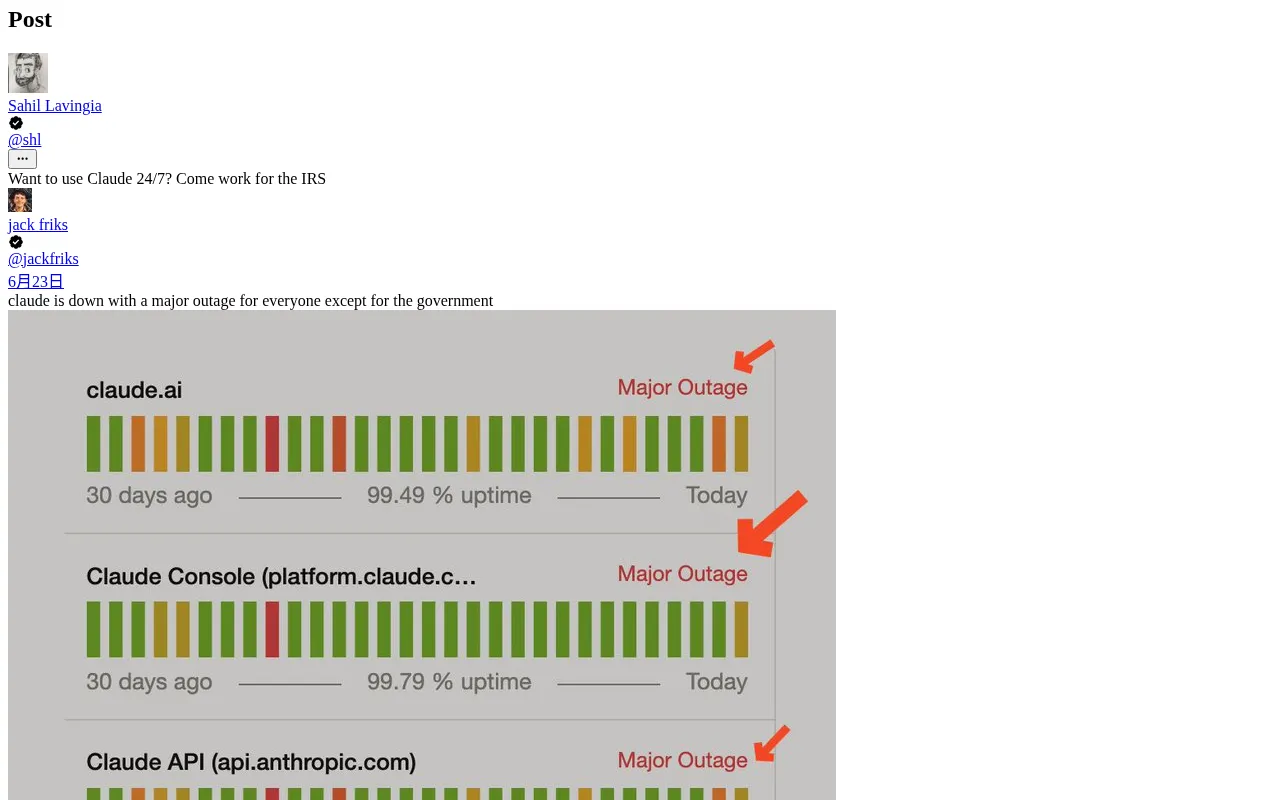
IRS Fully Embraces Claude AI, Accelerating Federal Government's AI Adoption
The IRS is recruiting staff with 24/7 Claude AI access, marking Anthropic's breakthrough into the federal government. Explore the strategic implications and tax use cases.
 Industry Insights
The IRS Mobile App Debate: A Trust Crisis in Government Digital Transformation
The IRS's proposed mobile app has sparked heated debate. This article analyzes the core arguments, exploring data security, privacy, and the trust crisis in government digital transformation.