All-New smart #2 Launched: Starting at 99,900 RMB — the Inventor of the Two-Seater Reinvents the Legend

smart launches the two-seat pure-electric #2, with a limited-time benefit price starting at 99,900 RMB, highlighting a dedicated architecture and luxury experience.
The all-new smart #2 is officially launched with a limited-time benefit price starting at 99,900 RMB, positioned by the brand as "the king of three-meter-class cars." The article outlines its core selling points: the world's first mass-production pure-electric architecture custom-built for a two-seater after seven years of development, emphasizing that it is not shrunk from an existing platform; an exterior centered on haute-couture design and street-art character; claims of being the world's safest and best-driving, most agile three-meter-class car; and a configuration philosophy emphasizing the emotional value of sound and light. The article also notes that several "most" claims lack third-party crash and handling data support, and whether the aggressive 99,900 benefit pricing can hold depends on real-world word of mouth after delivery and the product's strength after the benefit period ends.
The inventor of the two-seater, smart, has once again answered the ultimate question of urban mobility with an all-new product. The all-new smart #2 is officially launched, with a limited-time benefit price starting at 99,900 RMB, and the brand positions it as "the king of three-meter-class cars." From design to architecture, from safety to experience, this car carries smart's renewed understanding of "small-car luxury."
Seven Years in the Making: A Dedicated Pure-Electric Architecture for a Two-Seater
smart officially revealed that the development of the all-new #2 took seven years, during which it went through countless rounds of design discussions, overhauls, and refinement. What finally came to life is "the world's first mass-production pure-electric architecture custom-built for a two-seater." This architecture was not shrunk down from an existing platform; rather, it was designed from scratch around the dimensions, weight distribution, and use cases of a two-seat small car.
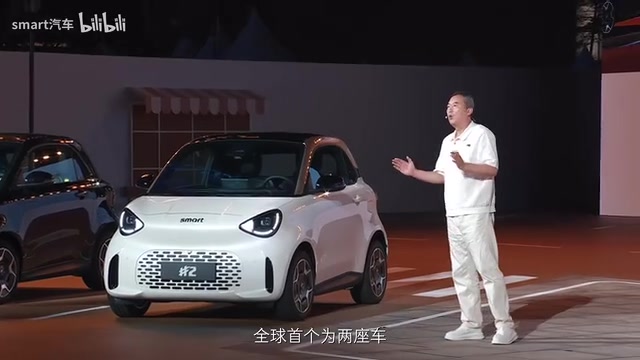
Against an industry backdrop where "one platform, many models" is the norm, smart chose to develop a separate architecture for a two-seater—clearly a higher-cost path. The official explanation is that "smart doesn't do rushed cars"—it doesn't chase rapid product launches but instead spends time on refinement. Whether this strategy holds up ultimately depends on whether the product's strengths can support the claim of being "the benchmark for the three-meter-class new-car experience."
A pure-electric architecture (BEV architecture) refers to a whole-vehicle platform redesigned around the battery, motor, and electronic control three-electric system. Unlike "oil-to-electric" conversions of traditional combustion-car platforms, it determines from the ground up the wheelbase layout, battery pack placement, body rigidity transmission paths, and weight distribution. A custom architecture for a single model means R&D and tooling costs cannot be spread across multiple models, significantly raising per-unit amortization—but it allows optimization of the crash energy-absorption zone, floor height, and turning radius for a specific size. This is exactly why smart emphasizes that it is "not shrunk from an existing platform."
Design: Like a Premium Piece of Street Art
The exterior is the most immediate selling point of the all-new #2. The brand describes it as "the world's most fashionable and best-looking small car, bar none," and the haute-couture edition design is described as "like a premium piece of street art," fitting perfectly with some users' aesthetic expectations for a refined small car.
One user who chose this model said smart has already become part of his life and work. Such brand loyalty is uncommon in the small-car category, showing that smart's design language has indeed established recognizability. The brand emphasizes that "what is within reach of the treetops is luxury," meaning luxury should not be limited by size—creating a premium feel within a limited body is the design core of this car.
Safety and Handling: A Double Benchmark in the Three-Meter Class
Small cars are often questioned on safety, and smart's response is that it has "completed a safety evolution across the entire system." The brand claims the all-new #2 is "the world's safest small car in the three-meter class" and also "the world's best-driving and most agile small car in the three-meter class."
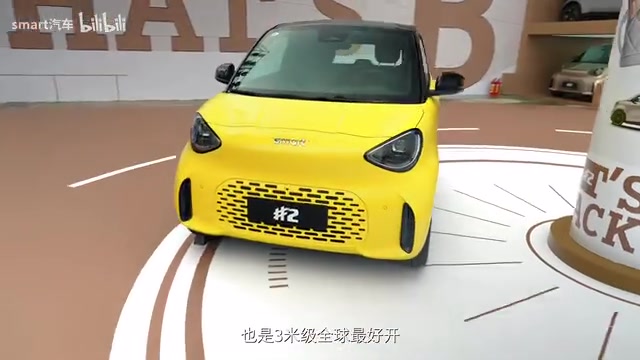
The agility brought by a three-meter-class body is a natural advantage—urban commuting, U-turns on narrow roads, and parking are all easier. But the two "most" claims—"safest" and "best-driving"—need real testing to verify. What the brand has provided so far are goal-oriented statements; specific crash results and handling data have not yet appeared in the materials.

Small-car safety is constrained by physical dimensions: a short front crumple zone and light curb weight mean a greater momentum difference in collisions with other vehicles, which in turn places higher demands on body structural strength and the load-transmission paths of the white body. The industry typically uses third-party crash test results such as C-NCAP and Euro NCAP as objective yardsticks, covering frontal offset, side pole, and pedestrian protection tests. Without such public results, "safest" can only be regarded as an engineering goal, not a verifiable conclusion.
Emotional Value: Sound and Light Are Also Luxury
In its configuration philosophy, the all-new #2 emphasizes that "sound and light are both emotional value." This means sensory experiences such as ambient lighting and the audio system are elevated to the same level as mechanical qualities. For a two-seat small car, users often do not treat it as their only vehicle but as a refined urban runabout, so emotional value indeed carries more weight.
Price and Market Positioning
The all-new smart #2 Premium luxury edition has a real-world benefit price of 99,900 RMB. This price falls under the 100,000 RMB threshold, and together with the "limited-time benefit" setup, it is clearly intended to lower the barrier to trying something new. The brand defines this car as "the king of three-meter-class cars in the new-energy era," continuing and surpassing the legend of the two-seater.
From a product-logic perspective, smart is betting that in the two-seat pure-electric small-car niche, users are willing to pay a premium for design, safety, and brand character. Whether the 99,900 benefit price can make this bet pay off depends on real-world word of mouth after delivery.
"Limited-time benefit price" is a common pricing tactic for new-energy vehicles: promoting at a price below the regular MSRP during a specific period, which both creates urgency and lowers the barrier to trying the product, while leaving room to later restore the price or launch a lower-spec version. For consumers, it is necessary to distinguish the benefit price from the official selling price, and to check whether the benefit comes with financing plans or trade-in conditions, because these will materially affect the on-road cost and resale value.
Editorial View
The biggest differentiation of the smart #2 lies in its "dedicated architecture" and the brand narrative of being "the inventor of the two-seater." A seven-year development cycle seems unusual in the fast-paced new-energy market, but it could also serve as a quality endorsement. What needs to be viewed calmly is that several "most" claims in the official promotion currently lack third-party data support, and safety and handling performance remain to be verified. The 99,900 benefit price is an aggressive starting point; the real test is whether the product itself can still hold this price band after the limited-time benefit ends.
Related articles

Watching Movies in the Terminal: Building an SSH Streaming Service with Codex Multi-Agent Workflow
A creator uses Codex multi-agent workflow to build an SSH-accessible streaming service in the terminal, with planning, cloud async dev, AI-drawn scenes, and synced live channels.

AI Face Licensing: A New Micro-Drama Trend or a Hollywood Trap?
Actors are licensing their faces to micro-drama startups for AI digital doubles to perform. Popular in China, the model raises concerns in Hollywood over lost control and diluted bargaining power.
Amazon's First Digital Photo Frame Is 50% Off for Black Friday: Is the Alexa Frame Worth Buying?
Amazon's first digital photo frame, the Alexa Photo Frame, is nearly 50% off for Black Friday, with prices starting at $114. We analyze why this new product dropped in price just one month after launch, its positioning, who it's for, and buying advice.