AlsonAI Review: An AI Tool That Turns Bedtime Stories into Animated Shorts with One Click

AlsonAI turns original children's stories into illustrated books and animated shorts via Gemini Omni pipeline.
AlsonAI Studio for Animated Shorts leverages Google's Gemini Omni multimodal model to convert original children's stories into illustrated picture books and then into animated shorts. Supporting multiple output formats including book trailers, read-aloud videos, and YouTube Shorts, it targets parents, teachers, and indie creators with a complete text-to-video AI workflow that addresses character consistency and narrative coherence challenges in the children's content space.
From Picture Books to Animation: How AlsonAI Is Redefining Children's Content Creation
Children's content creation is undergoing a transformation driven by generative AI. AlsonAI Studio for Animated Shorts, recently launched on Product Hunt, offers an imaginative new direction: converting original stories into illustrated picture books, then further generating animated shorts. Users no longer need professional drawing or video production skills—all they need is a story idea to complete the entire creation chain from text to video.
The product currently has 24 upvotes and 3 comments on Product Hunt, ranking 20th, categorized under Kids, Artificial Intelligence, and Animation, built by creator Nafisa M. Product Hunt is one of the world's most influential new product launch platforms, with dozens of new products competing for daily rankings. Top 5 products typically receive hundreds to thousands of votes. While AlsonAI's voting numbers aren't yet impressive, its product concept deserves attention—it represents the trend of AI content tools moving from "single-point generation" toward "complete workflows."
Between 2023 and 2024, AI creation tools underwent a notable shift from single-function tools to workflow integration. Early AI tools each addressed one link in the creation chain—Midjourney focused on image generation, ElevenLabs on voice synthesis—requiring users to manually bridge multiple tools. The new generation of products like Gamma (from outlines to presentations) and Descript (from recordings to finished podcasts) began covering complete creative pipelines. Once the technical barriers of single-point generation were leveled by large models, the real product value shifted to workflow orchestration, context preservation, and multi-step coordination. AlsonAI's "story → picture book → animation" pipeline is a concrete manifestation of this trend in the children's content space.
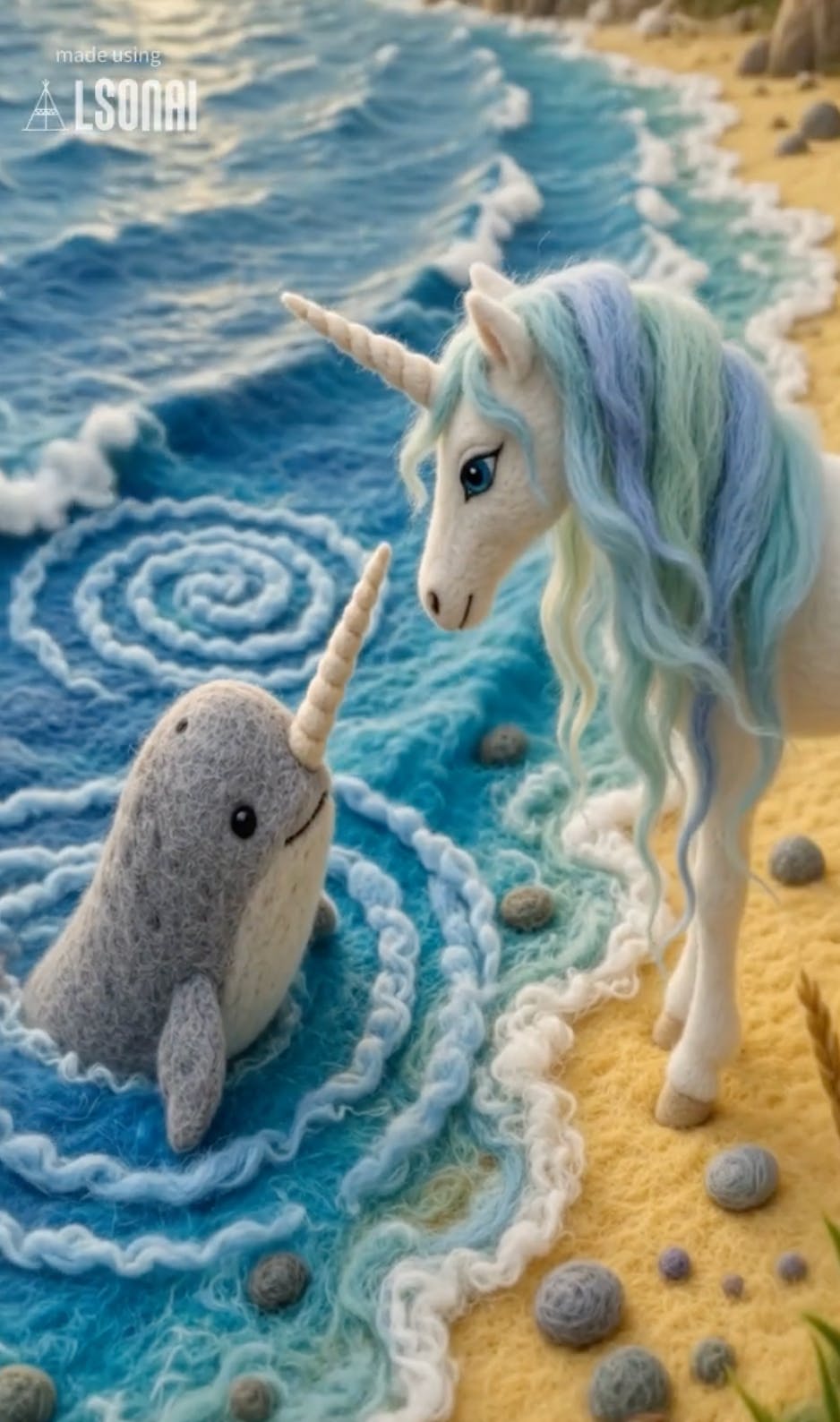
AlsonAI Core Feature: Gemini Omni-Powered Video Generation Pipeline
AlsonAI's most significant update is the introduction of a video generation pipeline based on Gemini Omni. Gemini Omni is the latest member of the multimodal large model family from Google DeepMind, capable of simultaneously processing text, images, audio, and video. Unlike the earlier Gemini Pro and Ultra versions, the Omni version particularly strengthens cross-modal generation capabilities, enabling it to generate output in one modality based on understanding input from another. In video generation scenarios, Gemini Omni can generate temporally coherent video clips based on text descriptions and reference images—a capability crucial for AlsonAI's use case, as the model needs to not only understand the semantics of story text but also "activate" characters from static illustrations into dynamic footage while maintaining visual style consistency.
Previously, AlsonAI was positioned primarily as a tool to "turn original stories into illustrated books," but this upgrade brings static picture book characters to life—evolving from flat illustrations into cinematic dynamic scenes.
One Story, Multiple Output Formats
According to official descriptions, creators can output the same story content in multiple forms:
- Cinematic scenes: Present book characters with compelling camera work
- Book trailers: Create promotional clips for picture book works
- Read-aloud videos: Suitable for parent-child reading or early education scenarios
- YouTube Shorts and Reels: Directly adapted to vertical video platform formats
- Classroom showcases: Content materials for educational settings
This "create once, distribute everywhere" capability directly addresses a current pain point for content creators. For independent picture book authors, early education content producers, or teachers, turning one story simultaneously into a book, trailer, and short video often means redundant work, and AlsonAI aims to link these steps together through a unified AI pipeline.
How AlsonAI Differentiates from General AI Video Tools
The AI video generation space is fiercely competitive, with Runway, Pika, Sora, and other general-purpose tools all vying for the creator market. AlsonAI's differentiation lies in not building a broad general-purpose video tool, but instead focusing on the vertical niche of "children's stories."
The global children's digital content market is expected to reach approximately $12 billion by 2025, with educational apps and original animation being the fastest-growing segments. Traditional children's animation production costs are extremely high—one minute of 2D animation typically costs between $5,000 and $15,000—which locks out many independent creators and small to medium educational institutions from content production. Meanwhile, platforms like YouTube Kids and Bilibili's children's channel have continuously growing demand for quality children's short videos, creating a clear supply-demand gap. AI tools are changing this landscape, but the special requirements of children's content (COPPA compliance, no violent or inappropriate elements, narratives that match cognitive development stages) also impose stricter requirements on AI generation tools compared to general scenarios.
From "Tool" to "Complete Narrative Workflow"
General-purpose video generation tools typically start from a prompt or reference image to generate isolated video clips. AlsonAI's logic is "story first, then picture book, then final video"—it preserves character consistency and narrative coherence, which is particularly important in children's content creation. Children love seeing the same characters repeatedly, making character image stability the key to whether picture book and animation IPs can sustain themselves.
By first building an illustrated book and then generating animation based on the book's characters, AlsonAI addresses the common AI video problem of "character drift" to a certain degree. Character Drift is one of the most challenging technical issues in current AI video generation—because diffusion models involve random sampling in the generation process of each frame, the same character may exhibit facial feature changes, clothing color shifts, or body proportion distortions across different frames or segments. While Runway Gen-3, Pika 1.5, and other tools have introduced reference image anchoring mechanisms, they still struggle to completely avoid drift in long-sequence generation. AlsonAI's strategy is to establish complete character settings in advance (locking down visual features from the picture book illustration stage), then feed these features as strong constraints into the video generation pipeline, solving the consistency problem at the architectural level rather than through post-processing, allowing the same protagonist to maintain a consistent visual appearance across scenes and media.
Who Is AlsonAI For? Potential Value and Use Cases
For early education, parenting, and educational markets, tools like AlsonAI lower the barrier to original content production. A parent or teacher without artistic skills can potentially create their own picture books and animated shorts for bedtime stories, classroom teaching, or social media sharing.
However, as a product still in its early stages, it also faces several issues worth watching:
- Visual quality and consistency: Whether the Gemini Omni pipeline can reliably output high-quality, stylistically unified animation in practice still requires real-world testing. The stability of multimodal models in handling long-sequence narratives remains an open problem in the industry
- Content safety: AI content targeting children has extremely high safety and age-appropriateness requirements—a double-edged sword of vertical positioning. The U.S. COPPA (Children's Online Privacy Protection Act) and similar regulations in other countries impose strict compliance requirements on children's content. How AI-generated content ensures no inappropriate elements appear requires safeguards at both the model and review levels
- Business model: How to price the complete chain from picture books to animation, and whether a sustainable creator ecosystem can form, remains unclear. Referencing similar creator tools, subscription models (monthly fees unlocking generation credits) and usage-based pricing (charged by video duration) are two common approaches, but the willingness and ability of children's content creators to pay requires further validation
Conclusion: The Future Direction of AI Children's Content Creation
AlsonAI Studio for Animated Shorts offers a clear product vision: AI isn't just a tool for generating isolated assets—it can become an assistant that spans the entire creative workflow. From bedtime stories to animated shorts, it returns the creative imagination space to ordinary people. In the rapidly iterating world of generative AI, products that focus on vertical scenarios and emphasize complete workflows may reach real user needs more effectively than general-purpose large models.
Notably, the direction AlsonAI represents is not an isolated case. From Canva integrating AI across its design workflow, to Adobe Firefly connecting creative workflows, to AlsonAI's exploration in children's content, the industry is forming a consensus: the competitive focus of next-generation AI creation tools isn't about the quality ceiling of a single generation, but about whether they can provide end-to-end, contextually coherent creative experiences for specific user groups. For the children's content space—a track with both educational value and commercial potential—this exploration has only just begun.
Related articles

A Single Pixel Shift Can Fool AI? A Deep Dive into Shift Invariance
Why can shifting an image by just one pixel cause AI recognition errors? This article explains the math behind CNN's lack of shift invariance and how BlurPool fixes it.

198K GitHub Stars in Two Weeks: What Do Stars Actually Measure?
An open-source project gained 198K GitHub Stars in two weeks without a single stable release. What do stars really measure? A practical 20-second framework to assess viral project maturity.

Spring Boot + Next.js Full-Stack in Practice: A Complete Guide to Building an AI-Powered Image App
Build a Google Photos clone with Spring Boot, Next.js, and ImageKit AI image processing. A free, open-source full-stack project you can complete in one weekend.