Altar II Mechanical Keyboard Review: Is This Apple-Style Ultra-Thin Mechanical Keyboard Worth the Hype?
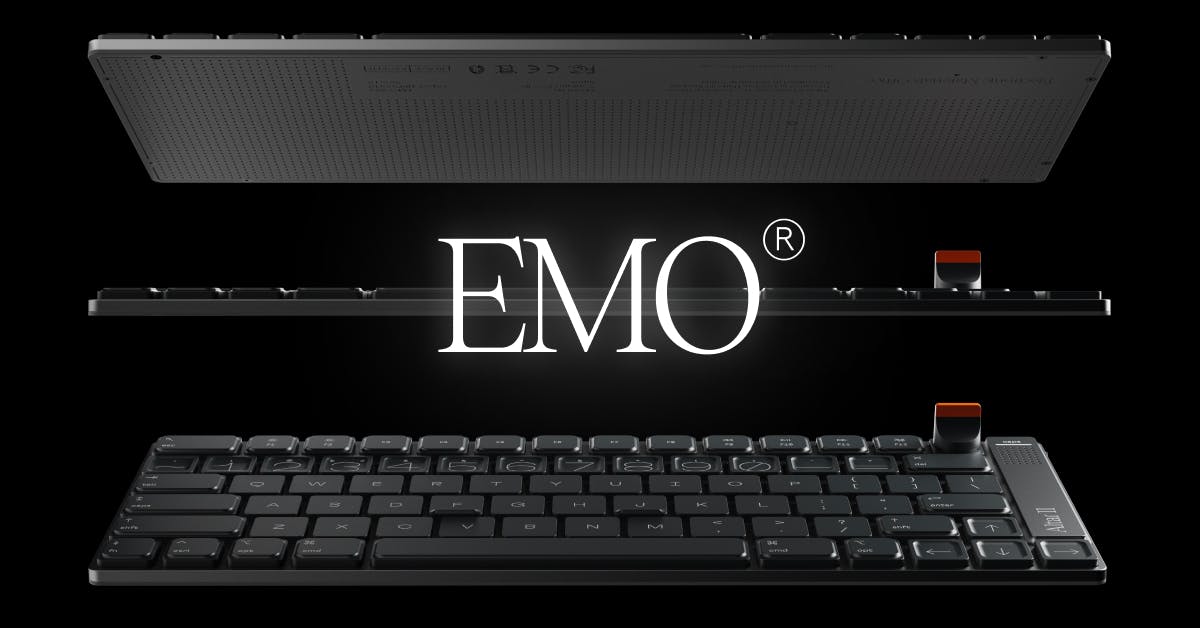
Altar II aims to be the ultra-thin mechanical keyboard Apple never made — here's our deep dive.
Altar II is a new mechanical keyboard launched on Product Hunt with the bold tagline "The mechanical keyboard Apple never made." It combines Apple-style ultra-thin aesthetics with full mechanical switches, targeting a gap no major brand has filled. This article examines its design philosophy, the technical challenges of ultra-thin mechanical keyboards, and its positioning in the booming custom keyboard market.
An Apple-Style Mechanical Keyboard: What Is Altar II?
In the highly specialized world of mechanical keyboards, a product called Altar II recently launched on Product Hunt. With the ambitious tagline "The mechanical keyboard Apple never made," it quickly captured the community's attention. After launch, it earned 87 upvotes and ranked 8th on the daily leaderboard, categorized under Custom Keyboards and Hardware. It was created by Andrew Emerson.
This tagline is no accident. Apple has always adhered to a sleek, minimalist design philosophy for its peripherals, but its own Magic Keyboard uses scissor or butterfly switch mechanisms — the company has never released a true mechanical keyboard. In fact, Apple's keyboard evolution has been quite a saga: the Scissor Mechanism uses two interlocking plastic supports to stabilize key presses with roughly 1mm of travel, a mature solution Apple relied on for years. In 2015, Apple aggressively introduced the Butterfly Mechanism on MacBooks, compressing key travel to about 0.5mm in pursuit of ultimate thinness — only to trigger widespread reliability complaints. Sticky keys, repeated inputs, and other issues plagued millions of users. By 2020, Apple fully reverted to an improved scissor mechanism. This history powerfully illustrates that even an engineering powerhouse like Apple couldn't find the perfect balance between thinness and a satisfying typing experience. Altar II targets precisely this market gap, attempting to bridge the divide between mechanical keyboard enthusiasts and minimalist aesthetics using Apple's design language.
How Do You Achieve Both Ultra-Thin Design and Mechanical Feel?
Altar II's core selling point is striking a balance between being "shockingly thin" and "fully mechanical." Conventionally, these two goals are seen as contradictory — mechanical keyboards need to house complete switch mechanisms, making them inherently thick and solid but also bulky. Keyboards that prioritize thinness (like laptop keyboards or Apple's Magic Keyboard) typically sacrifice the travel and tactile feedback of mechanical switches.
The Technical Challenges of Ultra-Thin Mechanical Keyboards
Switch height is the critical factor determining keyboard thickness. A standard Cherry MX switch has a total height of approximately 18.5mm. Its complete structure includes the top housing, spring, cross-shaped stem, and bottom housing, delivering 2mm of actuation travel and 4mm of total travel — it's these precision mechanical components that give mechanical keyboards their signature tactile bump and bounce-back. Even low-profile switch designs require at least 11mm of vertical space.
In recent years, the industry has made significant progress in low-profile switch technology: Cherry MX Low Profile reduces the total height to 11.9mm; the Kailh Choc series compresses it further to about 11mm, with the Choc V2 variant even achieving compatibility with some standard keycaps; and Gateron's KS-33 low-profile switch brings the height down to roughly 9mm. More cutting-edge exploration includes Hall Effect Switch technology — this approach uses Hall effect sensors to detect magnet displacement for triggering signals, eliminating the need for traditional metal contact structures. In theory, this allows for even thinner profiles while also supporting advanced features like fully customizable actuation points across all keys.
To achieve a "shockingly thin" profile while retaining a genuine mechanical actuation mechanism, Altar II likely employs a custom low-profile switch design or an entirely new structural approach. These engineering trade-offs determine whether a keyboard can deliver both aesthetics and typing feel.
For users who have long worked within the Apple ecosystem, a peripheral that visually harmonizes with Mac devices while providing mechanical keyboard typing feedback holds a uniquely compelling appeal. Altar II aims to prove that elegant industrial design and outstanding typing experience are not mutually exclusive.
The Custom Mechanical Keyboard Market Continues to Heat Up
Altar II's emergence also reflects the ongoing growth of the custom mechanical keyboard market. From its origins as a niche hobby for tech enthusiasts, the segment has evolved into a complete ecosystem spanning switches, keycaps, and cases — transforming custom keyboards from "functional tools" into vehicles for "personal expression."
This ecosystem is now highly mature with clearly defined roles: upstream are switch manufacturers (Cherry, Gateron, Kailh, etc.); midstream includes keycap producers (such as GMK and ePBT, offering premium PBT/ABS double-shot keycap sets where a popular colorway can cost $100–$200) and case design studios (typically using CNC-machined aluminum alloy, with individual cases costing hundreds of dollars). The distribution model is also distinctive — many products operate through Group Buys, where users pay months or even a year in advance, waiting for design, tooling, and mass production to complete before shipping. This model effectively lowers financial pressure and inventory risk for independent creators, though it also introduces the risk of delivery delays. In recent years, the success of brands like Keychron and HHKB has demonstrated that custom keyboards are expanding from a pure enthusiast niche toward broader productivity-focused users. Industry estimates put the annual market size at over $1 billion.
A Design-Driven Product Philosophy
Unlike mainstream peripherals that compete on specs and feature stacking, Altar II follows a design-driven approach. Its positioning isn't about being "the most powerful" but rather "the most harmonious and elegant." This product philosophy resonates particularly well with Apple's user base — a group that exhibits a distinctive "design consistency preference." When choosing third-party accessories, these users place significantly greater emphasis on color matching (Space Gray, Silver), material quality (anodized aluminum), and design language unity compared to users on other platforms. This mindset is rooted in the highly unified experience Apple has cultivated over the years — from hardware to software to accessories. This also explains why peripheral brands like Satechi and the Logitech MX series, which emphasize "Apple-style" aesthetics, can command noticeable price premiums over comparable products. By making "design harmony" rather than "performance specs" its core selling point, Altar II is essentially selling a complete desktop aesthetic experience.
Judging by its 87 upvotes and 8th-place finish on Product Hunt, Altar II has already earned positive early community recognition. It's worth noting that Product Hunt, as a major tech product launch platform, holds special significance for hardware products: unlike software that users can try instantly, hardware products face a longer conversion path from "generating interest" to "actual purchase," requiring users to navigate price, shipping, and after-sales considerations. 87 votes is a respectable performance in the hardware category, though the comment count of just 3 reflects a typical characteristic of hardware product community engagement — users need hands-on experience before they can provide in-depth feedback. Historically, successful hardware brands like Teenage Engineering and Nothing Phone have leveraged Product Hunt for initial exposure, using it as a springboard from niche design circles to the mainstream market. For Altar II, it's still in the early exposure stage and hasn't yet generated large-scale discussion. As a hardware product with design as its core selling point, the real test lies ahead — in post-production build quality, actual typing feel, and pricing.
Conclusion: Can Altar II Deliver an Apple-Level Experience?
Altar II's value proposition is clear and bold: to offer a previously nonexistent option for users who crave mechanical feel but love Apple-style minimalist design. Its tagline "The mechanical keyboard Apple never made" is both a marketing hook and a precise summary of its product positioning.
However, as a niche hardware product from an independent creator, it still needs to prove itself over time in engineering execution, supply chain management, and user reputation. Balancing thinness with mechanical feel sounds simple, but execution involves countless trade-offs in the details — from switch selection to PCB layout, from case tolerances to dampening structures, every engineering decision impacts the final experience within millimeter-level constraints. Whether Altar II can truly deliver on its promise of "Apple-level" design and experience is worth continued attention. For mechanical keyboard enthusiasts and Apple ecosystem users alike, this is at least a refreshingly innovative attempt.
Key Takeaways
Related articles
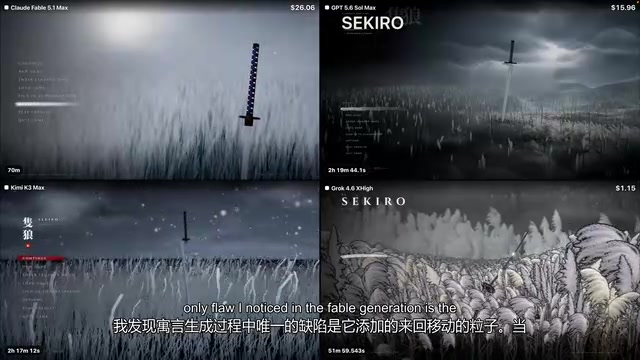
Fable 5.1 Hands-On: AI One-Click 3D Game Scene Generation Crushes GPT and Grok
Hands-on comparison of Fable 5.1, GPT-5.6 Sol, Grok 4.6, and Kimi K3 in 3D game scene generation — from Gothic architecture to Sekiro menus, analyzing real gaps in detail fidelity, speed, and interaction.
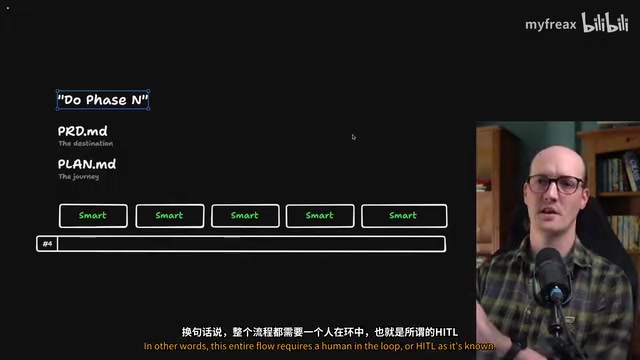
AFK Agent: Let AI Code Autonomously While You're Away From the Keyboard
Explore how AFK Agent mode elevates AI coding from Human-In-The-Loop to autonomous unattended execution through multi-phase plan decomposition and automation loops.
Free Data Science Learning Resources Guide: An Efficient Path to Getting Started on Zero Budget
How to learn data science on a tight budget? This guide covers free resources like Kaggle Learn, freeCodeCamp, and Fast.ai with a complete self-study roadmap from Python basics to machine learning.