Amazon's New Fire TV Stick 4K: The Remote Is the Real Story

The new Fire TV Stick 4K is thinner and faster, but the redesigned remote steals the show.
Amazon's new Fire TV Stick 4K delivers a slimmer design and improved processing speed, resulting in faster app loads and smoother navigation. But the headline upgrade isn't the stick itself — it's a redesigned remote optimized for low-light use, addressing the all-too-familiar struggle of fumbling with buttons in a dark room. This approach reflects a broader trend in mature hardware markets: as core performance gaps close, manufacturers shift focus to the interaction details that quietly define everyday satisfaction.
Amazon's new Fire TV Stick 4K brings hardware upgrades — a slimmer body and smoother performance. But the most compelling improvement might not be the streaming stick itself. It's the accessory you hold in your hand every single day: a redesigned remote that's easier to use than ever.
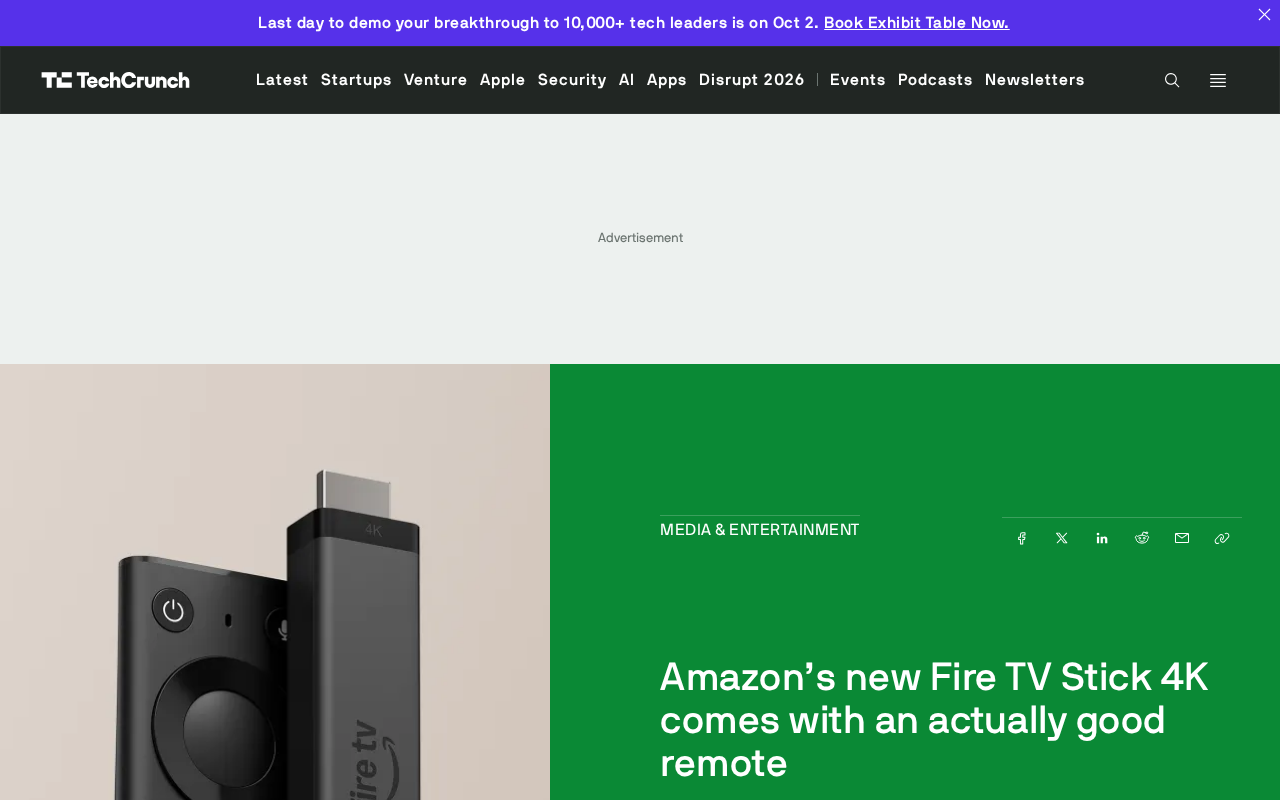
Slimmer Body, Faster Performance
The new Fire TV Stick 4K follows Amazon's familiar iteration playbook: make it smaller, make it faster. The slimmer profile makes it easier to tuck behind a TV's HDMI port, while the improved processing speed directly addresses one of the most common complaints about streaming sticks — the lag when loading apps or switching between menus.
For most users, the core experience of a streaming stick isn't about benchmark scores. It's about how quickly things respond when you just want to watch something. If the performance boost translates into shorter wait times and smoother scrolling, that's a genuine quality-of-life improvement.
The Fire TV Stick 4K plugs directly into an HDMI port and draws power from the TV's USB port or a separate adapter — no set-top box required. The new model features a more powerful processor and supports 4K Ultra HD, HDR10, HDR10+, and Dolby Vision, covering all the major high dynamic range formats and making full use of modern 4K displays. The slimmer design is especially useful when HDMI ports are closely spaced on the back of a TV, where a bulkier stick could block adjacent ports.
The Remote Is the Real Upgrade
This time around, Amazon put its focus on something that often gets overlooked: the remote. The company has called it the most noteworthy part of this update — because it's the thing users actually touch every day.
The redesigned remote is built around ease of use, with one key improvement targeting dark environments. Watching TV typically happens in a dimmed or completely dark room, where a traditional remote's crowded, undifferentiated buttons become a frustrating exercise in guesswork. Optimizing button layout and tactile feedback for low-light use is a small change on paper, but it speaks directly to how people actually use the product.
This "make the accessory the star" approach reflects a broader trend in mature hardware categories: once core performance reaches good enough, competition shifts toward the interaction details that determine everyday satisfaction.
The Details That Build Long-Term Loyalty
The streaming stick market is already highly commoditized. Most devices are roughly comparable in supported resolutions, codec formats, and app ecosystems. In that environment, what makes users still feel good about a product months or years later is often things like remote ergonomics and interface responsiveness — qualities that never show up on a spec sheet.
Amazon's decision to lead with a "genuinely better" remote as its key selling point shows it understands this. It's a reminder that hardware value isn't just about specifications — it's about how every small interaction between a person and a device actually feels.
Note: The information above is based on publicly available reporting. For official specifications and feature availability, refer to Amazon's official announcements.
The main competitors in the streaming stick market include the Google Chromecast with Google TV, Roku Streaming Stick, and Apple TV (which targets a higher-end segment). Hardware specs across these products have largely converged, with differentiation coming more from OS ecosystems, content recommendation algorithms, and accessory experience. The Fire TV lineup is deeply integrated with Amazon Prime Video and the Alexa voice assistant, while also supporting third-party platforms like Netflix and Disney+. In this context, the feel and usability of the remote is one of the few dimensions where a meaningful, perceptible difference can still be made.
Related articles

Cursor Can Now Control Your Computer: AI Agents Can Drive Desktop Apps for Testing
Cursor adds desktop control: AI agents can drive desktop apps like the iOS Simulator to test their own features. We analyze the impact on dev workflows, possible technical approaches, and reliability concerns.

Vibecoding a Custom Inference Engine: High Hopes, Harsh Reality
A Reddit developer shares the real experience of vibecoding a custom inference engine: running GGUF Q4 models in the browser with WebGL2 and GLSL, only to fall into tokenizer debugging hell. This article analyzes the engineering challenges of browser-side LLM inference and why cloning llama.cpp is the more rational choice.

How High Are Anthropic's Early Investor Paper Returns Ahead of IPO?
Anthropic's early investor paper returns draw attention ahead of IPO. This article analyzes sources of book gains, capital structure, pre-IPO games and risks, and implications for the AI startup ecosystem.