An Open-Source Local AI Platform Debuts on Show HN: A New Option for Data Sovereignty

An open-source local AI platform hits Show HN, promising data sovereignty and cost control, but still needs community validation.
A developer has posted an open-source, locally runnable full AI platform on Hacker News, aiming to integrate model inference, a chat interface, and knowledge base management into one cohesive workflow tool. Its core value lies in data sovereignty — letting sensitive industries avoid cloud API compliance risks — along with long-term cost control free from vendor pricing changes. The project fits the maturing local AI ecosystem driven by tools like Ollama and LM Studio, with quantization making large models viable on consumer hardware. However, it remains at a very early stage with minimal community engagement and limited technical transparency, requiring further validation before its sustainability can be assessed.
An Open-Source AI Platform Built for Local Deployment
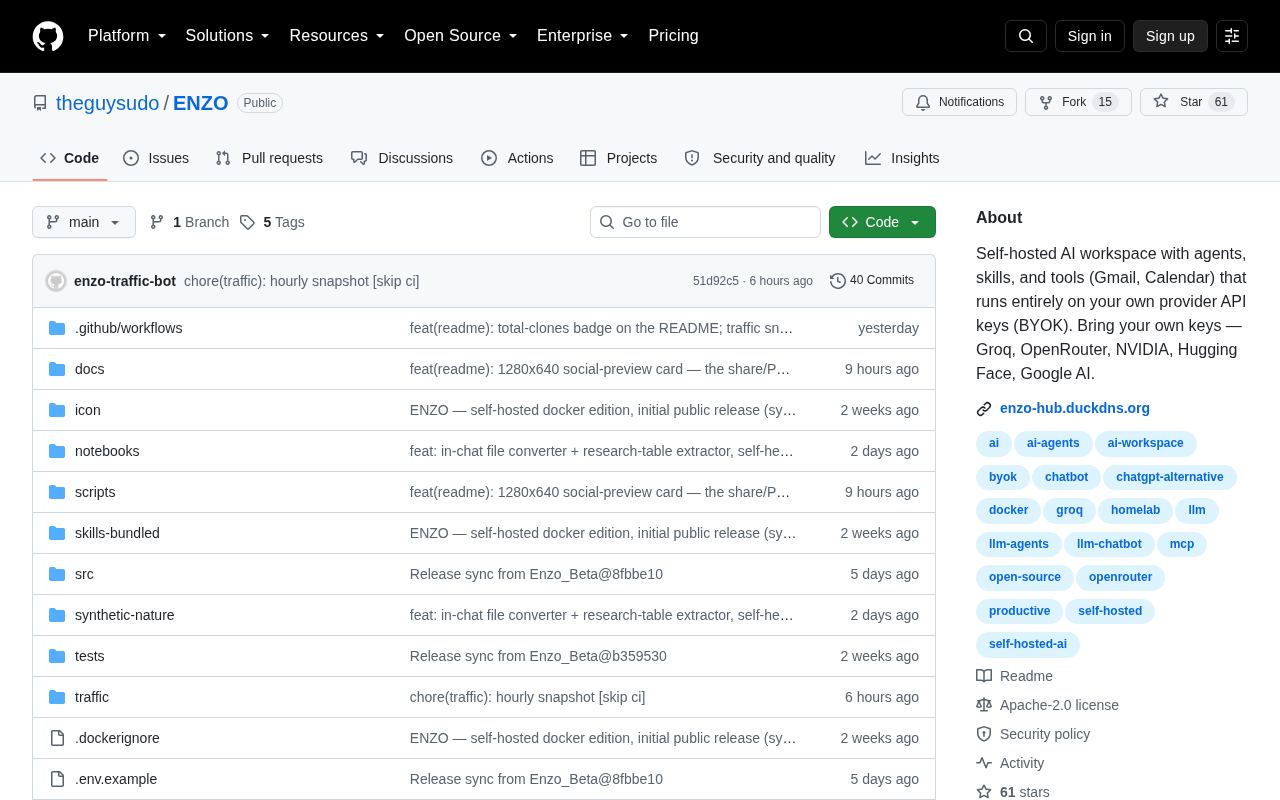
Recently, a developer posted their project on the Show HN section of Hacker News: a fully open-source, locally runnable AI platform (full fledged AI platform). While the post itself was light on details — garnering only 3 upvotes and 1 comment at the time of publication — it reflects a growing trend in the AI tooling ecosystem: bringing AI capabilities off the cloud and back onto users' own machines.
The phrase "full fledged" signals that the author's goal isn't a single-purpose script or demo, but a relatively complete platform. Based on similar projects in this space, these platforms typically integrate model inference, a chat interface, knowledge base management, and plugin or tool-calling modules — allowing users to build their own AI workflows without stitching together multiple separate tools.
Why "Locally Usable" Is the Key Phrase
The most notable tags on this project are "locally usable" and "open source." Together, these two qualities directly address concerns that many developers and organizations have about cloud-based AI services.
Data Sovereignty and Privacy
Keeping models and data on-premises offers the most immediate benefit of privacy and data sovereignty. For teams handling sensitive information — in legal, medical, or financial sectors, for example — sending data to a third-party API always carries compliance risk. Local deployment means data never leaves the internal network, fundamentally eliminating this class of problem.
"Data sovereignty" carries specific legal meaning in compliance contexts. The EU's General Data Protection Regulation (GDPR) imposes strict conditions on the processing and transfer of personal data, and sending data to overseas third-party providers may trigger cross-border transfer compliance requirements. China's Data Security Law and Personal Information Protection Law similarly restrict data exports. In healthcare, the U.S. HIPAA regulation explicitly requires that processing of Protected Health Information (PHI) be covered by a Business Associate Agreement (BAA) — which many cloud AI providers do not offer by default. Local deployment eliminates the possibility of data leaving your infrastructure at the architectural level, making compliance much simpler to demonstrate: there's no need to audit third-party security credentials, as the entire data chain stays within your own infrastructure.
Cost and Control
Cloud-based LLM APIs charge per call, and costs can accumulate quickly in high-frequency use cases. Local solutions require upfront hardware investment, but the marginal cost of long-term operation is lower — and you're insulated from rate limiting, price increases, or policy changes by the service provider. Open-source licensing further guarantees that users can freely modify, audit, and build on the platform, avoiding vendor lock-in.
The Broader Ecosystem of Open-Source Local AI
This Show HN project isn't an isolated phenomenon. In recent years, the local AI ecosystem has been maturing rapidly — from Ollama and LM Studio to various frontend and orchestration tools built on top of open-source models like Llama, Mistral, and the Qwen series. On the hardware side, rising VRAM capacities in consumer-grade GPUs, combined with advances in quantization, have made it possible to run multi-billion-parameter models on personal computers.
In this context, an open-source "full platform" project that packages model management, a user interface, and extensibility together can significantly lower the barrier to entry for everyday users — and that's its potential advantage over a collection of scattered command-line tools.
Quantization is one of the key enablers that allows large models to run on consumer hardware. The core idea is to compress model weights from high-precision floating-point formats (such as FP32 or FP16) into lower bit-width integer formats (such as INT8 or INT4), dramatically reducing VRAM usage and compute requirements at the cost of a slight loss in precision. Take the popular GGUF format as an example: a 7-billion-parameter model compressed with 4-bit quantization can shrink its VRAM requirement from roughly 14GB down to about 4GB, making it runnable on ordinary consumer GPUs or even in a CPU-only environment. The llama.cpp project has been instrumental in popularizing this technology, and tools like Ollama and LM Studio both use it as their inference backend. It is the maturation of quantization that has transformed "running a 10-billion-parameter model locally" from a lab experiment into an everyday option for ordinary developers.
A Realistic Perspective: The Challenges of Early-Stage Projects
It's worth being candid: this project is at a very early stage. The low engagement on Hacker News (3 points, 1 comment) indicates it has not yet received broad community validation. The original post also lacks critical details about the technical architecture, supported models, performance characteristics, or specific use cases.
For users considering giving it a try, a few core questions are worth investigating: Which underlying models and inference backends does it support? What are the hardware requirements for deployment? Is there active maintenance and documentation? And what specific type of open-source license does it use? These factors will directly determine whether this is a sustainable tool or yet another short-lived weekend project.
Summary
This open-source local AI platform represents a sound direction: making AI capabilities more private, more controllable, and less dependent on large cloud providers. Driven by growing awareness of data privacy and improving open-source model capabilities, local-first AI tools are worth keeping an eye on. That said, based on the information currently available, this project still needs more community feedback and real-world testing to prove its value. Developers who are curious are encouraged to try it out and share their experience with the author — which is exactly the spirit of Show HN.
Related articles

Gemini 4 Argon Hands-On: AI Builds Board Games, Constructs Temples, and Trains Robots Autonomously
Gemini 4 Argon hands-on roundup: AI autonomously builds a desk racetrack and temple in Blender, writes a ray tracing engine, trains a humanoid robot to sink 7 shots, plus API pricing and developer access.

The Magic Octagonal Coin: Why Only 9% of People Can Predict Its Flip?
Only 9% of people can correctly predict the Magic Octagon coin flip. This article explains its spatial rotation mechanism, common cognitive pitfalls, and a new hypothesis based on Relevance Theory, exploring the limits of human spatial reasoning.

Sam Altman: AI Is Entering the Era of Scientific Discovery — Math Breakthroughs Will Replicate in Biology and Energy
Sam Altman says AI is entering the era of scientific discovery — math breakthroughs will replicate in biology, materials science, and energy to help develop new drugs and energy sources.