Analyzing the 'I Play Rocky' Clip: The Producing Gamble Behind a Multi-Million Dollar Budget Negotiation
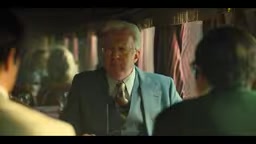
The 'I Play Rocky' clip shows the producing gamble of trading a low budget for casting control in indie film.
The official 'I Play Rocky' clip presents a heated negotiation between a producer and an investor. The producer proposes pushing the production cost below $1 million in exchange for casting control, hoping to cast an unknown actor; the investor rejects it in strong terms, arguing the low budget can't support a boxing movie and questioning the agreement's terms. The name 'Spillane' and the boxing-movie elements allude to the making of *Rocky*. The article argues this conflict reflects the classic paradox of independent producing: lowering the budget can buy greater autonomy, but too low a budget often brings quality risk and investor distrust—and the two sides' differing views on 'taking a gamble' are exactly why many projects die at the financing stage.
Introduction: A Single Conversation That Exposes the Dilemma of Film Financing
The newly released official clip from I Play Rocky on YouTube presents a heated producing negotiation. In the scene, a producer's representative tries to persuade an investor to accept an extremely low-budget proposal, while the other party responds with a barrage of vivid metaphors and threats. Though brief, the exchange distills the core conflicts common in independent film financing: the tug-of-war among budget control, casting rights, and creative risk.
The Budget Chasm: The Huge Gap from $4 Million to $1 Million
The most direct point of conflict in the conversation is the budget figure. The investor states plainly: "You said it would take $4 million to make this movie, then you said $2 million was too little. You can't make this movie for $1 million." The producer's representative, meanwhile, proposes what seems like a clever workaround: if the production cost stays under $1 million, they can control casting.
This proposal is immediately met with fierce opposition. The investor rejects it in highly cinematic language: "I'll cut out your kidney, roast it, and eat it before I let some dead-eyed hack push me around." He also stresses that he won't "throw money at some damn boxing movie." These lines make clear that the two sides hold fundamentally different judgments about the project's risk.
"Our Agreement": How a Low Budget Buys Casting Control
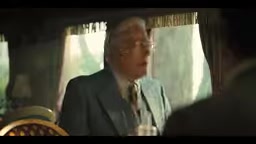
The producer's representative repeatedly invokes "our agreement," trying to win the other side over with contract terms. By his logic, as long as the production cost is pushed below $1 million, they can bypass the investor's influence over casting and hire an unknown actor. He even retorts: "A million isn't a lot of money—why not take a gamble on a nobody?"
The investor, however, is having none of it. He lists his experience dealing with different countries, implying he is no stranger to negotiation, yet he cannot accept striking a deal with "Sylvester Spillane." The name is spelled similarly to the famous actor Sylvester Stallone, and combined with the "boxing movie" context, it is clearly an allusion to the creative background of the Rocky series.
Characters and Background: The Real Shadow Behind a Fictional Clip
Judging from the dialogue, this work is likely centered on the making of Rocky. The investor's contempt when he mentions a "boxing movie" echoes the historical attitude of producers toward the Rocky project in its early days. And the variant name "Spillane," along with the casting discussion about a "nobody," both point to the story of Stallone insisting on playing the lead himself back then.
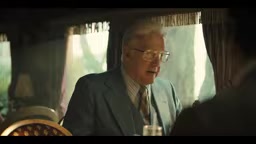
The investor's line "You're out of your mind" is captured as a standalone screenshot, further heightening the dramatic tension of the negotiation's breakdown. Although this is a fictional scene from a film or TV production, the power struggle it reflects between producers and investors is hardly rare in the real film industry.
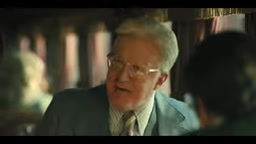
The making of Rocky is itself a legendary case in the history of independent film. Released in 1976, Rocky was written by and starred Sylvester Stallone, with a production cost of only about $1 million. Stallone was an unknown newcomer at the time, and he insisted on playing the lead himself, turning down the producers' proposal to trade a higher budget for a well-known actor. The film ultimately grossed over $225 million worldwide and won the Academy Award for Best Picture. This "low budget + unknown actor" model has since been cited repeatedly, becoming a classic example of the tension between creative control and commercial success in independent producing. The variant name "Spillane" and the boxing-movie elements in the text are direct allusions to this real history.
Industry Lessons: The Paradox of Control in Low-Budget Films
This conversation reveals a classic dilemma in independent producing: lowering the budget can buy greater creative freedom, but an overly low budget often means quality risk and investor distrust. The producer's side hopes to secure casting rights by crossing the "under $1 million" threshold, while the investor believes that budget level simply cannot support the shooting of a boxing movie.
The two sides hold completely different attitudes toward "taking a gamble." The producer's side sees an unknown actor as an opportunity; the investor sees it as uncontrollable risk. This difference in perception is exactly why many film projects die at the financing stage. Although the clip offers no solution, it presents this conflict in full through rapid-fire dialogue.
In the film industry, "casting control" is usually one of the key terms in the negotiation between investors and producers. Investors often hope to use well-known actors to reduce market risk, while producers and directors tend to retain casting freedom to protect their creative vision. Budget-threshold clauses in contracts (such as triggering specific changes in rights when the production cost falls below a certain figure) are not uncommon in independent producing agreements; their essence is to tie the scale of the budget to decision-making power. However, an overly low budget limits the shooting schedule, the scale of sets, and technical conditions—especially for a subject like boxing, which requires action design and professional training. Therefore, whether the strategy of trading a low budget for control can work depends on a comprehensive judgment of the project type, the capabilities of the key creatives, and the market positioning.
Conclusion: A Producing Conversation Worth Savoring
This official clip from I Play Rocky sketches the core conflicts of film financing in less than a minute of dialogue. The tug-of-war over budget figures, the invocation of contract terms, the struggle over casting rights, and the investor's highly personal threats together form a vivid picture of the producing game. For viewers interested in behind-the-scenes filmmaking and independent producing, this conversation offers plenty of room for interpretation.
Related articles
Cyber Monday Early Deals: Tech Offers Worth Watching
Cyber Monday deals start early as Black Friday discounts continue. We outline tech deal trends and shopping strategies to help you buy wisely this season.

Amap World Model Launched, GPT-6 Protein Design Validated
AI daily roundup: Amap launches interactive world model ABot-World 0.5 with audio-visual sync and natural language reshaping; Tencent open-sources HiMT3 translation model covering 102 languages; OpenAI says GPT-6 can design proteins validated in labs; Anthropic and OpenAI internally concerned about models being too powerful; UK NCSC warns of rising AI-driven cyberattacks.
GPT-6 Designs Proteins on Its Own: 35 of 322 Bind, General Model Challenges Specialized Tools
OpenAI's GPT-6 protein design paper: 35 of 322 small proteins bind, all five targets hit. A general model designs backbones and sequences without specialized tools, but structure prediction and experimental validation remain weak spots—the paper lists four limits.