Andrew Ng on Agentic AI: Cutting Through the Hype to Find Real Value in Agent Development
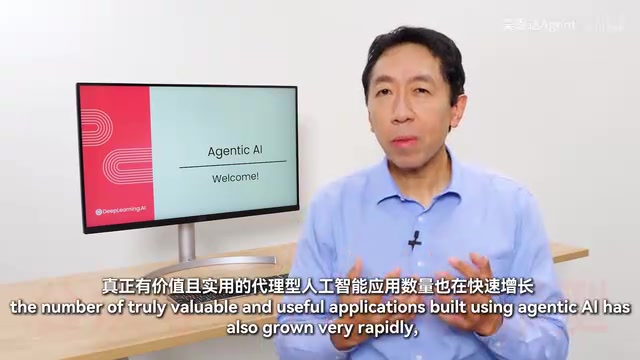
Andrew Ng argues the real edge in Agentic AI comes from evals-driven engineering discipline, not marketing hype.
In his Agentic AI course introduction, Andrew Ng separates hype from genuine value: while "agentic" has been overused by marketers, truly valuable agent applications are rapidly taking hold in customer support, deep research, legal work, and medical diagnosis — and some projects simply cannot exist without agentic workflows. The course's core insight is that what separates expert agent developers from average ones isn't the complexity of their frameworks, but whether they can establish a rigorous, data-driven development process centered on evals and error analysis — the engineering discipline that bridges the gap from "calling an LLM" to "building reliable agent systems."
Agentic AI: From Buzzword to Real Value
At the opening of his new Agentic AI course, Andrew Ng candidly admits that when he first coined the term "agentic" to describe an important and rapidly growing trend in how people build LLM applications, he never anticipated it would be seized upon by marketers as a label to slap on virtually every product. The result has been a dramatic inflation of hype around Agentic AI.
The good news, however, is that if you strip away the marketing noise, the number of genuinely valuable and useful agent applications is also growing quickly — even if not quite as fast as the hype would suggest. This observation sets the tone for the entire course: no hot air, only what actually works in the real world.
Real Problems Agentic Workflows Are Already Solving
Ng walks through the kinds of real tasks that agentic workflows are already handling today: building customer support agents, conducting deep research to produce insightful reports, processing complex legal documents, and analyzing patient inputs to suggest possible medical diagnoses.
He makes a point of emphasizing that across the many teams he leads, there are numerous projects that simply could not exist without agentic workflows. The weight of that statement is significant: agents are no longer just a "nice-to-have" feature — for certain applications, they are a prerequisite for existence. This is precisely why he describes knowing how to build applications with agentic workflows as one of the most important and valuable skills in AI today.
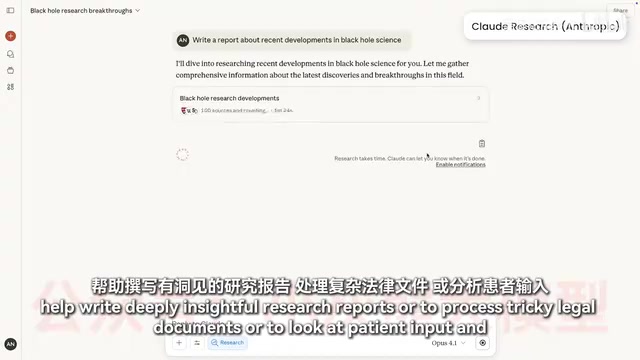
Agentic Workflow refers to letting a large language model operate in a looping, multi-step fashion rather than generating a single output in one shot. Typical patterns include: having the model generate a plan and then execute it step by step, calling external tools (search, code interpreters, database queries, etc.) to retrieve real-time information, coordinating multiple specialized sub-agents, and using self-reflection to revise outputs. Compared to single-turn question-and-answer interactions, this architecture can handle complex tasks that require decomposition, verification, and iteration — but it also introduces higher latency, cost, and error propagation risks. This is precisely why evaluation capability becomes indispensable.
The Core Gap Between Expert and Average Developers: Evals and Error Analysis
The most noteworthy insight in the course is Ng's answer to the question: what separates people who are truly good at building agentic workflows from those who struggle?
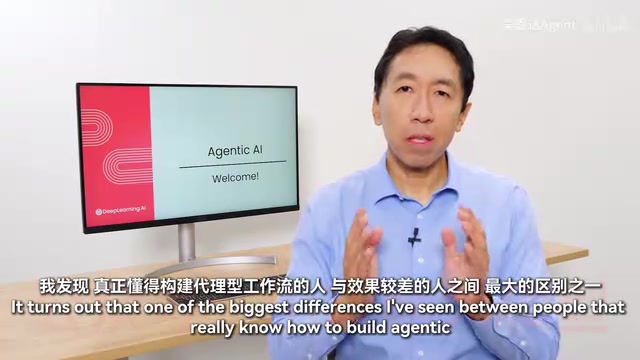
His observation is that the biggest difference between developers who genuinely excel at building agentic workflows and those who produce mediocre results comes down to whether they can drive a disciplined development process — one that is specifically focused on evals (evaluation) and error analysis.
Why Evals and Error Analysis Are So Critical
Agent systems typically involve multi-step reasoning, tool calls, and external interactions, where a failure at any single step can cause the final result to go off the rails. Unlike traditional software, agent behavior carries a degree of non-determinism — simply "running it and checking the output" is rarely sufficient to judge whether the system is working well.
Evals provide a quantifiable, reproducible way to measure agent performance, while error analysis helps developers pinpoint whether problems originate in the prompt, tool design, planning logic, or the model itself. Ng argues that it is precisely this systematic, data-driven debugging capability that sets excellent agent developers apart from everyone else. This philosophy is a natural extension of the "evaluation-driven iteration" methodology in ML engineering that he has long championed.

Evals (Evaluations) in LLM engineering typically refer to a suite of test sets and scoring mechanisms used to systematically measure how a model or agent performs on specific tasks. Unlike traditional unit tests, evals must contend with the open-ended nature of outputs — a single question may have multiple "correct" answers — so the scoring function itself often requires careful design, sometimes even leveraging another LLM to act as a judge (the "LLM-as-judge" pattern). Error analysis is a classic method from ML engineering: randomly sample a batch of failure cases, manually review and categorize the root causes of errors, and then decide which sub-problems to prioritize fixing. Together, these two capabilities form a sustainable "measure–analyze–improve" feedback loop, and are the essential engineering foundation for moving agents from prototype to production reliability.
Why This Skill Is Worth Learning
Ng positions mastery of agentic workflow development as "one of the most important skills in AI today," and states plainly that it leads to more opportunities — whether that means better job prospects or the ability to build outstanding software yourself.
For learners hoping to get started with LLM application development, the course maps out a clear path: don't be led astray by hype; focus your energy on use cases that genuinely create value. At the same time, build engineering discipline centered on evaluation and error analysis. Together, these two principles represent the critical leap from "knowing how to call an LLM" to "being able to build reliable agent systems."
Summary
This course introduction is brief, but it communicates three core messages clearly: the hype around Agentic AI must be distinguished from its real value; agentic workflows are already playing an irreplaceable role in customer service, deep research, legal work, and healthcare; and the factor that separates strong developers from the rest is whether they can establish a rigorous, evals- and error-analysis-driven development process. For developers looking to sharpen their competitive edge in the age of large language models, this is a pragmatic and high-return direction to pursue.
Related articles
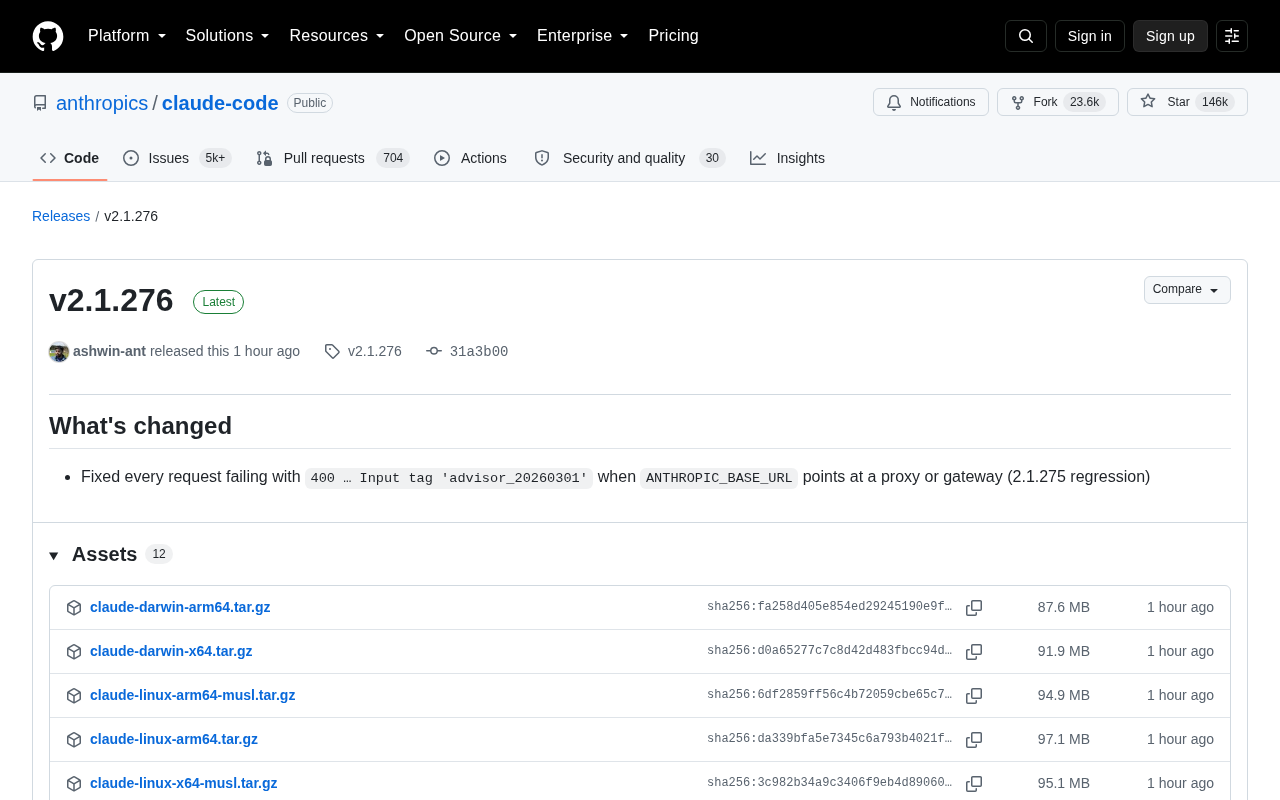
Claude Code v2.1.276 Released: Fixes Proxy/Gateway 400 Error Regression
Claude Code v2.1.276 fixes a critical regression from v2.1.275 where all requests via proxy or gateway failed with a 400 error (Input tag 'advisor_20260301'). Upgrade now.

The Netflix Microservices Myth: An Architecture Migration Misunderstood by an Entire Industry
The real story behind Netflix's cloud migration and microservices transformation — and why the entire industry copied the solution while missing the actual problem.

Java 27 Deep Dive: How Default Changes Are Quietly Reshaping Production Environments
Java 27 has just 9 JEPs but changes key defaults: compact object headers on by default, G1 as unconditional default GC, Flight Recorder redaction, and built-in post-quantum TLS 1.3.