Andrew Ng on Agentic AI: Cutting Through the Hype to Master the Skills That Actually Matter

Andrew Ng argues that evals and error analysis — not hype awareness — are the true differentiators in Agentic AI development.
In his new Agentic AI course, Andrew Ng acknowledges that the word "agentic" has been heavily co-opted by marketers, but insists real value is growing just as fast as the hype. The course focuses on what can actually be built now, covering deployed use cases in customer support, research, legal, and healthcare. Its central insight: what separates expert developers from average ones isn't familiarity with new concepts, but the ability to build a disciplined, data-driven iteration loop centered on evals and error analysis.
Agentic AI: Overhyped Buzzword or Real Technical Trend?
In the opening of his new Agentic AI course, Andrew Ng candidly admits that when he first coined the term "agentic" to describe a rapidly growing and important trend in application development, he never anticipated that marketers would slap it onto virtually every product in sight. This has directly fueled the explosive hype surrounding Agentic AI.
That said, setting the hype aside, a more important truth deserves attention: the number of genuinely valuable, practically useful Agentic AI applications is also growing fast — just not as fast as the hype. This sets a pragmatic tone for the entire course: rather than chasing conceptual bubbles, the focus is squarely on "what you can actually build right now."

For developers, this distinction matters enormously. When a technical term gets overused, people tend to fall into one of two traps: blindly jumping on the bandwagon, or dismissing the whole thing outright. Andrew Ng's position offers a third path — acknowledging that the trend is real while approaching it with the rigor of sound engineering practice.
What Can Agentic Workflows Actually Do?
Andrew Ng walks through several real-world applications where agentic workflows are already being deployed — examples far more convincing than abstract definitions:
- Customer support agents: Automatically handling user inquiries and responses
- Deep research: Assisting in writing research reports with substantive insights
- Legal document processing: Tackling complex, challenging legal document analysis
- Medical diagnostic assistance: Suggesting possible diagnoses based on patient-provided information
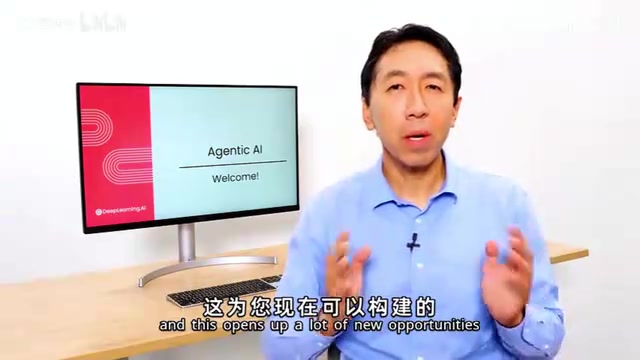
Andrew Ng is particularly emphatic that many of the projects his teams work on simply could not exist without agentic workflows. The weight of that statement lies in what it implies — it elevates Agentic AI from a "nice-to-have" to a "can't-do-without-it" capability. Knowing how to build applications with it has become one of the most important and valuable skills in AI today.
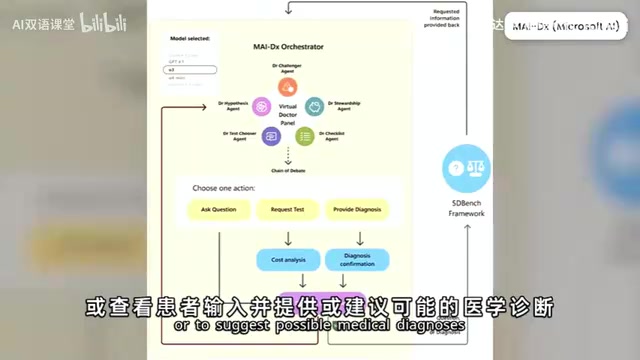
Agentic workflows differ fundamentally from traditional single-call LLM interactions. In the traditional approach, you describe a task once, the model produces output, and the process ends. Agentic workflows, by contrast, allow AI models to call themselves or external tools multiple times throughout a task, forming a closed loop of "perceive → plan → act → feedback." The model can decompose complex tasks, invoke search engines or code executors, revise its strategy based on intermediate results, and ultimately accomplish work that far exceeds the limits of a single inference pass. This architecture typically involves several core components: Memory (storing context and historical state), Tool Use (web search, code execution, database queries), Planning (breaking large tasks into subtasks), and Multi-Agent Collaboration (delegation and verification between specialized agents). It is precisely this dynamic, iterative mechanism that enables agentic workflows to handle real business scenarios requiring multi-step reasoning — which is the fundamental reason they've become indispensable.
The Dividing Line Between Experts and Average Developers: Evals and Error Analysis
The most illuminating insight in the course comes from Andrew Ng's observation about what separates those who truly excel at building agentic workflows from those who struggle. He argues that the biggest differentiator is whether a developer can drive a disciplined development process — specifically, one centered on evaluations (evals) and error analysis.

This insight hits the mark. The hard part of building agent applications isn't usually getting them to run — it's getting them to run reliably and well. Many developers get stuck at the "demo-able" stage, lacking systematic evaluation methods to quantify performance and pinpoint problems. Andrew Ng's point is a timely reminder:
- Evals (evaluation frameworks) allow you to measure an agent's performance objectively, rather than relying on gut feel
- Error analysis helps you precisely identify the root causes of failures, guiding the next round of improvements
In other words, building agentic applications isn't a one-shot "write the code" exercise — it's a continuous, data-driven engineering process. This disciplined development rigor is what truly distinguishes professional-grade work.
Evals occupy a role in AI engineering similar to unit and integration testing in traditional software engineering, except they target the quality of model outputs rather than the correctness of deterministic logic. A complete evals system typically includes: defining an evaluation dataset (covering typical scenarios and edge cases), designing scoring criteria (which can be rule-based matching, human annotation, or using another LLM as an automated "judge"), and continuously tracking how key metrics evolve across versions. Error analysis then systematically attributes the failure cases exposed by evals — distinguishing between root causes such as insufficient model comprehension, incorrect tool-calling sequences, context window truncation, or ambiguous prompt design — so that targeted improvements can be made. In agentic systems, because execution paths are dynamically generated, errors tend to cascade and amplify across multi-step chains. Without a robust evals framework, it becomes extremely difficult to pinpoint actual bottlenecks at the system level. This is why engineering discipline is even more critical in agent development than in traditional ML settings.
Why Is This Skill Worth Investing In?
Throughout the opening of his course, Andrew Ng returns repeatedly to a core conviction: mastering how to build agentic workflows is one of the most important skills in AI today, and it opens up enormous opportunities — both for career advancement and for building outstanding software yourself.
This judgment is grounded in real industry trends. As large language model capabilities mature, simply calling a model is no longer a meaningful competitive barrier. The real differentiation is increasingly shifting toward "how to organize and orchestrate these capabilities to accomplish complex tasks" — which is precisely the core value of agentic workflows.
For practitioners looking to enter or deepen their work in AI, rather than getting lost in conceptual hype, the more productive path is to build solid engineering capabilities centered on evaluation and error analysis. This is both a pragmatic strategy for navigating today's technological wave and the foundation of long-term competitive advantage.
Summary
Andrew Ng's course sends a clear signal: despite the overwhelming hype around Agentic AI, its real value is growing just as quickly. It has already become indispensable in scenarios like customer support, deep research, legal document processing, and medical diagnosis. What ultimately determines a developer's caliber is not how familiar they are with the latest buzzwords, but whether they can run a disciplined development process driven by evals and error analysis. For anyone who wants to build valuable applications in the AI era, this is the core skill worth investing in first.
Related articles

How Big Can Stars Really Get? The Physical Limits of the Largest Stars
Red supergiants are the largest stars by volume, with radii up to 2,000 times the Sun, engulfing the inner solar system. But there is no precise upper limit on stellar size—models predict up to 15,000 solar radii. The most massive blue stars are far smaller than red supergiants—biggest and heaviest are two different things.

Apple HomeView Smart Display Full Feature Breakdown: Wall-Mount or Desktop, $299
Apple launches HomeView, a $299 smart display with wall-mount and desktop options, 12MP camera for facial recognition, smart home control, music playback, and recipe step-by-step cooking. Full breakdown of watch faces, apps, privacy, and cooking integration.

Where Did the Promised New Studio Go? Craft Computing Answers After Five Years
Craft Computing's host responds to viewer questions: the new studio promised five years ago was shelved as construction costs soared from $30,000 to $75,000, and was replaced by a 168-square-foot garage conversion.