Andrew Ng on Agentic AI: How to Build High-Value Agent Applications with Evaluation-Driven Development

Andrew Ng argues that evaluation-driven engineering discipline — not framework knowledge — is the real differentiator in building high-quality agentic AI.
In his Agentic AI course, Andrew Ng acknowledges that the term "agentic" has been co-opted by marketers, but argues that genuinely valuable applications are growing fast regardless. He outlines real production use cases — customer support, deep research, legal document processing, and medical diagnostics — and frames agentic workflows as the capability that makes otherwise impossible applications feasible. His central insight: the gap between expert and novice builders isn't about knowing which framework to use, but about running a disciplined development process built around evals and error analysis. Ng calls this one of the most valuable skills in AI today.
When "Agentic" Became a Marketing Buzzword
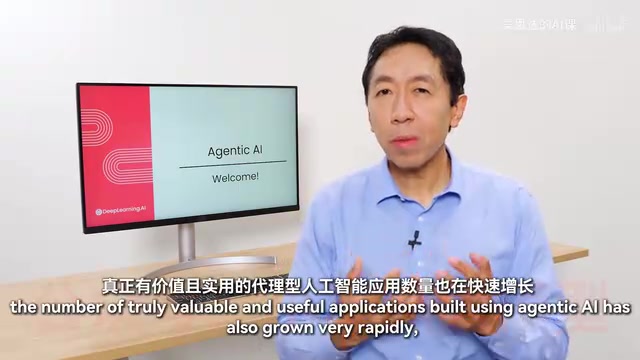
In the opening of his Agentic AI course, Andrew Ng shared a candid and somewhat ironic observation: when he originally coined the term "agentic" to describe what he saw as a rapidly growing and important trend in building LLM-powered applications, he never anticipated that marketers would seize the word and slap it onto virtually every product in sight.
This triggered a sharp rise in Agentic AI hype. That said, Ng offered an optimistic counterpoint: if you cut through the noise, the number of genuinely valuable and practical Agentic AI applications is also growing quickly — just not as dramatically as the hype would suggest. This coexistence of bubble and real demand is a defining characteristic of where AI adoption stands today.
What Agentic Workflows Can Actually Do
Rather than staying at the conceptual level, Ng jumped straight into real-world use cases already running in production environments. These examples sketch out the practical boundaries of what agentic workflows are capable of:
- Customer support agents: Handling complex user inquiries, replacing or augmenting traditional customer service;
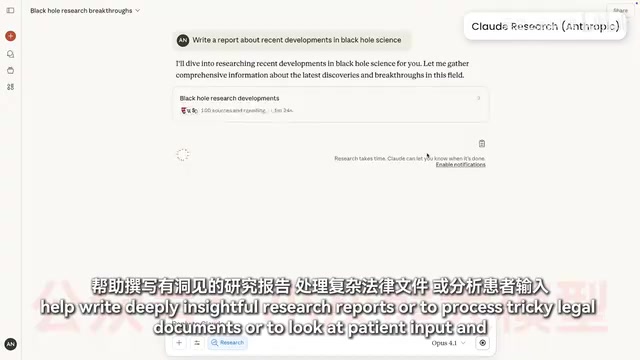
- Deep research: Helping produce in-depth, insight-rich research reports;
- Legal document processing: Tackling complex contracts, terms, and other specialized texts;
- Medical diagnostic assistance: Analyzing patient inputs and surfacing possible diagnoses.
He specifically emphasized that across the many teams he leads, numerous projects simply wouldn't be feasible without agentic workflows. The weight of that statement is significant — Agentic AI isn't a nice-to-have enhancement; it's the capability that transforms certain applications from "impossible" to "possible."
The core difference between an Agentic Workflow and a traditional single-pass LLM call is this: it allows the model to iteratively reason across multiple steps within a single task, autonomously invoke external tools (such as search engines, code execution environments, and databases), and dynamically adjust subsequent steps based on intermediate results. Ng has used a "writing analogy" to explain this distinction — a traditional call is like asking someone to write an entire article in one shot with no revisions, while an agentic approach allows for the full process of drafting, researching, self-reviewing, and iterative editing. It's precisely this "think-act-observe" loop that enables agentic workflows to handle complex tasks requiring long-horizon reasoning or dynamic information — tasks that often fail under single-pass approaches due to context limitations or missing information.
The Key Differentiator Between Experts and Novices: Evaluation-Driven Development
The most noteworthy insight in the course is Ng's answer to the question: what separates people who truly excel at building agentic workflows from those who struggle?
His observation: the biggest gap isn't whether someone knows how to call a particular framework or API.
The real dividing line is whether someone can drive a disciplined development process — especially one centered on evaluations (evals) and error analysis.
This aligns closely with hard-won lessons from traditional software engineering and ML engineering. Because agentic systems involve multi-step reasoning, tool calls, and uncertain intermediate states, failure points are scattered and hard to pin down. Without a systematic evaluation framework, developers are often left tuning by gut feel — iterating endlessly without ever identifying the root cause.
An evaluation-driven methodology means: establishing quantifiable metrics for agent performance, using error analysis to pinpoint exactly where failures occur, and then iterating with surgical precision. This kind of engineering discipline is the core competency that takes a demo-grade prototype to a reliable production system.
Evals in LLM engineering refers to a testing framework specifically designed to measure the quality of model or system outputs — analogous to unit and integration tests in traditional software engineering, but targeting non-deterministic outputs. In practice, developers build a set of "gold standard" input-output pairs or design automated scoring metrics (such as GPT-as-Judge or human annotation), then regularly run the full agent pipeline and score the results to track whether performance genuinely improves across iterations. For agentic systems, evals are far more challenging than single-turn Q&A scenarios — in a workflow with five tool calls, even slight degradation in any one step can cause the final output to collapse entirely, and without step-level evaluation, it's nearly impossible to identify which component broke. This is the heart of what Ng calls "engineering discipline": without a quantifiable evaluation framework, development is essentially navigating in the dark.
Why This Skill Matters More Than Ever
Ng describes "the ability to build agentic workflows" as one of the most important and valuable skills in AI today. His reasoning is both realistic and direct: mastering this capability opens up a wealth of new opportunities — whether in the job market or in building impressive software yourself.
From an industry perspective, this assessment isn't an overstatement. As foundation model capabilities converge and the barrier to calling an API continues to fall, real competitive advantage is shifting from "knowing how to use a model" to "being able to reliably orchestrate models into systems that solve real problems." Agentic workflows sit squarely at the center of that shift.
Takeaway: Cut Through the Hype, Get Back to Engineering Fundamentals
The opening of this course sends a clear signal: Agentic AI is worth learning, but the focus shouldn't be on flashy, marketing-wrapped concepts — it should be on the solid engineering methodology underneath.
Ng's core message can be distilled into three points: acknowledge the hype without being swept up in it, recognize the genuine value of agentic workflows, and treat evaluation and error analysis as the foundational discipline for building high-quality agents. For developers looking to build practical applications in the age of large models, this evaluation-driven development mindset is arguably more worth investing in than any specific framework.
Related articles

Chain of Thought Isn't Just for AI: How Humans Can Use CoT to Improve Thinking Quality
Chain of Thought isn't just a prompt trick for large models. Starting from a Hacker News discussion, this article analyzes why CoT works for human thinking too, breaks down actionable ways to transfer it, and highlights the key differences between human CoT and machine CoT.
Cloudflare Teams Up with OpenAI: Closi…
Cloudflare Teams Up with OpenAI: Closing the Loop from Vulnerability Discovery to Defense with AI
Cloudflare uses OpenAI Daybreak to investigate security vulnerabilities and generate reviewable remediation plans, while developers use Codex to boost coding efficiency and quality.

Orca Multi-Agent Orchestration in Practice: A Guide to Parallel Collaboration with Claude and Codex
Orca is Stable AI's free open-source agent workbench supporting 34 agents like Claude Code and Codex in parallel. Learn its Git worktree isolation, multi-model orchestration, and mobile management.