Andrew Ng's Agentic AI Course: How to Build AI Agent Applications That Actually Work

Andrew Ng's new course cuts through Agentic AI hype, arguing eval-driven engineering discipline is the real edge.
In his new Agentic AI course, Andrew Ng candidly admits that the term "agentic" — which he coined — has been heavily over-marketed, even as genuinely valuable agentic applications continue to grow. The course focuses on building the right methodology: agentic workflows use task decomposition, tool invocation, and iterative feedback to handle complex multi-step scenarios like customer support, deep research, legal documents, and medical diagnostics. The central insight is that the gap between expert and average developers isn't about which framework or model they use, but whether they've established engineering discipline driven by evaluations (evals) and error analysis — a systematic feedback loop that pinpoints why an agent fails rather than relying on guesswork.
AI buzzwords come and go at a dizzying pace, and "Agentic AI" is undoubtedly one of the hottest terms right now. Andrew Ng opens his new Agentic AI course with a candid admission: when he originally coined the term "agentic" to describe an important and fast-growing trend in application development, he never anticipated that marketers would slap it like a sticker onto virtually everything in sight — sending the hype around Agentic AI through the roof.
The core goal of this course is to help learners cut through the hype and master the best practices for building agentic applications.
What Is Agentic AI, and Why Does It Matter
Ng points out a key fact: setting aside the hype, the number of genuinely valuable and practical applications built with Agentic AI really is growing rapidly — even if not quite as fast as the buzz suggests. This is an important distinction: inflated excitement doesn't mean the technology is useless; the key is separating substance from noise.
Agentic workflows refer to AI systems that can complete complex tasks in a more autonomous, goal-directed way — rather than simply answering one question at a time. This fundamentally changes how applications are built, making previously impractical projects achievable.
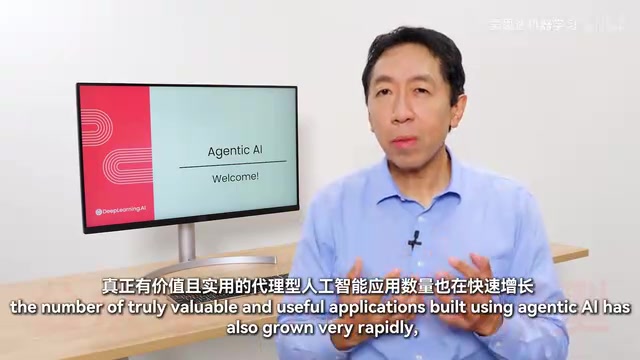
Ng emphasizes that across the many teams he leads, numerous projects simply could not have been completed without agentic workflows. That's why he considers knowing how to build applications with agentic workflows one of the most important and valuable skills in AI today.
From a technical architecture standpoint, Agentic AI differs fundamentally from traditional single-call LLM interactions. The conventional approach is a one-shot "input → model → output" exchange; agentic workflows introduce four core components: Planning, Memory, Tool Use, and Multi-agent Collaboration. Instead of just answering questions, the model can decompose complex goals into subtasks, invoke external tools like search, code execution, and database queries to gather information, and dynamically adjust subsequent steps based on intermediate results. This "reason-act-observe" loop — the ReAct paradigm — enables AI to handle tasks requiring multi-step reasoning. Agentic workflows can thus automate complex processes that previously required human coordination, but they also introduce greater debugging complexity and uncertainty — which is precisely why evaluation systems become critically important.
Real-World Applications of Agentic Workflows
The course showcases a range of already-deployed use cases, demonstrating that Agentic AI is no longer a purely conceptual idea but has already penetrated real business scenarios:
- Customer support agents: Automating user inquiry handling and issue resolution;
- Deep research: Helping produce research reports with substantive insights;
- Legal document processing: Tackling complex and intricate legal paperwork;
- Medical diagnostic assistance: Analyzing patient inputs and suggesting possible diagnoses.
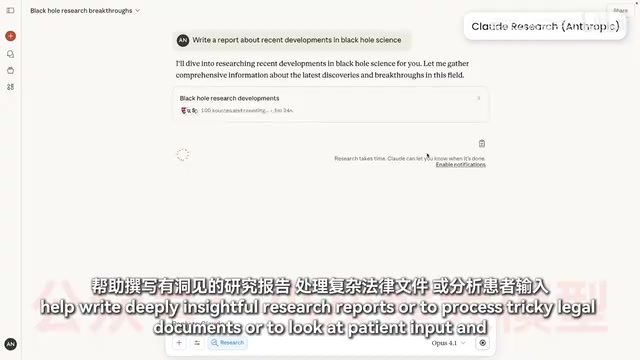
What these scenarios share is that they all involve multi-step tasks requiring reasoning and information synthesis — precisely the kind of work that traditional single-call LLM interactions struggle to handle. Agentic workflows, through task decomposition, tool invocation, and iterative feedback, bring AI closer to the way humans tackle complex problems.
The Core Gap Between Expert and Average Developers: Evals and Error Analysis
The most insightful part of the course is Ng's observation about the biggest difference between those who can and cannot build effective agentic workflows.
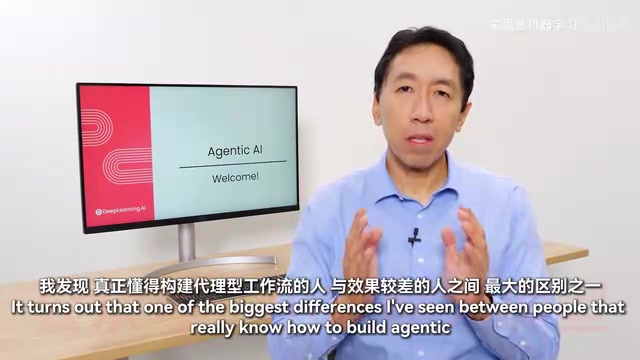
His answer isn't some sophisticated algorithm or framework — it's the ability to drive a disciplined development process, with a particular focus on evaluations (evals) and error analysis.
This deserves careful reflection. Many developers think building agentic applications means endlessly tweaking prompts, stacking tools, and trying new models. But Ng points to a more fundamental methodology: only by establishing a systematic evaluation mechanism can you truly know where your agent is failing, why it's failing, and how to improve it in a targeted way. Development without evaluation-driven discipline easily degrades into the inefficient cycle of "tuning by gut feeling."
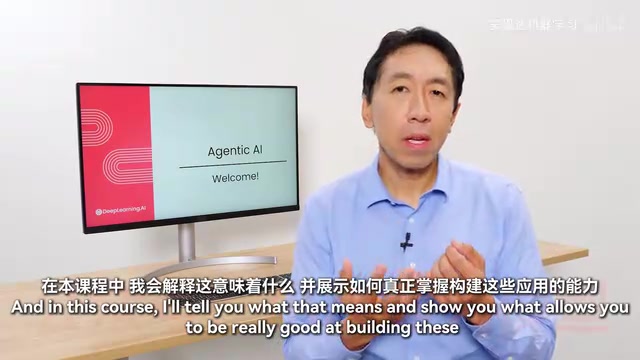
In other words, the key to building high-quality agentic applications lies not in flashy techniques, but in engineering discipline. This is also the core value that sets this course apart from the vast sea of "prompt tricks" content out there.
Evals play a role in agentic development analogous to unit tests and integration tests in traditional software engineering. Concretely, they are a set of test cases covering typical scenarios, edge cases, and known failure modes — runnable after every prompt change, model switch, or tool chain adjustment to quantify shifts in system performance. Since agent outputs are often open-ended text rather than deterministic results, evals typically combine multiple approaches: rule-based checks (e.g., verifying output format), comparison against human-annotated gold answers, and LLM-as-Judge scoring. Error analysis then follows when evals surface problems — systematically attributing failures to their root causes: insufficient retrieval recall, context window overflow, malformed tool call syntax, or the boundaries of the model's reasoning capability. Only with precise attribution do improvement efforts avoid becoming random guesses. This "build → evaluate → attribute → improve" feedback loop is engineering discipline made concrete.
Who Is This Course For
Ng clearly defines the course's audience in the opening: learners who want to master the ability to build agentic applications, whether their goal is career opportunities or building impressive software themselves. He positions this skill as "one of the most important skills in AI today," and believes that mastering it opens up a large number of new opportunities.
For developers and AI practitioners, the value of this course lies not in chasing the latest trend, but in establishing the right methodological framework — understanding the nature of agentic workflows and mastering a development process centered on evaluation and error analysis. At a time when the Agentic AI concept is being heavily over-marketed, this perspective that returns to engineering fundamentals is particularly refreshing.
Conclusion
Andrew Ng's course offers a clear-eyed starting point for anyone looking to enter the Agentic AI space: it acknowledges the genuine value of the technology while not shying away from the reality of industry hype. Real competitive advantage comes from solid engineering discipline, not from chasing buzzwords. For those who want to build practical applications amid the AI wave, understanding the core concept of "evaluation-driven development" may be more important than learning any single tool.
Related articles

Gmod TTT: Boba's Winning Streak and Game Design Insights
An in-depth analysis of Gmod TTT's role system, creative items, and social gameplay mechanics, exploring the relationship between randomness design and game balance through Boba's winning streak phenomenon.

FlexBudget: Fair Comparison of KV Cache Eviction Strategies Under a Unified Compute Budget
AMD engineer proposes FlexBudget at PyTorch Conference: a training-free fair comparison method for KV cache eviction rules using fixed kernels and memory budgets, all in core PyTorch.
