Andrew Ng's New Course: Build an AI Code Review Context Engine Hands-On
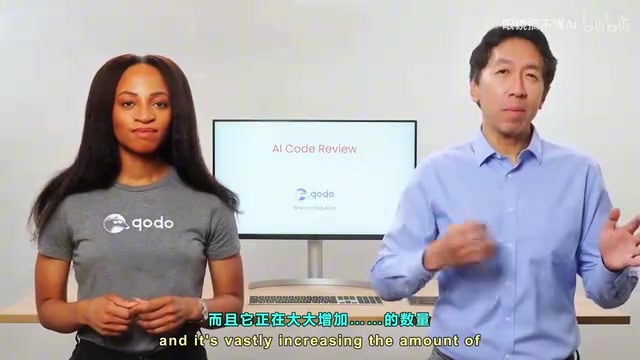
Andrew Ng's AI code review course: context matters more than the model, and it teaches you to build your own context engine.
Andrew Ng's *AI Code Review* course, co-produced with Codo, notes that the surge in AI-generated code has made line-by-line human review a development bottleneck, pushing AI code review into mainstream workflows. The course emphasizes that review focus has shifted from syntax correctness to intent satisfaction and risk exposure, since AI-generated PRs may look reasonable yet miss requirements or introduce vulnerabilities. It unfolds as "use it well first, then understand it, finally build your own": starting with review standards and hands-on techniques like pre-submission local review, providing task and repository context, and prioritizing by impact; then building a context engine from scratch and extending the reviewer with specialized multi-domain agents. The course's core judgment is that context, not model strength, determines review quality — suited for teams that have adopted AI in their workflow but still rely on humans for review.
When There's Too Much Code for Humans to Review, AI Review Becomes a Necessity
Andrew Ng's new course AI Code Review, co-produced with Codo, opens with a reality that's already unfolding: AI-generated code has dramatically increased the total volume of code we write, but if that code still requires line-by-line human review, developers themselves become the bottleneck. This is exactly why AI code review has entered his personal workflow and become standard practice for many teams.
The course doesn't stop at "AI can read code" — it emphasizes a more practical tension: AI-generated PRs may look entirely reasonable yet miss critical requirements or quietly introduce security vulnerabilities. In other words, the object of review has shifted from "is the syntax correct" to "is the intent satisfied, and are risks being concealed." This also means the code review workflow itself must evolve accordingly.
A PR (Pull Request) is a core mechanism in distributed version control collaboration: after completing changes on a separate branch, a developer requests that the code be merged into the mainline via a PR. On platforms like GitHub and GitLab, the PR also serves as the review unit — reviewers comment line by line, propose changes, and ultimately approve or reject the merge. AI code review tools typically use the PR as their trigger point, automatically reading the diff when changes are submitted or updated and generating comments. Thus "AI-generated PRs" refers both to merge requests made up of AI-written code and to the work objects naturally suited for automated processing by AI reviewers. Understanding the PR's role as a review container helps clarify why review processes get overwhelmed by the sheer volume of AI-generated changes.
Course Breakdown: From Best Practices to Building Your Own Engine
The course structure is quite pragmatic, following a "use it well first, then understand it, finally build your own" path.
The first part returns to fundamentals: what counts as a good code review, and where AI review fits in today's development workflow. It then moves into hands-on techniques, including running AI review locally before submitting a PR, providing the reviewer with richer task and repository context, and prioritizing findings by potential impact. These practices all point to the same goal — steering AI review from "generic comments" toward "focusing on high-risk issues."
The course specifically highlights an often-overlooked judgment: context is often the biggest factor determining review quality, and simply switching to a stronger model won't help much if the right information is missing. This point deserves serious attention from any team currently integrating AI review tools.
A context window is the upper limit on the total number of tokens a large model can receive in a single inference pass — it directly determines "how much code the AI reviewer can see at once." Real repositories often far exceed this limit, so a context engine must perform retrieval and filtering: feeding the model only the files, call chains, interface definitions, and historical discussions relevant to the current change. This also explains why the course emphasizes that context matters more than model capability — no matter how strong the model, if the context window is stuffed with irrelevant code, reasoning quality has no foundation. A common engineering approach is to first narrow the candidate set through retrieval, then rank by relevance within the window budget, and review in segments multiple times when necessary.
Building Your Own Context Engine: Understanding How Systems Retrieve and Reason
The climax of the course is the hands-on segment — building a context-aware AI code review system from scratch.
The specific path has two steps: first build a context engine responsible for retrieving code relevant to the current change; then extend the reviewer by combining specialized agents from different domains of expertise to work collaboratively. Andrew Ng emphasizes that the value of building it yourself lies in seeing how these systems retrieve context and reason about code, thereby understanding why certain guiding approaches yield better results.
For developers who normally just call off-the-shelf review tools, this "open it up and look inside" experience often has more transferable value than memorizing a few prompting tricks. When you understand what the retrieval stage is missing and what the reasoning stage depends on, tuning gains direction — rather than blindly swapping models and tweaking prompts.
Retrieval-Augmented Generation (RAG) is the general paradigm behind context engines: first retrieve relevant snippets from external knowledge sources (here, the codebase, documentation, and commit history), then assemble these snippets into the prompt for the model to generate results. In code review scenarios, RAG's retrieval units might be functions, files, or symbol reference graphs, and retrieval signals might come from symbols involved in the diff, directory structure, or semantic similarity. Multi-agent composition is the division of labor built on top of this — for example, a security agent, a test coverage agent, and a requirement consistency agent each carry different retrieval strategies and prompts, then aggregate their findings. Understanding RAG's three-stage structure of "retrieve — assemble — generate" lets you pinpoint exactly which stage is causing review misses.
Who Should Watch, and One Trade-off Worth Remembering
This course targets teams that have already written AI into their daily development workflow but still rely on human effort for review. It doesn't promise that AI review can fully replace humans; instead, it positions AI as the role that handles massive initial screening and frees human attention for genuinely high-risk decisions.
One point you'll need to weigh for yourself: the course demonstrates a general methodology and a build-your-own path, but when applied to a specific team, what the context engine can retrieve and how specialized agents divide domains both depend on your repository's structure and collaboration habits. Rather than copying the structure, it's better to understand its design philosophy of retrieval and reasoning. According to the course introduction, Ismail Ghaghari, Brendan Brown, and Nick Lewis of dblim.ai participated in producing the course.
Related articles
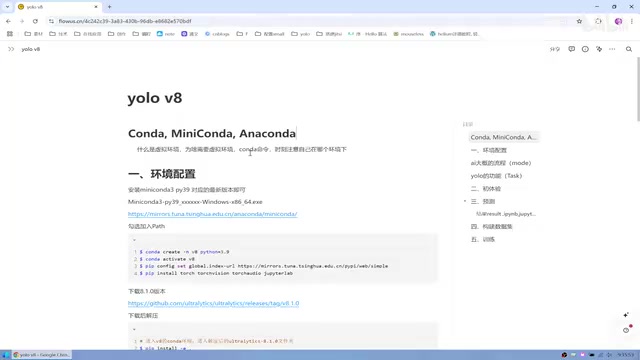
YOLO Object Detection for Absolute Beginners: Environment Setup and Core Concepts
Learn YOLO object detection from scratch: Python basics, VS Code, Miniconda environment setup. A Bilibili tutorial guides you step by step, with a desktop icon recognition project as your hands-on goal.

2026 Desktop Speaker Buying Guide: 24-Model Roundup and Pitfalls to Avoid
How to choose 2026 desktop speakers? Based on a Bilibili roundup of 23 products, this guide analyzes budget, interfaces, and placement by tier—under 100 yuan, 200–300, 300–600, and above 1,000—and reviews standouts like Huazai Pixelbar AI, Colorful X9 Pro, and Edifier G1500 MAX.
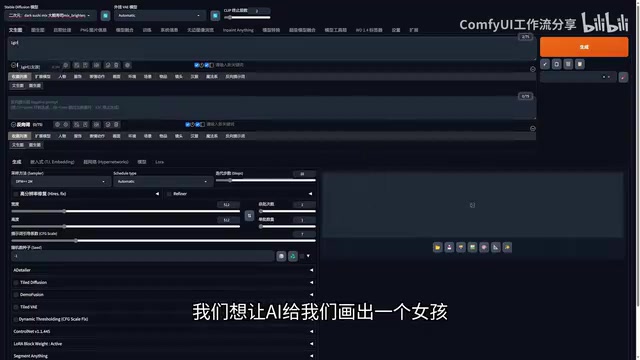
Akio SD Bundle 2026 Edition: One-Click Install & Zero-Basics Image Generation Tutorial
Akio Stable Diffusion bundle 2026 one-click install tutorial: text-to-image prompts, checkpoint and VAE selection, sampling parameters, seed reproduction, and ControlNet line-art repainting—generate images from zero basics.