Andrew Ng's New Logic for Learning Python from Scratch in the AI Era

Andrew Ng changes his tune: generative AI lowers the barrier, and knowledge workers should learn programming as an efficiency lever.
Andrew Ng launched the tutorial "Zero-Basis Python: From Beginner to AI Automation in Practice" on Bilibili, opening by addressing "why non-technical roles should still learn programming when AI can already write code." He contrasts his judgment from a decade ago that "not everyone needs to learn programming," arguing that generative AI has greatly reduced learning costs and barriers, turning programming from an exclusive skill for technical roles into a universal efficiency tool for knowledge workers. The course's core is "collaborative programming with chatbots": AI acts as an always-online programming partner, providing instant help during learning and practice, flattening the learning curve. The course isn't aimed at training professional programmers, but at giving people in journalism, marketing, administration, and other roles the ability to "write a little code" and use code to orchestrate AI for automated tasks. The course has 35 lessons, extending from Python fundamentals to AI automation in practice, emphasizing both practicality and the fun of programming.
Andrew Ng's Python course for beginners has been updated again. This time, the reasoning he gives is completely different from a decade ago.
According to the tutorial "Zero-Basis Python: From Beginner to AI Automation in Practice" launched on Bilibili, Andrew Ng doesn't start by explaining variables, loops, or functions. Instead, he first answers a more fundamental question: Now that generative AI can already write code, why should people in non-technical roles still learn programming?
His answer is direct—because AI has completely rewritten the cost and barrier to learning programming.
Ten Years Ago He Said "Not Everyone Needs to Learn Programming"; Now He's Changed His Tune
At the beginning of the course, Andrew Ng mentions a striking contrast. Ten years ago, if someone asked him "Should everyone learn programming?", his answer was no. The reasoning was practical: learning to program requires a considerable investment of effort, and for non-technical roles, the concrete usefulness of writing code wasn't clear.
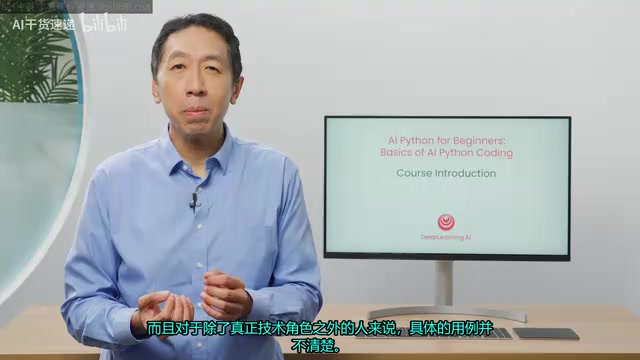
That judgment held true at the time. The traditional path to learning programming was long with slow feedback—someone in a marketing or administrative role might spend months learning syntax, only to end up writing a few scripts that didn't actually help their work. The return on investment wasn't worth it.
But Andrew Ng believes that the widespread adoption of ChatGPT and generative AI tools has changed the equation. In the course, he lists roles in journalism, marketing, business research, investing, and administrative decision-making, arguing that people in these fields would see significant efficiency gains if they could write a little code in their work.
In other words, programming has shifted from "an exclusive skill for technical roles" to "a universal amplifier for knowledge workers."
How Chatbots Turn Learning Programming into "Having a Training Partner"
The core idea of the course is that AI changes the very way code is written.
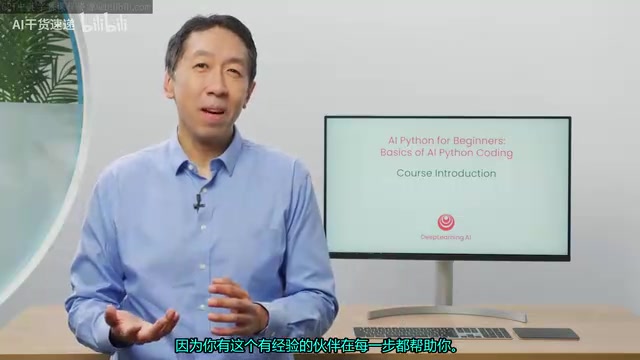
Andrew Ng uses a vivid analogy: with a chatbot as your partner, you'll never program alone—it's as if someone who's very good at writing code is always sitting right beside you, ready to help.
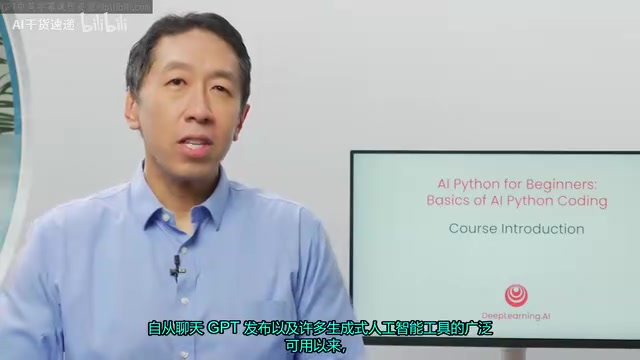
This has two layers of effect. The first is the learning phase: when you encounter syntax you don't understand or errors you can't fix, you can ask AI directly instead of scouring forums and waiting for replies. The learning curve is noticeably flattened. The second is the practical phase: when you start writing code yourself, this "experienced partner" is still there at every step to help you debug, explain, and optimize.
Andrew Ng calls this approach "a skill set that's more future-oriented and more in line with professional coding trends." This is also where this course differs from the many Python tutorials online—from the very start, it treats "collaborative programming with a chatbot" as the learning method itself, rather than learning syntax first and adding AI tools later.
This design philosophy is worth noting. Most introductory courses follow a "build the foundation first, then talk about applications" structure, but Andrew Ng reverses the order: establish a human-AI collaboration workflow first, then understand programming concepts through that collaboration. For beginners, this reduces frustration; for experienced developers, it's also closer to real-world modern development scenarios.
The "chatbot" Andrew Ng refers to means conversational tools built on large language models (LLMs), represented by ChatGPT. These models are trained on massive amounts of text and code, and can understand natural-language questions and generate, explain, and debug code. Compared with traditional search engines or forum questions, the advantage of chatbots is that they can hold continuous conversations with context, directly offer fix suggestions based on the error message you paste, and explain in plain language what a piece of code does. For programming beginners, this means the feedback loop for getting help shrinks from "post and wait for replies" to "a few seconds," and you don't need to learn how to describe a problem precisely to find an answer—you can just ask in everyday language.
The Efficiency Lever for Knowledge Workers Isn't "Becoming a Programmer"
There's an easily overlooked but crucial positioning in the course: Andrew Ng doesn't encourage everyone to become an AI developer or software engineer.
He explicitly says that regardless of your job role or career direction, this course applies to you. The point isn't to train professional programmers, but to give knowledge workers the ability to "write a little code."
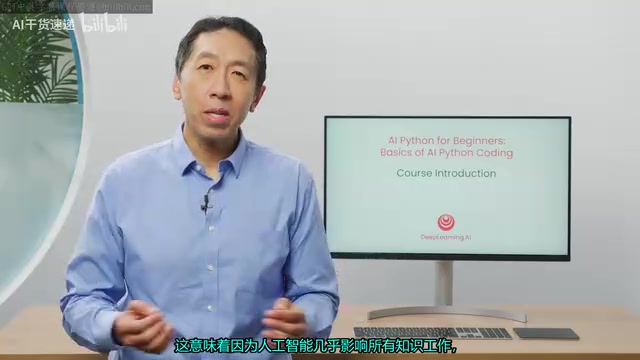
Behind this positioning is a judgment: AI affects almost all knowledge work, and the efficiency gap will widen between those who can use code to orchestrate AI and those who only know how to ask questions in a chat box. People who know a bit of programming can get AI to complete more automated tasks, rather than manually copying and pasting each time.
This is a different story from the "everyone should switch to coding" narrative. The former is skill stacking; the latter is career switching. Andrew Ng is betting on the former—programming as a basic productivity tool, just like learning Excel back in the day: it's not about making you an accountant, but about giving you one more lever in your daily work.
"Knowledge worker" is a concept proposed by management scholar Peter Drucker, referring to people who primarily rely on information, analysis, and knowledge to produce value—such as roles in marketing, administration, research, consulting, and finance—as distinct from roles centered on manual labor or standardized operations. Andrew Ng's course targets exactly this group. For them, the value of programming isn't in developing complete software products, but in delegating repetitive tasks like data processing, file organization, and report generation to scripts for automation. This is fundamentally different from the "switch to being a programmer" path: the former adds a tool skill on top of an existing career, while the latter changes career tracks, with completely different investment and risk.
Beyond Practicality, He Emphasizes One More Thing
In addition to being practical and useful, Andrew Ng specifically mentions at the beginning: coding itself is fun.
His exact words were roughly that after learning to write a bit of code, you can do many things you couldn't do before, and he and many friends find this very interesting. This seemingly casual remark actually addresses a common concern—many people treat learning programming as a chore, finding the process dull and the payoff distant.
When AI takes on the burden of memorizing syntax and troubleshooting low-level errors, learners can focus more energy on "what do I want the computer to do for me." This is precisely the most creative part of programming, and what Andrew Ng hopes learners will experience.
The entire course consists of 35 lessons, extending from Python fundamentals to AI automation in practice. This opening introduction doesn't involve any code, but the framework it provides—AI lowers learning costs, human-AI collaborative programming, efficiency tools for knowledge workers—determines how the subsequent content is learned. For beginners, understanding this logic first is more important than rushing to type the first line of print.
Related articles
 Tech Frontiers
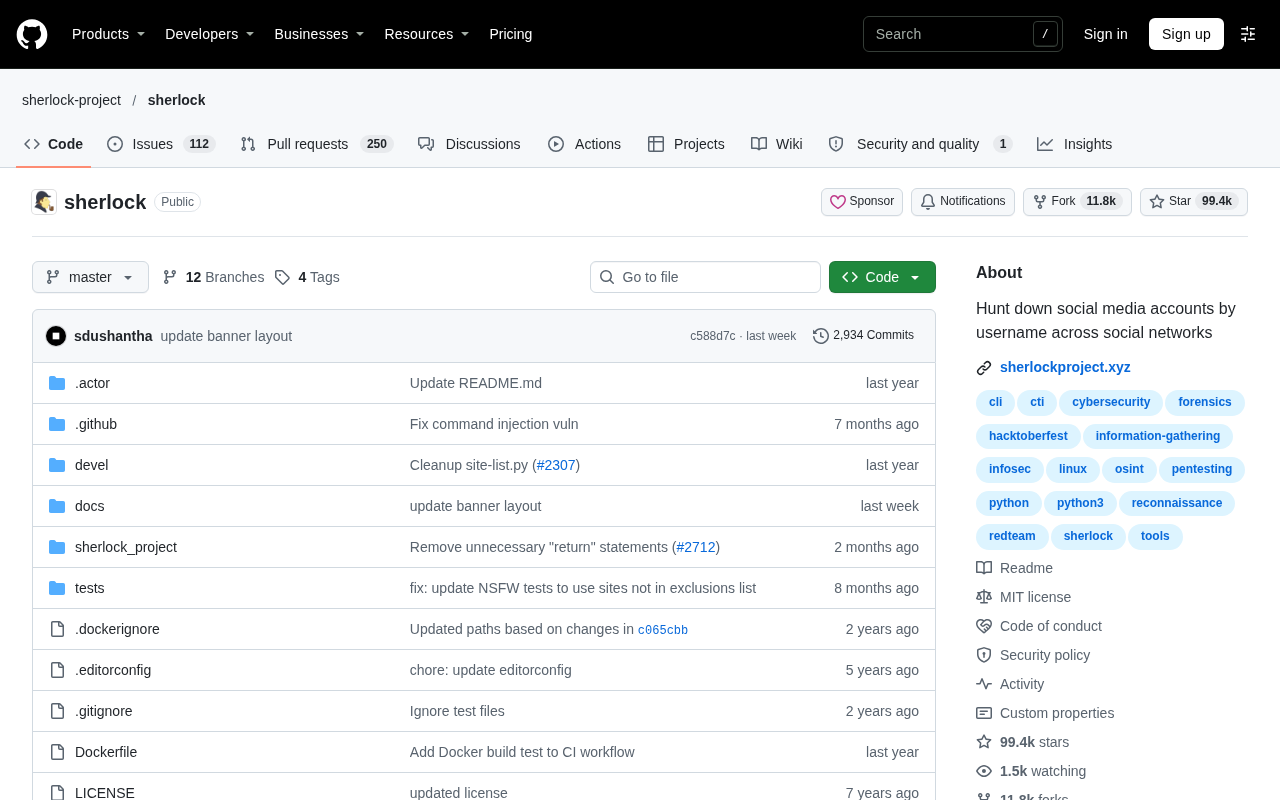
Sherlock: An Open-Source Tool for Tracking Usernames Across Social Networks
Sherlock is an open-source Python tool that tracks social accounts across networks by username. This article covers its core features, why developers love it, typical use cases, and privacy compliance considerations.
 Tech Frontiers
GitHub Daily·Nov 07: Agent-Ready and Context Compression
GitHub Trending Nov 07: meta's agent-ready design system astryx, billion-context's 5x context compression, sherlock nearing 100k stars, plus local-first localthings and bare-metal GPU orchestration nvke.
 Tech Frontiers
Buoyant Open-Sources Kinference: An Inference Control Plane for vLLM on K8s
Buoyant open-sources Kinference, an inference control plane for vLLM on Kubernetes, with declarative routing, KV-cache-aware load balancing, and per-tenant metrics—claiming 95% lower median TTFT in official benchmarks.