Android Studio's Built-In AI Skills Library: Auto-Generating Code That Follows Official Best Practices

Android Studio Quail pre-loads 20+ official AI skills so the AI assistant generates code following Google's latest best practices.
Android Studio Quail introduces Android Skills, a library of 20+ structured instruction sets maintained by Google's Android team. These skills automatically ground the AI agent in up-to-date best practices for tasks like Jetpack Compose migration, edge-to-edge layouts, and Navigation 3. Using metadata matching, the system injects relevant domain knowledge on demand — improving code quality and reducing token overhead without manual configuration.
The Awkward Moment When AI Writes Outdated Code
Have you ever encountered this scenario: you ask your IDE's built-in AI assistant to handle a complex API migration, only to watch it generate a pile of hopelessly outdated code? This is a pitfall that virtually every Android engineer using AI-assisted development has stumbled into.
The knowledge of large language models (LLMs) is often frozen at their training cutoff date, while the Android platform evolves at breakneck speed — from the XML-to-Jetpack Compose migration, to edge-to-edge layout adaptation, to the introduction of Navigation 3. These new paradigms frequently exceed the model's "cognitive boundary." The result: AI suggestions that look reasonable on the surface but actually violate Google's current recommended best practices.
At the heart of this lies a structural contradiction: LLM training data has an inherent time lag. Taking mainstream models as an example, their training data cuts off at a specific date, and any API updates or framework changes released afterward fall outside their knowledge scope. Meanwhile, the Android platform iterates at an aggressive pace — Google ships a new major Android version every year, and updates to the Jetpack library suite roll out on a weekly basis. In 2024 alone, Compose underwent multiple breaking-change-level API adjustments. This fundamental tension between "static model knowledge" and "dynamic platform evolution" means AI-generated Android code frequently references deprecated APIs or even uses patterns that have long been removed from official documentation.
In the latest Android Studio Quail release, Google is officially tackling this pain point: the AI Agent now comes pre-loaded with an officially maintained "Android Skills" library, giving the AI instant access to domain expertise when handling specific Android tasks.
What Are Android Skills? A Deep Dive into the Skills Library Mechanism
Android Skills are essentially a set of structured instruction sets handcrafted by the Android team, specifically designed to guide LLMs in correctly handling concrete Android development tasks. Think of them as authoritative "task briefing documents" covering the most common — and most error-prone — scenarios in modern platform development.

In the Quail release, Google ships over 20 of the most practical Android skills out of the box. These skills require no manual configuration or additional downloads — they're ready to use the moment you install the IDE.
What Core Development Tasks Are Covered?
Based on what Google has showcased, these skills target the key migration and build challenges in modern Android development:
-
Migrating from XML Views to Jetpack Compose: This is the dominant direction for Android UI development today, and one of the biggest trouble spots where AI tends to generate stale code. Jetpack Compose is the declarative UI framework Google officially released in 2021, designed to replace the decade-old traditional UI development model based on XML layouts and the View system. The traditional approach requires developers to define layout structures in XML files, then perform imperative operations in Activities or Fragments via findViewById or ViewBinding. Compose, by contrast, uses Kotlin function composition to describe UI — functions annotated with @Composable declare the interface directly in code, with state changes automatically triggering recomposition. This paradigm shift also involves entirely new conceptual systems like state hoisting, side-effects handling, and the Material 3 theming system. For large legacy projects, migration typically needs to be incremental, using ComposeView and AndroidView for interoperability between the old and new UI systems — precisely the kind of nuance that generic AI models most easily overlook.
-
Building Edge-to-Edge Screen Layouts: An essential capability for adapting to modern devices with full screens, notches, and cutouts. Edge-to-edge layout refers to a fullscreen display mode where app content extends behind the system status bar and navigation bar. Starting with Android 15, Google made edge-to-edge the default behavior for all apps, meaning applications must proactively handle content occlusion in system bar areas. Developers need to use the WindowInsets API to get precise system bar dimensions and set appropriate padding for critical UI elements. In Compose, this involves correct usage of modifiers like Modifier.windowInsetsPadding(); in the traditional View system, it requires handling via ViewCompat.setOnApplyWindowInsetsListener(). Because this mechanism behaves differently across Android versions and the API has undergone significant refactoring in recent releases, AI models are extremely prone to generating outdated code that uses legacy systemUiVisibility flags.
-
Using Navigation 3: The latest navigation component solution, with APIs that differ significantly from previous versions. Navigation 3 is a completely new navigation framework introduced by Google in 2025, with fundamental architectural differences from the previous Navigation Component. The old version relied on XML-format navigation graphs (nav_graph) to statically define page routing relationships, using NavController for page transitions. Navigation 3 fully embraces Compose's declarative philosophy, deprecating XML navigation graphs in favor of type-safe Kotlin DSL route definitions. It introduces an entirely new back stack management mechanism, supports more flexible multi-back-stack scenarios (such as each bottom navigation tab maintaining its own independent back stack), and natively integrates predictive back gestures. Since its API is completely incompatible with its predecessor, this is precisely one of the areas where AI is most likely to confuse old and new approaches.

These are exactly the areas where developers most need "authoritative guidance" and where general-purpose LLMs are most likely to make mistakes. With official skills in the mix, the AI can stand on the shoulders of Google engineers when offering suggestions.
How AI Skills Work: Automatic Metadata Matching
The operating mechanism behind Android Skills is worth examining. When you send a request to the AI Agent, the system automatically matches your request against the metadata of pre-loaded skills, thereby "grounding" the model to the correct task context.
Grounding is one of the core technical strategies for addressing LLM hallucination problems. The basic idea is to inject authoritative external knowledge during inference, so the model's output is evidence-based rather than purely reliant on parametric memory. The metadata matching mechanism in Android Skills is essentially a variant implementation of Retrieval-Augmented Generation (RAG): each skill carries structured metadata tags describing its applicable scenarios. When a developer inputs a request, the system first performs intent recognition, then semantically matches it against the skill metadata, injecting the most relevant skill instructions into the model's context window. This entire process is completely transparent to the user — there's no need to manually specify which skill to use. Compared to traditional full-corpus RAG retrieval, this approach of a pre-defined skill library plus metadata matching offers higher retrieval precision and lower latency, since the candidate set is a limited, human-curated collection rather than a massive corpus of unstructured documents.

Practical Benefits of Metadata Matching
This mechanism delivers two direct advantages:
First, code quality improves significantly. The AI no longer relies on potentially outdated internal knowledge but is guided to use Google's latest best practices to complete tasks. The generated code better aligns with officially recommended architectures, reducing rework and debugging costs.
Second, token overhead drops substantially. Traditionally, to help AI understand a complex task, developers often had to stuff large amounts of background context and constraints into their prompts — a process that's both tedious and token-hungry. In the LLM API billing model, tokens serve as both computational and billing units — one token corresponds to roughly 4 English characters or 1-2 Chinese characters. When developers need AI to handle complex Android migration tasks, a carefully crafted prompt can consume thousands or even tens of thousands of tokens. Although model context windows continue to expand (e.g., Gemini 1.5 Pro supports 1 million tokens), longer contexts not only mean higher API costs but also cause the model to exhibit "lost in the middle" phenomena in long texts, reducing its ability to follow critical instructions. The Skills mechanism uses precise injection rather than bulk stuffing, significantly compressing context usage while maintaining high relevance. In other words, you get more precise output with less input.
This "inject domain knowledge on demand" philosophy aligns with the skills/tool-calling paradigm gaining traction across the industry — rather than trying to make a general-purpose model omniscient, it supplements the model with the right expertise at the right moment.
What This Means for Android Developers
For developers who use Android Studio daily, this update means more than just "the AI got smarter."
It reflects a trend: IDE vendors are leveraging their domain authority as a core competitive advantage in AI-assisted programming. The current AI-assisted programming market features multiple tiers of competition: the first tier includes general-purpose AI coding tools like GitHub Copilot and Cursor, which have won a broad user base through massive open-source code training data and seamless editor integration; the second tier consists of native AI features from IDE vendors, such as JetBrains AI Assistant and Android Studio's Gemini integration. The strength of general-purpose tools lies in their broad cross-language, cross-platform coverage, but their weakness is precisely the lack of deep understanding of specific platform ecosystems. Android Studio's Android Skills strategy targets exactly this differentiation space: as the official Android IDE, it has access to first-hand platform change information, officially recommended architectures, and internal engineering practices — informational advantages that third-party tools simply cannot match. This strategy also signals that future IDE competition will shift from "whose model is smarter" to "whose domain knowledge is more authoritative."
Compared to third-party AI plugins, Android Studio's built-in skills library is maintained by the platform's own team and can synchronize with the latest API changes and design specifications immediately. This kind of "OEM advantage" is something generic programming assistants struggle to replicate.
For projects undergoing large-scale modernization — such as teams migrating entirely from XML views to Compose — this skills suite can significantly reduce the probability of AI producing incorrect recommendations, turning AI into a truly reliable migration assistant rather than a "liability" that requires constant correction.
Of course, over 20 skills is just the starting point. As the Android platform continues to evolve, we can expect this skills library to keep expanding to cover more specialized scenarios.
Conclusion
Android Skills in Android Studio Quail represents a pragmatic case study in the evolution of AI-assisted development from "general capability" to "domain expertise." Through officially authored skill instructions, automated metadata matching, and lower token overhead, Google is working to make the AI Agent truly understand "how Android code should be written."
If you're currently developing with Android Studio, consider upgrading to the latest version and experiencing this out-of-the-box intelligent skills suite firsthand — let your AI assistant leave outdated code behind and build more modern Android apps using official best practices.
Related articles

AI Pro Model Release Cadence Is Accelerating — Why Developers Are Collectively Anxious
AI Pro models are shipping faster than ever. We analyze why this acceleration triggers developer anxiety, the competitive dynamics behind it, and where the real opportunities lie.
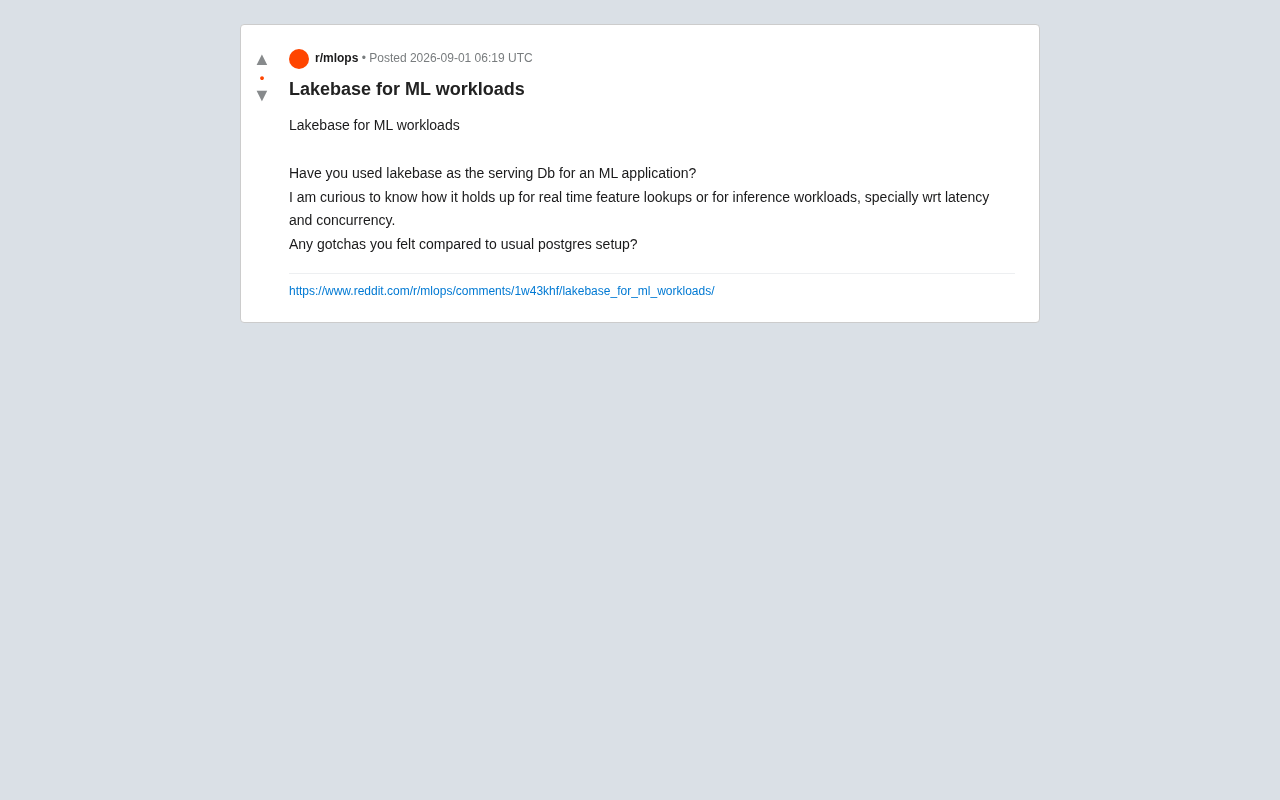
Can Lakebase Handle ML Real-Time Feature Serving? A Deep Dive into Latency and Concurrency
In-depth analysis of Databricks Lakebase as a real-time ML feature serving database, evaluating latency, concurrency, consistency, and cost versus traditional Postgres with practical selection advice.
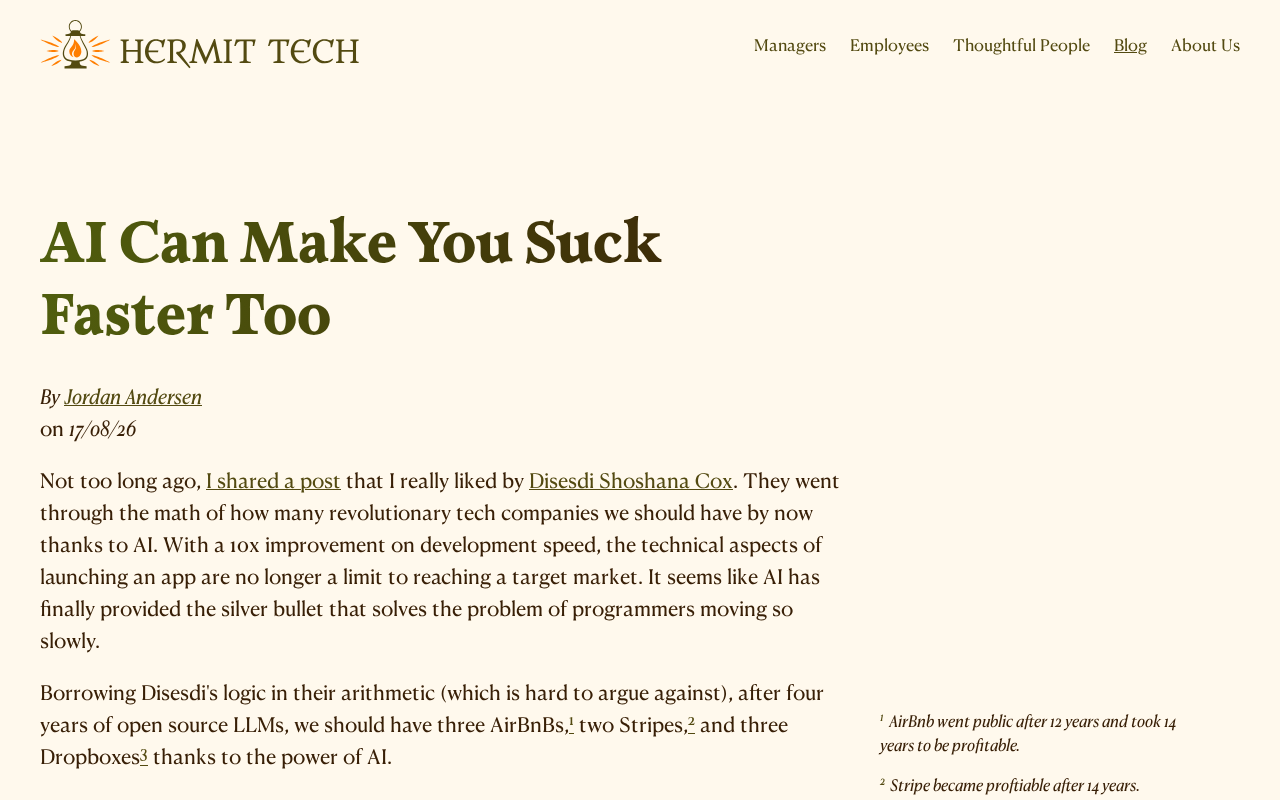
The Truth About AI Coding Tools: They'll Only Help You Write Bad Code Faster
AI coding assistants amplify ability, not fix it. Without solid engineering foundations, Copilot and Cursor only accelerate low-quality code production.