Anthropic Abandons Markdown? New AI Coding Trend Sparks Debate

An Anthropic engineer argues documents in the AI coding era should shift from Markdown to HTML, sparking fierce debate among developers.
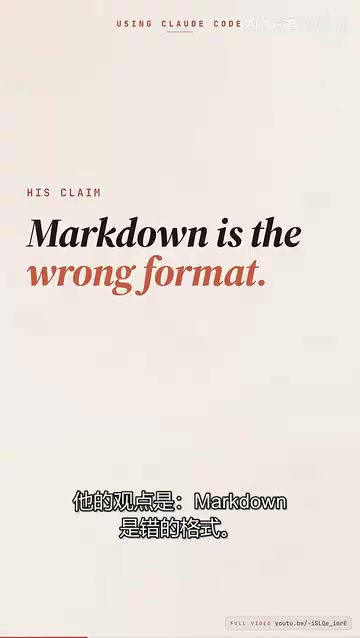
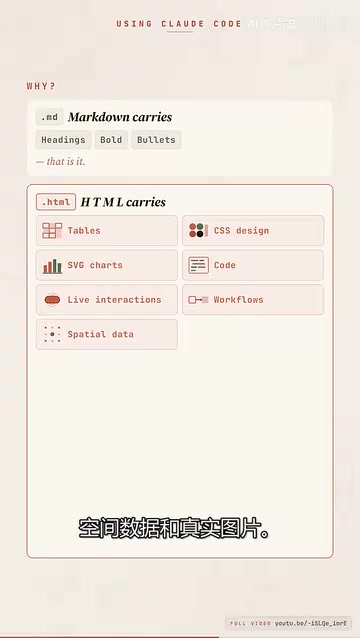
Anthropic engineer Thariq claims Markdown is "the wrong format" and advocates moving specs, planning documents, and PR descriptions to HTML, splitting the developer community. His core argument: Markdown only carries headings, bold text, and lists, while HTML supports tables, CSS, SVG charts, code interaction, and embedded resources, letting AI agents draw real charts instead of "faking" them. Supporters say that as document consumers shift from humans to agents, format standards should move from human readability to machine operability; opponents stress Markdown's simplicity, universality, and efficiency in version control and code review. The article sorts out the essential differences between the two formats, five scenarios that could change radically, and the workflow debate behind the controversy, ultimately advising developers to choose by scenario: HTML for rich expression, Markdown for lightweight collaboration.
A Debate About Markdown
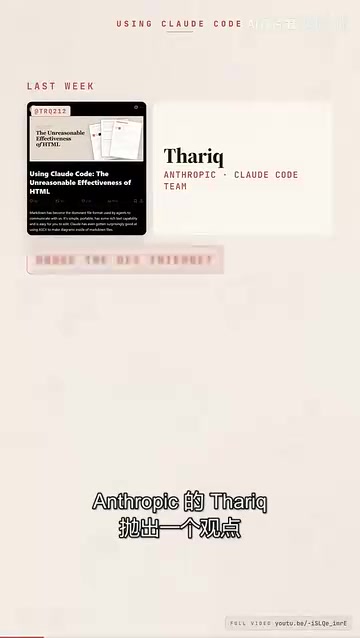
Last week, an engineer at Anthropic named Thariq raised a point on social media that quickly shook the developer community. He argued that Markdown is "the wrong format" and advocated that in the AI coding era, almost everything—from specs and planning documents to PR descriptions—should shift to HTML. The claim split the comments section sharply, with supporters and opponents each holding their ground. According to an interpretation by Bilibili creator "DIY Smart Code," Thariq's core argument is: Markdown can only carry headings, bold text, and bulleted lists, whereas HTML can carry tables, CSS design, SVG diagrams, live code interaction, workflow spatial data, and formal images.
The Essential Difference Between the Two Formats
Behind Thariq's view is a reexamination of what documents can carry. Markdown was designed to be lightweight, easy to read and write; it excels at handling plain-text structure but falls short when presenting complex data. HTML is different—it natively supports rich visual elements and interactive logic. Thariq points out that when an AI agent is given HTML, the agent no longer "fakes" charts but draws real ones directly. This shift from "description" to "presentation" could fundamentally change how developers collaborate with AI.
SVG (Scalable Vector Graphics) is an XML-based vector image format that describes shapes, paths, and styles in text, so it can be embedded directly in HTML documents and rendered by browsers. Unlike bitmaps, SVG does not lose fidelity when scaled, and its source code can be read and generated by AI agents—an agent can output SVG code to precisely express bar charts, flowcharts, or architecture diagrams without relying on external drawing tools or generating an uneditable image. This is the technical basis for Thariq's emphasis that HTML can "draw real charts": Markdown cannot embed renderable vector graphics, while HTML combined with SVG makes the document itself a visualization medium.
Why HTML May Be Better Suited for AI Agents
From "Skim" to "Open"
Thariq summed up the audience difference between the two formats with a vivid contrast: Markdown is something you skim; HTML is something you open. In workflows involving AI agents, documents are no longer just static text for humans to read—they are dynamic carriers that agents need to parse, operate on, and generate. The structured semantics and visualization capabilities HTML provides allow agents to understand context more accurately and reduce information loss.
Radical Changes in Five Scenarios
According to the video, switching to HTML brings radical changes in five scenarios. Although the original did not elaborate on each, it can be inferred that these scenarios involve specifications, planning documents, PR descriptions, data reports, and interactive presentations. In these scenarios, HTML's tables, styles, and embedded resource capabilities can make AI-generated output closer to the final product form rather than an intermediate draft. For example, a spec written in HTML can directly embed prototype diagrams, state tables, and runnable code snippets—something Markdown struggles to achieve.

Controversy and Doubts
Why the Comments Section Split
Not everyone agrees with Thariq's claim. Opponents argue that Markdown's simplicity and universality are its greatest strengths, and that HTML's complexity introduces unnecessary maintenance costs. In version control, code review, and plain-text collaboration scenarios, Markdown remains hard to replace. In addition, HTML rendering depends on the environment, and support across toolchains varies, which may create friction in team collaboration.
The diff comparison in version control is key background for understanding this debate. Tools like Git display changes as line-by-line text comparisons. As plain text, Markdown modifications are clearly readable in diffs, allowing reviewers to quickly locate additions and deletions. HTML documents, however, have deeply nested structures and verbose tags; the same content changes are often drowned in tag noise in diffs, significantly raising code review costs. Moreover, HTML rendering depends on browsers or specific toolchains, and different platforms support CSS and scripts inconsistently, which may cause the same document to render differently across environments. These frictions at the engineering practice level are the core reason opponents worry about maintenance costs.
Format Choice in the Agent Era
The essence of this debate is that once AI agents enter the development process, the role of document formats needs to be rethought. If the primary consumer of documents shifts from humans to agents, then the criteria for choosing a format should shift from "human readability" to "machine operability." HTML does have an advantage here, but Markdown is not defenseless—its plain-text nature keeps it efficient for diff comparisons and automated processing.
An AI agent is an intelligent program capable of autonomously perceiving its environment, making plans, and calling tools to execute multi-step tasks, distinct from chatbots that only handle single-turn Q&A. In coding scenarios, agents can read documents, modify code, run tests, and submit PRs. The significance of document formats for agents is that they are both the input through which agents obtain context and the carrier for agents' output. Structured, semantically clear formats reduce information loss during agent parsing, while rich media capabilities make agents' output closer to directly usable finished products. Therefore, when agents become important consumers and producers of documents, the weight of a format's "machine operability" rises—this is the underlying logic of Thariq's push for HTML.
Implications for Developers
Thariq's view does not necessarily mean Markdown will die immediately, but it reminds developers that with AI coding tools becoming increasingly widespread, choosing document formats requires more deliberate consideration of agent participation. For carriers that need rich expression, such as specifications and design documents, trying HTML may bring unexpected efficiency gains; for lightweight scenarios such as quick notes and code comments, Markdown remains a reasonable choice. The format debate is at heart a workflow debate—whoever decides the shape of documents holds the initiative in collaboration.
According to the summary by Bilibili creator "DIY Smart Code," the value of this discussion is not in concluding that "Markdown is dead," but in forcing developers to reexamine those taken-for-granted tool choices. As AI agents begin to participate deeply in the coding process, even infrastructure like document formats deserves reevaluation.
Related articles

Gemini 4 Neon Leak: A Potential Strong Contender Against Opus 5.5
A Hacker News thread suggests Gemini 4 Neon looks like an Opus 5.5 competitor. This article unpacks the product positioning behind this community signal, shifts in the top-model competitive landscape, and what it means for developers' model selection strategy.

Claude Fable 5.2's Self-Authored Short Film 'Fable' Sparks Discussion
A short film 'Fable,' credited to Claude Fable 5.2 for script, visuals, and directing, appears on Hacker News. This article analyzes the significance of full-pipeline AI creation, community reactions, and what it means for content creators.

Anthropic IPO Pricing: A Signal of AI Giants Going Public
Anthropic's IPO pricing draws attention. This article analyzes its potential impact on AI industry valuation, commercialization paths, and the competitive landscape, and highlights public-market expectations and challenges for AI companies.