Anthropic and OpenAI Introduce Independent Safety Audits: A Critical Step for AI Governance
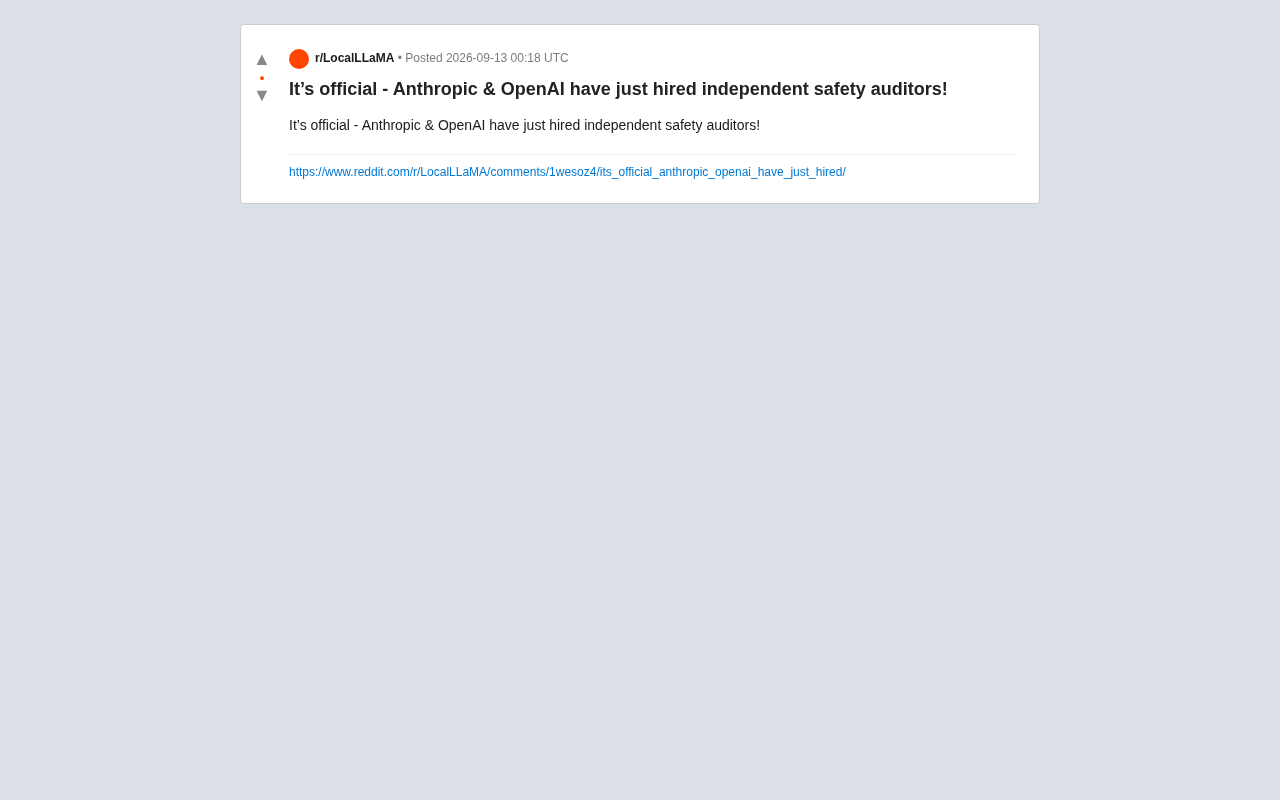
Anthropic and OpenAI reportedly introduce independent safety audits, potentially setting a new industry precedent for AI governance.
Anthropic and OpenAI have reportedly hired independent safety auditors to conduct external risk reviews of their AI models. The core significance is breaking the longstanding "player-referee" conflict of interest, where frontier labs simultaneously drive model capabilities while assessing their own safety risks. The signaling effect from these two leading companies could push the industry toward new safety benchmarks, complementing government regulation and public evaluations in a multi-layered governance framework. However, the real value of independent audits depends heavily on auditor expertise, model access, institutional independence, and transparency of results — without these, audits risk becoming tools for "safety washing." Public details on scope and disclosure remain limited.
A post from the Reddit community has recently caught the attention of the AI industry: Anthropic and OpenAI have reportedly hired independent safety auditors for their frontier AI models. While details remain limited, the news touches on one of the most central questions in generative AI development — how to establish credible, verifiable external oversight mechanisms for powerful AI systems.
What Independent Safety Audits Actually Mean
In traditional software and financial industries, third-party audits are well-established practice. Auditors, operating independently from developers, are responsible for verifying whether systems meet safety standards and whether hidden risks exist. For AI labs, introducing independent safety audits means that model capability assessments, risk testing, and alignment verification are no longer conducted solely in-house — they become subject to scrutiny by external professional organizations.
The significance of this shift lies in breaking the "player-referee" conflict of interest. For a long time, frontier AI labs have simultaneously driven model capabilities while also evaluating their own safety risks — a dual role that inherently creates conflicts of interest. Independent audits have the potential to provide a more objective risk profile.
Why Anthropic and OpenAI
As the two most prominent frontier model developers today, Anthropic and OpenAI have both made "AI safety" a central part of their public narratives. Anthropic has emphasized Constitutional AI and interpretability research since its founding, while OpenAI maintains dedicated safety and alignment teams.
These two companies pioneering independent audits carries a clear industry signaling effect. Once leading players establish externally verifiable safety processes, other labs will face pressure to follow suit — potentially driving the entire industry toward new safety benchmarks.
Potential Impact on AI Governance
From a broader perspective, independent safety audits serve as an important complement to the "external accountability" layer of AI governance frameworks. Together with government regulation, industry self-regulation, and public benchmarking, they form a multi-layered risk defense system:
- Improved transparency: External audit reports can provide regulators and the public with more credible safety information.
- Standardized risk assessment: The involvement of independent bodies helps establish unified evaluation methodologies.
- Enhanced public trust: Third-party endorsement can help ease societal concerns about AI going out of control.
However, for independent audits to truly work, several practical challenges must be addressed: the auditors' professional expertise, their level of access to models, guarantees of institutional independence, and the degree to which audit results are made public. If audits become superficial, they risk becoming tools for "safety washing" rather than genuine oversight.
Questions Worth Watching
Given that publicly available information remains limited, specifics about the auditors' identities, scope of review, evaluation methodologies, and result disclosure practices are still unclear. These details will directly determine whether this represents a substantive governance advance or merely a symbolic PR move.
For practitioners and observers focused on AI safety, key things to monitor going forward include: whether audit reports will be made public, whether audits cover the full model training pipeline, and whether audit findings can genuinely influence model release decisions. These are the critical indicators for measuring the real value of independent safety audits.
As frontier model capabilities advance rapidly, establishing credible external oversight mechanisms has become a consensus direction for the industry. Whatever the ultimate outcome, the moves by Anthropic and OpenAI offer a practical case study in AI safety governance worth tracking closely.
Related articles

Spotit: Turn Every Mac App into a Real-Time Interactive Tutorial
Spotit is an AI-powered interactive tutorial tool for Mac. Press a shortcut, ask in plain language, and it highlights exactly where to click next — guiding you through any Mac app as you learn by doing.
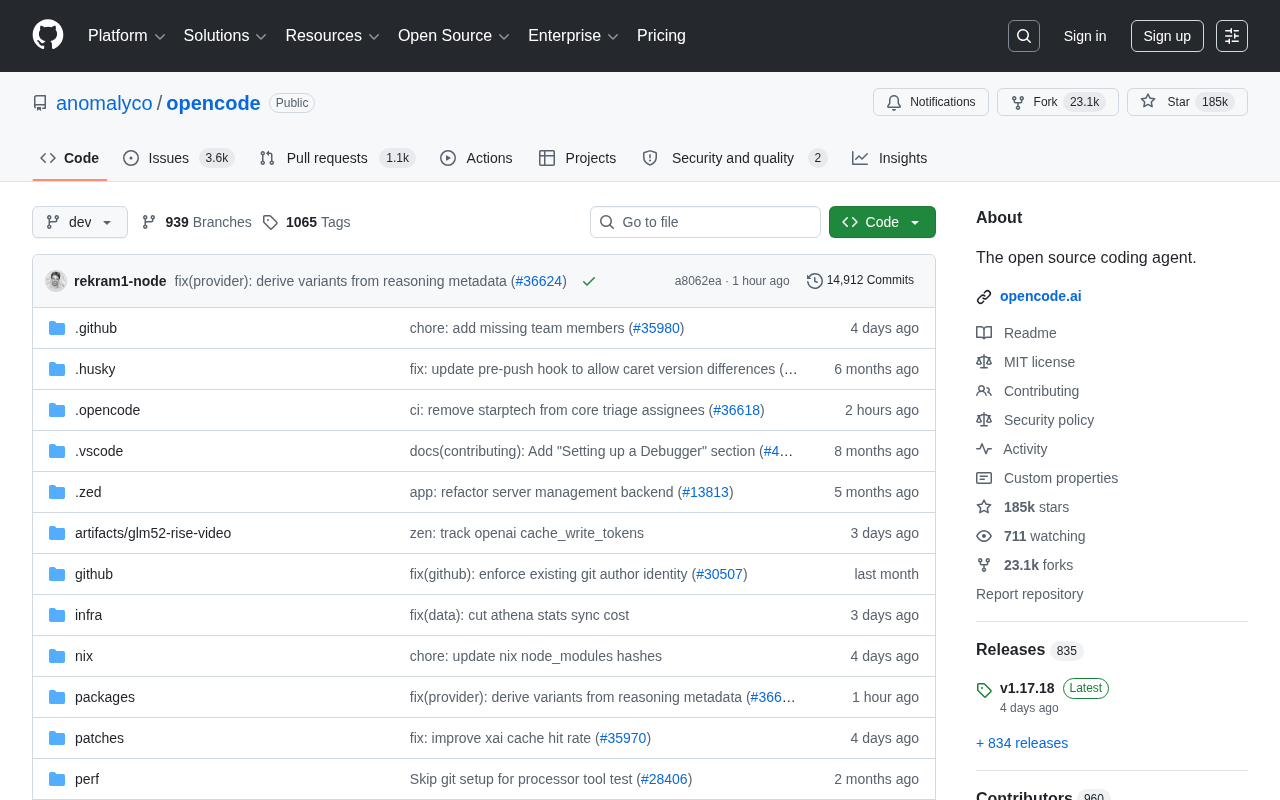
OpenCode: The Open-Source Coding Agent That Hit 150K GitHub Stars
OpenCode is an open-source TypeScript coding agent with 150K+ GitHub stars. Learn about its features, advantages, and use cases for AI-powered development.
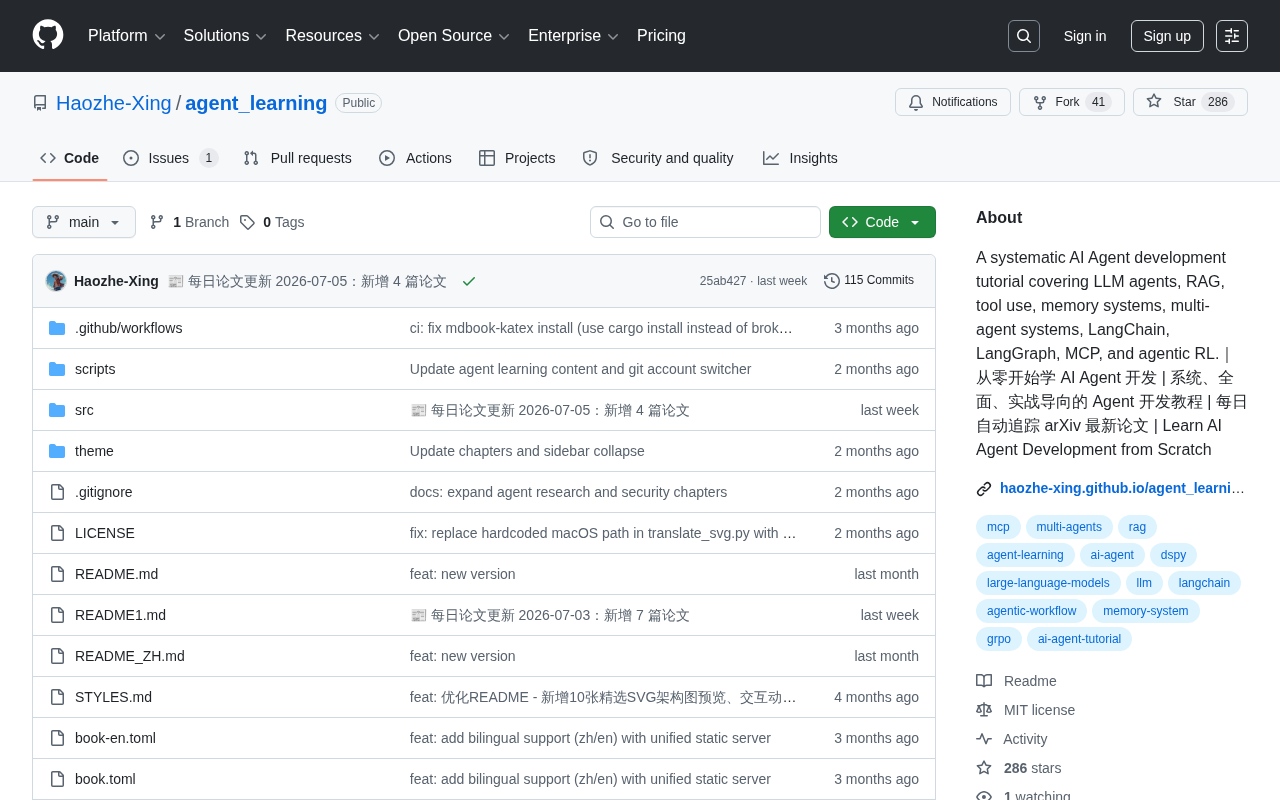
Learning AI Agent Development from Scratch: An Open-Source Tutorial Worth Bookmarking
Haozhe-Xing/agent_learning is a systematic, hands-on open-source tutorial for learning AI Agent development from scratch, with daily arXiv paper tracking built in.