Anthropic Blocks Third-Party Tools: OpenCode Alternative Setup Guide

Anthropic blocks third-party tool access to subscriptions while competitors embrace open strategies
Anthropic has begun using technical measures to prevent developers from accessing its Claude Code Max subscription service through third-party tools like OpenCode and Cursor, building an Apple-like walled garden ecosystem. Their motivation includes economic considerations under the subscription model, but more fundamentally centers on controlling the developer ecosystem — allowing Agents built on their official SDK while banning independent tools. Meanwhile, competitors including OpenAI, Google, and Zhipu AI are opening up access, adopting strategies of providing infrastructure rather than locking in users.
Anthropic Is Building a Walled Garden
The developer community recently exploded — not because of yet another new JavaScript framework, but because Anthropic has officially started cracking down on developers using third-party tools to access its subscription services. If you've been using the Claude Code Max plan (the $200/month one) and calling it through OpenCode, Crush, or other custom Agents, you've likely already seen error messages — Anthropic is pulling the plug.
The error messages they throw make it clear: your credentials are only authorized for use with the official CLI tool. This is essentially an "Apple-style" strategy — building a closed ecosystem around their own models. The so-called "Walled Garden" is a classic platform control strategy in the tech industry, where companies use technical or commercial means to confine users within their own ecosystem, preventing access to external services or use of third-party tools. Apple's App Store is the most typical example — developers must go through Apple's review, use Apple's payment system, and follow Apple's rules, or they can't reach iOS users. Anthropic is now using User-Agent detection, API key binding, and account behavior analysis at the technical level to identify unofficial clients, essentially force-binding subscription service usage rights to specific software clients. They don't want you using your preferred interface — they want you using the one they control. This is classic vendor lock-in.
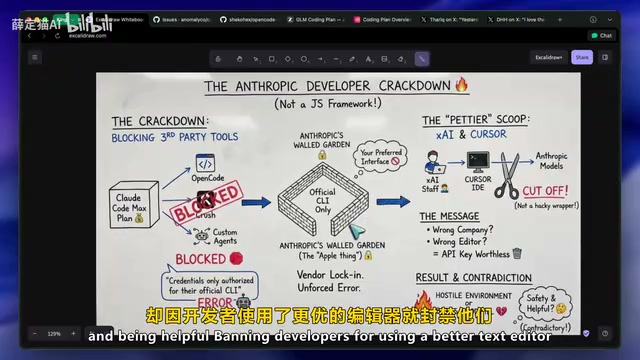
Even more shocking, there are reports that XAI employees have been completely cut off from accessing Anthropic's models. The key point is that they weren't even using some hacker tool — they were using Cursor, a mainstream editor that practically everyone uses. Anthropic's technical methods for identifying third-party clients primarily rely on the User-Agent field in HTTP request headers — a string in every HTTP request that identifies the sending software's identity. The official Claude Code CLI sends a specific User-Agent identifier, while OpenCode, Crush, and other tools send different ones. Additionally, Anthropic may also detect through multiple dimensions including request frequency patterns, concurrent connection counts, and organizational attribution of request source IPs (which is exactly how they identified XAI employees using enterprise IP ranges). This means: if you work at the "wrong company" or use the "wrong editor," your API key is worthless.
The Economic Logic Behind Subscription Pricing
To understand Anthropic's move, you need to first understand the inherent contradiction in their pricing structure. Claude Code Max's $200/month subscription offers high-limit token usage, while in Anthropic's pay-as-you-go API, Claude 3.5 Sonnet's input token price is approximately $3 per million tokens, with output at approximately $15. A heavy-use developer might consume hundreds of dollars worth of compute per month through the API. The subscription model is essentially Anthropic's bet on average user consumption — they expect most users won't max it out, thereby achieving profitability. But when third-party Agent tools (like OpenCode) improve usage efficiency and actual consumption far exceeds expectations, each subscription user goes from profitable to loss-making. This is the direct economic motivation behind Anthropic's blocking behavior, even though they package it as "ecosystem control."
OpenAI, Google, and Other Competitors Are Opening Their Doors Wide
While Anthropic is busy locking doors and checking IDs, other players in the industry — Google, OpenAI, GLM (Zhipu AI), and Minimax — have opened their doors wide in OpenCode.
This is a major shift. In OpenCode's latest version, you can now officially use ChatGPT Plus or Pro subscriptions to power coding Agents without paying additional per-token API fees. The same goes for Google — you can access Gemini 3 Pro directly in OpenCode through Anti-Gravity, and ironically, even access Claude 4.5 Opus.
It's not just US tech giants. Zhipu AI has launched a DevPack coding plan, and Minimax has its own dedicated coding plan. Their philosophy is completely different from Anthropic's — allowing you to use high-limit plans in any tool, without binding to specific terminal interfaces or proprietary marketplaces. They just provide the intelligence layer and say: "Go build cool things with your favorite IDE."
This "providing the intelligence pipeline" positioning is similar to AWS's strategy in the early days of cloud computing — not competing with customers, focusing on providing infrastructure, and letting the ecosystem grow naturally. OpenAI's API has become the "de facto standard interface" in the AI field — a massive number of tools, frameworks, and services prioritize OpenAI format support, and this network effect itself is a moat. Google's Gemini series needs to maximize exposure while catching up, and opening access to third-party tools is the fastest path to obtaining real user feedback and usage data. Zhipu AI and Minimax, as Chinese AI vendors, have relatively low brand awareness in international markets, and an open strategy is a necessary means to quickly build developer communities.
Anthropic's Double Standard: Control, Not Cost
There's a key contradiction here: Anthropic actually released something called the Agent SDK. An SDK (Software Development Kit) typically includes officially certified libraries, standardized API call interfaces, and Tool Use specifications. By allowing Agents built on the official SDK to use subscription credentials, Anthropic is effectively establishing a "franchise" system — you can start a business within their framework, but you can't bypass it. If you build an Agent using their specific SDK, you're allowed to authenticate with a Claude Code subscription and use those subsidized tokens. But if you build a tool like OpenCode or Crush — doing exactly the same thing, just existing outside their SDK, or offering a better UI than their terminal app — you get banned. This logic is identical to Microsoft's early control of the software ecosystem through Windows APIs and Google's control of the Android ecosystem through GMS certification.
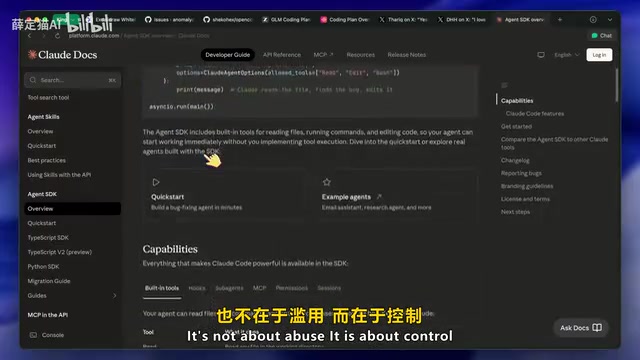
This proves the issue isn't about model cost, nor about abuse — it's about control. They don't mind you using compute, as long as you're locked into their development ecosystem. The moment you step outside and use a tool that gives you more freedom, they shut down your access.
Selective Enforcement Exposes Hypocritical Logic
Following Anthropic's logic for banning XAI, they should immediately cut off Cursor and its millions of users — because Cursor is also developing its own models (CursorTab, etc.). But they won't do that. Why? Because they know that if they ban Cursor, they'll lose massive revenue, free marketing, and the reputation of "performing best in the most popular AI editor."
Related articles
 Industry Insights
The IRS Mobile App Debate: A Trust Crisis in Government Digital Transformation
The IRS's proposed mobile app has sparked heated debate. This article analyzes the core arguments, exploring data security, privacy, and the trust crisis in government digital transformation.
 Industry Insights
IRS Fully Embraces Claude AI, Accelerating Federal Government's AI Adoption
The IRS is recruiting staff with 24/7 Claude AI access, marking Anthropic's breakthrough into the federal government. Explore the strategic implications and tax use cases.
 Industry Insights
Nadella Introduces the Loopcraft Framework: Building AI Ecosystems Through Feedback Loops
Microsoft CEO Satya Nadella's Loopcraft framework explains how to build frontier AI ecosystems through nested feedback loops across technology, business, and ecosystem dimensions.