Anthropic CEO Rejects AI Controlling Humanity Accusation: Calls It Absurd

Anthropic CEO Amodei denies handing control to AI, calling the accusation absurd.
Anthropic CEO Dario Amodei publicly responded to competitor accusations, denying the claim that he is "handing over human control to AI" and calling it "absurd." The controversy stems from leading AI companies increasingly automating their own R&D and model development processes, raising concerns about whether humans are losing control of AI systems. The article argues that "control" became an attack point because, in the heated AI race, companies are competing for AI safety discourse and a responsible image; such accusations are more of a public relations battle. But as AI autonomy grows, ensuring humans retain ultimate control remains an unavoidable governance challenge for the industry.
The Focus of the Controversy: Is AI Slipping Out of Human Control?
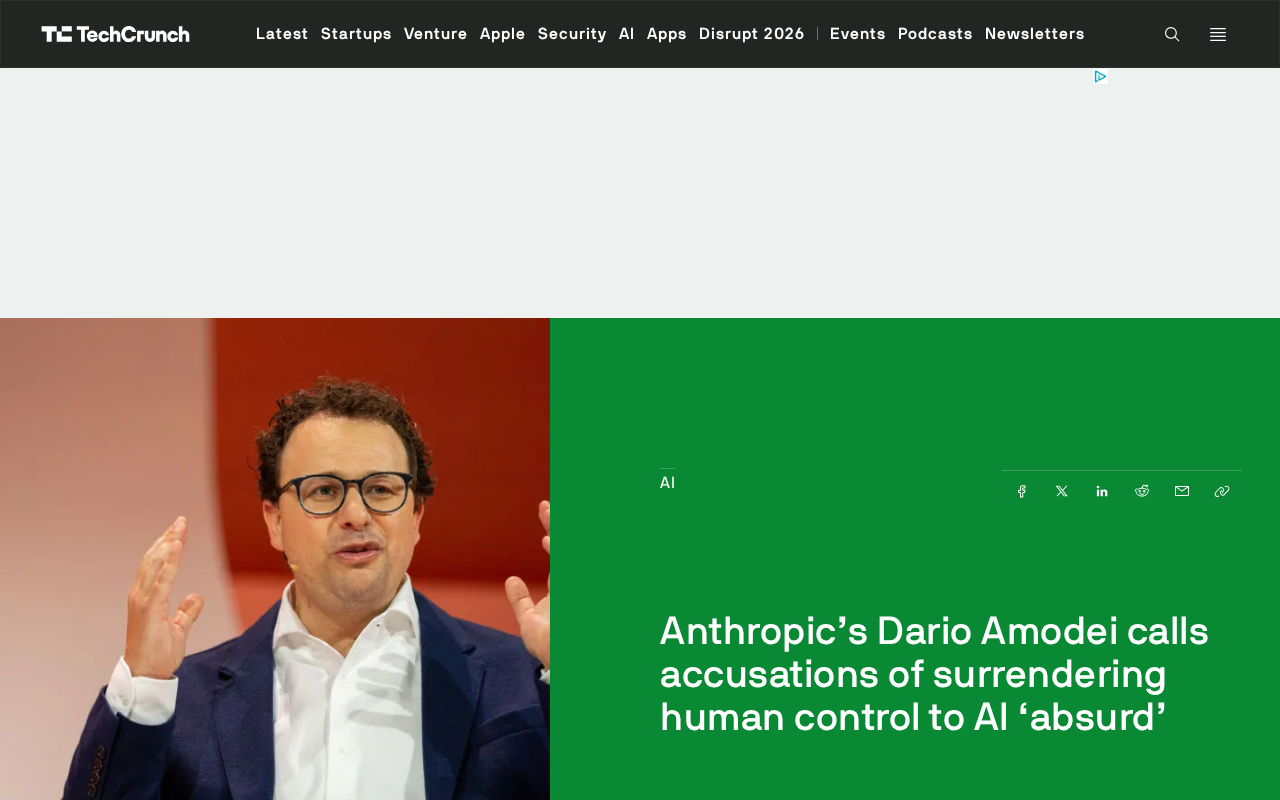
Recently, Anthropic CEO Dario Amodei publicly responded to accusations from competitors, calling the claim that Anthropic is "handing over human control to AI" "absurd." The backdrop to this debate is that leading AI companies are increasingly automating their own R&D and model development processes, raising concerns about whether humans are losing their grip on AI systems.
According to an RSS source report, Amodei explicitly denied the competitors' accusations, emphasizing that Anthropic's position is not about abandoning human oversight of AI.
The Control Anxiety Behind Automated R&D
Let humans control AI, or let AI evolve autonomously? This has become an increasingly sharp point of divergence within the AI industry. As top companies use AI to accelerate AI research itself—so-called "automated R&D"—critics worry that this process may gradually push humans out of key decision-making roles.
Amodei's rebuttal directly targets this anxiety. He argues that portraying Anthropic as "surrendering human control" is a distortion. Although the specifics of the accusations have not been fully disclosed, this public exchange reflects deep-seated unease in the industry about the path of AI development.
Automated AI R&D refers to letting AI systems participate in or even lead the research and development process of AI itself, including model architecture search, hyperparameter tuning, training data selection, code generation and evaluation, and other stages. Its core logic is "using AI to accelerate AI," leveraging model self-improvement to shorten development cycles. This concept is closely related to "recursive self-improvement"—if AI can significantly enhance the capabilities of the next generation of AI, capability growth may follow an accelerating curve. Critics worry that as key decisions (such as setting training objectives and safety evaluation standards) are gradually delegated to AI, human oversight may degrade from "substantive gatekeeping" to "formal confirmation," thereby weakening actual control over the system. Supporters argue that automation can improve R&D efficiency while humans retain goal-setting and final approval authority; the key lies in designing reasonable oversight and interruption mechanisms.
Competition and Narrative: Why "Control" Became an Attack Point
With the AI race at a fever pitch, "who is more responsible" has become a key narrative for companies. Competitors' choice to attack Anthropic with "abandoning human control" is essentially a contest over the discourse on AI safety. Amodei's forceful use of the word "absurd" shows that Anthropic does not want to be labeled negatively on this core issue.
From an industry analysis perspective, this exchange of accusations and rebuttals may be more of a public relations battle than a fundamental clash over technical approaches. But it is true that as AI systems become more autonomous, how to ensure humans always retain ultimate control remains an unavoidable challenge for the entire industry.
AI safety discourse refers to the ability of various parties to compete for the right to define "what kind of AI development path is safer and more responsible" and to win public trust. Amid tightening regulation and rising public attention, safety narratives directly affect corporate reputation, policy influence, and business partnerships. Therefore, labels like "abandoning human control" are highly damaging: they turn technical differences into ethical stance issues, forcing the accused party to publicly clarify. This discourse competition may not correspond to real technical differences, but it shapes the cognitive frameworks of regulators and the public, thereby influencing the direction of industry rule-making.
Conclusion: The Control Debate Is Far From Over
Amodei's response clarified Anthropic's public position, but the debate over AI control will not subside. With automated R&D becoming a trend, the industry needs more transparent discussion and clearer governance frameworks, not simple mutual recrimination.
Related articles

Michael Nielsen Takes Down His Classic Neural Network Textbook, Sparking Community Discussion
Michael Nielsen's classic free textbook Neural Networks and Deep Learning has been taken offline, sparking discussion on Hacker News about the reasons and impact.

Inside the AI Training Data Market: The Trade-off Between Exclusivity and Discounts
G2i founder Gabe Greenberg reveals the dual-track pricing of the AI training data market: labs pay a premium for exclusive data or accept discounts that allow others to buy it.

SessionGraph: Unifying All Coding Agent Sessions in One Interactive Graph
SessionGraph aggregates coding agent sessions into an interactive graph, helping developers review, debug, and manage AI coding workflows across sessions. This article examines its positioning, value, and open questions.