Anthropic Drops Git: AI Coding Surge Sparks In-House Version Control System

AI agents drove a tenfold surge in code merges, prompting Anthropic to migrate its main repo from Git to in-house Scion.
According to a YouTube video, Anthropic moved its primary codebase from Git to an in-house version control system, Scion, because AI agents expanded code change volume dramatically: daily merges rose from ~2,500 in May to over 30,000 in September. Scion isn't a general Git replacement but internal infrastructure for Anthropic's ultra-large-scale AI-driven environment. The real signal: when code production outpaces general-purpose tools, top companies build their own.
Anthropic Drops Git: AI Coding Surge Sparks In-House Version Control System
A rumor from YouTube has set the developer community abuzz: Anthropic has migrated its primary codebase from Git to an in-house version control system called Scion. At first glance it sounds like clickbait, but the numbers behind it are impossible to ignore—when AI agents commit tens of thousands of code changes per day, Git really does start to choke.

From 2,500 to 30,000: AI Has Pushed Commit Volume Up Tenfold
According to the video, Anthropic was merging roughly 2,500 code changes per day in May, and by September that figure had climbed to over 30,000—a more than tenfold increase. A shift of this magnitude can't be explained by hiring a few hundred more engineers; it points to a fundamental transformation: the entity writing code is expanding from human developers to AI agents.
When AI agents continuously generate and modify code at this scale, the bottleneck shifts from "how to write" to "how to manage." Code review, merge conflicts, build queues, history tracing—all of these degrade rapidly under traditional Git workflows as commit frequency explodes.
"Merging code changes" typically refers to a Pull Request (or equivalent process) being reviewed, approved, and merged into the main branch—not an individual local commit. The distinction between these two metrics is crucial: local commits can be cheap, whereas a merge means the change has passed code review, CI builds, and conflict resolution, and has genuinely landed in the shared codebase. So the daily merge volume rising from 2,500 to 30,000 reflects a more-than-tenfold amplification of load on the review and integration stages, not just growth in commit counts. This is also why the article emphasizes that bottlenecks concentrate in code review, merge conflicts, and build queues—precisely the stages along the merge path.
Scion Is Not a Git Killer, but Tailor-Made for AI Workloads
Anthropic's in-house Scion system has completed migration of the primary codebase. But the video specifically emphasizes a key caveat: Scion was not designed to replace Git—it is internal infrastructure customized for Anthropic's own ultra-large-scale, AI-driven engineering environment.
In other words, ordinary development teams need not panic in the short term, nor rush to find a "Git replacement." Scion's emergence is more like a flare—when code production speed crosses a certain threshold, general-purpose tools become bottlenecks, and leading companies are forced to build their own wheels from the ground up.
From an engineering perspective, the choice is reasonable. Git's branching model and merge strategies were designed for the rhythm of human collaboration. Faced with high-frequency, fine-grained, potentially concurrent code modifications from AI agents, it exposes weaknesses in lock contention, object storage, and review workflows. An in-house system can be optimized specifically for these pain points—for example, finer-grained change tracking or automated conflict pre-processing.
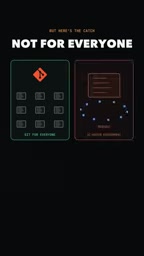
Git uses a distributed object model: each commit generates tree objects pointing to file snapshots, stored with SHA hash-based content addressing, and a branch is essentially just a mutable pointer to a commit. The advantages of this design are offline availability, tamper-proof history, and extremely low branch creation cost; the price is that repository size grows linearly with history, very large repositories require mechanisms like partial clone and sparse checkout to cope, and merge conflict resolution still relies heavily on human judgment. When changes pour in at high frequency, fine granularity, and concurrency, lock contention (such as ref updates), object storage growth, and manual review queues come under pressure simultaneously—which is exactly where general-purpose tools expose their weaknesses at extreme scale.
The Bigger Story: AI Is Reshaping the Infrastructure Layer of Software Engineering
The video concludes by highlighting the real theme: AI changes not only how we write code, but also the tools, workflows, and infrastructure that support software development. This judgment deserves serious consideration.
Over the past few years, the main battleground for AI coding assistants has centered on code generation quality. But as agents begin to take on code modification tasks at scale, the competitive focus will migrate upstream—version control, CI/CD, code review, test orchestration—these "plumbing" stages all need to be redesigned to accommodate AI's production pace. Anthropic's Scion is one of the earliest cases to surface in this trend, but it likely won't be the only one.
CI/CD (Continuous Integration/Continuous Delivery) refers to the pipeline that automatically triggers builds and tests on code changes and delivers deployments. Its throughput is typically measured by "concurrent build count" and "per-pipeline duration," and under human commit rhythms these capacities are planned on a per-day/per-hour basis. When merge frequency increases by an order of magnitude, pipelines experience queue backlogs and delayed test feedback, which in turn slows the entire merge chain—even if version control itself is fine, CI becomes the new bottleneck. Thus infrastructure redesign doesn't happen only at the version control layer; it also includes test selection (running only affected cases), cache reuse, and review automation, among other supporting stages.
Will Git Die? Not in the Short Term
Back to the question posed in the title. Git won't perish because of one internal migration at Anthropic. It remains the standard version control tool for the vast majority of open-source projects and enterprises worldwide, and its ecosystem maturity and network effects are unassailable in the short term.
But "will Git be replaced" may itself be the wrong question. A more accurate question is: when AI pushes code change volume up by an order of magnitude, how much longer can existing development infrastructure hold up? Anthropic's answer was to vote with its feet—build its own. Other organizations reaching similar scale will eventually face the same choice.
For most developers, the practical significance of this is to pay early attention to how AI workflows affect version control strategy: whether branch management needs adjustment, whether review processes can be automated, whether commit granularity is still reasonable. Tool replacement often lags behind changes in how we work—and how we work is already changing.
One-line Summary
AI agents drove a tenfold surge in code merges, prompting Anthropic to migrate its primary repository from Git to an in-house system called Scion.
Paragraph Summary
According to a YouTube video, Anthropic has migrated its primary codebase from Git to an in-house version control system called Scion, because AI agents have dramatically expanded the scale of code changes: daily merges rose from about 2,500 in May to over 30,000 in September—a more than tenfold increase. The article notes that Scion is not a general-purpose Git replacement but internal infrastructure customized for Anthropic's ultra-large-scale, AI-driven engineering environment, so ordinary teams need not panic. The real signal is that when code production speed crosses a threshold, general-purpose tools like version control, code review, and CI/CD become bottlenecks, forcing leading companies to build their own. Git won't die in the short term, but the pace of AI coding is forcing a redesign of the development toolchain.
Related articles

One Neuron Detects Both Cats and Cars? We Reproduced It and Found a New Explanation
The cat-car neuron reinterpreted: researcher Cammarata argues it distinguishes pointy from round, not cats from cars. We reproduced the experiment and found the new explanation holds on most inputs—but cars are the exception. The interpretability debate continues on language models.

MCP Server + Python Assistant: A MicroStation Design Efficiency Revolution
Explore the early preview of the MCP Server and Python Assistant in MicroStation 2026: custom tools in five minutes, intelligent sheet index checks, and how AI is reshaping drawing workflows to unleash design creativity.

Was the Neural Network Always "Clean"? Interpreting Goodfire's Long-Form Explainability Essay
Goodfire researcher Nick Camerata proposes a working hypothesis: neural networks are not tangled knots of polysemanticity but were clean all along. From reinterpreting the cat-car neuron, recursive generalization, and ~90% single-duty neurons in Qwen3-32B to a four-neuron diagnostic circuit, this article unpacks the core evidence and controversies of this long-form explainability essay.