One Neuron Detects Both Cats and Cars? We Reproduced It and Found a New Explanation

Reproducing the "cat-car neuron" reveals it actually distinguishes pointy from round, not cats and cars.
The article centers on the "cat-car neuron" that went viral in 2017. It was long seen as evidence that neural networks are internally messy and incomprehensible, explained by the "superposition" hypothesis. In October 2025, Cammarata—one of the original paper's authors—published a long article proposing a new explanation: feature visualization methods themselves favor easy high-scoring paths like animal faces, and the neuron actually distinguishes "pointy" from "round," growing outward from a core concept. The author reproduced this on Inception V1 using unoptimized shapes, photos, and same-species comparisons, finding the pointy-vs-round explanation holds in most cases but not for cars, and that the neuron is not unique. Turning it off has almost no effect on final classification. The article further notes that Anthropic and Goodfire reach clearly different conclusions on language model interpretability, that negative directions may carry more information, and calls for public comparisons using the same model and method.
One Neuron Detects Both Cats and Cars? We Reproduced It and Found a New Explanation
A single neuron that responds both to cat faces and to car front ends. This case, known as the "cat-car neuron," has for years been treated as typical evidence that neural networks are internally messy and incomprehensible. In October 2025, one of the researchers who originally made this neuron famous published a long article admitting he may have misread it. We decided to reproduce the experiment ourselves to see what the truth really is.
Why One Neuron Makes People Uneasy
In 2017, Google researchers Chris Olah, Alexander Mordvintsev, and Ludwig Schubert demonstrated a method: starting from random noise, repeatedly fine-tuning pixels to drive up a given neuron's activation value. The resulting images contained cat faces, fox faces, and car front ends.
This neuron was later written into OpenAI's 2020 network mapping guide, described as responding to "cat faces, car front ends, and cat legs." A 2021 follow-up paper even summed it up in four words: "genuinely, or cat, car."
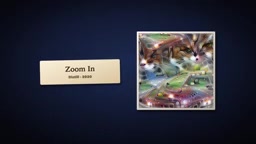
This phenomenon—one component carrying two unrelated concepts at once—was explained by "superposition": network capacity is limited while the world contains too many things, so unrelated items that rarely co-occur can share the same neuron, and the cost of occasional confusion is acceptable. In 2022, Anthropic verified with small-scale networks that superposition does exist, but for large real networks the paper was cautious—the evidence was only "consistent with superposition."
The problem is that if a single neuron is already a tangled mess, understanding the whole model seems hopeless. Anthropic CEO Dario Amodei wrote in 2025 that people are often shocked by "we don't understand how the AI we created works."
Feature visualization is a class of techniques in neural network interpretability research. The core idea is to fix network parameters, treat the input image as an optimizable variable, and adjust pixels via gradient ascent to maximize the target neuron's activation. The method systematized by Olah et al. in 2017 typically also adds regularization terms (such as frequency penalties and transformation robustness) to avoid generating adversarial-example-style noise. Images produced by such methods are not templates "stored" by the neuron but an illustration of "the input that most easily activates it"; the optimization path, choice of regularization, and initial noise all affect the result. Therefore, equating generated images directly with neuron semantics is one of the most common misreading risks of this method.
Inception V1 (GoogLeNet) is the winning network of the 2014 ImageNet competition and one of the most commonly dissected public models in interpretability research. It introduced the Inception module (parallel multi-scale convolution) and 1×1 convolution for dimensionality reduction, with a depth of about 22 layers. The "832 neurons in this layer" mentioned in this article usually refers to the number of channels in a particular convolutional layer of the network; in a convolutional network, each channel can be roughly viewed as a "feature detector," which is also the physical basis for discussing a "single neuron." It was chosen for reproduction precisely because its weights are public, its structure is relatively simple, and there is a large body of prior research.
Superposition is the mainstream hypothesis explaining "one neuron responds to multiple concepts": when the number of features to be represented exceeds the available neuron dimensions, the network can compress multiple approximately orthogonal (rarely co-occurring) feature directions into the same set of neurons, at the cost of occasional interference. Anthropic's 2022 toy model experiments showed that under sparse feature conditions, the model does spontaneously form such compressed representations. But note that superposition describes a phenomenon at the level of representation geometry and does not directly dictate that a single neuron's semantics must be "messy"; a neuron may also be encoding some more abstract, lower-level distinguishing dimension (such as "pointy vs. round" in this article), thereby superficially responding to both cat faces and car fronts. Distinguishing "mixing caused by superposition" from "natural generalization of an abstract feature" is the key to this debate.
Reinterpretation: Not Cats and Cars, but "Pointy" and "Round"
In October 2025, Nick Cammarata—a co-author of the original OpenAI paper—published a long article through the interpretability company Goodfire, calling it a "working hypothesis." The article was not peer-reviewed, and a substantial part of it dismantles his own earlier paper.
His core argument begins with the image generation method itself. This method has only one instruction: drive the activation up by the easiest path. Deep in an image network, Cammarata argues, the easiest path goes through animal faces. Under this interpretation, whiskers are not evidence that the neuron "wants cats"; rather, cats are an "easy high-scoring" path.
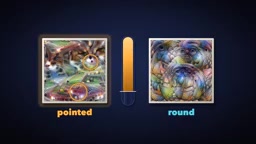
The second key move is to observe what suppresses the neuron, not just what drives it up. They generated an image for suppressing the neuron's activation, and the result was a round, flat face. Seen this way, this neuron is neither a cat neuron nor a car neuron; it makes only one distinction: pointy vs. round. Long, pointed snouts and tapering car fronts fall on the same side.
Cammarata further argues that such neurons grow outward from a core concept rather than being stuffed with unrelated concepts. He acknowledges that the network needs to represent more things than it has neurons, but questions the specific form of "packing."
We Tested It Ourselves: Does Pointy vs. Round Hold Up?
Because Inception V1 is a public model, this hypothesis can be tested. We fed the network inputs that the image generation process had never seen.
First, flat shapes: V-shaped arrows and triangles versus rings and disks, covering various sizes, angles, and colors. At every size, every angle, and every color, pointy shapes scored higher on average. Taking one random sample of each, pointy shapes won about 84 times out of 100. Some black rings even pushed the activation below zero.
Next, photos from Wikimedia Commons—about a dozen per group, neither cats nor cars. Pointy objects (high-speed train fronts, arrows, paper planes) beat round objects (clocks, oranges, soap bubbles). The closest comparison was within the same animal: nine long-snouted dogs (such as Pomeranians and Dobermans) versus four flat-faced bulldogs. Taking one random sample of each, long-snouted dogs won nearly nine times out of ten.
So on inputs that no one had optimized, the reinterpretation holds up. But it does not hold everywhere.
It does not specifically correspond to V shapes—diamonds and flat crosses also strongly activate the neuron. On simple shapes, "corners vs. smooth curves" fits better than "V shapes." Nor is this rare: when we ran the same pointy-vs-round comparison across all 832 neurons in that layer, about 100 neurons preferred pointy things more strongly than this one.
The car category does not fit. A wedge-shaped Lamborghini Countach should beat a loaf-shaped Fiat 500, but in a comparison of nine wedge-shaped cars and eight rounded cars, wedge-shaped cars won only half the time. Rounded cars actually had higher average activation, and the strongest car in the test was the Fiat 500.
Connections and Ablation: Some Details Match, but Overall Impact Is Limited
One part of the article matches the experiment: connections. Among the 528 channels feeding into this neuron, the one with the largest weight has generated images showing exactly fox and cat snouts.
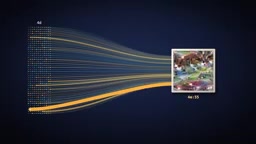
Then we turned the neuron off. On cat faces and fox faces, the response of the "flames and fox faces" neuron in the next layer dropped by about 15%, more than the influence of any other neuron in that layer on it. But among the 75 photos we tested, the network's final answer did not change for a single one.
The Real Disagreement: Two Camps Clash on Language Models
None of this resolves the larger question. What people are really worried about is language models, not a 2014 photo classifier. And the opposing side has serious arguments.
First, small activation values. Patterns in a neuron's strongest responses cannot tell us what its weaker activity means. In 2025, Anthropic found that in its models, a neuron's largest readings are usually readable, while small readings are not; discarding small readings harmed the model more noticeably than swapping in Anthropic's own translation network. Goodfire reported the opposite on its models: in an image network, discarding the smallest three-quarters of readings dropped accuracy only from 72% to 71%. Different models, different measurement methods—and we found no public comparison on the same model.
Translation networks also reveal another layer of complexity. In 2024, Anthropic used sparse autoencoders to extract millions of independent "features" from its Claude 3 Sonnet model, about four-fifths of which, upon inspection, were not closely tracked by any single neuron. Goodfire's flagship number is also still early: in an unpublished audit of the open-source chatbot Qwen3-32B, it reported that about 90% of neuron directions (up or down) each served their own purpose, but this proportion changes with where the line is drawn.
Interests also need to be considered: Goodfire sells interpretability tools, Anthropic invested in Goodfire in 2025, and three Anthropic researchers provided feedback on the article—but that does not equal endorsement.
Sparse Autoencoder (SAE) is a feature extraction tool that has emerged in recent years: it reconstructs the model's internal high-dimensional activation vectors through an overcomplete bottleneck layer and applies a sparsity penalty, forcing each hidden unit to activate on only a few inputs, thereby obtaining feature directions that are more "monosemantic" than a single neuron. In 2024, Anthropic extracted millions of such features from Claude 3 Sonnet and found that most features do not correspond one-to-one with any single neuron, supporting the view that "neurons are not reliable semantic units." But SAEs have their own limitations: whether a feature is monosemantic depends on the choice of sparsity coefficient and dictionary size, reconstruction error may lose information, and SAEs trained by different teams have limited comparability. Therefore, conclusions from SAEs and conclusions from "directly reading a single neuron" are not competing at the same level but represent two different granularities of decomposition.
Turning Off "Negative" Neurons: An Intriguing Test
Goodfire posed a puzzle to Qwen3-32B: the cookies were eaten, the milk is gone, there is soot under the chimney, and someone heard sleigh bells. Who did it? The model gave Santa Claus a 99.7% probability. Turning off 20 neurons automatically labeled "Christmas" or "Santa"—the obvious ones—dropped the probability only to 76%.

In another test, they turned off eight neurons that negatively respond to Santa. If the downward direction carries some of the information, silencing them should cause harm. And it did: Santa's probability plummeted to about 6%, and the model began blaming the family pet. Turning off eight random neurons instead kept the probability above 99%. This is just one prompt in an unpublished audit, but if it holds, the obvious labels missed the strongest control lever, while looking at the "negative" direction found it.
Back to That Image: The Microscope Needs Calibration First
Reading that image as "pointy vs. round" rather than "cats and cars" makes most of it make sense. But it still cannot explain the Fiat 500. And one neuron in a 2014 network cannot settle conclusions about the models people are really worried about.
A useful next test is easy to describe: run Anthropic's and Goodfire's comparisons on the same model, with the same measurement method, and publish the results. If Cammarata is right, the case for reading models directly neuron by neuron becomes much stronger; if not, those small readings deserve more attention.
Regardless of the outcome, this neuron has already proven one thing: before declaring a machine a tangled mess, check your microscope first.
Related articles

M&M's Spent Millions Replacing Artificial Blue Dye — Why Is It So Hard?
Mars spent millions trying to replace artificial blue dye in M&M's with spirulina, but thick material clogs pipes and residue risks mold, forcing a full production-line rebuild. Here's the engineering behind the reformulation.

Teammate Wanted for Meta Global AI Developer Hackathon: Computer Vision & Medical AI
A Reddit developer seeks teammates for the Meta Global AI Developer Hackathon, focusing on computer vision and medical AI. This article analyzes the track logic, skills-complementarity needs, and topic selection strategy behind this teaming signal.
Multiple Claude Models Hit by Errors: A Postmortem of Fable 5.1, Sonnet 5.5, and Haiku 5.5
Claude Fable 5.1, Sonnet 5.5, Haiku 5.5, and Opus 5.5 fast mode saw elevated errors; Anthropic identified and resolved the issue in 17 minutes. This postmortem covers the timeline, the technical reasons for the multi-model cascading failure, and practical lessons for retry and degradation strategies.