Anthropic Employee Resignation Sparks Deep Discussion on AI Industry Talent Mobility
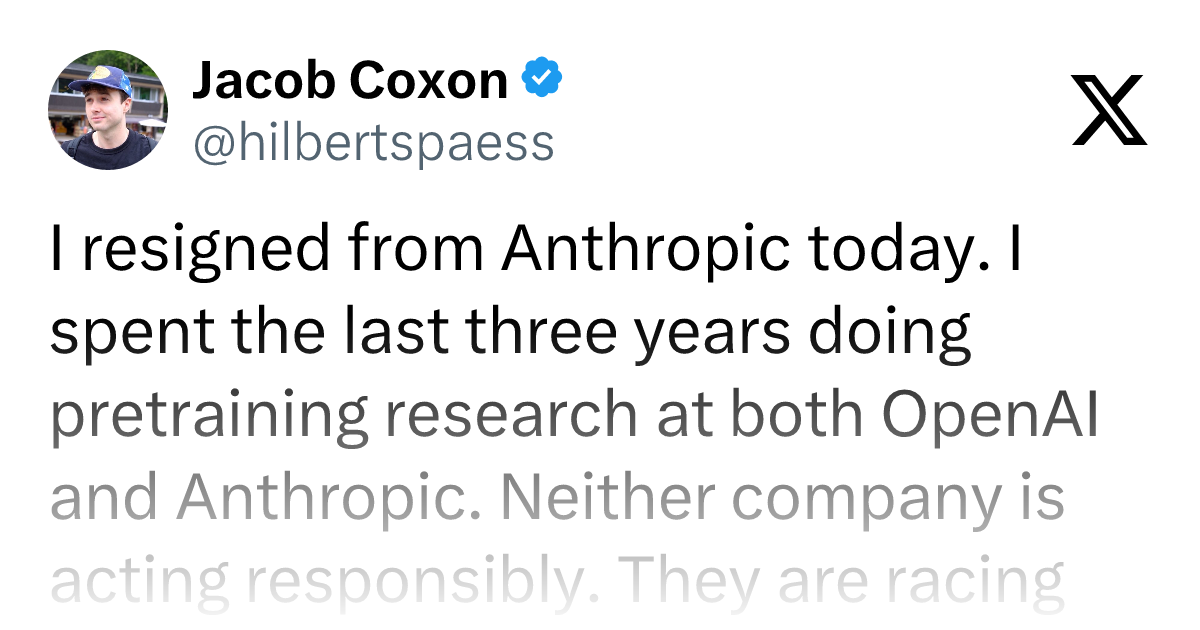
Anthropic employee's public resignation exposes deep tensions in AI industry talent, culture, and values.
A public resignation from an Anthropic employee ignited widespread discussion on Hacker News, highlighting fundamental tensions in the AI industry. The debate reveals three key drivers behind AI talent mobility: divergence in technical direction between safety research and commercialization, inevitable cultural shifts as startups scale, and substantive values conflicts over responsible AI development. The incident serves as a warning for the industry about balancing mission with commerce and maintaining effective internal communication during a transformative era.
Recently, an Anthropic employee publicly announced their resignation on social media, quickly igniting discussion on Hacker News with 287 upvotes and 344 comments. Hacker News, operated by Y Combinator, is widely regarded as a bellwether for Silicon Valley's tech community, with a user base primarily composed of engineers, founders, and investors. On a platform known for rational discourse, a post garnering nearly 300 upvotes and over 340 comments typically indicates that the topic has struck a core nerve within the tech community — by comparison, the median upvote count for daily top posts on the platform hovers around 100–150. This incident is more than a simple personnel change; it reflects deeper tensions in the AI industry around talent management, corporate culture, and technology roadmap decisions.
Background: Why This Garnered Widespread Attention
Anthopic, founded by former core OpenAI researchers, has consistently positioned "building reliable, interpretable, and controllable AI systems" as its core mission, establishing a prominent role in AI safety. Specifically, Anthropic was co-founded in 2021 by Dario Amodei (former VP of Research at OpenAI) and Daniela Amodei, with a founding team that included several researchers who played pivotal roles in developing the GPT series of models. Their departure from OpenAI was fundamentally driven by disagreements over AI safety direction and corporate governance — a founding story that carries a strong "values-driven" narrative. Anthropic subsequently introduced the Constitutional AI technical framework, which attempts to achieve self-regulation and value alignment by having AI systems follow a set of explicit principles, differentiating itself from OpenAI's RLHF (Reinforcement Learning from Human Feedback) approach. To date, Anthropic has raised over $7 billion in funding from investors including tech giants like Google and Salesforce, and its flagship Claude model series has become one of GPT's primary competitors.
The employee's decision to announce their departure publicly and issue a personal statement immediately struck a nerve in the tech world.
From the community response, nearly 300 upvotes and over 340 in-depth comments indicate this has transcended ordinary personnel turnover. Industry insiders seized the opportunity to discuss core issues such as AI companies' research direction, values trade-offs, and commercialization pressures, reflecting widespread concern about these topics across the industry.
Three Key Drivers Behind AI Talent Mobility
Competition for top AI talent is currently at a fever pitch. According to industry survey data, senior research scientists with large model development experience can command total annual compensation packages (including equity) of $800,000 to several million dollars, while the global pool of researchers with genuine frontier large model training experience may number no more than a few thousand. In recent years, talent movement between top AI labs has been frequent and highly symbolic: OpenAI co-founder Ilya Sutskever departed to establish SSI, the merger of Google Brain and DeepMind was accompanied by significant talent redistribution, and Anthropic itself is a product of such talent flow. In this "seller's market," frequent personnel changes often point to deeper structural issues:
Fundamental Divergence in Technical Direction
AI Safety research is a field encompassing multiple sub-domains, with its core concern being ensuring that increasingly powerful AI systems operate according to human intent without producing harmful outcomes. Specific technical topics include: the Alignment problem — how to ensure AI goals are consistent with human values; Interpretability research — understanding the internal decision logic of models rather than treating them as black boxes; and Red Teaming — systematically identifying model vulnerabilities to assess safety boundaries. These research efforts often require long-term investment and are difficult to convert into direct commercial value in the short term.
Commercialization, on the other hand, demands rapid iteration and market share capture. This inherent tension is amplified under funding pressure and market competition. Researchers may find that company strategy gradually drifts from its original safety commitments, prioritizing product release timelines instead. For example, an interpretability research project might require 6–12 months to produce paper-level results, while competitors could release multiple product updates in the same time window. When the timeline for safety testing directly conflicts with the timeline for product releases, divergence in technical direction evolves into substantive organizational conflict.
The Inevitable Evolution of Organizational Culture
Early-stage AI companies often maintain a strong academic atmosphere where researchers enjoy high autonomy — freely choosing research topics, publishing papers at an academic pace, with flat organizational structures and transparent decision-making. But as teams expand and engineering demands grow, process standardization, project management, and commercial objectives gradually replace early flexibility. In Anthropic's case, its team has grown from dozens of people at founding to nearly a thousand, and a change of this magnitude inevitably requires more systematic management processes. This transition can be difficult for researchers accustomed to academic environments — many of whom joined from top university labs expecting "a well-resourced research institution" rather than a rapidly scaling commercial company.
Substantive Values Conflicts
With AI capabilities advancing rapidly, "how to develop AI responsibly" is no longer an abstract discussion but a practical choice faced at every decision point. Differences in stance on model release timing, safety testing standards, and transparency boundaries can become the final straw that breaks collaborative relationships. Take model releases as an example: should a new version of Claude only go live after completing all safety evaluations, or can it be released after "sufficient" testing and then continuously iterated? Who defines "sufficient"? Safety teams and product teams may have diametrically opposed answers. These seemingly technical decisions actually reflect fundamental value judgments about AI development priorities.
Industry Implications: The Challenge of Balancing Acts
This incident offers three important warnings for the entire AI industry:
The Dynamic Balance Between Mission and Commerce. Companies like Anthropic that champion AI safety derive their brand value precisely from their commitment to long-term research. Anthropic adopted a Public Benefit Corporation structure and established a Long-Term Benefit Trust to counterbalance purely commercial interests — a governance structure designed specifically to safeguard the baseline of safety research amid fundraising and expansion. If core talent is lost due to strategic pivots, it represents not just a human resources loss but could fundamentally undermine the competitive advantage built on this differentiated positioning. Finding a sustainable balance point is critical for survival.
The Effectiveness of Internal Communication Mechanisms. When employees choose public expression over internal resolution, it usually signals that communication channels have already failed. This is not unique in the tech industry — in recent years, companies like Google and Meta have experienced employees voicing dissatisfaction through open letters or media channels, from the dissolution of AI ethics teams to content moderation policy disputes. These cases repeatedly demonstrate that building organizational mechanisms that accommodate diverse voices and confront disagreements head-on is far more valuable than surface-level harmony.
Growing Pains During Industry Transformation. Since the release of ChatGPT in late 2022, the capability leap in large language models — from GPT-3.5 to GPT-4 to multimodal models — has completely reshaped the AI industry's operating logic in less than two years. Previously, the primary outputs of frontier AI research were papers and open-source models, with long commercialization paths; now, a model can go from research breakthrough to product launch in months or even weeks. This new paradigm of "dual-engine research and product development" demands that teams simultaneously possess deep research capabilities and rapid engineering abilities, placing entirely new requirements on organizational structure, talent composition, and culture. This paradigm shift inevitably brings talent reallocation and cultural redefinition, making short-term turbulence unavoidable.
Reflections for Practitioners and Companies
Talent mobility in the AI industry will remain high, but each instance of movement conveys important signals.
For technical talent, choosing an organization aligned with your values holds more long-term significance than simply chasing compensation packages. During the interview and selection process, it's crucial to deeply understand a company's actual decision-making mechanisms, research freedom, and cultural atmosphere. Specifically, several key indicators are worth examining: Does the company's safety team have an independent reporting line? Do researchers have the authority to recommend a "pause" on product releases? Has the company's paper publication frequency and quality been declining recently? These details often reveal a company's true priorities more accurately than recruitment marketing.
For AI companies, maintaining the founding mission, preserving research culture, and holding the line under commercial pressure are the fundamental keys to attracting and retaining top talent over the long term. Short-term commercial success cannot compensate for the loss of core values. Historical experience shows that institutions that find a balance between commercial success and research excellence — such as the early Bell Labs or Google Research at its peak — tend to continuously attract the best talent and create greater commercial and social value over longer time horizons.
The Value of Continued Attention
The aftermath of the Anthropic incident deserves ongoing tracking from the industry, as it may become a defining case study for understanding the AI industry's current development stage and cultural evolution. Regardless of how the full picture ultimately unfolds, the public discussion triggered by this resignation has already generated value — it has prompted the entire industry to re-examine core principles and consider what truly deserves to be upheld amid technology's breakneck advance.
Notably, public resignation statements in the AI industry are forming a distinctive "whistleblowing" culture. From the public statements by multiple employees during the 2023 OpenAI board upheaval to researchers at various AI labs speaking out after departing over safety philosophy disagreements, these events collectively paint a panoramic picture of value evolution in the AI industry. Each public expression pushes industry transparency forward and helps the public understand the internal tensions in AI development that often remain hidden from view.
The significance of this kind of open dialogue may far exceed the incident itself.
Related articles

Multi-Agent Collaboration with Coze: A Complete Guide to Building AI Agent Teams
A deep dive into Coze's multi-Agent collaboration, covering agent types, RAG knowledge bases, and workflow orchestration with a complete practice guide from basics to enterprise deployment.
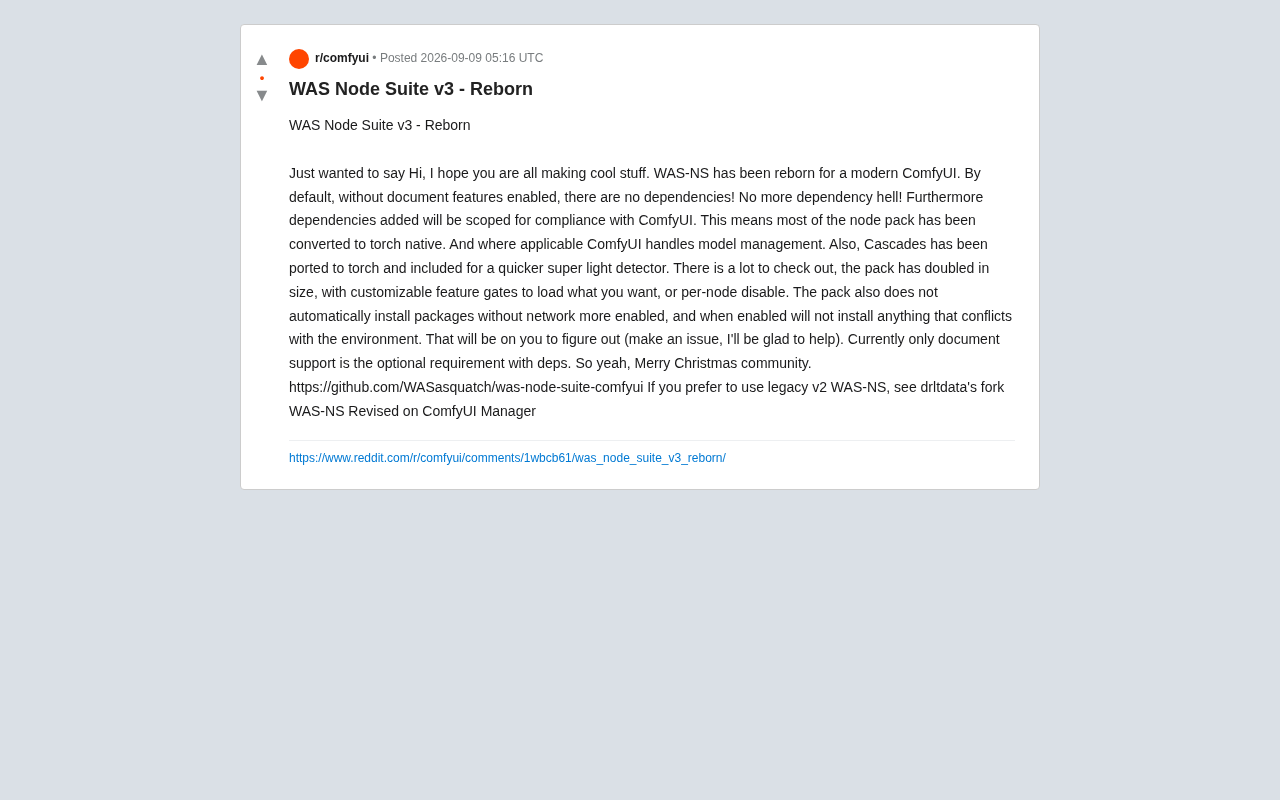
WAS Node Suite v3: A Comprehensive ComfyUI Node Pack Upgrade That Eliminates Dependency Hell
WAS Node Suite v3 overhauls the ComfyUI node pack with zero external dependencies, native PyTorch conversion, doubled node count, and flexible feature gating to eliminate dependency hell.

AI Training Facilities Face Superhuman Hacker Threats: An Unprecedented Cybersecurity Risk
AI safety experts warn: next-gen LLM training infrastructure may face superhuman-level attacks from AI hackers, with threat scales exceeding all of human history.