Anthropic Files S-1: $16.3B Revenue, $80.7B Net Loss in Half a Year — Who Controls the Company?

Anthropic files S-1 to go public — revenue soars, losses are massive on paper, and control is highly concentrated.
Anthropic filed its S-1 with the SEC for a Nasdaq listing under ANT. H1 2026 revenue reached $16.3B, up 1,300% YoY, but the company cautions growth may not persist. The $80.7B net loss mainly reflects $72.4B in fair value changes on convertible notes, derivatives, and SAFEs; the operating loss was just $693M. Founder-held Class F shares carry 50.1% voting power, and no offering price or date has been disclosed.
Anthropic, the company behind Claude, has officially filed an S-1 with the U.S. Securities and Exchange Commission (SEC), planning to list on Nasdaq under the ticker ANT. Inside this 300-plus-page registration document sit two numbers side by side: $16.3 billion in revenue for the half year, and a net loss of $80.7 billion over the same period. One document, two diametrically opposed signals. This article breaks down what actually matters in the S-1: the revenue curve, the truth behind the losses, the control structure, and the question everyone wants answered but no one can yet — when will it list, and at what price.
Revenue Growth: One of the Fastest Ramps in History, But the Company Itself Pours Cold Water
Start with revenue. $41 million in 2023, $386 million in 2024, reaching the $600 million range in 2025 — over 1,000% year-over-year growth. And in the first half of 2026, revenue jumped straight to $16.3 billion, a 1,300% year-over-year increase. That pace is rare even in the history of tech.
But there's a passage in the S-1 that's easy to overlook: Anthropic explicitly states that it does not expect revenue to continue growing at a similar rate, and cannot even guarantee further growth. The filing attributes recent growth to early adoption, a young AI market, and rapid initial customer expansion, and cautions that these factors may not last. Every company lists risks, but this one is worth reading twice — the growth story is being cooled down by the company itself. Also, the Q3 revenue figure is still blank in this draft.
An S-1 is the registration statement a U.S. company files with the SEC when it first offers shares to the public — formally the Registration Statement on Form S-1. Its core purpose is to fully disclose the company's business model, financial condition, risk factors, equity structure, executive compensation, and other information for regulatory review and potential investor decisions. Before it takes effect, it is typically filed in "draft" form, with certain figures (such as offering price, number of shares offered, and valuation) left blank and later completed through amendments (such as S-1/A). Unlike the annual 10-K, an S-1 is aimed at members of the public who do not yet hold shares in the company, so the risk factors section tends to be unusually long — in Anthropic's filing, this section runs about 90 pages.
Who's Paying: Nearly 12,000 Enterprise Customers Paying Over $100K a Year
Customer structure is key to understanding revenue quality. As of September 30, 2026, Anthropic disclosed 11,900 customers paying at least $100,000 a year, more than 1,900 paying at least $1 million a year, and about 250 paying over $10 million a year. Headcount also expanded from roughly 940 at the end of 2024 to about 5,300 by September 2026. A large number of very large customers underpins the revenue base, but it also means concentration risk — the impact of losing a major customer gets amplified.
Where the Money Goes: $8.9B Eaten by Compute, Core Business Near Break-Even
In the first half of 2026, compute and infrastructure costs were $8.9 billion, covering the chips and data used to train and run Claude. Personnel costs were $3.2 billion, sales, marketing, and partnerships $3.2 billion, and other operating costs $1.7 billion. Total spending was about $17 billion against $16.3 billion in revenue — the core business is very close to break-even, but hasn't crossed that line yet.
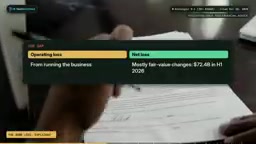
So where does the $80.7 billion net loss come from? Two numbers need to be distinguished. Operating losses were $8.1 billion in both 2024 and 2025, narrowing to $693 million in the first half of 2026. Net losses were $8.3 billion, $42 billion, and $80.7 billion. The difference comes mainly from fair value changes on convertible notes, derivatives, and SAFEs — $72.4 billion in the first half of 2026 alone. The filing explains this was driven primarily by rising company valuation, making its convertible notes more valuable. This is an accounting remeasurement, not a cash outflow. Read every number, and check the label first.
Another number about to get bigger: the S-1 shows Anthropic has agreed to spend up to $120.5 billion by 2029 to purchase Nvidia-powered compute from SpaceX AI (formerly xAI). Once all capacity is delivered, that works out to about $3.1 billion per month, with the company expecting delivery to be completed in December 2026. After the initial periods ending in January and March 2027, either party may cancel with 90 days' notice. The company also uses Amazon's Trainium chips and Google's TPUs, and has a hardware agreement with AMD. Compute commitments are rigid; revenue may not be — this is one of the core contradictions in the risk factors.
Convertible notes are a financing instrument combining debt and equity features: investors put in money as a loan, and under certain conditions (such as the company going public or reaching a valuation threshold) the notes can convert into shares at an agreed price. Because conversion value rises with company valuation, accounting rules require remeasuring them at fair value each reporting period, with the difference recorded in profit and loss. SAFE (Simple Agreement for Future Equity) is an early-stage financing contract commonly used in Silicon Valley, which likewise generates paper remeasurement gains or losses as later valuations rise. Such non-cash changes can significantly inflate net loss figures without representing actual cash burn, so analysis typically looks at operating loss and net loss separately.
Control Structure: Five Share Classes, Founders Decide with a Single Vote
This is the most unusual part of the S-1. The company has five classes of shares: Class A is what the public buys, with one vote per share; Class N carries identical economic rights but no voting rights; Class T is held by a long-term benefit trust, which elects the directors constituting a majority of the board; Class F is a single share held by a founders' LLC, controlled by Dario Amodei, Daniela Amodei, and five other co-founders, carrying 50.1% of voting power on ordinary matters with no economic rights attached; Class E is issued to employees and votes only on limited matters.

Why design it so complexly? Because Anthropic is a public benefit corporation (PBC), which must balance shareholder profit against mission — the mission being to develop advanced AI responsibly in service of humanity's long-term interests. The long-term benefit trust is positioned as a group of financially disinterested trustees with expertise in AI safety, national security, and policy. Because of this voting arrangement, Anthropic qualifies as a controlled company under Nasdaq rules, though the company says it plans to use only one of the available exemptions. It has also issued shares representing 5% of fully diluted equity to its own Anthropic Public Benefit Fund.
What does this mean for ordinary investors? Class A shareholders share in the economic benefits but have extremely limited control. The founders and the trust hold the votes and the board. As a public benefit corporation, Anthropic may by design choose mission over short-term profit. The risk factors section begins on page 26 and runs about 90 pages.
A public benefit corporation (PBC) is a corporate form permitted under the laws of some U.S. states, requiring the company to pursue shareholder financial returns while explicitly committing to one or more public benefit missions and balancing them in decision-making. The board is obligated to periodically assess whether the company has fulfilled these missions and disclose this in its annual report. Compared with an ordinary corporation, a PBC gives management a legal basis to resist short-term profit pressure, but it also means shareholders can bring derivative suits if they believe the mission is being neglected. Delaware is the most common domicile for PBCs, and Anthropic adopted this structure precisely so that it can continue to put AI safety ahead of short-term financial goals after going public.
What It Sells: Models, a Coding Agent, and Claude Code on Mars
The product line has three parts: models offered through its own API and apps, as well as through the three major clouds — AWS, Google Cloud, and Microsoft Azure; the Cloud Code coding agent, released as a research preview in February 2025; and Cloud Co-work, launched in January 2026, which the filing says has been adopted faster than Cloud Code at the same stage. The most interesting detail: NASA engineers used Cloud Code to plan commands for the Perseverance Mars rover — AI-planned driving on Mars. The risks are equally clear — growth may slow (the company says so itself), massive compute commitments must be paid whether or not revenue keeps up, competition is fierce (on the very same day, OpenAI released a new model priced far below Claude Opus), and shareholder control is limited.
Listing Date and Offering Price: No Answer in the Filing
The honest answer is: this filing doesn't say. There's no date, the per-share price field is blank, and valuation isn't specified because it depends on final pricing. Some online claims of a mid-November debut are unconfirmed. The real signal to watch is an amended S-1 with a price range — when it appears, the roadshow is usually not far off. Another term you'll hear repeatedly is the lock-up period: insiders commit not to sell shares for a certain period after listing. Anthropic's arrangement is staggered, with some shares automatically unlocking around earnings; for many holders (including directors, executives, and some employees), the lock-up ends around 180 days later or shortly after the Q1 2027 earnings report; for co-founders and some major shareholders, it can last up to 365 days. Unlock dates can affect the share price and are worth marking.
On the buying process: before listing, most people generally can't participate — IPO allocations are mainly aimed at large institutions, though some brokers offer IPO subscription channels; once trading begins, shares can be bought through a broker under the ticker ANT. The price range and date usually appear in later amended filings, so watch for updates on SEC EDGAR. This article is informational analysis and does not constitute investment advice.
The lock-up period is a selling restriction agreed between underwriters and company insiders before an IPO, typically 180 days, intended to prevent a flood of selling from hitting the share price early in trading. Anthropic uses staggered unlocks: some shares automatically unlock around earnings milestones, most directors, executives, and employees unlock after about 180 days or after the Q1 2027 earnings report, and co-founders and some major shareholders up to 365 days. As unlock dates approach, the market often expects increased supply and share price volatility may rise, making these key dates for investors to mark.
One-line Summary
Anthropic files its S-1 to go public — revenue soars but paper losses are massive, and control is highly concentrated.
Paragraph Summary
On October 26, 2026, Anthropic filed its S-1 with the SEC, planning to list on Nasdaq under the ticker ANT. The filing shows first-half 2026 revenue of $16.3 billion, up 1,300% year over year, though the company itself cautions that growth may not continue. The $80.7 billion net loss stems mainly from fair value changes on convertible notes, derivatives, and SAFEs ($72.4 billion in the first half), while the operating loss was only $693 million, putting the core business near break-even. The customer base is dominated by nearly 12,000 enterprises paying over $100K a year, and concentration risk should not be ignored. The company has committed to spend up to $120.5 billion on compute by 2029, a rigid cost. Under the five-class share structure, founder-held Class F shares carry 50.1% of voting power, the long-term benefit trust elects a majority of directors, and public shareholders have limited control. Neither the offering price nor the date has been disclosed.
Related articles
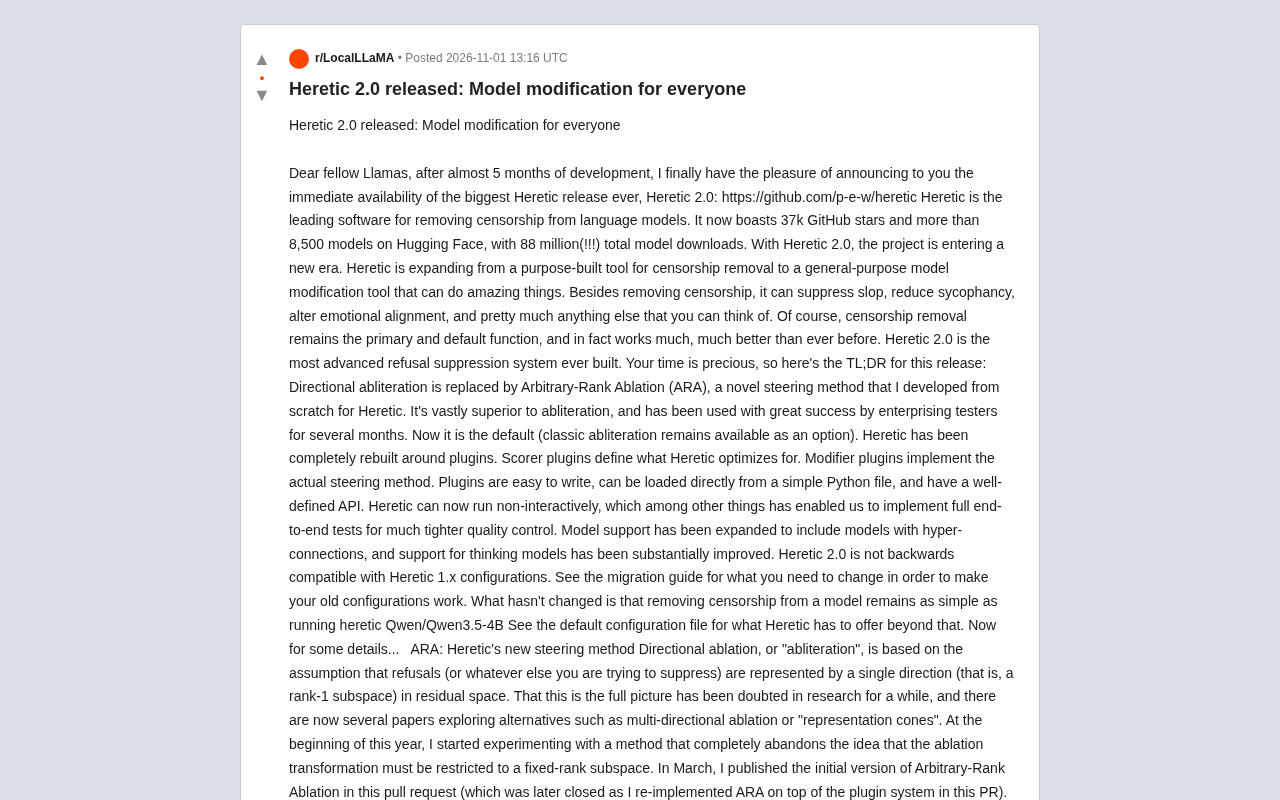
Heretic 2.0 Released: From Uncensoring to a General-Purpose Model Modification Tool
Heretic 2.0 releases with Arbitrary-Rank Ablation and a plugin system, evolving from an uncensoring tool into a general-purpose model modification platform. 37k GitHub stars, 8,500+ derivative models on Hugging Face.

How to Choose Local LLM Hardware? MacBook Pro vs Mac Mini+iPad In-Depth Comparison
Reddit community debates local LLM hardware: 32GB MacBook Pro or Mac Mini+iPad? In-depth analysis of portability, value, and memory needs to find the best device for local inference.

Tracing AI Agent Failures: How Do You Pinpoint the Root Cause of Bad Decisions?
A Reddit discussion on tracing AI Agent failures: how to pinpoint root causes of bad decisions? We analyze the limits of LangSmith and LangFuse and explore combined practices with manual analysis and custom analysis systems to improve Agent reliability.