Anthropic Goes Public: AI Bubble or Buying Opportunity?
Anthropic surged on its first trading day, but offering size, implied valuation, and market price are different concepts; the real test is whether paid usage can become sustainable cash flow.
Anthropic listed on Nasdaq, with its opening price about a third above the $83 offer price. The "two trillion dollar valuation" in headlines is the valuation implied by post-opening trading prices, distinct from the roughly $1.5 trillion valuation implied by the offer price and the roughly $81.3 billion IPO proceeds. Including about $26 billion in private placement, total gross transaction size was roughly $107 billion. Third-quarter revenue was just under $17 billion, up 47% quarter over quarter, but operating loss was $567 million—growth diverging from profitability. Buying the stock provides economic exposure, not control; the Long-Term Benefit Trust can appoint a majority of board seats, but actual decisions must be observed. The key to judging whether this is an AI bubble is not a single day's gain but whether paid usage can translate into sustainable cash flow without relying on continuous injections of cheap capital.
Anthropic, the company behind the Claude models, has officially listed on Nasdaq. The opening price came in roughly a third above the IPO price, and with it came a flood of "two trillion dollar valuation" headlines. The problem is that these figures often get conflated: offering size, opening-day gain, and implied valuation are three different things. Only by separating them can we judge what this IPO actually means.
Three Numbers, Three Meanings
Let's start with the part most easily confused. The initial price range was set at $70 to $78, but the final price was $83; the share count was also raised from 825 million to 980 million. Multiplying the two gives an offering size of roughly $81.3 billion—a gross figure before fees, already exceeding SpaceX's previously reported $75 billion IPO size. On top of that, there was a separate private placement of about $26 billion running in parallel with the IPO. Total gross transaction size came to roughly $107 billion.
But note that this is not the whole of the "public offering." The roughly $1.5 trillion valuation calculated at the offer price uses a fully diluted share count—it measures the overall value of the company implied by that price, not the cash actually deposited into Anthropic's accounts. As for the "two trillion dollars" in media headlines, that corresponds to the valuation implied by the post-opening trading price. Each of the three numbers speaks to something different, and mixing them only creates confusion.
Fully diluted valuation is a key concept in the IPO context. It assumes that all convertible securities (such as options, convertible bonds, and restricted stock units) have been converted into common stock, thereby calculating the value corresponding to all of the company's potential shares. Unlike "basic valuation," which counts only outstanding shares, fully diluted valuation reflects "how much the company is worth if all potential shares are realized." Thus, the $1.5 trillion obtained by multiplying the $83 offer price by the fully diluted share count measures the overall value implied by the price, not the cash actually flowing into the company—the latter depends only on the number of new shares actually issued. Media outlets often mix the two bases, producing wildly different valuation figures.
Who Gets the Money, Who Calls the Shots
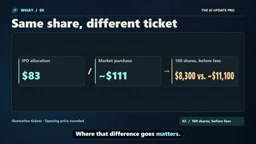
Two people buying the same stock on the same day can pay completely different prices: one gets an IPO allocation and pays $83; the other buys at market price after the open. Where that price gap flows is worth a closer look.
Of the shares sold publicly, about $956 million were newly issued shares and about $24 million came from existing shareholders selling down. The former provides capital to Anthropic; the latter goes to the holders selling their shares. At $83, the new-share portion comes to roughly $79.4 billion gross, while the existing-share portion is just under $2 billion.
One caveat: these figures cannot tell us how much employees as a whole received. Going public gives employees a way to cash out, but paper wealth is not cash—how much they can sell depends on the number of shares held, whether they have vested, and applicable lock-up restrictions.
Buying stock gives you economic exposure, which is not necessarily proportional control. Anthropic states that its Long-Term Benefit Trust is designed to be empowered to appoint a majority of board seats. As a public benefit corporation (PBC), this structure does matter, but the real test is: when accelerating model releases wins customers while slowing down reduces risk, what does the company actually choose? Watch the decisions, not just the charter.
Public Benefit Corporation (PBC) is a special corporate legal form in the United States that requires a company to write a specific public benefit mission into its charter while pursuing shareholder financial returns, and to balance shareholder interests with that mission. A PBC's board has an obligation to consider the public benefit mission when making decisions, but the actual execution is quite flexible. Anthropic adopts the PBC structure and layers on a Long-Term Benefit Trust to influence board seat appointments, aiming to prevent short-term commercial pressure from eroding its safety mission. However, charter design is only a framework; the real binding force depends on actual decisions—whether the company is willing to sacrifice short-term gains when commercial interests conflict with safety considerations. Therefore, observing its model release cadence and disclosure of safety incidents is more meaningful than interpreting the charter.
What the Opening Jump Tells Us
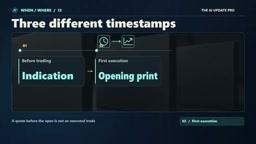
The IPO priced on November 18 and began trading the next day under the ticker ANT on the Nasdaq Global Select Market. Pricing and opening are two separate events. According to reports, the first trade was around $111, roughly a third above the $83 offer price.
That gain does not increase the IPO proceeds, nor is it the closing price. Before the open, the screen may show a reference range from the auction, followed by the actual opening trade price, and then the closing price. Label every price with its time and type, or a dynamic market gets read as a misleading chart.
The big opening gain shows that buyers were willing to pay well above the offer price, but it does not answer whether Anthropic can deliver Claude profitably. To answer that, you have to leave the trading floor and look at real workflows.
Breaking Down Claude's Business
Anthropic reported revenue of about $33.2 billion for the nine months through September. Reuters also reported an annualized run rate of about $81 billion at the end of October—an extrapolated figure, not a full year of revenue already earned. Third-quarter revenue was just under $17 billion, up 47% quarter over quarter. But in the same quarter, the company reported an operating loss of $567 million. Growth and operating profit can move in opposite directions.
Imagine a software team using Claude Code to track down bugs: give it a failing test, review the code diff it proposes, then rerun the test suite. What should be measured is the developer minutes saved after review, not how many lines of code the model generated. Now imagine a finance team processing invoices: have Claude extract fields, then reconcile amounts against purchase orders, and route exceptions to human review. What should be measured is the cost per correctly reconciled invoice, including retries and review time.
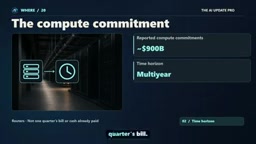
Reuters' reported compute spending commitment of roughly $900 billion is a multi-year figure, not this quarter's bill. The real question is: when delivery costs change, are customers still willing to pay for work that has been done?
Bloomberg reported that Google was one of the investors in the private placement. Yet Google is also building Gemini—a competitor to Claude. Money flowing through partnerships neither proves the underlying product is profitable nor means the two companies stop competing. For OpenAI, this listing gives investors a public reference point for valuing frontier labs; for Google, it is a reminder that a company can compete at the model layer while partnering at the infrastructure layer. Neither outcome tells us which model will win.
Annualized Run Rate is a metric commonly used by SaaS and high-growth companies, typically calculated as the most recent month's revenue multiplied by 12, or the most recent quarter's revenue multiplied by 4, to estimate full-year revenue scale. It assumes the current growth rate or revenue level can persist for a full year, but actual revenue may fluctuate due to seasonality, contract cycles, or competition. The $81 billion annualized run rate reported by Reuters is extrapolated from month-end October revenue and is not realized or committed full-year revenue. Investors should distinguish annualized run rate from reported revenue (such as the $33.2 billion through September), which is confirmed actual revenue. Annualized run rate is good for observing trends but should not be used directly in valuation multiple calculations.
What to Watch in the Next Earnings Report
A few actionable checkpoints: first look at reported revenue and gross margin, then view operating cash flow alongside infrastructure spending. List future compute commitments on a separate line to avoid conflating committed spending with cash already paid. Next, look for signs of customers renewing and expanding after pilots. Finally, when commercial incentives conflict with safety considerations, look at what the company actually does.
A single trading session cannot determine whether this is the peak of an AI bubble. The stronger test is whether paid usage can grow into sustainable cash flow without assuming the next round of capital will always be cheap.
Issuance measures how many shares were sold, market price measures what buyers are willing to pay, and the company must earn that confidence over time.
One-line Summary
Anthropic surged on its first trading day, but offering size, implied valuation, and market price are different concepts; the real test is whether paid usage can translate into sustainable cash flow.
Paragraph Summary
Anthropic listed on Nasdaq, with its opening price about a third above the $83 offer price. The "two trillion dollar valuation" in media headlines is actually the valuation implied by post-opening trading prices, distinct from the roughly $1.5 trillion valuation implied by the offer price and the roughly $81.3 billion IPO proceeds. Including about $26 billion in private placement, total gross transaction size was roughly $107 billion. The company's third-quarter revenue was just under $17 billion, up 47% quarter over quarter, but it posted an operating loss of $567 million—growth diverging from profitability. Buying the stock provides economic exposure, not control; the Long-Term Benefit Trust can appoint a majority of board seats, but actual decisions must be observed. The key to judging whether this is an AI bubble is not a single day's gain but whether paid usage can translate into sustainable cash flow without relying on continuous injections of cheap capital.
Related articles
Agent Project in Practice: Real Delivery and Pitfalls from Requirements to Launch
Based on a real Agent project, this article breaks down the full process from a minimal viable loop to autonomous long-task delivery, analyzes the pitfall of over-constrained prompts, and provides acceptance criteria and pitfall records for context management, tool calling, and long-task decomposition.

When AI Becomes the Manor Lord: A Tech Experiment Behind a Murder Mystery
From YouTube interactive mystery video Brindley Manor, analyze how multi-agent AI plays eight roles, maintains information isolation, and generates dynamic murder puzzles, exploring the potential and current technical shortcomings of AI interactive narrative.
From Pulpit to Senate: A Pastor-Senator on What Sin Is
A pastor-senator at Ebenezer Church reflects on how his Senate experience reshaped his understanding of sin and hubris, making his sermons more powerful—even likening Washington to Sodom and Gomorrah.