From Pulpit to Senate: A Pastor-Senator on What Sin Is
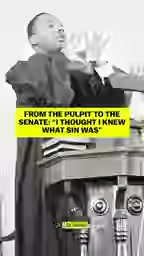
Pastor-senator says Senate experience makes sermons more powerful, reflecting on sin and hubris through Washington's realities.
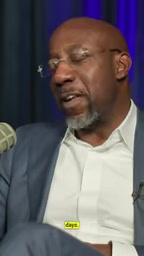
A figure serving as both pastor of Ebenezer Church and U.S. senator shared his unique experience of two "pulpits." He said the Senate experience unexpectedly made preaching easier, as witnessing hubris and power in Washington provided endless sermon material. He likened Washington, D.C., to Sodom and Gomorrah—self-deprecating yet critical—forming an unexpected complementarity between political reality and faith perspective.
A senator who also serves as pastor at Ebenezer Church recently shared his unique experience of serving two "pulpits" in an interview. Ebenezer Church is where Dr. Martin Luther King Jr. once preached, and this pastoral role alone is already a heavy responsibility—serving simultaneously in the U.S. Senate makes that weight even more complex. When asked which job is harder, he admitted he couldn't quite say. But he then offered an unexpected answer: his experience in the Senate has actually made his preaching at Ebenezer easier. This seemingly contradictory statement opens up a candid reflection on sin, hubris, and power.
The "Sermon Material" That Washington Provides
The pastor-senator explained that he used to think he understood what sin was. However, after he went to Washington, his understanding of sin was completely overhauled. He mentioned that when talking about hubris, human arrogance, high-handedness, and a sense of self-importance, he suddenly found himself with an endless supply of material. "My sermons are more powerful than ever," he said. "I bring real, real-world examples." He even half-jokingly thanked Washington, D.C., and likened it to Sodom and Gomorrah from the Bible, asking what the difference between them really is. This blunt comparison is both self-deprecating and reveals a certain critique of what he has seen and heard at the center of power.

Sodom and Gomorrah are two ancient cities recorded in Genesis, destroyed by God with sulfur and fire because of the grave sins of their inhabitants; in later ages they have often symbolized extreme depravity and divine punishment. In Christian tradition, these two cities represent not only sexual sin but more broadly arrogance, indifference, injustice, and turning away from God. The pastor-senator's comparison of Washington to these two cities is not a literal accusation but borrows their powerful symbolic meaning to critique the amplifying effect the center of power has on human weakness, as well as the self-inflation and moral blind spots common in political life.
The Tension Between Two Pulpits
Preaching at Ebenezer Church and legislating in the Senate both demand an extremely high level of moral commitment and public responsibility. The former concerns the soul and faith; the latter concerns law and governance. The pastor-senator did not simply set the two in opposition but pointed to an unexpected complementarity: the real-world political experience of the Senate provides vivid, grounded illustrations for his preaching. He no longer needs to rely on abstract theological concepts to explain sin and hubris, because in Washington he has witnessed firsthand the many ways human nature manifests in the face of power. This feedback loop from practice to preaching makes his religious expression more concrete and more impactful.

Ebenezer Church is located in Atlanta, Georgia, and is the spiritual home of Dr. Martin Luther King Jr. and an important birthplace of the civil rights movement. Dr. King once co-pastored there with his father and launched a series of nonviolent protests from there. The church has thus become a symbol of the African American church tradition and public witness, carrying the historical memory of faith engaging with social justice. Understanding this background helps explain why serving as pastor of this church carries such heavy moral weight, and why the senator's dual identity invites profound associations about the relationship between faith and politics.
The Collision of Faith and Politics
Placing Washington alongside Sodom and Gomorrah is clearly a rhetorical intensification. Sodom and Gomorrah traditionally represent sin and destruction, while Washington is the center of modern democratic politics. This contrast is not meant to negate politics itself but to remind people that places where power is concentrated are often also places where human weakness is magnified. For a pastor, the Senate experience becomes a continuous moral observation; for a senator, a pastor's eye may keep him sensitive to the human factors behind policy. This dual identity brings not only a burden but also a distinctive kind of clarity.
Preaching as Public Witness
The pastor-senator's story reflects a typical path for religious leaders entering the public sphere: they enter politics with a perspective of faith, and in turn enrich their religious expression with political experience. He did not claim to have fully understood the balance between the two, but he acknowledged that his experience in Washington has given him a deeper and more complex understanding of "sin." The reason his preaching is "more powerful than ever" is not that he has found simple answers, but that he dares to confront the human drama repeatedly played out in the corridors of power and bring it to the pulpit as material for believers' reflection. This may be precisely the true meaning of what he called "thank God for Washington, D.C."
One-line Summary
A pastor-senator says his Senate experience makes his sermons more powerful, reflecting on sin and hubris through the realities of Washington.
Paragraph Summary
A figure who serves both as pastor of Ebenezer Church and as a U.S. senator shared in an interview his unique experience of serving two "pulpits." He admitted it was hard to compare which job is harder, but unexpectedly said that his Senate experience has actually made his preaching easier. Because in Washington he witnessed firsthand how hubris, arrogance, and power magnify human nature, he gained an endless supply of sermon material. He likened Washington, D.C., to Sodom and Gomorrah—both self-deprecating and critical. This dual identity forms an unexpected complementarity: political reality makes his religious expression more concrete and powerful, while a faith perspective may keep him sensitive to the human factors behind policy.
Related articles

TechCrunch Mobility: The A/B Test Pitting Robots Against Humans
TechCrunch Mobility spotlights the future of transportation and AI's role, discussing A/B testing robots vs. humans in mobility scenarios, test design challenges, and industry implications.

Project Leonida: An Open-Source Attempt to Recompile Xbox GTA 6 for PC
Leonida is an open-source project attempting to recompile Xbox GTA 6 to run on PC. We analyze its technical approach, community controversy, and significance for the PC gaming ecosystem.

Sheherazaad's New Album 'Khudgarzi': A Reverb-Drenched New Voice in South Asian Folk
Sheherazaad releases debut album 'Khudgarzi,' produced after Arooj Aftab's EP 'Qasr.' Sung in Urdu, blending Carnatic and Hindustani traditions with reverb-drenched folk-noir.