Anthropic IPO: $100B Losses and a $900B Compute Bill — Buy or Avoid?

Anthropic eyes a $1.4T IPO; most losses are book items, but the $900B compute bill is the real risk.
Anthropic's rumored IPO at $1.4 trillion draws attention to two extremes: $104 billion in net losses (91% non-cash, with adjusted operating profit of $2.46 billion and 85.5% gross margins) and a $900 billion take-or-pay compute commitment. Revenue is growing ~1206% to $33.24 billion annualized with 900% NRR and 55% enterprise API share. Morning Star's scenarios range from $500 billion to $3 trillion, while macro signals cool and retail money flows in.
Title
Anthropic IPO: $100B Losses and a $900B Compute Bill — Buy or Avoid?
Meta Description
Anthropic's IPO is rumored at a $1.4 trillion valuation — with $104B in net losses (91% non-cash) on one side and a $900B compute commitment on the other. This article breaks down its 1206% revenue growth, 900% NRR, 55% enterprise API share, Morning Star's three valuation scenarios, and the bull-bear debate, offering a framework for deciding whether to buy or avoid.
Article Content
Anthropic's IPO rumors are putting two extreme numbers on display at the same time: on one side, cumulative net losses of roughly $104 billion; on the other, a compute bill on the order of $900 billion — while the valuation is being placed at $1.4 trillion. The YouTube channel @inteligentinvestor did an in-depth breakdown in Hindi, and the core question is straightforward — is this the smartest capital move in AI history, or the biggest trap ever set for retail investors?
1. 91% of the $104B Loss Isn't Real Cash Outflow
Panicking at the sight of $104 billion in net losses is the most common misreading in this discussion. The channel points out that roughly 91% of these losses fall under non-cash accounting entries — not actual cash flowing out the door.
An analogy makes it clear: the company raises financing in the form of convertible notes, and as the valuation rises, those notes are remeasured at fair value, producing a massive "loss" on paper. This is a mechanical reaction of accounting rules to high-valuation companies, not operational deterioration.
The quarterly numbers make the point even better: Q2 actually showed $974 million in profit, Q3 swung to a $567 million loss, but adjusted operating profit was $2.46 billion, corresponding to a positive margin of about 15%. A business with gross margins as high as 85.5% is fundamentally still making money.

Non-cash accounting entries refer to book gains and losses that do not involve actual cash outflows, commonly including asset impairment, fair value remeasurement, share-based compensation expenses, and changes in the value of convertible instruments. What these items share is that they reflect changes in the valuation of assets or liabilities rather than cash actually received or paid by the company in the period. Therefore, when analyzing a company with a high valuation and a rapid financing cadence, investors typically look at both GAAP net income and adjusted operating income, the latter stripping out the non-cash items above and getting closer to the business's own cash-generating ability. Understanding this distinction is the key prerequisite for judging whether a "massive loss" means operational deterioration or accounting noise.
2. Growth Is Truly Explosive — But Costs Are Running Faster
The revenue numbers are staggering enough: annualized revenue has surged to $33.24 billion, a growth rate of about 1206%. For Q3 alone, revenue was $17 billion, while the October run rate had already touched the $81 billion threshold.
The customer structure supports this scale too — more than half of Fortune 500 companies are its customers, along with a group of major clients paying over $10 million a year. The channel specifically highlights its NRR (net revenue retention) of 900%, meaning existing customers are spending nine times what they did last year — an extremely strong signal in the enterprise API business.
But the flip side of the same coin is cost. Compute is a fixed cost: once you sign up, you pay, and it runs faster than revenue. That's the real risk point covered in the next section.
NRR (Net Revenue Retention) measures the retention and expansion of revenue contributed by the same cohort of existing customers over a year, typically including upsells and cross-sells while netting out downgrades and churn. An NRR above 100% means revenue from the existing customer base is growing even without signing new customers; at 900%, it means existing customer spending expanded to nine times its original level within a year, a scenario that typically appears in usage-based billing businesses like enterprise APIs where customer businesses scale rapidly. It is one of the most closely watched forward-looking metrics in SaaS and cloud services, but note: extremely high NRR often comes with a small customer base and early large-customer ramp-ups — temporary factors that may not be sustainable long term.
3. The $900B Compute Bill: The IPO's Biggest Financial Reef
The channel calls this $900 billion compute bill the most critical "financial catch" of the entire IPO. It comes from take-or-pay long-term locked contracts — whether you use it or not, you pay.

The problem is that this is a fixed expense locked in advance, and whether revenue can keep pace over the contract term is uncertain. As revenue growth decelerates from an early 144% to 47%, the scissors gap between fixed costs and variable revenue widens. The channel views this as the single biggest risk for the entire company going forward.
More subtly, there's the circular funding structure: the suppliers providing compute to Anthropic (mostly tech giants) are also major investors in the company, and this IPO also involves a $26 billion private placement. Money flows from suppliers to the company, then flows back to suppliers in the form of compute contracts, forming a closed loop. Whether this structure can persist is the focus of much debate.
Take-or-pay contracts are long-term purchase agreements in which the buyer commits to paying a specified minimum amount over the contract term, regardless of whether it actually takes delivery of all the products or services. For compute procurement, this means cloud providers or chip suppliers lock in revenue certainty, while the AI company bears the rigid expense if demand falls short of expectations. Such contracts typically appear in financial statements as long-term purchase obligations, disclosed as off-balance-sheet commitments rather than current liabilities, and are therefore easily overlooked by ordinary investors. Their mismatch with variable revenue is precisely the core angle for analyzing the financial resilience of such companies — when revenue declines, costs don't decline in tandem, and profits are squeezed from both sides.
4. How Wide Is the Wall Street Bull-Bear Divide?
Morning Star Research mapped this uncertainty into three scenarios, with a spread that is unusual in IPO pricing:
| Scenario | Price per share | Implied valuation |
|---|---|---|
| Bull | $188 | ~$3 trillion |
| Base | $92 | — |
| Bear | $25 | ~$500 billion |

The bulls point to market share: Anthropic holds roughly 55% of the enterprise API market, a solid dominant position. The bears point to slowing growth, plus competitive pressure from rival OpenAI, which alone generates $10 billion in quarterly revenue.
There's also debate over the valuation multiple: about 17x based on the current run rate, but if historical figures are annualized, the valuation is pushed to 32x — demanding near-perfect execution.
CDS (Credit Default Swap) is a credit derivative in which the buyer pays a periodic fee and receives a payout if the reference entity defaults. A widening CDS spread is typically read by the market as a signal of rising credit risk for that entity, so it is often used as a thermometer for bond-market sentiment toward a company or industry. The article mentions Nvidia's CDS rising 76%, referring to a significant increase in the cost of its credit protection, reflecting heightened bond-market concerns about the future cash flows and leverage of the AI hardware leader. It should be noted that CDS movements are heavily influenced by liquidity and market sentiment, and this single indicator is not sufficient to judge fundamentals — but it has reference value as one piece of evidence of macro cooling.
5. Macro Temperature Is Falling — Are Retail Investors Buying the Bag or Getting In?
Macro heat in the AI sector is already cooling. The channel cites several signals: Nvidia's CDS (a risk indicator) rose 76%, Oracle's stock recently fell 6.5%, and Goldman Sachs has offered a cautious view.
On the retail side, the picture may be different. Wanda Research expects retail investors to put in at least $250 million after the listing. And a small float means price volatility gets amplified — a small amount of buying or selling can swing the stock sharply.
Note: the above is analysis based on public market data and does not constitute investment advice.
Conclusion: Five Points in Brief
- The growth is real, but costs are running faster. Against 1206% revenue growth, the fixed compute cost curve is steeper.
- Take-or-pay locked contracts are the biggest financial risk. The $900 billion compute commitment won't shrink because of demand fluctuations.
- 91% of the losses involve no cash. Book losses from accounting remeasurement should not be conflated with operational deterioration.
- The supplier is also the investor. Whether the circular funding structure is sustainable determines whether the long-term valuation can hold.
- The valuation demands flawless execution. In the 17x to 32x range, any execution misstep could trigger a sharp correction.
Is the $1.4 trillion price tag a one-time discount of the next decade, or an expensive ticket set for retail investors? The answer depends on whether you believe more in the share moat or in that faster-running cost curve.
One-line Summary
Anthropic plans to IPO at a $1.4 trillion valuation; most of its massive losses are book items, and the real risk is the $900B compute bill.
Paragraph Summary
The article breaks down Anthropic's rumored IPO, noting that market panic over $104 billion in net losses is a misreading — about 91% is non-cash accounting treatment, adjusted operating profit is $2.46 billion for a ~15% positive margin, and gross margin is as high as 85.5%. Revenue growth is stunning: $33.24 billion annualized, ~1206% growth, 900% NRR, and ~55% enterprise API market share. But the real risk lies in the $900 billion take-or-pay compute contracts, where fixed costs grow faster than revenue, and suppliers are also investors, forming a circular funding loop. Morning Star offers three valuation scenarios ranging from $500 billion to $3 trillion, while macro signals cool and retail money floods in — a small float will amplify volatility.
Related articles

FBI and USDA Hit by Cyberattacks: Critical Infrastructure Security Alarms Sound Again
FBI and USDA reportedly hit by cyberattacks; the FBI was breached for the second time in recent months, this time targeting the National Crime Information Center (NCIC). This article analyzes the incident details, NCIC's strategic value, and common security challenges facing government agencies.
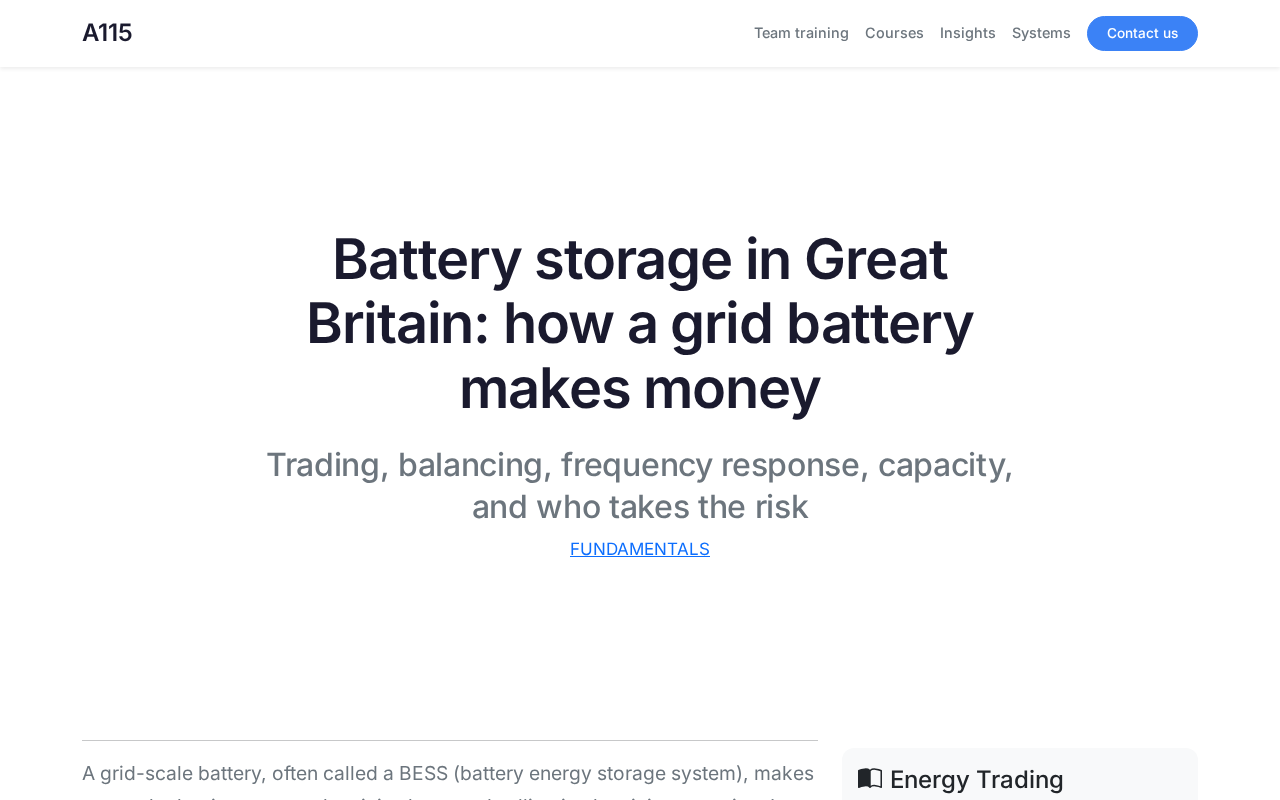
How Do UK Grid Battery Storage Systems Make Money?
How UK grid battery storage makes money: stacking frequency response, capacity market, and wholesale arbitrage revenue, plus operational trade-offs and market risks.
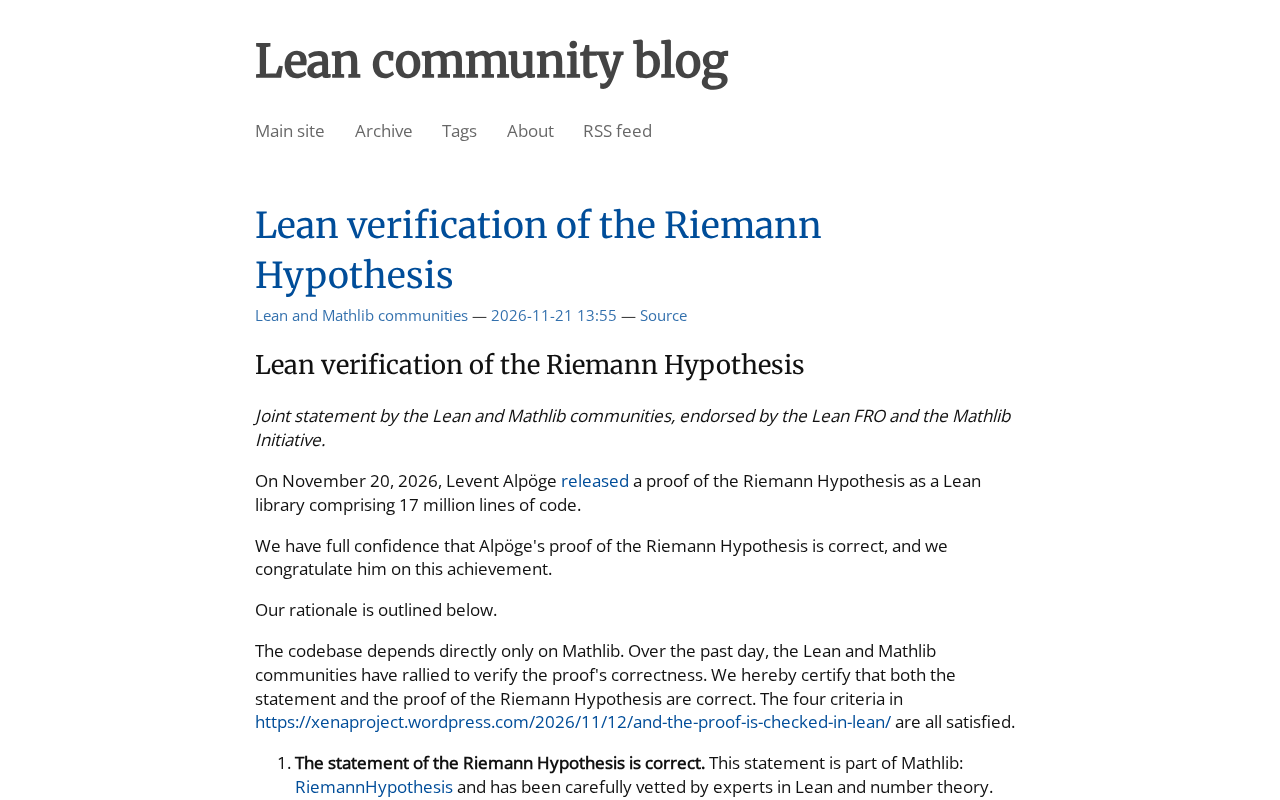
Riemann Hypothesis Formally Verified in Lean? Joint Statement Sparks Heated Debate
The Lean community blog published a joint statement on formal verification of the Riemann Hypothesis, sparking heated discussion on Hacker News with 359 points and 263 comments. This article analyzes the background of Lean and mathlib formal verification, polarized community reactions, and why one should not conclude the Riemann Hypothesis has been proven before reading the original text.