Anthropic IPO Revealed: The Truth Behind the $80 Billion Loss and a Trillion-Dollar Valuation

Anthropic files S-1 for a trillion-dollar valuation; the $80.7B loss is mostly accounting conversion cost, and governance keeps founder control.
Anthropic made its S-1 public on October 26, 2026, planning to list on Nasdaq under ANT, with the offering price left blank; media reports put the valuation at about $1.5T to $2T. First-half 2026 revenue was $16.3B, about 14 times the year-earlier period. Of the $80.7B loss, about $72B came from convertible note fair-value changes, while the operating loss was only about $700M, and operating cash flow was positive $3.9B. But conversion will dilute shareholders, and the company has lost money every year. Governance keeps control with founders and a trust, and about $417B in compute commitments is a financial pressure point.
Anthropic has filed its S-1, planning to list on Nasdaq under the ticker ANT. The headlines all say the same thing: the company lost $80 billion in six months while aiming for a valuation that could reach $2 trillion. The numbers look jarring side by side, but if you open the filing itself, the makeup of that $80 billion differs from most people's first reaction. This article breaks down the key figures in the prospectus.
The IPO Basics: The Price Column Is Empty
An IPO is the first time a private company sells shares to the public on an exchange. Before that, the company belongs only to founders, employees, and early large investors; afterward, anyone with a brokerage account can buy a small piece. To do this in the U.S., a company must file a long document called an S-1 with the SEC. Anthropic's S-1 went public on October 26, 2026.
One detail in the filing is worth noting: the offering price column is blank, with only two dollar signs. In other words, the valuation range comes from media reports, not company pricing. Reports put the raise at roughly $75 billion to $100 billion, corresponding to a company value of about $1.5 trillion to $2 trillion. For reference, Anthropic's last private funding round in May valued it at about $965 billion.
The Revenue Curve: More Than Tenfold Growth in a Year
First, look at how fast money is coming in. Revenue was $41 million in 2023, $386 million in 2024, and about $4.6 billion in 2025. In the first half of 2026 alone, it hit $16.3 billion in just six months—compared with about $1.2 billion in the same period a year earlier.
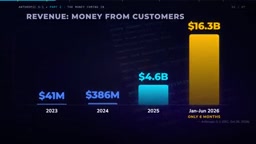
Large customers are the main driver. Customers paying more than $100,000 a year grew from about 150 to more than 11,900 within 12 months. That growth rate explains why the market is willing to discuss a trillion-dollar valuation, and it makes the loss figure that follows seem even more jarring.
The Truth Behind the $80 Billion Loss: Mostly Accounting Numbers
The six-month loss was $80.7 billion, nearly five times revenue in the same period. The first reaction is "burning money on compute," but actual operating costs—compute, compensation, marketing—totaled about $17 billion, only slightly more than revenue. In other words, the operating loss from the core business was about $700 million.
Where does the rest come from? About $72 billion comes from one line item: changes in the fair value of convertible notes, with another roughly $8 billion from similar accounting adjustments. The logic of convertible notes is this: investors give the company money as a loan, and in the future, instead of repaying cash, the company converts it into shares. As the company's valuation rises, those future shares are worth more, and accounting rules require the increase to be recorded as a loss. The filing's exact words are that this was driven by "an increase in enterprise valuation."
So this is an accounting loss with no cash outflow. The filing also shows that the six months generated $3.9 billion in cash inflow from operating activities.
But an accounting loss does not mean there is no cost. These notes will eventually become shares, and the filing explicitly says this will dilute existing shareholders—everyone's stake gets smaller. The filing also acknowledges that Anthropic has lost money every year since its founding and warns that it may not achieve or sustain profitability.
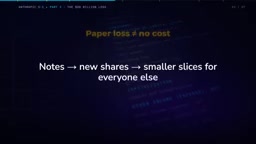
Convertible Notes are a financing tool commonly used by startups and growth-stage tech companies. Investors inject funds in the form of debt, agreeing to convert it into company shares at a discount or agreed valuation at some future point (usually alongside the next funding round or IPO), rather than receiving back cash principal and interest. For the issuer, this avoids immediate debt-service pressure; for investors, it is a bet on profiting from conversion after the company's valuation rises. In accounting terms, because the conversion price is tied to company valuation, as the valuation climbs, the "fair value" of the notes rises accordingly, and this increase constitutes a liability increase for the issuer that must be recognized as a loss on the income statement—even if there is no cash outflow. Understanding this is essential to seeing the substance of Anthropic's $72 billion loss: it is an accounting mirror of rising valuation, not operating bleeding.
Is This the Largest IPO Ever?
The long-standing record holder is Saudi Aramco, which raised about $25 billion in 2019. In June 2026, SpaceX sold shares at $135 each, raising $75 billion, with a valuation of about $1.8 trillion at IPO.
Anthropic's position depends on final pricing. At the high end of the fundraising estimate, it would surpass SpaceX and set a new record; at the low end, it would be roughly on par. Measured by company value, it could be slightly below or slightly above SpaceX. Since the filing contains no price, these are only estimates, and the answer will not be clear until pricing day.
Who Really Controls This Company
Buying stock usually means buying voting rights; with enough shares, you can replace the board. Anthropic's structure differs in three ways.
First, it is a public benefit corporation, legally required to balance shareholder returns with its stated mission. The mission in the filing is "the responsible development and maintenance of advanced AI for the long-term benefit of humanity."
Second, there is a Long-Term Benefit Trust. Its members hold no economic interest in the company, but through a special class of shares, they can select and remove a majority of board members.
Third, the seven co-founders hold one special share through a company, and that one share carries 50.1% of voting power in most shareholder votes.
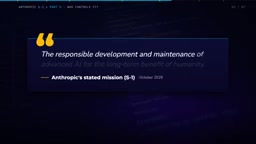
Put plainly, public-market buyers own the company's economic share, but major decisions remain with the founders and the trust. The filing itself warns that this may effectively eliminate the ability of public shareholders to influence important decisions. Some see it as protecting the mission; others see it as excessive concentration of power.
Public Benefit Corporation (PBC) is a corporate form permitted in some U.S. states (such as Delaware) that requires a company to pursue shareholder financial returns while also treating a public mission stated in its charter as a legal objective, and to disclose its social impact periodically. In decision-making, the board is legally obligated to weigh the mission against shareholder interests, rather than treating share-price maximization as the sole standard. This differs from a traditional C corp, which in principle prioritizes shareholder returns. Anthropic's adoption of the PBC structure means that even after going public, its board can invoke the mission clause to resist purely financial-oriented acquisitions or pressure. However, a PBC does not automatically give public shareholders veto power; actual control still depends on the voting structure—which is exactly where the Long-Term Benefit Trust and the founders' special share come into play.
Compute Commitments and the Timeline Ahead
AI requires massive compute. The filing shows that since early 2026, Anthropic has signed new or expanded compute and data-center agreements totaling about $417 billion in future payment commitments. These are commitments that must be paid regardless of whether revenue materializes, and they are the real financial pressure point behind the growth story.
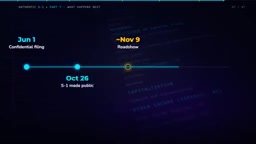
Next comes the roadshow, where the company and its banks pitch shares to large investors, reportedly possibly starting around November 9; pricing could come in the week of November 16; trading could begin as early as late November, around Thanksgiving. These dates may change. In addition, insiders typically sign lock-up agreements promising not to sell shares for a period after the IPO; the filing says nearly all existing shareholders have agreed or will agree.
Compute Commitments refer to long-term contracts signed by AI companies with cloud providers or data centers to purchase a fixed amount of GPU/TPU compute or rack space over the coming years, usually with minimum purchase volumes or take-or-pay clauses. These commitments appear in financial statements as contractual obligations rather than immediate capital expenditures, but once signed, the company must pay as agreed regardless of actual usage or whether revenue targets are met. For AI companies, locking in compute is a prerequisite for ensuring model training and inference capacity, but it also ties the balance sheet deeply to industry conditions. Anthropic's $417 billion commitment is more than 25 times its first-half 2026 revenue, highlighting the tension between growth expectations and financial risk.
The Questions That Really Matter
Most of the $80 billion loss is not cash outflow but an accounting cost of the company becoming more valuable. But it does mean more shares and smaller individual stakes. More important than this number are three questions: Can sales keep growing? Is the growth rate enough to cover that $417 billion compute commitment? Will buyers accept a governance structure in which founders and the trust retain control? The answers will emerge gradually around pricing and after listing. This article is only an explanation of the mechanics and does not constitute investment advice.
One-line Summary
Anthropic files S-1 for a trillion-dollar valuation; the $80.7 billion loss is mostly accounting conversion cost, and governance keeps founder control.
Paragraph Summary
Anthropic made its S-1 public on October 26, 2026, planning to list on Nasdaq under the ticker ANT, with the offering price column left blank; media reports put the valuation at about $1.5 trillion to $2 trillion. First-half 2026 revenue was $16.3 billion, about 14 times the year-earlier period, and customers paying over $100,000 annually grew from about 150 to more than 11,900. Of the $80.7 billion loss, about $72 billion came from fair-value changes on convertible notes, while the operating loss was only about $700 million, and operating cash flow was positive $3.9 billion in the same period. But conversion will dilute shareholders, and the company has lost money every year since its founding. In governance, the public benefit corporation structure, the Long-Term Benefit Trust, and the founders' 50.1% voting share make it difficult for public shareholders to influence major decisions. In addition, the company has committed to about $417 billion in future compute payments, a financial pressure point behind the growth story.
Related articles
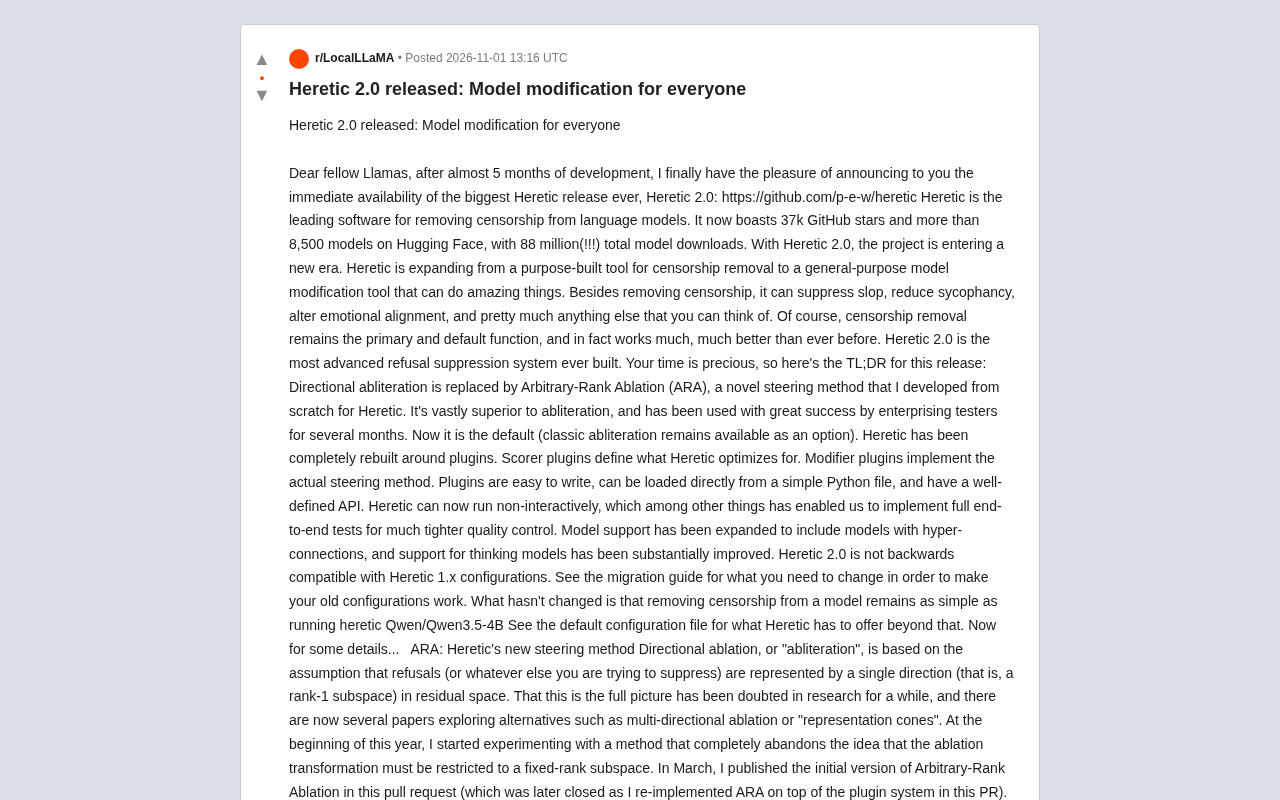
Heretic 2.0 Released: From Uncensoring to a General-Purpose Model Modification Tool
Heretic 2.0 releases with Arbitrary-Rank Ablation and a plugin system, evolving from an uncensoring tool into a general-purpose model modification platform. 37k GitHub stars, 8,500+ derivative models on Hugging Face.

How to Choose Local LLM Hardware? MacBook Pro vs Mac Mini+iPad In-Depth Comparison
Reddit community debates local LLM hardware: 32GB MacBook Pro or Mac Mini+iPad? In-depth analysis of portability, value, and memory needs to find the best device for local inference.

Tracing AI Agent Failures: How Do You Pinpoint the Root Cause of Bad Decisions?
A Reddit discussion on tracing AI Agent failures: how to pinpoint root causes of bad decisions? We analyze the limits of LangSmith and LangFuse and explore combined practices with manual analysis and custom analysis systems to improve Agent reliability.