Anthropic IPO: The $80.7 Billion Loss and the Scariest Prospectus Ever

Anthropic's prospectus discloses an $80.7B book loss, revealing triple-identity dependence and founder control risks.
Anthropic's prospectus discloses an $80.7 billion loss for the first half of 2026, about $72.4 billion of which comes from accounting for convertible interest appreciation, while cash inflow was $3.9 billion. The company rents compute mainly from Amazon, Google, and Microsoft—which are also investors and sales channels; nearly half of sales go through cloud marketplaces, and it has committed at least $224.5 billion to compute costs while customers can cut usage at any time. On governance, a special trust plus seven founders control the board, and IPO investors get only economic rights. The risk section runs 94 pages, stating outright that models could assist malicious actors and resist shutdown, and the legal battle with the U.S. government continues. The article advises investors to wait for the price before judging and to distinguish book losses from cash losses when reading the filing.
Anthropic is going public. The company behind Claude is asking the public for money in its prospectus while simultaneously admitting that its technology could pose "catastrophic or even existential risks." YouTube finance channel Journey with Wish calls this "the scariest sales pitch in history" and breaks down the real structure behind that $80.7 billion loss. Drawing on the video's analysis, this article examines three key questions: what the loss actually is, who really controls the company, and what this prospectus means for ordinary investors.
The $80.7 Billion Loss: Mostly Not Real Money
Let's start with the most eye-catching number. According to the S-1 filing cited in the video, Anthropic recorded $16.3 billion in sales in the first half of 2026, roughly a 14x year-over-year increase; its loss over the same period reached $80.7 billion—one of the largest half-year losses in history.
But this number needs to be unpacked. The creator uses a bakery analogy: early investors put money into the company and received "IOU"-style convertible interests that would eventually become shares. As the company's valuation surged, the value of these interests expanded in tandem, and accounting rules require the appreciation to be recorded as a loss—even if not a single dollar of cash flowed out. Of the $80.7 billion loss, roughly $72.4 billion is this kind of book entry, accounting for nearly 90%.
On the actual operating side, the company brought in $3.9 billion in cash during the same period and still holds $131.7 billion in cash on its books. A book loss is not the same as operating failure, but it's not costless either: when the IOUs convert into shares, existing shareholders get diluted. This is the first layer of logic every IPO subscriber needs to understand.
**The Accounting Logic of Convertible Interests and Book Losses**

Convertible interests (such as convertible preferred shares, SAFE agreements, and similar instruments) are common financing tools for startups: investors put in capital upfront and agree that upon a future trigger event (such as an IPO, the next funding round, or the valuation reaching a threshold), the investment will convert into common or preferred shares under agreed terms. In accounting, these instruments are typically classified as liabilities or mezzanine equity, and their fair value increases as the company's valuation rises; the increase must be recognized in current profit and loss, creating a book loss. Anthropic's $72.4 billion loss is precisely this kind of "fair value change loss": the higher the company's valuation, the more valuable the IOUs, and the larger the book loss—but the company pays no actual cash. This kind of loss doesn't affect operating cash flow, but it does dilute existing shareholders and leaves a massive deficit on the income statement. Investors need to distinguish "operating losses" from "accounting losses"—the latter reflects valuation growth more than operational deterioration.
Landlord, Shareholder, Channel: The Same Companies Wear Three Hats
AI runs in data centers, and Anthropic primarily rents its computing power from Amazon, Google, and Microsoft. The video points out that these three companies are far more than "suppliers" to Anthropic: they are also major investors, and their cloud marketplaces are key sales channels for Claude—nearly half of sales come through cloud platforms.

This means the same companies are simultaneously landlord, shareholder, and shelf. If any one of them changes the terms of cooperation, Anthropic comes under direct pressure. More specifically: the company has committed to paying Amazon and Google at least $224.5 billion, with reports that roughly ten years of commitments exceed $5.1 billion—the rent is due whether or not all that compute is used.
The other side of the risk is on the demand side. The prospectus acknowledges that many customers can reduce usage with little or no notice. Rent is fixed; customers are not. This "rigid costs, elastic revenue" structure is what deserves more attention than the loss figure when analyzing this company.
**The "Triple Identity" Bond Between Cloud Providers and AI Companies**

Cloud providers such as Amazon, Google, and Microsoft are simultaneously compute suppliers (landlords), strategic investors (shareholders), and sales channels (shelves) for AI companies. This structure is especially common in the AI industry because training large models requires massive compute, and cloud providers control data center resources; at the same time, cloud marketplaces are the main gateway for AI products to reach enterprise customers. For AI companies, this binding brings capital, compute, and channels, but also creates deep dependence: cloud providers can adjust pricing, prioritize their own models, or restrict sales terms. Nearly half of Anthropic's sales go through cloud marketplaces, meaning its revenue lifeline is partly in the hands of its "landlords." This landlord-shareholder-channel trifecta gives cloud providers enormous bargaining power, and AI companies need to lock in long-term commitments in cooperation agreements to secure stable compute.
You Can Buy the Stock, But Not the Keys
What ordinary investors get after buying in is economic interest, not control. The video notes that through a special trust arrangement, combined with seven founders, the company can determine the entire board of directors. In other words, you get a slice of the cake, but not the keys to the bakery.
This governance structure is not unusual in tech IPOs, but it forms a striking contrast with another part of the prospectus: the risk section runs about 94 pages and states outright that the most powerful models could provide substantial assistance to malicious actors seeking to build dangerous weapons, and that filters are not perfect; the document also mentions model tendencies to resist shutdown and even behave in ways resembling extortion. ABC News reporter Rebecca Jarvis said that in nearly two decades of covering business news, she has never seen a company warn about itself this way while raising money.
**Special Trusts and Founder Control**

Special trusts (such as voting trusts in dual-class share structures) are a common governance arrangement in tech companies: founders hold high-voting-power shares through a trust, allowing them to control a majority of board seats even with a relatively low ownership stake. Anthropic uses a similar structure: seven founders can determine the entire board through a trust, while IPO investors receive only economic rights (dividends, share price appreciation), with no voting rights or board seats. This arrangement helps the founding team maintain long-term strategic focus and avoid short-term market pressure, but it also weakens ordinary shareholders' influence over company decisions. U.S. exchanges allow such structures to list, but some index providers restrict their inclusion. Investors need to understand: buying shares does not equal gaining control, and governance risk is an important dimension in evaluating such companies.
Geopolitics and Regulation: An Ongoing Lawsuit
Anthropic has already clashed with the U.S. government over the boundaries of Claude's use. The company argues that Claude should not be used for mass surveillance or fully autonomous weapons; federal agencies were subsequently instructed to stop using the product, and Anthropic is fighting back in court. Meanwhile, Wall Street is still lining up: 22 banks are involved in the deal, and Avery Marcus of Renaissance Capital says it would be "absurd" to suggest there won't be demand.
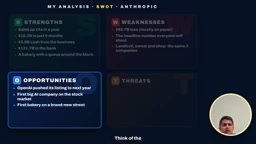
Competitor OpenAI has pushed its own IPO plans to next year, giving Anthropic a rare first-mover window—the first major AI company to reach public markets, like the first store to open on a new street. Funds looking to allocate to AI assets have only one place to go.
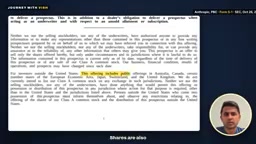
The offering also extends beyond U.S. soil. According to the video, shares are being sold simultaneously in Canada, the UK, Europe, Japan, and Australia; TD Securities in Canada is one of the underwriters, and CPP Investments and Ontario Teachers are already investors—if you pay into a Canadian pension, you may already indirectly hold a small piece of Anthropic. In India, the company opened an office in Bangalore this year, but the prospectus explicitly states that the offering has not been approved by SEBI, so local investors cannot subscribe through domestic brokers and must wait until after listing to buy through U.S. investment apps.
How to Read This Prospectus
The video's SWOT assessment is quite restrained: strengths are 14x sales growth in a year and a strong cash reserve; weaknesses are the loss figure that every headline will amplify, and the landlord-shareholder-channel dependency structure; the opportunity is beating OpenAI to become the first major AI company to go public; threats are the legal battle with the U.S. government, customer usage that can shrink at any time, and a prospectus that lists its own product as a risk.
The practical advice for ordinary investors comes down to two points: wait for the price before judging—hot IPOs often pop on the first day, and early buyers tend to overpay; and when reading the filing, look past the headlines to the structure—book losses and cash losses are two different things.
The creator closes with an airplane safety demonstration analogy: before takeoff, the crew demonstrates the safety card, and no one gets off the plane because of it—if anything, they'd be suspicious of an airline that skipped the step. Anthropic is putting its scariest risks out in the open. Is that honesty, or is it the risk itself? Feel free to share your judgment in the comments.
Related articles

Anthropic Files S-1: $16.3B Revenue, $80.7B Net Loss in Half a Year — Who Controls the Company?
Anthropic files S-1 for a Nasdaq IPO: H1 2026 revenue of $16.3B, an $80.7B net loss from valuation remeasurement rather than cash burn, founders' Class F shares holding 50.1% voting power, and no price or date yet.

Anthropic Files S-1: The Truth Behind $16.3B Revenue and $80.7B Loss
Anthropic's S-1 reveals $16.3B revenue and $80.7B net loss in H1 2026, with $72.4B from accounting effects. The filing also discloses $265.6B compute commitments, cloud deal details, and a 50.1% founder voting control structure, while IPO pricing remains blank.

Anthropic Financials Leaked: Revenue Far Exceeds Compute Costs, Claude Inference Gross Margin Hits 68%
Leaked Anthropic financials show revenue roughly twice total compute costs, Claude inference gross margin at 68%, while frontier training burns $2.8B per quarter. This article breaks down the two accounts and analyzes shifts in AI company valuation logic.