Anthropic Is Losing Developer Trust: A Full-Blown Crisis from Ban Policies to Corporate Culture
Tech blogger Theo systematically critiques Anthropic's subscription policies, developer relations, and closed culture.
Tech blogger Theo released a lengthy video criticizing multiple Anthropic issues: the Cloud Code subscription carries roughly a 15x subsidy ($200 for ~$2,700 in inference credits), creating structural market distortion for third-party developers; a new policy bans OAuth token use in the Agent SDK and other external tools, contradicting a prior public commitment by an Anthropic employee, and cutting off developers' most economical path to building automated workflows. These issues reflect a closed-off mentality in Anthropic's approach to developer relations and corporate culture.
Well-known tech blogger Theo recently released a lengthy video systematically criticizing Anthropic's various practices. From controversies around Cloud Code usage policies and a lack of developer relations, to a closed-off mentality in the company's corporate culture, these issues are leaving a growing number of developers frustrated. This article summarizes the core controversies and explores what they mean for the AI developer ecosystem.
Cloud Code Subscription Policy: The 15x Subsidy Game Behind the $200 Plan
Both Anthropic and OpenAI offer premium subscription plans at $200 per month, but the actual inference quota provided far exceeds the face value. According to reverse-engineered data, the inference tokens alone in a Cloud Code subscription are worth approximately $2,700 — meaning a nearly 15x subsidy.
To understand what this figure means, you first need to grasp the underlying logic of token economics. Tokens are the basic unit of measurement for how large language models process text — typically one English word corresponds to about 1–2 tokens, while Chinese characters usually correspond to 2–3 tokens. The cost of inference tokens is determined by GPU compute power, memory bandwidth, and model scale, making it the primary source of marginal cost for AI companies. Currently, major AI labs broadly adopt aggressive subsidy strategies whose underlying logic mirrors the user acquisition wars of the early internet era: price below cost to rapidly capture market share, establish user habits and data flywheels, then gradually adjust pricing once the competitive landscape stabilizes. A 15x subsidy rate means Anthropic is effectively losing about $2,500 per month on each Cloud Code user — a burn rate that is only sustainable under the dual drivers of venture capital backing and market share targets.
This aggressive subsidy strategy puts enormous pressure on independent developers and third-party products. Theo used his own product, T3 Chat, as an example: last month it consumed 6 billion input tokens and nearly 500 million output tokens, costing roughly $23,000. If calculated at Cloud Code's subsidized rate, that bill might only be $1,000–$2,000. As both a business operator and an individual user, the token consumption is similar, but the cost differs by over 100x. For third-party developers, this subsidy isn't just price competition — it's a structural market distortion.

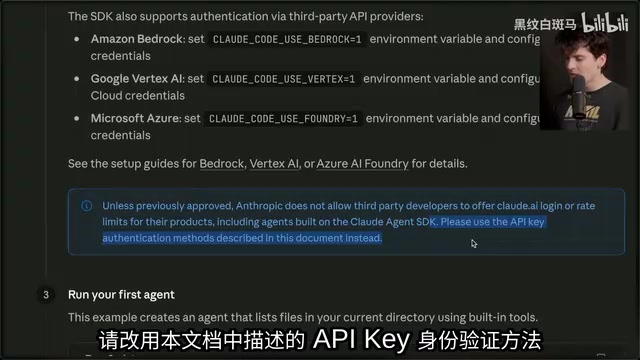
The more critical controversy lies in the latest policy change: Anthropic revised its Cloud Code policy to explicitly state that OAuth tokens obtained through a Cloud subscription are not allowed to be used in other products, tools, or services, including the Agent SDK.
OAuth (Open Authorization) is an industry-standard authorization protocol that allows third-party applications to access a user's resources on a given platform through a token mechanism, without obtaining the user's password. In the AI subscription context, OAuth tokens are essentially digital credentials representing a user's identity and subscription entitlements. The core controversy of this policy change is: are users purchasing the subscription service itself, or merely the right to use that service within a specific interface? This question isn't new in the SaaS industry — similar disputes have arisen with Spotify restricting third-party clients and Adobe limiting API calls. For developers, the portability of OAuth tokens directly determines whether they can build toolchains on top of the Anthropic ecosystem.
Furthermore, the Agent SDK (Agent Software Development Kit) is one of the hottest technical directions in AI engineering today. Unlike traditional single-turn Q&A-style API calls, agent frameworks allow AI models to autonomously plan tasks, invoke external tools, execute multi-step operations, and iterate continuously in a loop until complex objectives are completed. Token consumption for agent tasks is typically tens of times that of ordinary conversations — an automated coding task might involve dozens of rounds of tool calls and context accumulation. This makes the ban on using Cloud Code subscription tokens with the Agent SDK particularly impactful, effectively cutting off developers' most economical path to building automated workflows.
This directly contradicts a public statement made by Anthropic employee Tarik just over a month ago — at the time, he explicitly stated "you can still use the Agent SDK"
Related articles
Meta Muse Hits 900K Downloads in Six D…
Meta Muse Hits 900K Downloads in Six Days: The AI Agent Era Has Officially Arrived
Meta's AI agent Muse hit 902K downloads in 6 days, topping US App Store and Google Play charts above ChatGPT and Claude. A deep dive into Muse's capabilities and the AI Agent race.
 Industry Insights
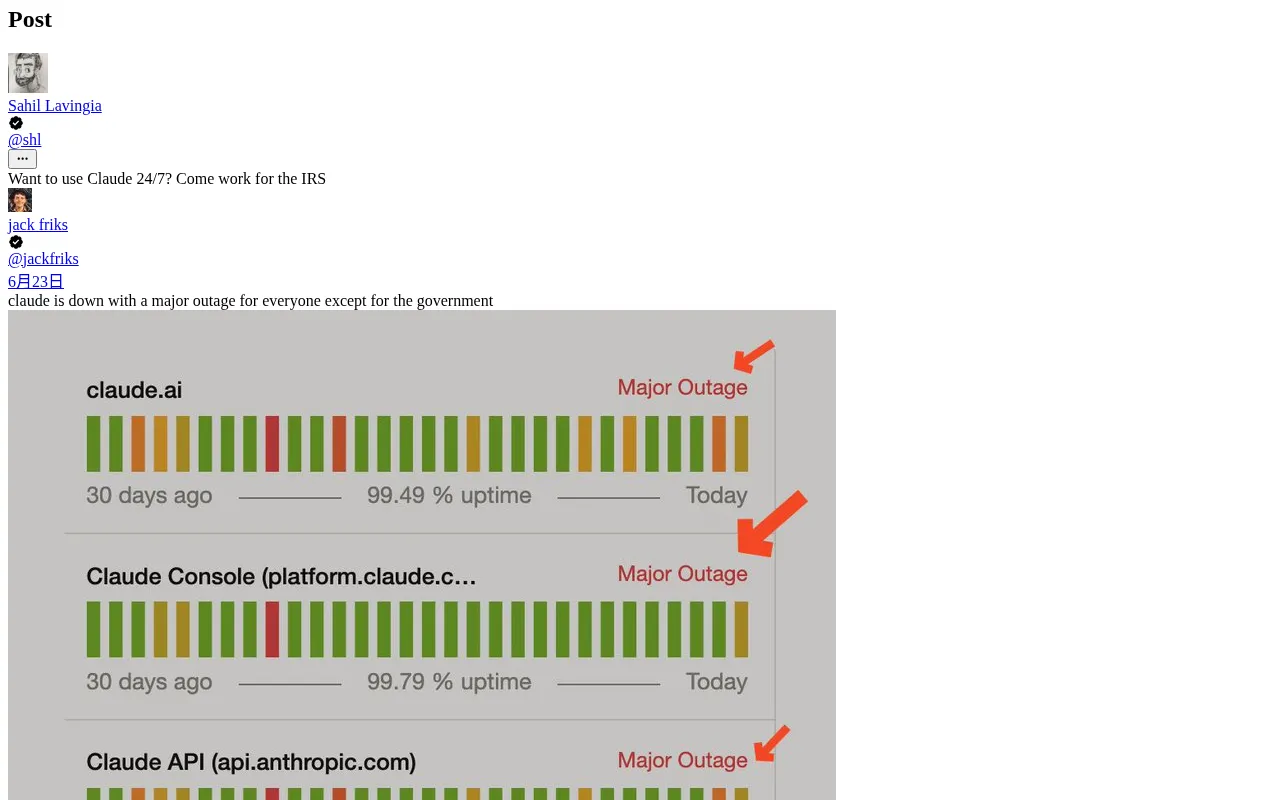
IRS Fully Embraces Claude AI, Accelerating Federal Government's AI Adoption
The IRS is recruiting staff with 24/7 Claude AI access, marking Anthropic's breakthrough into the federal government. Explore the strategic implications and tax use cases.
 Industry Insights
The IRS Mobile App Debate: A Trust Crisis in Government Digital Transformation
The IRS's proposed mobile app has sparked heated debate. This article analyzes the core arguments, exploring data security, privacy, and the trust crisis in government digital transformation.