Anthropic Lists on Nasdaq: An IPO That Writes AI Safety Into Its DNA
Anthropic lists on Nasdaq as ANT, putting AI safety commitments before capital markets.
Anthropic listed on Nasdaq under the ticker ANT, closing higher on day one with intraday market cap briefly crossing $2 trillion, one of the largest IPOs ever. At the bell-ringing, co-founders framed the listing as a public statement on who is responsible for AI. The company built safety first, rejected ads, and as a PBC legally weighs public interest. Over half the Fortune 500 use Claude. CEO Dario Amodei says AI could compress a century of medical progress into ten years, pledging safety over pressure and proposing a "race to the top."
Anthropic has officially listed on Nasdaq under the ticker ANT. The stock closed higher on its first day of trading, with intraday market cap briefly crossing the two-trillion-dollar mark, and it is being called one of the largest IPOs in history. But more worth pondering than the numbers on the trading floor are the remarks made by the two co-founders at the bell-ringing ceremony—they framed this listing as a public statement about who should be responsible for AI.
A Counterintuitive Starting Point: Safety Team First, Product Later
In her remarks, Anthropic President Daniela Amodei openly acknowledged that this is a "somewhat odd" company, one that could even be described as "built backwards"—they assembled an AI safety team first and only released their first product much later.
This sequence explains a series of subsequent choices that outsiders might view as less than "commercial": when launching Claude, they explicitly rejected advertising, the business model that sustains half the internet; and when a new model proved exceptionally good at finding security vulnerabilities, they didn't rush to release it but instead gave it first to people defending critical systems.
Anthropic is a public benefit corporation, legally required to weigh the public interest. Daniela's framing is that they care as much about people who don't use Claude as they do about their users. This positioning is uncommon among public companies, and it makes the tension between "public shareholders" and "public interest" a question it must answer over the long term.
Public Benefit Corporation (PBC) is a corporate form legally recognized in some U.S. states (such as Delaware). Unlike an ordinary company, whose sole fiduciary duty is shareholder financial return, a PBC's charter must state one or more specific public benefit missions and require the board to balance shareholder interests, the public benefit mission, and the interests of third parties affected by the company's actions when making decisions. This means management is legally given room to sacrifice some short-term profit for the public interest, but it must also regularly disclose progress toward its public benefit goals. For a public company, the PBC structure does not exempt it from disclosure obligations under securities law; rather, it turns "public benefit commitments" into public metrics that investors, regulators, and the public can scrutinize quarter by quarter—this is precisely the institutional source of the "tension between public shareholders and the public interest" mentioned in the text.
The Deployment Logic Behind the Customer List
To understand why Anthropic dared to go public at this moment, you have to look at its customer structure. One data point Daniela disclosed: more than half of the Fortune 500 use Claude, in scenarios spanning drug discovery, underwriting, and financial fraud and abuse prevention.
She told several small but telling stories. A school principal in São Paulo used to transcribe 40 pages of report cards by hand, spending 30 days determining what each child needed; now she takes a photo and hands it to Claude, and it's done in minutes. At a badge manufacturer in Massachusetts founded in 1852, production planning manager Edgar used Claude to build new tools for a 40-year-old system, cutting delivery cycles in half. Open Evidence, a medical research tool powered by Claude, was called 42 million times by U.S. clinicians in August alone.
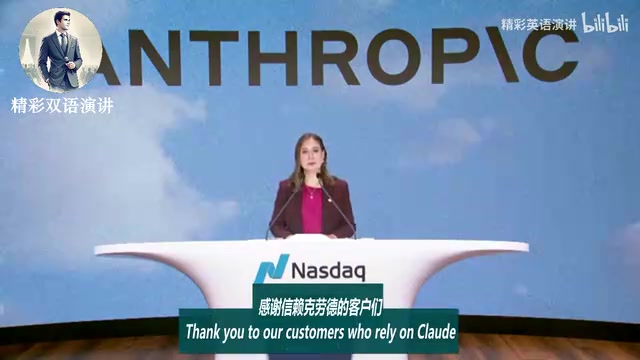
The common thread across these cases: the value of AI is not replacing people but freeing them from repetitive work—giving the principal time to face students and doctors faster access to answers. Daniela's phrasing is that they want Claude to be a trusted partner that makes you more capable, while the decision-making remains in your hands.
Dario's Bet: Compressing a Century of Medical Progress Into a Decade
CEO Dario Amodei's remarks offered a longer perspective. He mentioned that he and his sister lost their father to a disease that was untreatable at the time, and just a few years later that disease became curable—something that first drove him into biology.
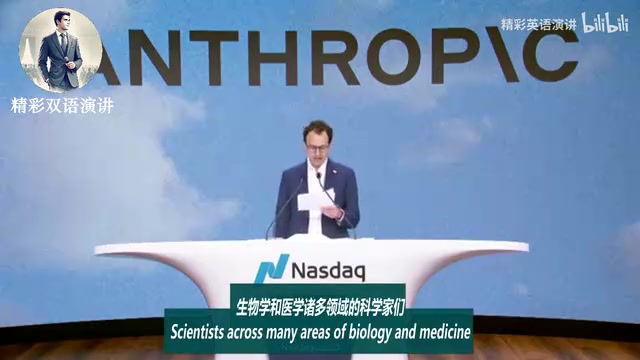
In the lab, he saw scientists' helplessness in the face of disease complexity: gene editing, gene synthesis, controlling brain cells with light—these tools capable of cutting through thorns all began as ideas, born of pure intelligence. Human intelligence has already made plague, smallpox, and polio history in most of the world, but progress on other diseases remains too slow: from a good idea to a therapy can take decades, and CRISPR took many years from initial discovery to the first approved therapy.
His judgment is that sufficiently powerful AI collaborating with humans could compress a century of scientific and medical progress into ten years. He also added with restraint: there are only early results so far, experiments and clinical trials still take time, but these slow, cumbersome processes can be significantly accelerated.
CRISPR is an adaptive immune mechanism in prokaryotes that scientists engineered into a programmable gene-editing tool: guide RNA locates the target DNA sequence, and Cas proteins do the cutting. Since it was shown around 2012 to precisely edit DNA in vitro, it quickly became a standard tool in basic research. But there is a long road between "can edit" and "can cure": off-target effects, delivery efficiency, immunogenicity, ethical review, and years of clinical trials are all unavoidable steps. The first CRISPR-based therapy, Casgevy, was approved for sickle cell disease in late 2023, more than a decade after the initial discovery. This timescale is the real-world backdrop to the argument in the text—the time from scientific idea to usable therapy is the step where AI would deliver the greatest benefit if it could compress it.
After the IPO, How to Keep Safety Commitments From Being Diluted
For a company that has just entered the public market, the sharpest question is: will the pressure of quarterly earnings cause safety to give way to growth?
Dario's response was direct. He listed Anthropic's investments in biosecurity and cybersecurity protection, alignment training and testing, and examining model internals like an X-ray, and stated that the company will lengthen the pace of training and deployment as needed until it is confident systems are safe and under human control—and will not bow to commercial or political pressure. He framed the greater funding that going public brings as, in turn, a condition for strengthening that resolve.
He proposed a framework called the "race to the top": if one company can prove that balancing safety and commercial success is feasible, peers will be pulled along; when this mechanism works properly, it doesn't matter who has the best model, because everyone is building safely. This sounds idealistic, but at least it provides a testable standard—whether the commitments are kept will be revealed by the pace of future model releases.
Alignment refers to the technical problem of making AI systems' behavior consistent with human intent and values, not simply making models "obedient." It covers subproblems such as how training objectives are set, how models generalize out of distribution, reward hacking, deceptive behavior, and interpretability. Some of the methods Anthropic uses (such as reinforcement learning from human feedback and constitutional AI) are training-level alignment, while "examining model internals like an X-ray" points to mechanistic interpretability research—trying to understand internal representations rather than merely observing inputs and outputs. Alignment is central to the "race to the top" because it cannot be solved with after-the-fact patches: once more capable models are deployed, the consequences of alignment flaws are amplified accordingly.
What This IPO Is Really Selling
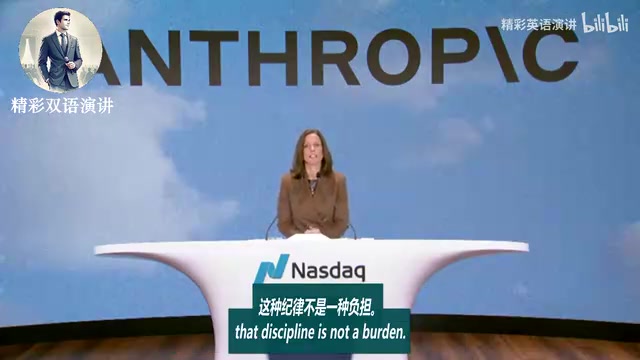
Setting aside the market cap figures, the core narrative of Anthropic's listing is "trustworthiness." In her opening remarks, Nasdaq CEO Adena Friedman said that public markets require companies to be transparent, accountable, and to earn investors' confidence every day—and for a company whose work is built on earning trust, this discipline is not a burden but an extension of its mission.
Daniela's final words to the uneasy onlookers may have been the most weighty part of the entire ceremony: this technology needs you—not your trust, not your usage, but your voice. The story's ending has not yet been written; intelligence is now something humans can build, and what we build with it depends on everyone.
For those watching the AI industry, the significance of this IPO may lie not in the scale of the fundraising but in the fact that, for the first time, it puts "AI safety" before the capital markets as a public commitment, making quarterly disclosure a mechanism for testing that commitment.
One-line Summary
Anthropic lists on Nasdaq as ANT, using the IPO to put AI safety commitments before the capital markets.
Paragraph Summary
Anthropic listed on Nasdaq under the ticker ANT, closing higher on its first day with intraday market cap briefly crossing two trillion dollars, making it one of the largest IPOs in history. At the bell-ringing ceremony, the two co-founders did not focus on valuation but framed the listing as a public statement about who is responsible for AI. The company built its safety team before releasing products, rejected the advertising model, and as a public benefit corporation legally weighs the public interest. More than half of the Fortune 500 use Claude, across scenarios including drug discovery, underwriting, and fraud prevention. CEO Dario Amodei believes powerful AI could compress a century of medical progress into a decade, while pledging not to sacrifice safety to commercial or political pressure, and proposing a "race to the top" framework that makes quarterly disclosure a mechanism for testing commitments.
Related articles

Michael Nielsen Takes Down His Classic Neural Network Textbook, Sparking Community Discussion
Michael Nielsen's classic free textbook Neural Networks and Deep Learning has been taken offline, sparking discussion on Hacker News about the reasons and impact.

Inside the AI Training Data Market: The Trade-off Between Exclusivity and Discounts
G2i founder Gabe Greenberg reveals the dual-track pricing of the AI training data market: labs pay a premium for exclusive data or accept discounts that allow others to buy it.

SessionGraph: Unifying All Coding Agent Sessions in One Interactive Graph
SessionGraph aggregates coding agent sessions into an interactive graph, helping developers review, debug, and manage AI coding workflows across sessions. This article examines its positioning, value, and open questions.