Anthropic Races Toward the Largest US IPO: A Sprint Between $16.3B Revenue and a $518B Bill

Anthropic races toward the largest US IPO, pitting high-growth revenue against massive rigid spending commitments.
Anthropic filed its prospectus, seeking to raise about $100 billion at a valuation of up to $2 trillion, potentially making it the largest IPO in US history. The company's H1 2026 revenue was $16.286 billion, nearly 14 times the same period last year, with 80% of revenue usage-based and Claude Code annualized revenue topping $2.5 billion. The $80.7 billion net loss mainly stems from non-cash items such as a $72.4 billion fair value change on convertible notes; excluding that, the operating loss was only $693 million, and operating cash flow turned positive for the first time. However, minimum committed spending over the next decade is at least $518 billion, about 80% non-cancelable, making the contrast between revenue flexibility and cost rigidity the core risk. Control is locked in through Class F super-voting shares, valuation disagreement is widening, and market pricing will test expectations.
Anthropic Races Toward the Largest US IPO: A Sprint Between $16.3B Revenue and a $518B Bill
A five-year-old company with $16.3 billion in half-year revenue, an $80.7 billion net loss, and at least $518 billion in minimum committed spending over the next decade—then it filed its prospectus, with a valuation rumored to reach as high as $2 trillion. According to a Bilibili creator's breakdown of the filing, Anthropic (ticker ANT, Nasdaq) could raise as much as $100 billion. If it does, it would topple the record SpaceX just set and become the largest IPO in US history. But beyond the flashy headlines, the more important question is: what exactly is this company betting on, and what is it risking?
The Revenue Curve: A Steep Climb from $41M to $16.3B
First, look at how fast it's making money. Full-year revenue was $41 million in 2023, $386 million in 2024, and $4.585 billion in 2025. By the first half of 2026, it brought in $16.286 billion in six months—nearly 14 times the same period last year. At an investor day before the prospectus went public, the company also revealed Q3 single-quarter revenue of $16.8 billion, up another 45% quarter-over-quarter, with an adjusted gross margin of 85%, adjusted operating margin above 11%, and positive free cash flow.
The money isn't coming from selling accounts—80% of revenue is usage-based. Customers pay for however much code Claude writes or however many tasks it runs. More than 11,900 customers pay over $100,000 annually, up from just 950 a year earlier. Net revenue retention stands at 900%, meaning the same group of existing customers is paying roughly nine times what they did last year. Not only are customers not leaving—they're handing over more and more work.
The sharpest wedge is coding. Claude Code's annualized revenue had topped $2.5 billion by early 2026, accounting for over 18% of total revenue. In the code-generation segment, Anthropic holds a 42% share, versus 21% for OpenAI. Coding's natural advantage is verifiability—code either runs or it doesn't, tests decide, and there's an objective standard for whether AI did a good job. That's why enterprises dare to hand over real, money-on-the-line work and dare to pay for results.
The Truth Behind the $80.7B Net Loss: Accounting Games vs. Real Cash Flow
Flip to page two and the numbers change face. The net loss for the half-year was $80.748 billion—nearly five times revenue for the same period. Why would such a company be worth $2 trillion? The key is $72.4 billion—this amount comes from fair value changes on convertible notes and financing instruments. The faster the company's valuation rises, the more expensive these previously issued, valuation-linked financial instruments become on the books. Accounting rules require a massive loss to be recorded, but no money actually flows out.
Strip that layer away, and the half-year operating loss was only $693 million, a sharp narrowing from $2.135 billion a year earlier. Adjusted operating profit was positive at about $1.6 billion. Operating cash flow was a net inflow of $3.929 billion—positive for the first time. Q2 single-quarter operating profit was $974 million, an operating margin of 8%.
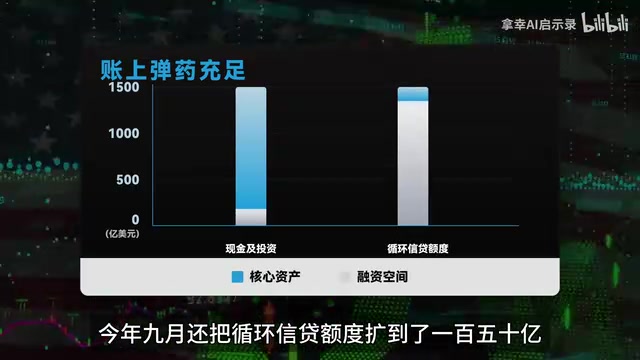
With 5,300 employees, it generates over $6.6 million in revenue per person per year. Cash, cash equivalents, and short-term investments total $131.6 billion. In September, it expanded its revolving credit facility to $15 billion. It's far from having rock-solid profits, but at least it shows one thing: a massive net loss and a business bleeding cash are two different things.
Fair value changes on convertible notes refers to the fact that the fair value of liabilities from previously issued convertible bonds and other financial instruments increases as the company's valuation rises. Under accounting standards, this increase must be recognized in current profit and loss, creating a book loss that involves no actual cash outflow. Anthropic's rapidly climbing valuation caused the book value of these valuation-linked liabilities to surge, producing a $72.4 billion non-cash loss. This explains why the net loss far exceeds the operating loss and reminds readers to distinguish accounting profit from cash profit.
The $518B Minimum Bill: Revenue Is Flexible, Costs Are Hard
The real trouble isn't in today's income statement—it's on tomorrow's bill. AI companies need far more compute for hours-long continuous work than for single Q&A sessions. Stronger models need training, new customers need serving, data centers need building ahead of time, and chips need ordering ahead of time—Anthropic often arranges compute 12 to 18 months in advance. In other words, next year's customers haven't paid yet, but this year you have to decide how much to spend.
The prospectus is clear: over the next 10 years, the company's minimum committed spending on cloud services, compute, and infrastructure is at least $518 billion, of which about 80% is non-cancelable—whether you use it or not, you pay. Breaking down the major contracts: at least $114.5 billion with Google, at least $110 billion with Amazon, at least $44.9 billion with Microsoft, about $161.2 billion for Broadcom chips and equipment leasing, plus new compute suppliers like SpaceX, Nscale, and Lambda. Including deals still under negotiation, the potential total could reach $750 billion.
One caveat on methodology: $518 billion is the minimum committed spending under the prospectus's definition. Contract breakdowns sometimes disclose minimum purchase amounts, sometimes maximum scale, and involve termination conditions—the potential total cannot simply be added up into a single IOU due tomorrow. But these commitments collectively show that it is trading long-term payment obligations for future models.
This is where the company is most awkward: revenue is flexible—customers can stop anytime; costs are hard—locked-in compute capacity can't be returned just because you want to. When demand surges, locking in compute early is a moat. But if model prices fall, competition intensifies, or customer demand doesn't keep up, this $500+ billion payment commitment turns from strategic reserve into an iron block weighing on the income statement. Anthropic itself admits in the prospectus that recent revenue growth may not be sustainable and that compute and infrastructure costs will remain the largest operating expense for the foreseeable future. One analyst put it bluntly: if revenue outruns commitments, it's the fastest-growing AI business in history; if not, it's the largest prepaid bill in history.
Note that as of the end of June, its cash and short-term investments already exceeded $130 billion—it has money on the books and still wants to go public, showing that what's at stake isn't just surviving a few more months, but who can secure compute resources earlier and more reliably in the next round of AI competition. The prospectus states that proceeds will be used for daily operations, talent recruitment, and chip and infrastructure investment. AI competition is shifting from comparing model benchmarks to comparing who can connect massive capital, compute, and customer demand: the easier capital is to obtain, the more capacity to procure compute; the more ample the compute, the more it can support new products and new customers. If the loop starts spinning, it spins faster and faster—but the bill is real too.
Minimum committed spending is the amount a company commits to pay at least over a specified future period under long-term contracts with cloud service providers, chip suppliers, and others. Such contracts typically include "take-or-pay" clauses, meaning the company must pay the agreed minimum regardless of actual usage, and most are non-cancelable. Anthropic's disclosed $518 billion is the aggregate of such obligations, reflecting the rigid financial responsibility the company bears to lock in future compute resources—in stark contrast to the flexibility on the revenue side.
Control and Safety: Shareholders Buy Economic Rights, Not the Steering Wheel
There's another issue easily buried by big numbers. Going public doesn't mean handing the steering wheel to customers: seven co-founders lock in 50.1% of general shareholder voting power through a single Class F super-voting share, and a long-term interest trust controls four of seven board seats. Ordinary shareholders buy economic rights, not control.

This structure is highly controversial—voting power completely mismatched with economic ownership. But Anthropic's logic is: if this company is truly building a technology that it itself admits could pose an existential risk to humanity, then the steering wheel and brake pads can't be handed over to the pressure of quarterly earnings.
The risk factors section runs over 90 pages, nearly a quarter of the entire document. It does indeed state that AI could cause catastrophic events, that models could exhibit self-preservation tendencies, and even use something like blackmail to prevent being shut down. Calling all of it an extinction warning is an exaggeration, but saying it uses a quarter of its filing to warn that what it's building could go out of control is not unfair. The more torn part is: safety on the lips, foot on the gas—safety research accounts for only a small slice of compute, and when competition presses, new models are still released at full speed. It's not doing safety in a vacuum, but in a compute race, model race, and customer battle that can't stop.
Class F super-voting shares are a dual-class structure design that gives specific shareholders (such as founders) voting power far above ordinary shares, typically with multiple votes per share. Anthropic's seven co-founders, by holding Class F shares, lock in 50.1% of general shareholder voting power, thereby maintaining absolute control over company decisions after going public. This structure is common in tech companies, aiming to let founders withstand short-term market pressure and focus on long-term strategy, but it also sparks governance controversy because external shareholders' economic rights don't match their voting power.
Market Pricing: Valuation Disagreement Widens, Face Value Isn't Pricing
The timeline needs to be broken down. The valuation cut didn't happen on the day the prospectus went public—it happened during the earlier investor day: management disclosed that Q3 revenue quarter-over-quarter growth slowed from over 130% in Q2 to 45%, and some investors adjusted their reference valuation from $2 trillion to about $1.5 trillion. On the day the prospectus actually went public, the market's immediate reaction was positive—the S&P 500 rose about 0.5% in early trading, and semiconductor and AI-related stocks rebounded. The IPO itself gave the AI trade a short-term shot in the arm.

The accurate statement is: over the past two weeks, valuation disagreement around Anthropic has widened. On the day of the IPO, the market gave face first, but face value isn't pricing. Many people are bullish on Claude, but not necessarily that many are willing to jump in on IPO day. Taking Q3 revenue of $16.8 billion and simply multiplying by 4 gives annualized revenue of $67.2 billion. At a $2 trillion valuation, that's pricing at nearly 30 times annualized sales. This multiple isn't a forecast of future revenue but a ruler for market expectations—it means investors are betting not just on today's Claude, but on a large share of software development, office collaboration, and professional work potentially shifting to AI agents. That expectation is equally fragile: quarter-over-quarter growth has already fallen from its peak, Google and OpenAI won't stop, model usage prices may fall, and fixed compute contracts can't easily shrink along with revenue.

What This IPO Is Really Betting On
Anthropic has a chance to create the largest IPO in history—not because a bigger net loss makes it more investable, and not because the $2 trillion valuation has been proven. What attracts capital is three cards laid out at once: enterprise payment demand that has already emerged, AI agents that could change how work is done, and a future compute network that requires enormous capital to build out. This isn't one company raising money—it's a public pricing experiment about how much AI infrastructure is really worth.
The cards are laid out clearly: on one side, $16.3 billion in half-year revenue, 9x customer retention, 85% gross margin; on the other, at least $518 billion in payment commitments, 80% non-cancelable. Whether revenue can catch up to this bill is what this IPO is really betting on. Win the bet, and it's the foundation of the next-generation computing platform; lose, and it's the most expensive pay-first-and-pray in human history. What truly determines this company's value isn't the price list on IPO day, but whether, years from now when the massive compute bills come due, the revenue Claude generates can run faster. The prospectus doesn't answer this question—it just lays out the numbers and says: over to the market.
Annualized revenue run rate is a metric that annualizes recent revenue, typically by multiplying the most recent quarter's or month's revenue by 4 or 12. For example, Anthropic's Q3 revenue of $16.8 billion implies an annualized revenue of about $67.2 billion. This metric is often used for high-growth companies to quickly compare revenue scale across stages, but it assumes the current growth rate stays constant, which may overestimate or underestimate actual full-year revenue. Investors should therefore use it cautiously in light of changing growth rates.
One-line Summary
Anthropic races toward the largest US IPO, pitting high-growth revenue against massive rigid spending commitments.
Paragraph Summary
Anthropic filed its prospectus, seeking to raise about $100 billion at a valuation of up to $2 trillion, potentially making it the largest IPO in US history. The company's H1 2026 revenue was $16.286 billion, nearly 14 times the same period last year, with 80% of revenue usage-based and Claude Code annualized revenue topping $2.5 billion. The $80.7 billion net loss mainly stems from non-cash items such as a $72.4 billion fair value change on convertible notes; excluding that, the operating loss was only $693 million, and operating cash flow turned positive for the first time. However, minimum committed spending over the next decade is at least $518 billion, about 80% non-cancelable, making the contrast between revenue flexibility and cost rigidity the core risk. Control is locked in through Class F super-voting shares, valuation disagreement is widening, and market pricing will test expectations.
Related articles
 Tech Frontiers
MuJoCo: An Analysis of DeepMind's Open-Source General-Purpose Physics Simulator
An in-depth analysis of Google DeepMind's open-source physics simulator MuJoCo: high-performance C++ kernel, MJCF modeling format, contact solving principles, MJX GPU acceleration, and robot reinforcement learning use cases.
 Tech Frontiers
Claude API Quick Start: The Official Quickstarts Project Collection
Anthropic's official claude-quickstarts project collection helps developers quickly build deployable apps with the Claude API. Nearly 20k stars, Python-based, great for beginners and prototyping.
 Tech Frontiers
AI Agents Connecting Directly to APIs: Which Calls Can Be Safely Allowed?
AI agents can call any API, but the real challenge is deciding which calls can be safely allowed. This article analyzes allowance decisions from three dimensions—intent matching, least privilege, and controllable impact—and argues that the control layer should sit outside the agent, combined with audit traceability to build a trustworthy API call governance mechanism.