Anthropic Releases AI-Native Startup Playbook: A Four-Stage Framework Redefining Entrepreneurship for 2026

Anthropic releases an AI-native startup playbook, redefining founders as "orchestrators."
Anthropic has released The Founder's Playbook, systematically presenting an AI-native entrepreneurship methodology for 2026. The playbook proposes that the founder's role is shifting from executor to "orchestrator," focusing energy on strategic judgment and critical decisions. The guide divides startups into four stages (Idea, MVP, Launch, Scale), providing practical frameworks for AI-accelerated market validation, technical debt control, and identifying real PMF to help founders embed AI throughout their operations.
Article
Anthropic recently released a practical guide for entrepreneurs — The Founder's Playbook — systematically outlining how to build a startup from scratch using AI in 2026. This playbook redefines the four core stages of entrepreneurship and provides actionable frameworks, exercises, and prompts to help founders deeply embed AI into every aspect of company operations.
The Fundamental Shift in the Founder's Role: From Executor to Orchestrator
The core message of this playbook is unmistakable: the founder's role is shifting from "individual contributor" to "orchestrator."
In multi-agent system architecture, "orchestrator" is a role with specific technical meaning. The orchestrator is responsible for decomposing complex tasks into subtasks and coordinating multiple AI agents or tools to execute them in a defined logical sequence. This concept originates from the service orchestration pattern in microservices architecture and was later introduced into AI system design. In its technical documentation, Anthropic positions Claude as capable of serving a dual role — both as an orchestrator (delegating tasks to other agents) and as a sub-agent (executing specific instructions). For founders, the "orchestrator" metaphor means that core competitiveness shifts from "hands-on execution" to "designing systems, defining goals, and evaluating outputs" — highly similar to the traditional management path of progressing from individual contributor to manager, but AI dramatically compresses the time and team size required for this transition.
In the past, founders needed to personally write code, do design work, and run sales. In the AI-native era, founders who have never written a single line of code can deliver production-grade applications, generate revenue before expanding their team, and build automated tools to handle the most tedious workflows. This means founders can focus their energy on "things only they can do" — strategic judgment, customer insights, and critical decisions.
This is not a distant vision. The playbook cites real cases from companies including Ambral, Carta Healthcare, HumanLayer, and Vulcan Technologies, demonstrating that this model has already been validated in practice.
The Four-Stage Lifecycle Framework for AI-Native Startups
The playbook divides the entrepreneurial journey into four stages — Idea, MVP, Launch, and Scale — and defines clear objectives, exit criteria, common failure modes, and AI-driven exercises for each stage.
Idea Stage: Accelerating Market Validation with AI
During the ideation stage, the playbook provides methodologies for using AI to validate problem hypotheses, analyze competitive landscapes, and conduct customer discovery. Traditional market research might take weeks or even months, but with AI tools like Claude, founders can rapidly generate competitive analysis reports, simulate customer interview scenarios, and identify market gaps.
The key point is that AI doesn't replace the founder's judgment — it dramatically accelerates information gathering and hypothesis testing. Founders still need to get out and talk to real users, but AI helps them enter those conversations with more precise questions.
MVP Stage: Building Quickly with Claude Code While Controlling Technical Debt
This is the stage where many AI-native entrepreneurs are most likely to stumble. The playbook specifically emphasizes architecture design, feature scope control, and security practices to prevent AI-generated codebases from accumulating excessive technical debt.
The concept of Technical Debt was introduced by software engineer Ward Cunningham in 1992, referring to imperfect technical solutions adopted for short-term delivery speed that require additional future costs to fix or refactor. With the proliferation of AI code generation tools (such as Claude Code, GitHub Copilot, and Cursor), technical debt takes on new characteristics: AI-generated code is often locally correct in logic but lacks awareness of overall architecture, easily producing issues like excessive coupling between modules, inconsistent naming, and missing error handling. More critically, the speed of AI code generation is several times or even dozens of times faster than manual coding, meaning technical debt accumulates at a correspondingly accelerated pace. Research shows that technical debt consumes approximately 20-40% of engineering time on average for development teams to repay — for resource-constrained early-stage startups, this ratio can directly impact survival.
The playbook provides specific best practices to help founders find the balance between development speed and code quality — the most successful AI-native entrepreneurs of the future may not be those who write code the fastest, but those who best understand how to "manage AI output."
Launch Stage: Distinguishing Real PMF from Early False Prosperity
The playbook proposes a metrics framework for distinguishing genuine Product-Market Fit (PMF) from early-stage false prosperity.
Product-Market Fit (PMF) was formally articulated by venture capitalist Marc Andreessen in 2007, describing the state where a product satisfies a strong market demand. Common measurement methods in the industry include: Sean Ellis's "40% test" (PMF is achieved if more than 40% of users would be "very disappointed" if the product disappeared); Net Promoter Score (NPS); and retention curve analysis (where user retention curves flatten rather than continuously decline). In the AI product space, determining PMF is particularly complex — AI applications often achieve inflated activity metrics at launch due to the "Novelty Effect," where users try the product out of curiosity but haven't formed genuine dependency. Key indicators for distinguishing real PMF from false prosperity typically include: D30/D90 retention rates, organic referral rates, paid conversion rates, and user substitution behavior when the product is unavailable — for products that have truly achieved PMF, users will actively seek alternatives rather than simply abandoning the need.
Additionally, the playbook introduces a "launch-stage operating system"
Related articles
Meta Muse Hits 900K Downloads in Six D…
Meta Muse Hits 900K Downloads in Six Days: The AI Agent Era Has Officially Arrived
Meta's AI agent Muse hit 902K downloads in 6 days, topping US App Store and Google Play charts above ChatGPT and Claude. A deep dive into Muse's capabilities and the AI Agent race.
 Industry Insights
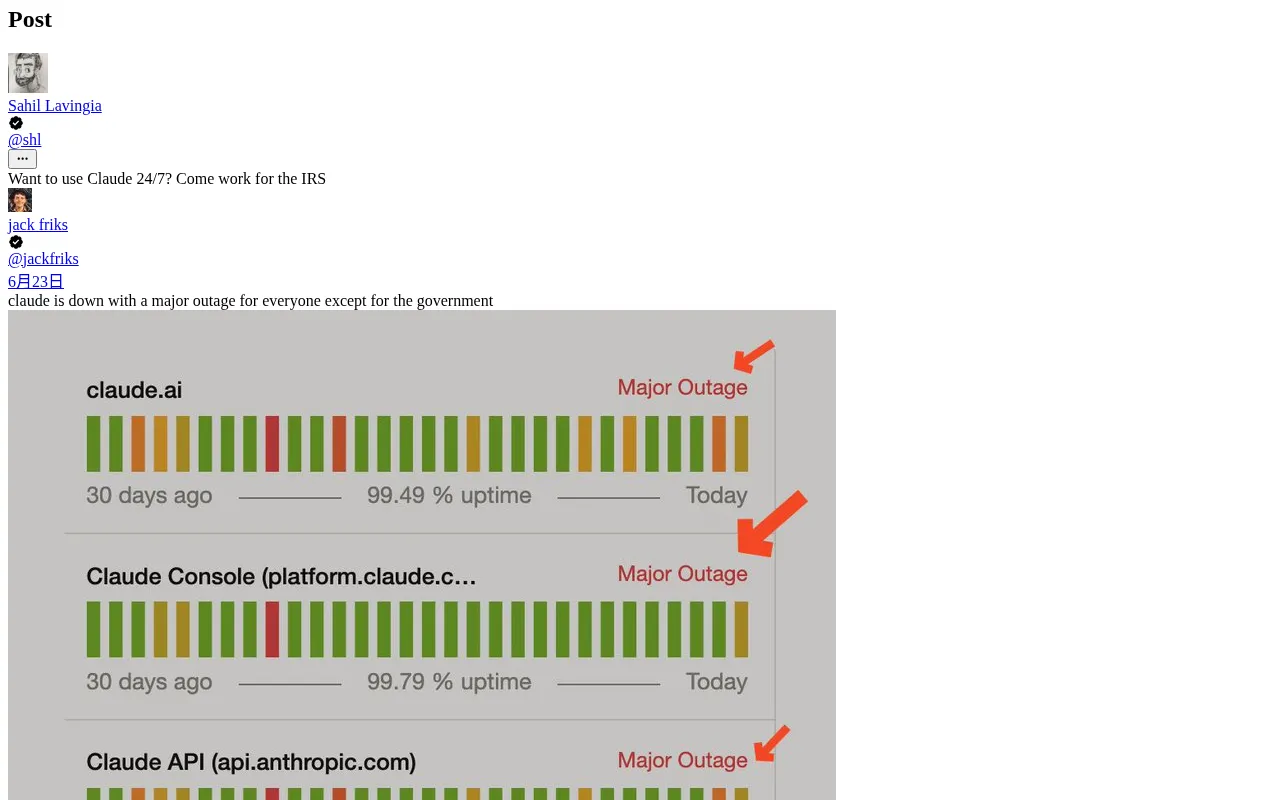
IRS Fully Embraces Claude AI, Accelerating Federal Government's AI Adoption
The IRS is recruiting staff with 24/7 Claude AI access, marking Anthropic's breakthrough into the federal government. Explore the strategic implications and tax use cases.
 Industry Insights
The IRS Mobile App Debate: A Trust Crisis in Government Digital Transformation
The IRS's proposed mobile app has sparked heated debate. This article analyzes the core arguments, exploring data security, privacy, and the trust crisis in government digital transformation.