Anthropic's Seven Founders to Cash Out $250 Million Each in IPO

Anthropic's seven founders each cash out about $250M in the IPO, totaling $1.75B while retaining control.
Anthropic's IPO details reveal that seven co-founders will sell an identical number of shares in the offering, each cashing out about $250 million at the midpoint of the price range, totaling roughly $1.75 billion. Equal selling is uncommon in tech IPOs, satisfying early team monetization needs while avoiding confusing market signals from uneven selling. More importantly, the founding team retains control after the cash-out, addressing concerns about AI companies being captured by short-term performance pressure after listing. The article argues this case provides a reference for observing AI company IPO governance structures and founder liquidity arrangements—the cash-out is not an exit signal but a capital operation as the company enters a new phase.
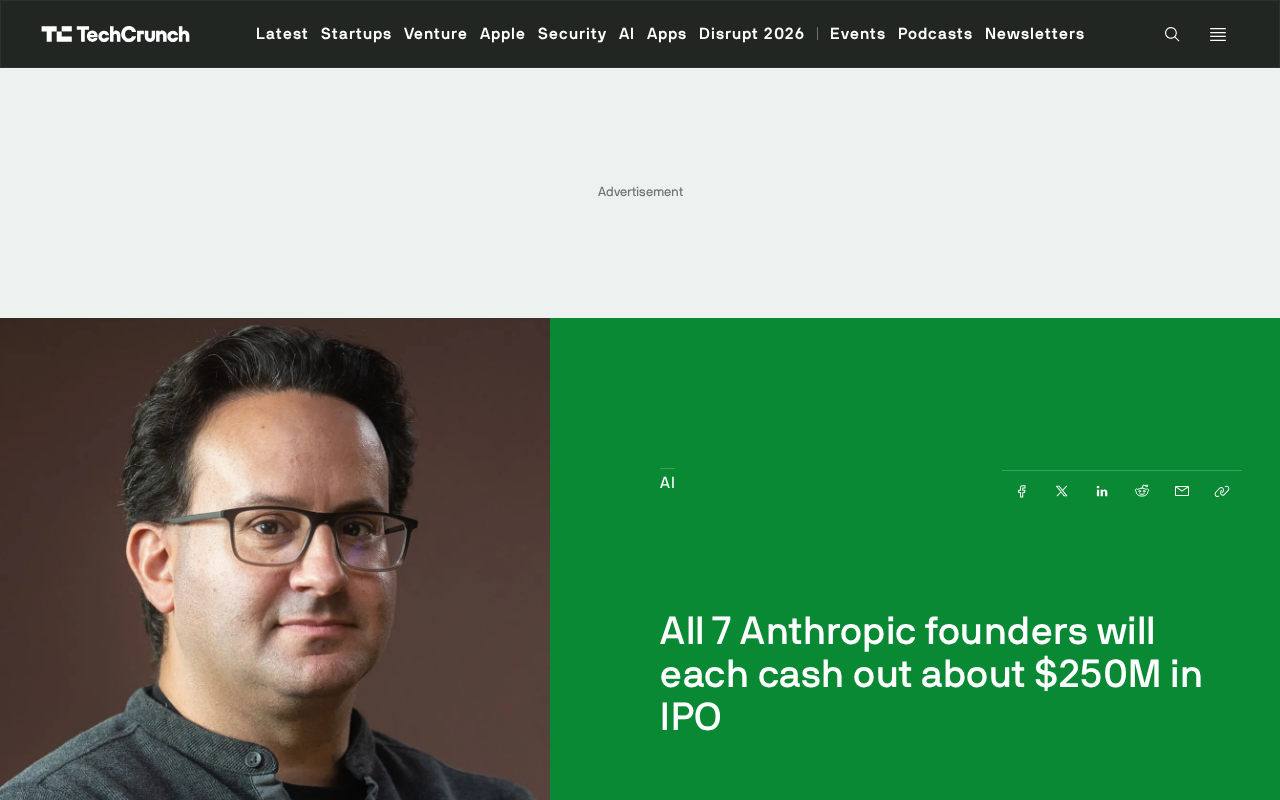
Details of AI unicorn Anthropic's IPO are emerging. According to an RSS source, the company's seven co-founders will sell an identical number of shares in the IPO, cashing out approximately $250 million each based on the midpoint of the offering price range. This arrangement gives the founding team substantial liquidity while ensuring they retain control of the company after going public.
Founder Cash-Out Plan: Equal Sales, Retained Control
According to disclosed information, each of the seven co-founders plans to sell exactly the same number of shares—an uncommon arrangement in tech company IPOs. Founders typically sell different proportions of their holdings based on individual financial needs, but Anthropic's choice is closer to a collective decision: it satisfies early team members' desire to monetize while avoiding confusing signals to the market from uneven selling.
At the midpoint of the price range, each founder would receive approximately $250 million in cash, totaling about $1.75 billion. For an AI company built around safety research as its core philosophy, the founding team achieving this scale of liquidity at the IPO stage demonstrates that capital markets have fully validated Anthropic's valuation.
Founder Cash-Outs and Lock-Up Periods in IPOs
In U.S. IPOs, company insiders (founders, executives, early investors) are typically subject to a "lock-up period," generally 180 days after listing during which they cannot sell shares. However, at the time of the IPO offering, the company can arrange for certain existing shareholders to sell shares directly in the offering (a secondary offering), and these shares are not subject to the lock-up. The seven Anthropic founders "selling shares in the IPO" falls into this category—the shares sold are counted in the total offering rather than being sold on the secondary market after listing. Understanding this is crucial: it means the cash-out occurs at the offering pricing stage, at the offering price rather than a post-market-fluctuation trading price, so the "approximately $250 million each" is a static estimate based on the midpoint of the offering price range.
Control Not Diluted: Founding Team Still at the Helm
While cashing out, the seven founders will maintain control of the company. This is noteworthy: in a context where AI companies broadly face governance structure controversies, Anthropic's IPO design ensures the founding team continues to lead the company's direction after listing. For a company whose core narrative is "responsible AI," governance stability is itself part of its brand equity.
This arrangement also addresses external concerns that AI companies might be captured by short-term performance pressure after going public. The founding team retaining control means the company's long-term investment in safety research won't be easily compromised by quarterly earnings.
Dual-Class Share Structure and Control Retention
The most common method for tech founders to retain control after listing is a dual-class share structure: the company issues Class A common stock (one vote per share, publicly traded) and Class B common stock (multiple votes per share, typically 10 or more, held only by the founding team). As long as the founders' combined Class B voting power exceeds a certain threshold, they can dominate the board and major decisions even if their economic interest (ownership percentage) declines through IPO dilution or cash-outs. As a public benefit corporation (PBC), Anthropic also layers on mission-lock mechanisms, making its governance design more complex than a standard dual-class structure. The essence of "cashing out without diluting control" lies in selling economic interest rather than voting power—or in voting power remaining concentrated among the founding team after the sale.
Reference Significance for AI Industry IPOs
Anthropic's IPO details provide a sample for observing AI company listings. Unlike traditional SaaS companies, leading AI companies' founding teams often still hold significant stakes at IPO and maintain their voice through equity structure design. The seven founders' equal cash-outs balance personal returns with corporate governance transparency to some degree.
From a market perspective, founders collectively cashing out at the $250 million level while retaining control indicates that the IPO is not a signal of team exit but rather a capital operation as the company enters a new phase. For investors watching the AI sector, this case also suggests that when evaluating AI companies, founder ownership and governance arrangements are important dimensions for understanding long-term strategy.
Public Benefit Corporation (PBC) and Mission Lock
Anthropic is incorporated as a Delaware public benefit corporation (PBC), a legal entity form that requires the company to balance a stated public mission alongside shareholder returns. A PBC's board has a legal obligation to weigh mission against financial returns in decision-making, rather than being accountable solely to shareholder profit. This structure mutually reinforces Anthropic's "responsible AI" narrative and explains why its IPO governance arrangements receive extra attention: investors are buying not just an AI company's growth but also a set of legally binding mission commitments. When evaluating such companies, the specific mission provisions in the PBC charter, board composition, and the authority of the mission committee are all important bases for judging whether long-term strategy can withstand short-term performance pressure.
The Signal Behind the Cash-Out
Founder cash-outs are often interpreted by the market as a negative signal, but Anthropic's plan has its particularities. Equal selling means no founder is rushing to exit, and the scale of cash-outs relative to the company's overall valuation is within a reasonable range. More importantly, the retention of control shows the founding team still has confidence in the company's long-term value.
In an increasingly competitive AI environment, Anthropic's IPO arrangement is both an accountability to early investors and a grasp of the pace of future development. The $250 million cash return for each of the seven founders may be just the opening chapter of this company's capital story.
Related articles
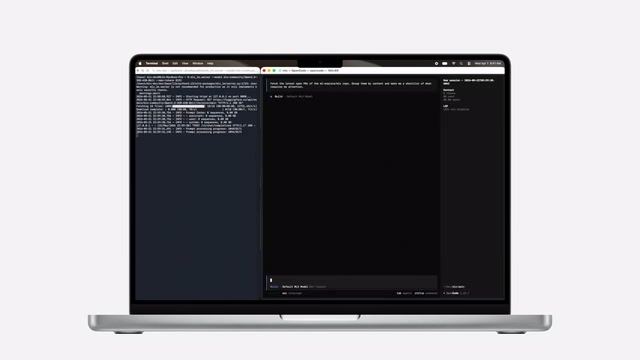
Running Local AI Agents on Mac: A Full Breakdown of the MLX Four-Layer Stack
A breakdown of Apple engineer Joanna's local Mac AI agent solution: the MLX four-layer stack, a three-step setup, and how the neural network accelerator, continuous batching, and distributed inference solve local agent performance bottlenecks.
52KB Engine Runs 2B LLM in a Browser Tab
52KB Engine Runs 2B LLM in a Browser Tab
A 52KB WebAssembly engine on Hacker News claims to run Qwen3.5-2B in a browser tab. We analyze the engine-model separation, browser inference pros and cons, and the on-device AI runtime race.

MIT PhD Takes You from Scratch to Build DeepSeek: A 25-Hour Hardcore Course
MIT PhD Raj Dandekar launches a 25+ hour Bilibili course building DeepSeek from scratch—MoE, MLA, GRPO, hand-written code plus math derivations, aiming to reproduce mini R1.