Anthropic Says Claude Is Helping Build Its Own Successor
Anthropic says Claude is actively involved in building its own successor, raising both efficiency and safety questions.
Anthropic has revealed that Claude is taking on a growing role in developing next-generation models, including tasks like coding, training data generation, and experiment design. This reflects a broader industry trend — OpenAI and Google DeepMind have similar practices — but also raises concerns about "recursive self-improvement" risks. While the efficiency gains are real, ensuring human oversight and preventing errors from propagating across model generations remain critical safety challenges. With limited public details available, readers should distinguish genuine technical progress from marketing messaging.
Claude Is Now Helping Build the Next Generation of AI
Anthropic recently revealed that its AI assistant Claude is taking on an increasingly active role in the development of next-generation models. This suggests that AI models are no longer passive subjects of human engineering — they are becoming active participants in building the systems that will succeed them.
The announcement has sparked widespread discussion across the industry. It touches on a topic long debated in research circles: when an AI system becomes capable enough, can it accelerate — or even drive — the development of even more powerful successors, creating a self-reinforcing cycle of capability growth?
What AI-Assisted AI Development Actually Means
In practice, involving AI in model development can take many forms: writing and reviewing code, generating training data, designing experiments, analyzing model behavior, and helping debug issues during training. For a company like Anthropic, whose core business is model research and development, programming and research work consume enormous amounts of engineer time — and these happen to be areas where large language models have already demonstrated strong capabilities.
The Claude model family has consistently performed well on code generation and reasoning tasks. Deploying Claude within internal development workflows both improves team productivity and serves as a real-world stress test of the model's own capabilities. From this perspective, Anthropic's approach looks less like science-fiction-style "AI self-evolution" and more like deeply integrating their own product as a productivity tool.
It's worth noting that AI-assisted model development is not unique to Anthropic. OpenAI has publicly acknowledged using GPT-4 to assist with parts of GPT-4's own evaluation process; Google DeepMind has explored using models to generate synthetic training data in internal research. This practice — "using AI to evaluate AI" or "using AI to produce the data AI needs" — is commonly referred to in the industry as Model-Assisted Labeling or RLAIF (Reinforcement Learning from AI Feedback). It has become an important method for reducing manual annotation costs and scaling training data, though quality control and bias propagation remain active areas of research.
Efficiency Gains and Safety Concerns Go Hand in Hand
The most direct benefit of involving AI in building its own successors is faster development. Engineers can delegate repetitive, pattern-driven tasks to the model, freeing their attention for more creative work like architectural design and high-stakes decision-making.
But this approach also carries risks that deserve serious attention. Anthropic is a company deeply committed to AI safety, with a long track record of advocating for interpretability research and alignment work. When AI becomes deeply involved in constructing the next generation of systems, critical questions arise: How do we ensure humans maintain understanding and control over the development direction? How do we prevent errors or biases from being amplified and passed down across generations of models?
In the AI safety field, this type of scenario is sometimes described as an early precursor to "Recursive Self-Improvement" — the concern being that if an AI system can improve the capabilities of its successor, and that successor can further improve the next generation, the chain could theoretically produce an exponential capability growth curve. Claude's current involvement remains firmly in the realm of tool-assisted support, far from any kind of autonomous recursive optimization. Still, researchers argue it is necessary to establish appropriate oversight frameworks early. Anthropic's ongoing Interpretability Research is aimed at building exactly this kind of technical safeguard — by understanding how models work internally, it becomes possible to assess whether AI-generated code or training data carries unintended behavioral patterns, helping prevent defects or biases from quietly propagating across model generations.
A Window Into a Broader Industry Trend
AI-assisted software development has already become standard across the tech industry — from code completion to automated testing, more and more engineering teams are integrating large language models into their daily workflows. Anthropic's announcement simply takes this trend to a more symbolically significant place: using AI to build better AI.
It's worth noting that publicly available details remain limited. The extent to which "taking over the work of building its successor" represents a substantive technical milestone — versus a marketing narrative — still warrants more specific clarification. For readers, critically evaluating such claims and focusing on verifiable technical details is more valuable than being swept up in grand narratives.
Closing Thoughts
The image of AI participating in its own development reflects both the progress of current model capabilities and the governance challenges that come with it. Regardless of how far this practice has actually been implemented, it signals a profound shift in how AI development works: models are gradually evolving from objects of development into participants in the development process itself.
Related articles
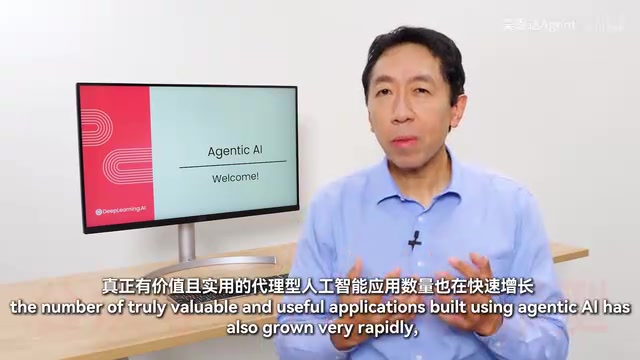
Andrew Ng on Agentic AI: Cutting Through the Hype to Find Real Value in Agent Development
Andrew Ng's Agentic AI course intro: separating hype from real value, exploring agent workflows in customer service, research, law, and healthcare, and why evals and error analysis define expert-level agent development.
The Netflix Microservices Myth: An Architecture Migration Misunderstood by an Entire Industry
The real story behind Netflix's cloud migration and microservices transformation — and why the entire industry copied the solution while missing the actual problem.

Java 27 Deep Dive: How Default Changes Are Quietly Reshaping Production Environments
Java 27 has just 9 JEPs but changes key defaults: compact object headers on by default, G1 as unconditional default GC, Flight Recorder redaction, and built-in post-quantum TLS 1.3.