Antigravity vs Claude Code vs Cursor: How to Choose Your AI Coding Assistant

A detailed comparison of Antigravity, Claude Code, and Cursor to help developers choose the right AI coding assistant.
This article compares three leading AI coding assistants—Google Antigravity, Claude Code, and Cursor—across core positioning, pricing, and user experience. Antigravity excels in multi-agent parallel workflows, Claude Code offers deep codebase understanding for complex projects, and Cursor delivers the smoothest editor-integrated experience. Selection guidance is provided based on user profiles and technical needs.
The Three-Way Battle of AI Coding Assistants
The AI-assisted programming landscape is evolving rapidly, progressing from simple inline code completions to intelligent Agent modes capable of independently completing complex tasks. Among the many AI coding tools available, Google Antigravity, Anthropic's Claude Code, and the widely popular Cursor have become the three dominant choices developers can't ignore.
The evolution of AI-assisted programming has gone through several distinct phases. Early code completion tools (like TabNine and Kite) primarily relied on statistical models to predict the next token, with limited capabilities. The launch of GitHub Copilot in 2021 marked the official entry of large language models (LLMs) into programming—built on OpenAI's Codex model, it could generate multi-line code based on context. Since 2024, the industry has entered a new "Agent mode" phase—AI no longer just passively responds to prompts but actively plans tasks, invokes tools, executes commands, and forms complete autonomous workflows. The technical foundation for this shift is the significant improvement in LLM reasoning capabilities (models like o1, Claude 3.5 Sonnet) and the maturation of Tool Use/Function Calling abilities.
These three AI coding assistants represent fundamentally different design philosophies: one bets on multi-agent parallelism, another goes deep on codebase understanding, and the third focuses on editor experience. This article provides a systematic comparison across three dimensions—core positioning, pricing strategy, and real-world experience—to help you find the one that best suits your needs.
Google Antigravity: A New Paradigm of Multi-Agent Parallel AI Programming
Google Antigravity's design core is an agent-based development model. It's not content being a simple code completion tool—instead, it enables users to simultaneously manage multiple coding agents, achieving cross-project collaboration, automatic terminal command execution, task processing, and review of generated changes.
This "multi-agent parallelism" concept is particularly appealing when handling large tasks that need decomposition. Multi-Agent architecture is a system design pattern that breaks down complex tasks for multiple independent AI agents to collaboratively complete. Each agent has its own context window, toolset, and execution environment, and can process different subtasks in parallel. This concept draws from distributed computing and microservices architecture thinking—just as different team members handle their respective responsibilities in large software projects, multiple AI agents can separately handle frontend component development, backend API writing, test case generation, and more, with an Orchestrator layer performing final integration. Compared to single-agent serial processing, multi-agent parallelism can significantly improve completion speed for large tasks, but also introduces engineering challenges like state synchronization, conflict resolution, and resource scheduling.
In terms of pricing, Antigravity's personal plan is completely free, while Google AI Pro and Ultra subscriptions provide higher usage limits, making the entry barrier quite friendly.
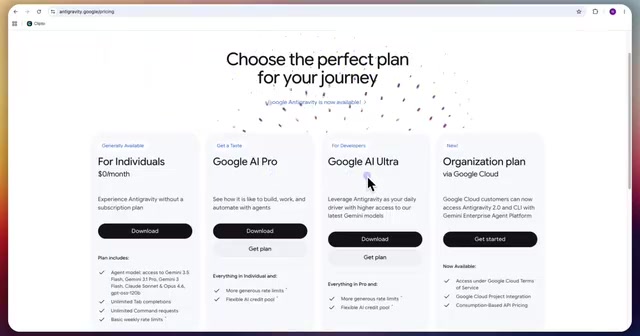
However, actual user feedback is polarized. Some developers praise its parallel agent workflow and flexible model selection, but many others report encountering connection issues, excessive resource consumption, and inconsistent results. The instability of multi-agent systems isn't coincidental—when multiple agents operate on the same codebase in parallel, complex locking mechanisms and state management are needed to avoid conflicts, while each agent's network requests, model inference, and file I/O all compete for system resources. This indicates that as a relatively new product, Antigravity still has room for engineering stability improvements, making it better suited for early adopters willing to explore the multi-agent paradigm.
Claude Code: The Powerhouse of Deep Codebase Understanding
Unlike Antigravity's "casting a wide net" approach, Claude Code's killer feature is its deep understanding of entire codebases. It can proactively explore project files, fix bugs, build new features, run tasks, create commits, and even invoke specialized sub-agents to handle specific subtasks.
Deep codebase understanding involves multiple key technologies. First is long-context processing—modern LLM context windows have expanded from the original 4K tokens to 200K and beyond, allowing the model to "see" more code files at once. But simply expanding the context window isn't enough; intelligent Retrieval-Augmented Generation (RAG) mechanisms are also needed: through code indexing, Abstract Syntax Tree (AST) analysis, dependency graphs, and other methods, the system precisely locates code snippets most relevant to the current task. Additionally, codebase understanding includes semantic-level grasp of project architecture patterns (like MVC, microservices), coding standards, type systems, and inter-module dependencies. Claude Code's advantage in this area stems from Anthropic's deep expertise in long-document reasoning and multi-step Chain-of-Thought logic.
In terms of usage, Claude Code is quite flexible, accessible through terminal, supported editors, desktop clients, and browsers, adapting to different developers' work habits.
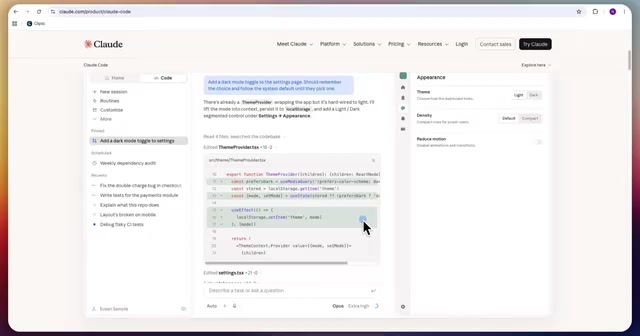
On pricing, Claude Pro is $20 per month, while the Max plan for heavy users starts at $100. Many developers praise its reasoning capabilities and performance on complex codebase tasks, considering this its greatest advantage.
But the flip side is cost anxiety. Many users commonly complain about high token consumption and conversation or weekly usage limits. To understand the root cause: tokens are the basic unit of measurement for LLM text processing, where approximately 4 English characters equal 1 token. When processing large codebases, the system needs to inject large amounts of file content as context, causing input tokens to inflate dramatically. Using Claude 3.5 Sonnet's API pricing as reference (input $3/million tokens, output $15/million tokens), a complex refactoring task involving tens of thousands of lines of code could consume hundreds of thousands of tokens, costing several dollars. This explains why platforms need to set usage limits to control costs, and is the structural reason heavy users feel it's "not enough." In other words, Claude Code's powerful performance on complex projects often comes with significant usage costs, making it better suited for experienced developers handling complex engineering tasks.
Cursor: The Smoothest AI Code Editor Experience
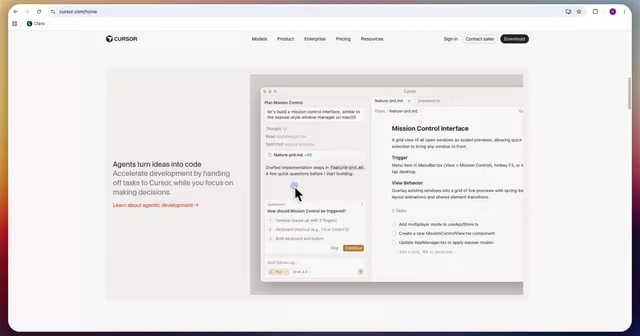
If the first two lean more toward "tool-driven," then Cursor provides the most familiar, most seamless editor experience. It essentially deeply integrates powerful AI capabilities into a modern code editor.
Cursor's technical approach is a deep Fork customization based on the VS Code open-source version, meaning it can modify the editor's core rendering pipeline, input processing flow, and file system interactions, achieving deeper AI integration than a plugin approach. Compared to GitHub Copilot's plugin approach existing as a VS Code extension, the Fork path can display AI-suggested changes directly in diff views, embed native conversation interfaces within the editor, and achieve more granular context awareness. The trade-off of this deep integration is that users need to switch to a new editor application, but the benefit is that experience continuity and response speed far exceed plugin solutions—this also explains why users rate its "smoothness" so highly.
Users can experience inline completions, Agent Mode, cloud agents, code review, and more in Cursor, with the freedom to choose from multiple cutting-edge LLMs.
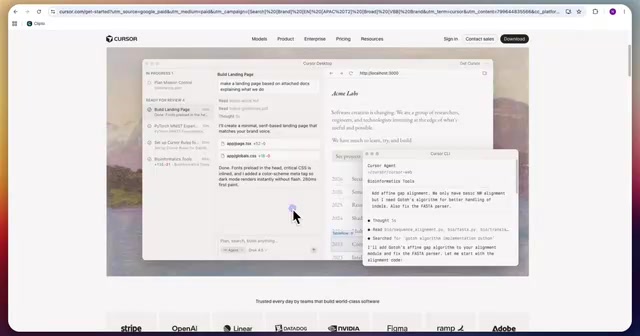
On pricing, Cursor's Hobby plan is free, and Pro is $20 per month, on par with Claude's basic tier. Users widely praise its speed and seamless editor integration—this is the key reason it has quickly amassed a large following.
Of course, Cursor isn't perfect either. Its pricing structure has been criticized as lacking clarity, and conversation quotas in agent mode can run out quickly. But overall, thanks to its extremely low barrier to entry, Cursor is considered the easiest AI coding assistant for beginners and visual-oriented developers to get started with.
Side-by-Side Comparison and Selection Guide
Considering the characteristics of all three tools, here's a clear selection guide.
Choosing by User Profile
- Beginners / Visual-oriented developers: Choose Cursor first. The familiar editor interface, smooth experience, and free Hobby plan make getting started virtually barrier-free.
- Experienced developers handling complex projects: Claude Code is the stronger choice. Its deep codebase understanding and complex task reasoning capabilities are hard to replace, but you need to accept higher token costs.
- Early adopters eager to explore cutting-edge workflows: Give Google Antigravity a try. The multi-agent parallel concept represents the future direction, and the free personal plan lowers the cost of experimentation—you just need to tolerate current stability issues.
Pricing Comparison at a Glance
| Tool | Free Tier | Basic Paid | Premium Plan |
|---|---|---|---|
| Antigravity | Yes (Personal) | Google AI Pro | Ultra |
| Claude Code | — | Pro $20/mo | Max from $100/mo |
| Cursor | Hobby Plan | Pro $20/mo | — |
Technical Architecture Differences Summary
From an underlying architecture perspective, the differences among these three tools reflect three competing technical routes in the current AI programming field: parallel orchestration (Antigravity achieves task decomposition through multi-agent scheduling), deep reasoning (Claude Code achieves codebase-level semantic understanding through long context and RAG), and experience-first (Cursor achieves seamless interaction through deep editor customization). These three routes aren't mutually exclusive—the ideal future form will likely be a fusion of all three: within a smooth editor interface, invoking multiple parallel agents with deep code understanding capabilities to complete complex tasks.
Conclusion: Choose the Right Tool, Maintain Code Review Habits
Whether it's Antigravity with its multi-agent focus, Claude Code with its deep codebase expertise, or Cursor with its smooth experience, each has its strengths and collectively drives the transformation of programming paradigms.
But it's important to recognize clearly: AI-generated code still requires careful developer review. Current large language models have a "Hallucination" problem—models may generate code that appears reasonable but is actually incorrect, including calling non-existent APIs, introducing subtle logic vulnerabilities, or ignoring edge cases. Especially in scenarios involving security, concurrency handling, and data consistency, deploying AI-generated code without review could lead to serious consequences.
At the current stage, these AI coding assistants are powerful "collaborators" rather than "replacements." Choosing the right tool for your project and habits while maintaining critical oversight of generated results is the true way to maximize the value of AI coding assistants.
Key Takeaways
Related articles

ChatGPT Space Launches: Team Collaboration and New Pages Features Explained
ChatGPT Space is OpenAI's new team collaboration feature with Pages, real-time collaboration, and Slack/Google Drive sync. We break down its privacy design, multi-platform integration, and the full workflow from conversation to document.

Migrating Apache Spark UDFs to GPU Acceleration with AI Agents
NVIDIA developer blog explains how AI Agents rewrite Apache Spark UDFs for GPU acceleration, covering migration criteria, agent rewriting and verification workflows, plus pitfalls like result consistency and CPU-GPU transfer overhead.
Zed Editor v0.40.4-rc2 Released: Usage Credits Now Available Without Upgrading
Zed editor releases v0.40.4-rc2, allowing users to use usage credits for AI features without upgrading to a paid plan, lowering the trial barrier.