App Store's New 12-Month Commitment Monthly Subscription: A Complete Guide to Developer Pricing Strategies
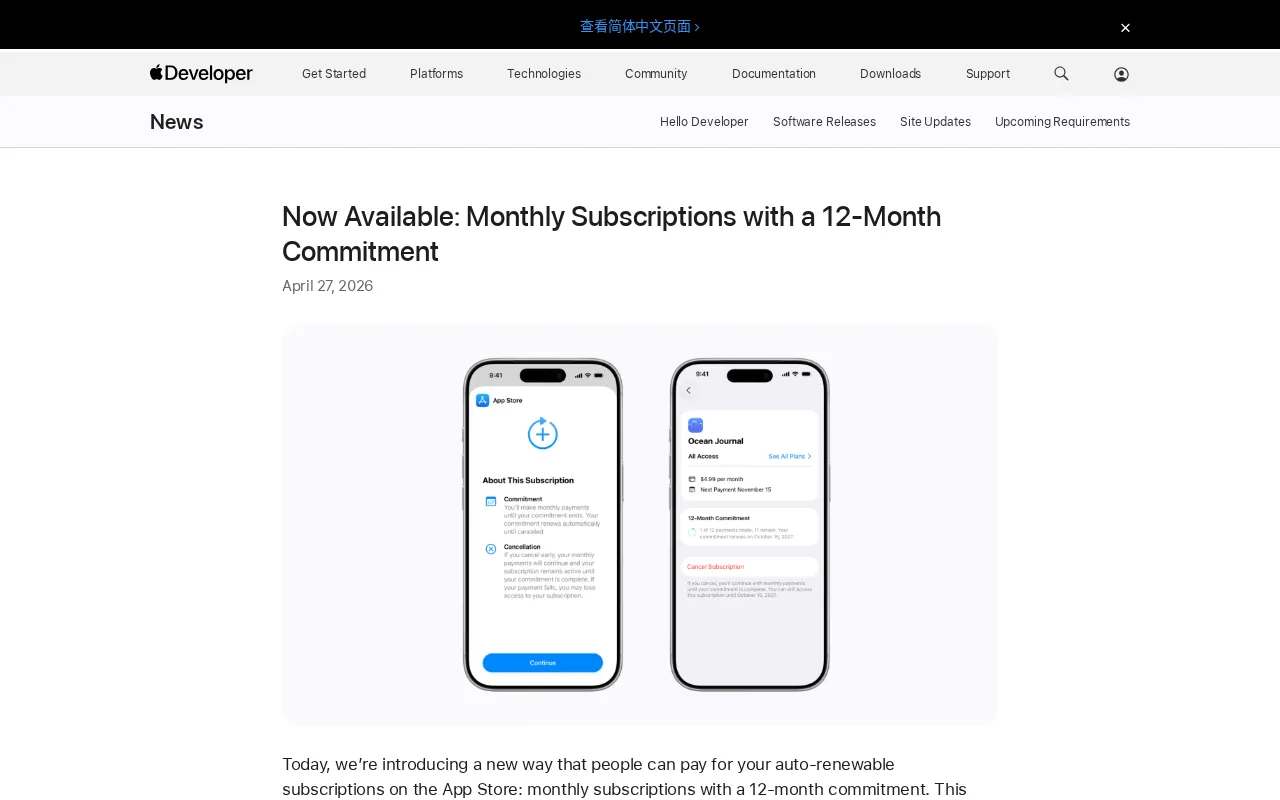
Apple launches App Store 12-month commitment monthly subscription model
Apple has introduced a 12-month commitment monthly subscription for the App Store, allowing users to pay monthly while committing to a 12-month cycle—cancellation still requires completing remaining payments. This model reduces users' single-payment pressure while ensuring stable developer revenue. Apple provides payment progress visualization and renewal reminders, but the feature is not available in the US and Singapore markets.
Overview
Apple today announced a brand-new payment option for App Store auto-renewable subscriptions: Monthly Subscriptions with a 12-Month Commitment. This plan allows developers to offer users a more affordable subscription option while ensuring stable revenue expectations.
Since Apple introduced App Store Auto-Renewable Subscriptions with iOS 5 in 2011, the subscription model has become one of developers' most important monetization tools. Early subscriptions only supported two basic billing cycles—monthly and annual—before Apple gradually expanded options to include weekly, quarterly, semi-annual, and more. In 2016, Apple increased the developer revenue share for subscription apps from 70% to 85% (after one year of continuous subscription), further incentivizing developers to adopt the subscription model. This new 12-month commitment monthly plan is yet another powerful tool in Apple's subscription toolkit, reflecting the platform's ongoing response to developers' need for revenue diversification.
Core Mechanics of the 12-Month Commitment Monthly Subscription
Payment Model Explained
Unlike traditional monthly or annual subscriptions, this new model essentially splits an annual subscription into 12 monthly installments. Users commit to a 12-month subscription cycle but pay on a monthly basis. Developers can set a monthly price that's lower than a standard month-to-month subscription while gaining user retention assurances similar to annual plans.
Commitment-based subscriptions are not an Apple invention—this model has long been widely used in traditional telecom, streaming, and SaaS industries. For example, gym memberships typically require signing a 12-month contract while allowing monthly payments, and telecom carriers' contract plans use a similar structure. In the digital subscription space, Spotify, Netflix, and other platforms have also explored similar hybrid payment models. The core business logic is: reducing users' "payment pain" by lowering the single payment amount, while locking in customer lifetime value (LTV) through the commitment period. This improves overall ROI without changing the customer acquisition cost (CAC).
Cancellation Policy and User Rights
Users can cancel their subscription at any time, but cancellation does not immediately terminate the service. After canceling, users must still complete the remaining committed payments, and the subscription will only stop renewing after all agreed payments are fulfilled. This design strikes a balance between user flexibility and developer revenue stability.
Transparency and User Experience Design
Payment Progress Visualization
Apple has given thorough consideration to the user experience. Users can clearly view completed and remaining payment counts in their Apple Account, providing full visibility into their subscription commitment. This transparency design helps reduce complaints and refund requests caused by information asymmetry.
This design deeply aligns with the "Goal Gradient Effect" in behavioral economics—when users see their completed payment progress, they develop psychological motivation to continue fulfilling their commitment. In fact, the entire plan's design reflects a precise understanding of user psychology: compared to paying the full annual fee upfront, monthly payments make users perceive a smaller per-transaction loss (the "loss aversion" principle), and users tend to categorize small monthly payments as routine expenses rather than a major financial commitment ("mental accounting" theory). Research shows that displaying annual prices broken down as "just X per day" can increase conversion rates by 20-40%, and payment progress visualization further reduces mid-term cancellation rates, creating a positive cycle favorable to developers.
Proactive Reminder Mechanism
Apple will also send email reminders before renewal dates, and push notifications for users who opt in. This proactive communication approach protects consumer rights while reducing disputes caused by users "forgetting about their subscription."
Availability and Technical Requirements
Regional Restrictions
An important detail: this feature is not available in the United States and Singapore markets. Apart from these two regions, the plan will be rolled out globally. There is a deep legal background behind this restriction: in the United States, the Federal Trade Commission (FTC) introduced the "Click-to-Cancel" rule in 2023, requiring that the cancellation process for subscription services be as simple as the subscription process itself, and that no additional financial barriers be imposed on consumers—the "continued payments required after cancellation" aspect of commitment-based subscriptions
Related articles
Meta Muse Hits 900K Downloads in Six D…
Meta Muse Hits 900K Downloads in Six Days: The AI Agent Era Has Officially Arrived
Meta's AI agent Muse hit 902K downloads in 6 days, topping US App Store and Google Play charts above ChatGPT and Claude. A deep dive into Muse's capabilities and the AI Agent race.
 Industry Insights
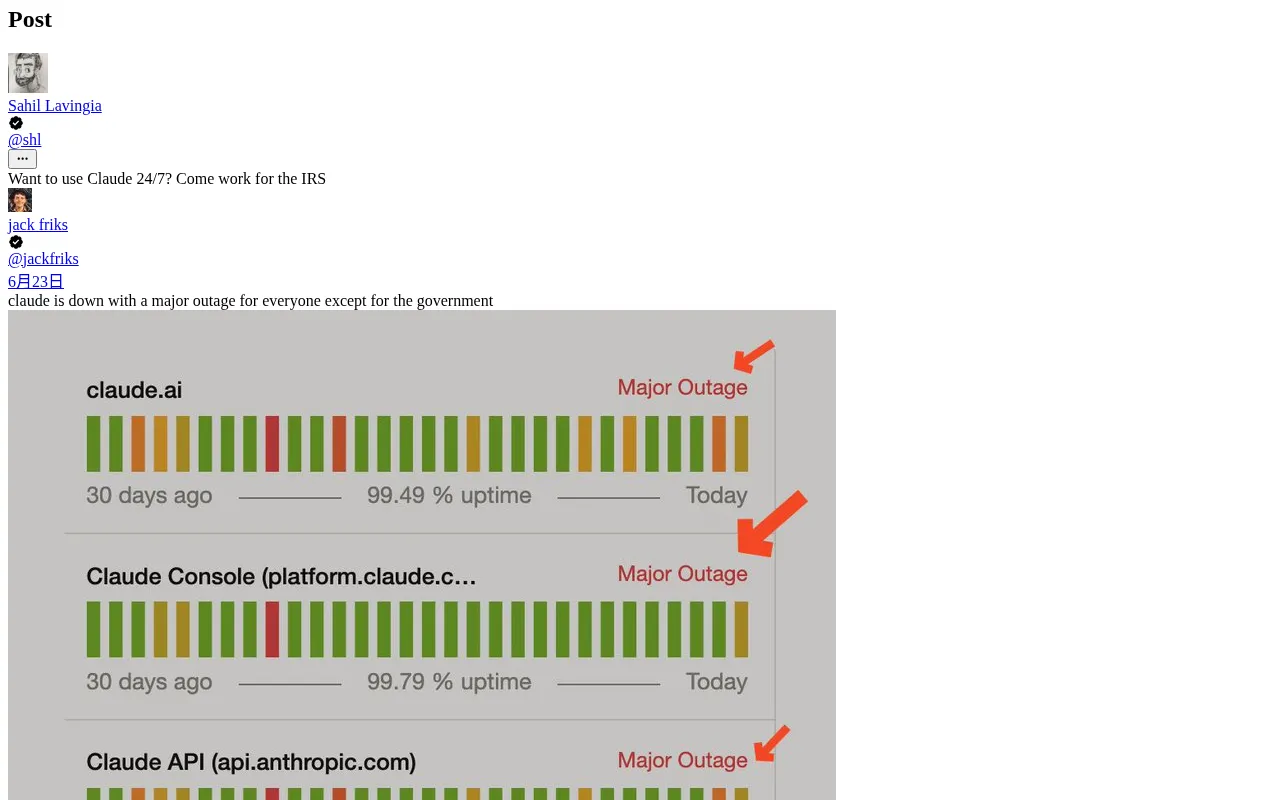
IRS Fully Embraces Claude AI, Accelerating Federal Government's AI Adoption
The IRS is recruiting staff with 24/7 Claude AI access, marking Anthropic's breakthrough into the federal government. Explore the strategic implications and tax use cases.
 Industry Insights
The IRS Mobile App Debate: A Trust Crisis in Government Digital Transformation
The IRS's proposed mobile app has sparked heated debate. This article analyzes the core arguments, exploring data security, privacy, and the trust crisis in government digital transformation.