Apple Accelerates Siri's Agent Transformation: Internal Pressure to Catch Up with OpenAI and Meta

Apple CEO pressures AI chief to accelerate Siri's agent transformation, benchmarking against OpenAI and Meta to close the gap.
According to Bloomberg's Mark Gurman, Apple CEO John Ternus is pressuring AI chief Craig Federighi to accelerate Siri's roadmap and build an AI agent capable of benchmarking against OpenAI Dots and Meta Muse. Federighi has delivered a functional version of Siri AI on an extremely short timeline, but internally the company clearly recognizes this is only the beginning of the catch-up. The article notes that Siri's next-stage form will shift from "smarter Q&A" to an agent that can execute multi-step tasks, requiring planning, tool calling, and cross-app operation capabilities. By benchmarking against agent products, Apple's goal is to integrate AI at the system level and make Siri a cross-app orchestration hub. However, achieving reliable agent capabilities under privacy commitments and on-device computing constraints is the core engineering challenge facing Federighi's team, and it determines whether Siri can shed the "lagging assistant" label.
According to Bloomberg's Mark Gurman, Apple CEO John Ternus is pressuring AI chief Craig Federighi to accelerate Siri's roadmap and build a powerful AI agent capable of competing with OpenAI's Dots or Meta's Muse. Although Federighi has already delivered a functional version of Siri AI on an extremely short timeline, the company is not relaxing internally—they know this is only the beginning of the catch-up game.
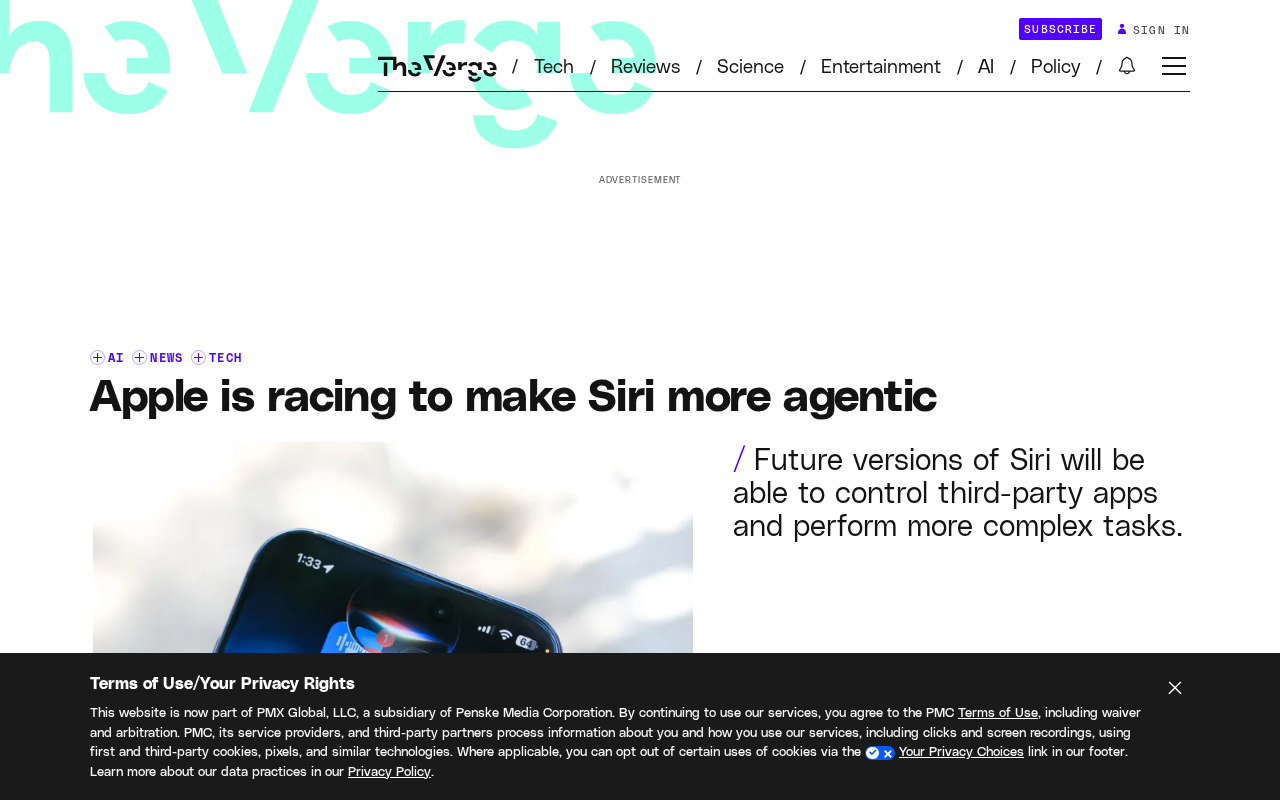
Apple's Agent Anxiety: From Feature Catch-Up to Ecosystem Competition
Since its inception, Siri has long been criticized as a voice assistant that "can only set alarms and check the weather." In the generative AI wave, Apple's pace has clearly lagged behind competitors. Gurman's report reveals a key turning point: Apple is no longer satisfied with making Siri "answer questions more intelligently"—it wants Siri to become an agent that can proactively execute multi-step tasks. This means Siri needs planning, tool-calling, and cross-app operation capabilities, rather than staying at the single-turn Q&A level.
From an organizational perspective, the CEO directly pressuring the AI chief reflects that Apple treats Siri's intelligence as a strategic priority. The fact that CEO John Ternus is personally overseeing this shows it has gone beyond routine product iteration—it's more like an ecosystem positioning battle that must be won.
AI Agent refers to an AI system capable of perceiving its environment, autonomously planning, and executing multi-step tasks to achieve goals. Unlike traditional voice assistants or chatbots that can only passively respond to single-turn commands, an agent's core capabilities include: task decomposition and planning (breaking down "help me arrange a Friday business trip" into sub-tasks like checking flights, booking hotels, and syncing calendars), tool calling (invoking APIs, application interfaces, or system functions), cross-app operations, and self-correction and fallback upon failure. The industry often describes its working paradigm as a "perceive—plan—act" loop. OpenAI's Operator and Anthropic's Computer Use are representative explorations in this direction. For Apple, giving Siri agent capabilities means upgrading from "intent recognition + single-step execution" to "multi-step planning + reliable execution," which places far higher demands on model reasoning, tool ecosystem openness, and safety guardrails than before.
Benchmarking Against Dots and Muse: Apple's Reference Frame Has Changed
The report explicitly lists OpenAI's Dots and Meta's Muse as Siri's competitive targets. Both products represent cutting-edge explorations in the "agent" direction—they are not just conversational interfaces but AI systems that can perform actual operations on behalf of users. By choosing them as benchmarks, Apple is effectively acknowledging that Siri's next-stage form is a "task-executing proxy" rather than a "more natural voice interface."
This benchmarking also hints at Apple's expectations for Siri: integrating AI capabilities at the system level and making Siri a cross-app orchestration hub. Given Apple's commitment to privacy and on-device computing, how to achieve agent capabilities without sacrificing experience will be the core engineering challenge facing Federighi's team.
On-device Computing refers to completing AI inference locally on the user's device (such as the iPhone's Neural Engine) rather than uploading data to the cloud. Its advantages are low latency, offline availability, and privacy protection—user data never leaves the device. However, on-device computing is limited by chip compute power, memory, and power consumption, and typically can only run smaller-parameter models; complex reasoning still requires cloud or "device-cloud collaboration" architectures. Apple has long used privacy as a core selling point and tends to process sensitive data locally as much as possible, which creates tension with the long-context planning and complex tool calling required by agents. Therefore, Apple's engineering challenge lies in designing a reasonable task-routing strategy: lightweight intent recognition and personal data operations stay on-device, while heavy inference is outsourced to Private Cloud Compute, all while ensuring end-to-end security and verifiability.
Behind the Short-Timeline Delivery: Capabilities Exist, Gap Remains
Gurman notes that Federighi delivered a functional version of Siri AI on an "extremely short timeline." This shows at least two things: first, Apple's technical reserves are not empty, and its engineering execution is still solid; second, the company is not satisfied with the current version internally—the phrase "no illusions" reveals a clear sense of crisis.
There is an obvious gap between functional availability and competitiveness. The core of agent capability lies in reliability: accurately understanding intent, correctly invoking tools, and gracefully falling back upon failure. These require extensive real-world refinement, and Apple is constrained by its privacy strategy in data acquisition and model iteration, making the catch-up difficult.
What This Race Means for the Industry
Apple's entry will further intensify competition in the agent track. When the world's largest consumer electronics company goes all-in on AI agents, the developer ecosystem and user expectations will both be recalibrated. For users, Siri's evolution may mean a substantive change in the interaction paradigm on iPhone, Mac, and other devices—shifting from "people finding features" to "AI doing it for them."
But Apple's pace also reminds us: there is still a long road between agent demos and reliable products. Whether Federighi's team can close the gap with OpenAI and Meta while maintaining its privacy commitments will determine whether Siri can shed the "lagging assistant" label and truly become the linchpin of Apple's AI strategy.
One-line Summary
Apple CEO pressures AI chief to accelerate Siri's agent transformation, benchmarking against OpenAI and Meta to close the gap.
Paragraph Summary
According to Bloomberg's Mark Gurman, Apple CEO John Ternus is pressuring AI chief Craig Federighi to accelerate Siri's roadmap and build an AI agent capable of benchmarking against OpenAI Dots and Meta Muse. Federighi has delivered a functional version of Siri AI on an extremely short timeline, but internally the company clearly recognizes this is only the beginning of the catch-up. The article notes that Siri's next-stage form will shift from "smarter Q&A" to an agent that can execute multi-step tasks, requiring planning, tool calling, and cross-app operation capabilities. By benchmarking against agent products, Apple's goal is to integrate AI at the system level and make Siri a cross-app orchestration hub. However, achieving reliable agent capabilities under privacy commitments and on-device computing constraints is the core engineering challenge facing Federighi's team, and it determines whether Siri can shed the "lagging assistant" label.
Related articles
Mysterious Synchronized Disturbances Hit Global Power Grids — German Team Finds the Culprit
Mysterious synchronized power drops hit grids worldwide. A German team found the culprit. This article explains the coordinated disturbances, the research breakthrough, and what it means for grid monitoring and operations.
NVIDIA Board Investigates Espionage Ca…
NVIDIA Board Investigates Espionage Case: CEO's Admission of Extramarital Affair Sparks Internal Turmoil
NVIDIA's board has launched an espionage investigation following the CEO's admission of an extramarital affair. This article analyzes the background, corporate governance logic, and potential impact on NVIDIA, noting that current information is limited and should be viewed rationally.
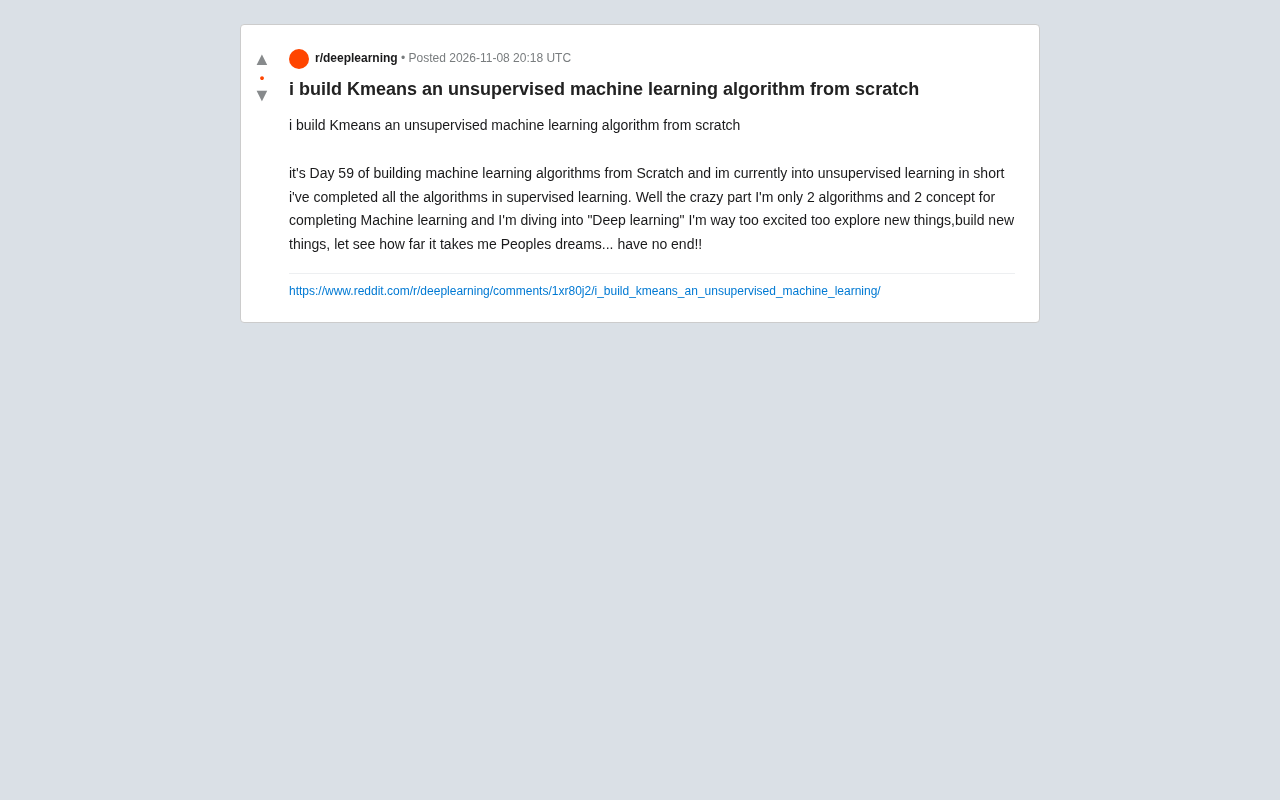
Writing K-Means from Scratch: One Developer's Journey into Machine Learning
A developer shares day 59 of writing K-Means from scratch: finishing all supervised learning algorithms and entering unsupervised learning, covering K-Means++ initialization, vectorized distances, convergence and empty clusters.