Apple Adjusts EU App Tracking Transparency Framework: Introducing Alternative System Prompt
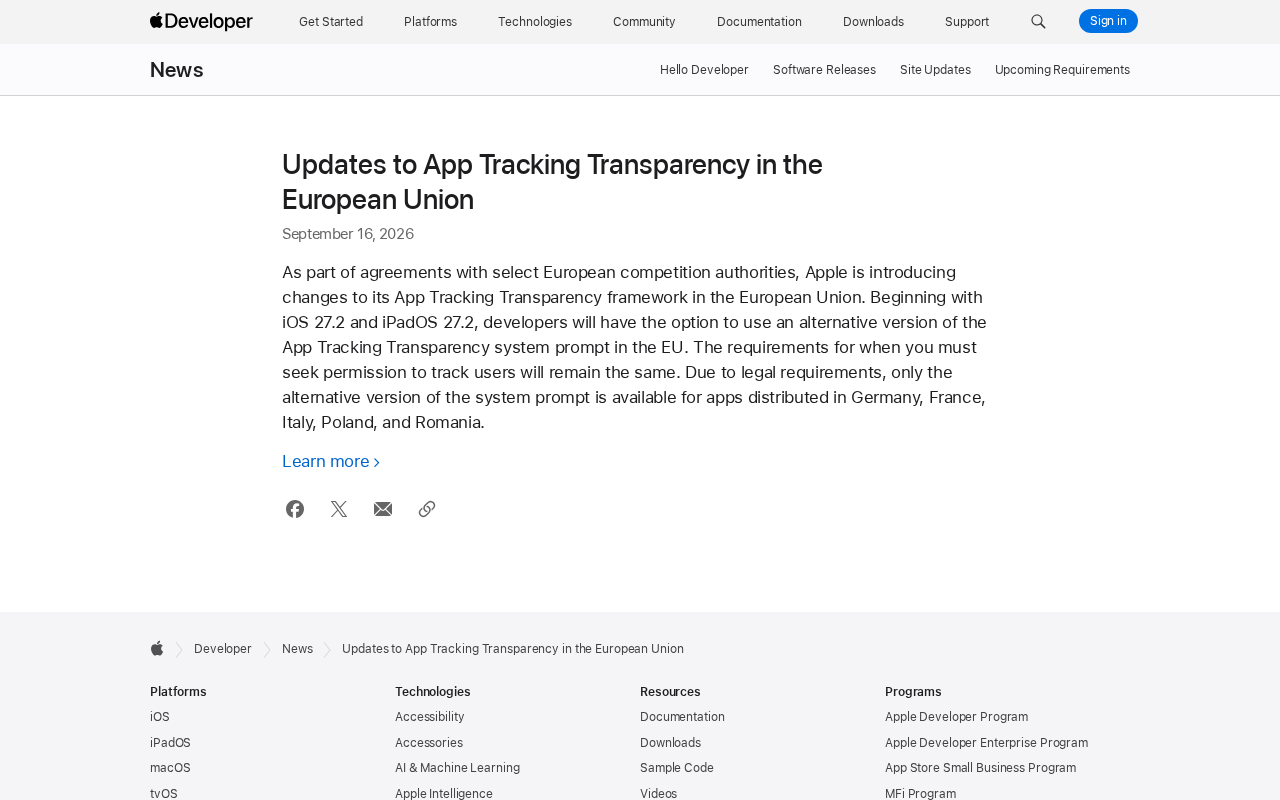
Apple introduces an alternative ATT prompt for the EU from iOS 27.2, mandatory in five countries.
Apple announced that starting with iOS 27.2 and iPadOS 27.2, EU developers will have access to an alternative ATT system prompt — a direct result of agreements with European competition regulators. The core change only affects how the prompt is presented; the rules triggering tracking permission requests remain unchanged. Germany, France, Italy, Poland, and Romania are required by local law to use only the alternative version. This adjustment reflects ongoing DMA scrutiny of Apple's Gatekeeper status, with regulators arguing the original ATT prompt may have unfairly favored Apple's own ad business.
Apple has announced adjustments to its App Tracking Transparency (ATT) framework for the European Union, as part of agreements reached with certain European competition regulators. Taking effect with iOS 27.2 and iPadOS 27.2, this change gives developers in the EU market a new compliance option.
What's Changing
According to Apple's announcement, starting with iOS 27.2 and iPadOS 27.2, developers will be able to choose an alternative version of the ATT system prompt for users in the EU. This means developers are no longer limited to Apple's original standard tracking authorization dialog — they now have an alternative presentation option.
Importantly, the rules that trigger a permission request have not changed. In other words, the underlying requirement for when developers must obtain user consent before tracking remains consistent. Only the presentation form of the prompt has changed, not the compliance threshold for tracking.
ATT is Apple's privacy framework introduced with iOS 14.5 in 2021. It requires all apps to display a system-level permission dialog to obtain explicit user consent before tracking user behavior or accessing device identifiers (such as the IDFA — Identifier for Advertisers) across apps. Once a user declines, the app cannot access the IDFA, which severely limits cross-platform behavioral targeted advertising. ATT had a profound impact on the digital advertising ecosystem upon launch, causing significant declines in targeted ad revenue for platforms like Meta. The EU's push for an alternative system prompt centers on whether the wording and visual design of the original prompt was nudging users toward refusal — indirectly disadvantaging third-party advertising businesses in terms of competitive standing.
Some Countries Can Only Use the Alternative Version
One notable detail is the regional distinction. Apple notes that due to legal requirements, apps distributed in Germany, France, Italy, Poland, and Romania will only be able to use the alternative version of the system prompt — the original standard version will no longer be available in these markets.
This distinction reflects differing demands from individual EU member state regulators regarding privacy prompts and competitive fairness. For developers operating in these markets, this is not an optional choice — it is a mandatory compliance adjustment.
The Regulatory Backdrop
This adjustment is not a voluntary improvement from Apple, but rather the result of agreements with European competition regulators. In recent years, Apple's ATT framework has been a focal point of regulatory scrutiny. Critics argue that while ATT limits third-party developers from tracking users, it may have preserved an advantage for Apple's own advertising business — raising potential competitive fairness concerns.
The introduction of an alternative system prompt can be seen as a concession Apple has made to ATT mechanics under regulatory pressure. By offering different prompt versions, Apple is attempting to strike a balance between meeting regulatory requirements and maintaining its privacy protection framework.
The EU's competition concerns about Apple's ATT stem primarily from the regulatory logic of the Digital Markets Act (DMA), which came into force in 2023. The DMA designates large platforms like Apple as "Gatekeepers" and explicitly prohibits them from using platform rules to grant unequal advantages to their own businesses. France's competition authority (Autorité de la concurrence) launched an investigation into ATT as early as 2021, finding that Apple applied inconsistent standards to its own services versus third-party services when implementing the consent framework. Regulators in Germany, Italy, and other countries subsequently conducted similar reviews. The mandatory use of the alternative prompt in these five countries is the result of negotiations between national regulators and Apple, now codified at the local legal level.
What This Means for Developers
For developers targeting the EU market, this update has several practical implications:
- Version compatibility attention required: Apps operating in Germany, France, Italy, Poland, and Romania must ensure they adopt the alternative prompt.
- Compliance logic unchanged: The criteria for tracking authorization have not changed; developers do not need to rebuild existing privacy compliance logic.
- Test the new version early: With the release of iOS 27.2 and iPadOS 27.2, developers are advised to verify the display and user experience of the new prompt in a test environment as early as possible.
Apple recommends that developers consult its official User Privacy and Data Use page for complete technical details and implementation guidance.
Summary
While this ATT framework adjustment is incremental on a technical level, it reflects the ongoing power struggle between global tech giants and the EU's regulatory system. The boundaries between privacy protection, platform power, and market competition will continue to be redrawn through similar policy adjustments. For developers and digital privacy observers, changes of this nature in the EU market often serve as a bellwether for where the industry is headed.
Related articles
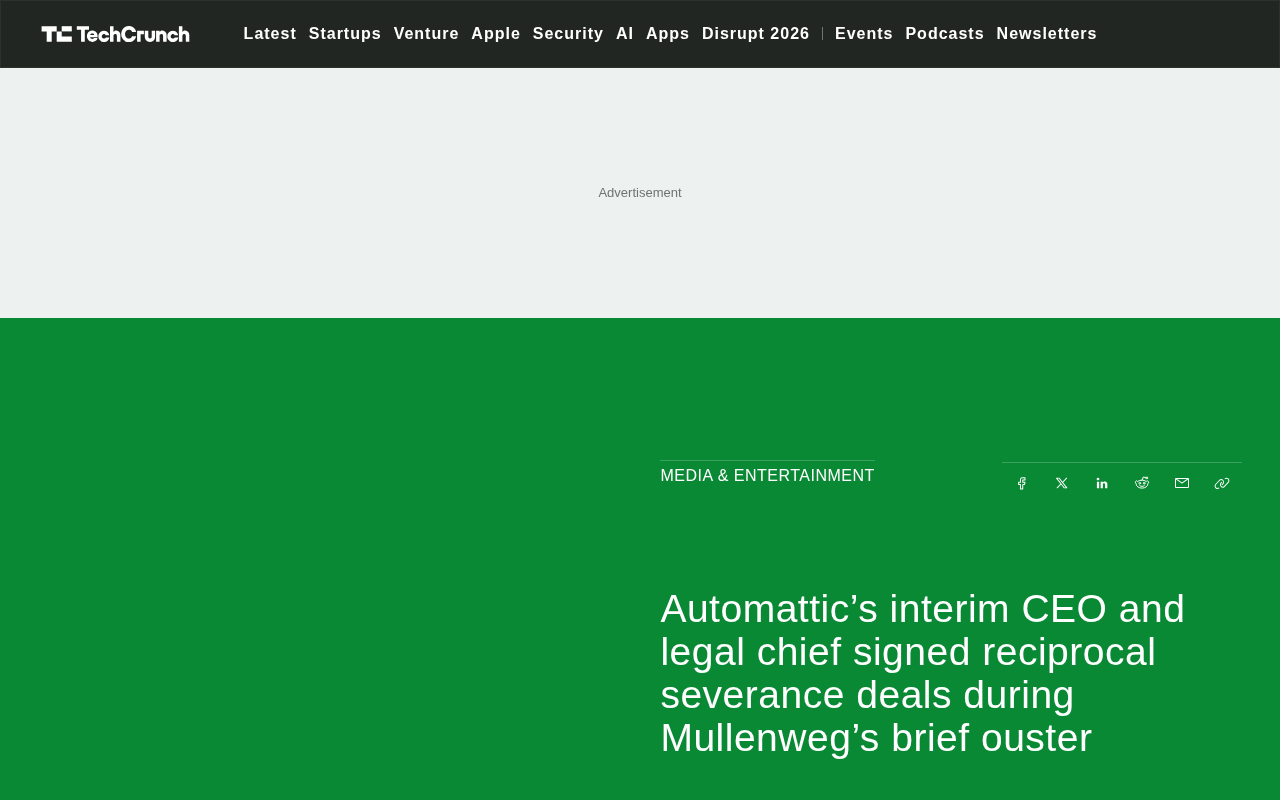
Automattic Executives Signed Reciprocal Severance Agreements During Mullenweg's Brief Ouster
Automattic's CFO and General Counsel signed reciprocal severance agreements during Matt Mullenweg's brief ouster, covering one year's salary and accelerated equity vesting, raising corporate governance concerns.
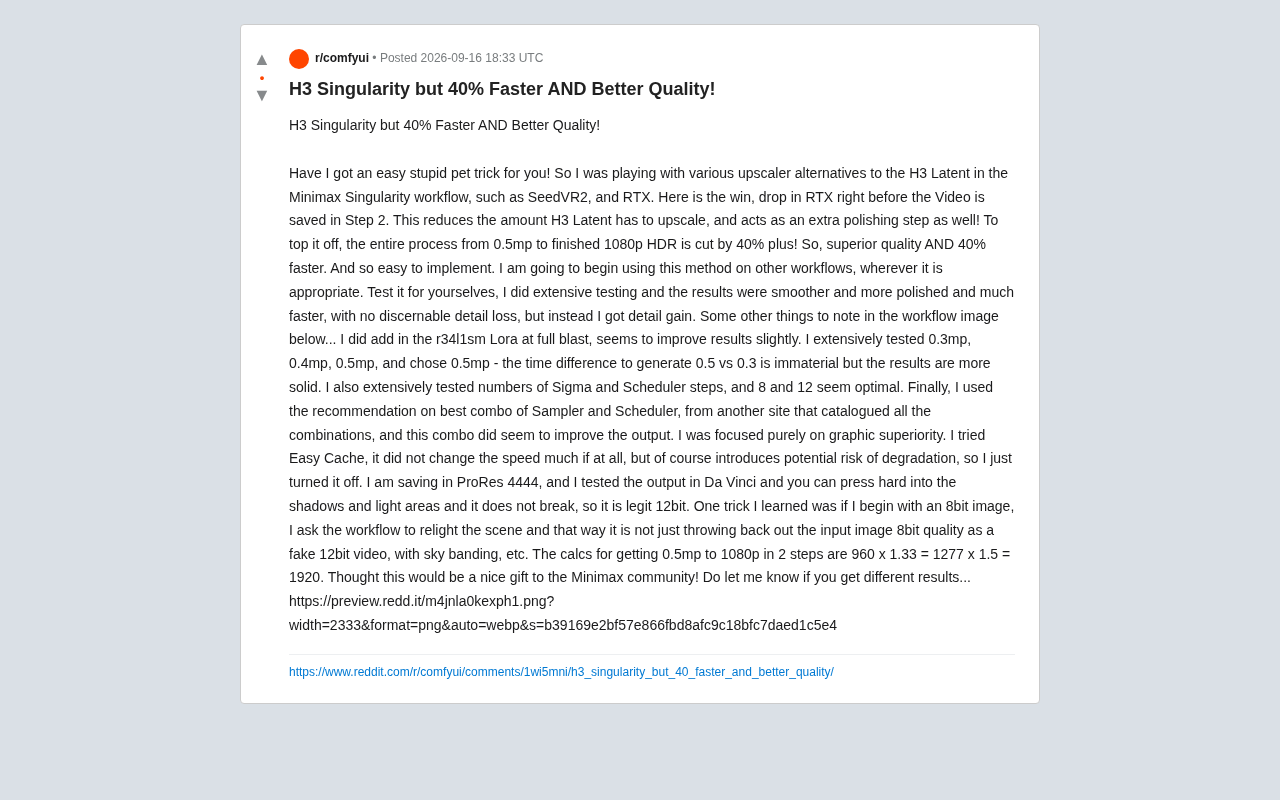
H3 Singularity Optimization: 40% Speed Boost With Better Image Quality
A Reddit user's Minimax Singularity workflow tip: insert an RTX upsampler before H3 Latent for 40%+ speed gains and better quality. Covers parameters, 12-bit output, and more.
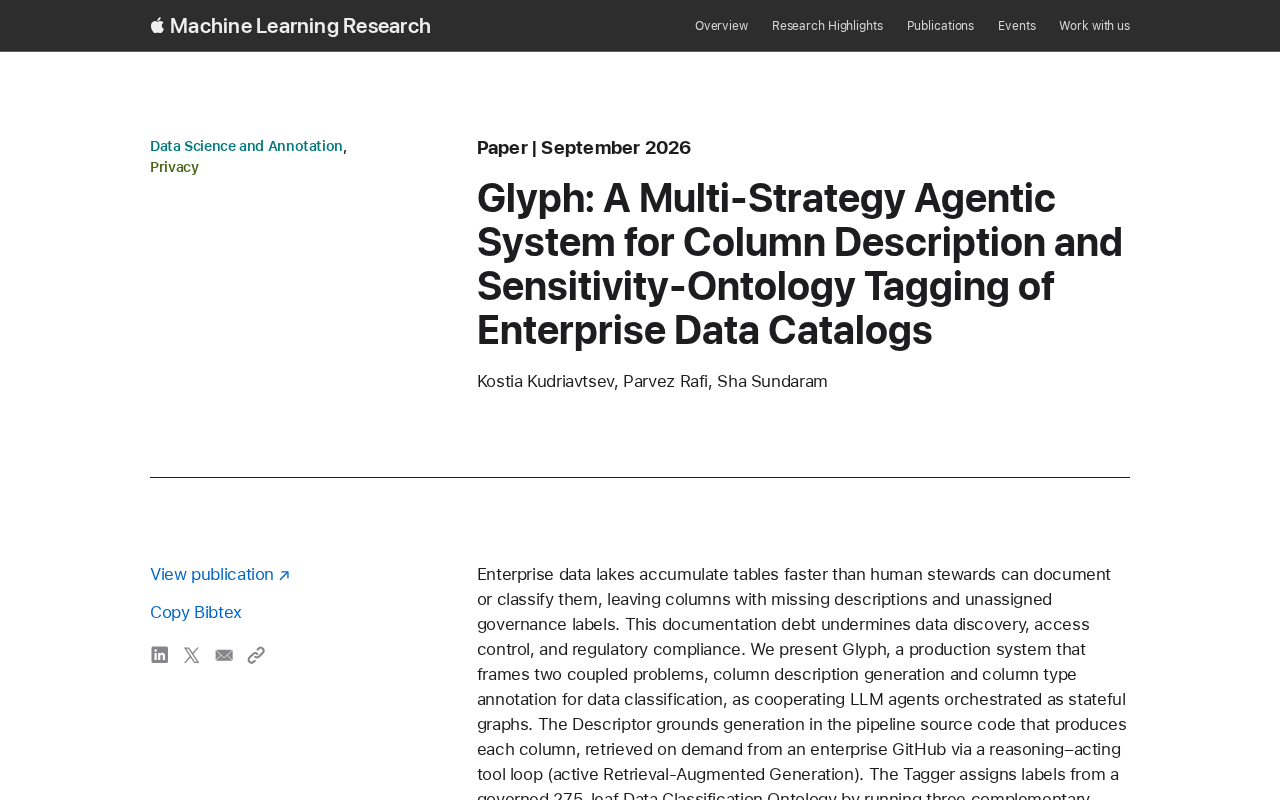
Glyph: A Multi-Strategy Agent System for Automated Enterprise Data Catalog Annotation
Glyph is a multi-strategy LLM agent system for enterprise data catalogs that automates column description generation and sensitivity ontology tagging, grounding outputs in pipeline source code to improve accuracy.