Apple HomeKit AI Video Summaries: Technical Breakdown and Subscription Costs

Apple's iOS 27 adds on-device AI video summaries to HomeKit cameras, trading high hardware and subscription costs for privacy and search.
Apple brings Apple Intelligence to HomeKit in iOS 27, offering AI video summaries for compatible security cameras with natural language search, face recognition, notification aggregation, and selective deployment. Processing runs entirely on-device — raw video never leaves the device, with only metadata syncing to iCloud. Hardware requires a second-gen HomePod, HomePod mini, Apple TV 4K, or iPhone 15 Pro+, plus an iCloud+ subscription tiered by camera count reaching $719.88/year for five cameras. Apple's on-device inference is its key edge over Google Nest and Amazon Ring, though cost and privacy regulation remain challenges.
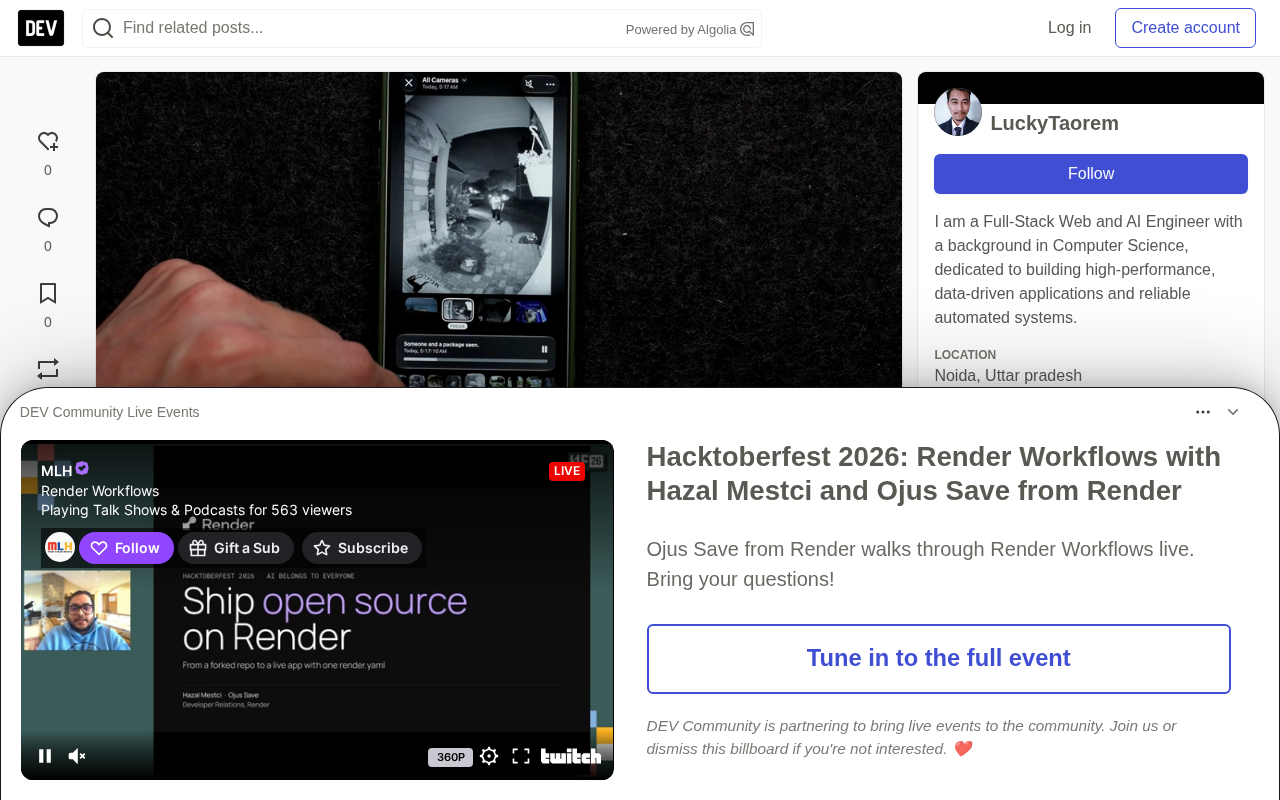
Apple is bringing Apple Intelligence into the HomeKit ecosystem with iOS 27, delivering AI-powered video summaries for compatible security cameras. This feature can automatically parse surveillance footage, generate text descriptions, and cluster related clips from multiple devices into groups. Users can simply type natural language queries like "dog on the porch yesterday" and the system will pinpoint the exact moment — all while supporting face recognition tagging and notification aggregation to reduce the disruption of frequent push alerts.
Core Features and Hardware Requirements
AI video summaries offer four main capabilities: natural language search lets users find recorded clips using everyday language; face recognition can label known individuals and cross-reference them against the Home app's visitor list; similar clips get bundled into a single notification rather than triggering individual alerts, effectively reducing alert fatigue; and selective deployment allows users to enable AI on just a single camera while keeping the rest on raw footage to control storage overhead.
There are clear hardware limitations. A second-generation HomePod, HomePod mini, Apple TV 4K, or iPhone 15 Pro and newer is required as the local AI processor. On the software side, an iCloud+ subscription tiered by camera count is mandatory. This means users with older devices face upgrade pressure, while those who already own a HomePod mini may find the added value easier to justify.
Technical Architecture: On-Device Inference with Privacy First
Apple's AI processing pipeline relies entirely on the device's on-device neural engine and never uploads raw video to servers. When a motion event is recorded, the system runs a three-step process: first, the neural engine on the HomePod or iPhone extracts keyframes, detects faces, and identifies objects; second, it generates lightweight text descriptions (e.g., "person at front door, 3 PM") and stores them in iCloud as searchable text; finally, it performs cross-camera correlation — if the same person appears on multiple cameras within a short window, the system clusters those clips into a single summary view.
The face recognition component reuses the model from the "People" album in the Photos app but is sandboxed within the Home app. Users must explicitly enable face tagging, and Apple ties face information to the iCloud Keychain as encrypted identifiers. This on-device processing approach continues Apple's established practice in Siri and Home View hubs, and echoes its earlier on-device AI security philosophy of reducing the cloud attack surface.
Neural Engine is dedicated AI acceleration hardware that Apple has integrated into iPhones since the A11 Bionic chip, as well as iPads and later HomePod and Apple TV devices, specifically handling matrix operations and machine learning inference tasks. Compared to CPU and GPU, it consumes less power and has lower latency when running models for face recognition, voice recognition, and similar tasks, and data can be processed without leaving device memory. This is the physical foundation that allows Apple to promise "raw video never leaves the device." In a HomeKit context, the HomePod or Apple TV serves as the home hub, and its neural engine continuously analyzes camera video streams; if the home hub goes offline, an iPhone 15 Pro or newer can temporarily take over. It's worth noting that neural engine compute is limited, which is why Apple chose to "extract keyframes + generate lightweight text descriptions" rather than storing full AI video streams — balancing privacy, cost, and usability.
Pricing Structure: Over $700 Per Year for Five Cameras
The iCloud+ plans required for AI features are priced well above traditional storage tiers. The 2TB plan costs $9.99/month, 6TB is $29.99/month, and 12TB is $59.99/month. A five-camera household wanting full AI summary support would need the top-tier 12TB plan at $59.99/month, totaling $719.88 annually.
Compared to previous base iCloud+ tiers (50GB, 200GB, 2TB), the storage threshold for AI features has risen sharply. Apple also warns that "supported cameras and iCloud+ features may change over time," hinting at possible future price adjustments or additional hardware requirements. This cost model is pushing the HomeKit market toward a split between "AI-enabled" and "classic mode."
iCloud+ is Apple's bundled subscription service combining iCloud storage with privacy features, including capabilities like "iCloud Private Relay" and "Hide My Email" beyond just capacity. In HomeKit security scenarios, iCloud+ handles the storage and AI processing quota for "HomeKit Secure Video": the more cameras you have and the more cameras with AI summaries enabled, the higher the tier you need. Currently, AI summaries require a 2TB minimum, and five cameras require 12TB — effectively turning AI features into an exclusive benefit of premium subscriptions. Compared to the free 50GB tier or the low-cost 200GB tier, users who want to keep their existing storage habits while adding AI must cross multiple price tiers. Apple also retains a "classic mode" where basic secure video storage still works without AI, but notifications and search experience degrade to conventional methods, creating a de facto feature stratification.
User Experience and Ecosystem Lock-In
AI summaries transform hours of raw footage into a searchable, readable log, making after-the-fact auditing feasible. The natural language interface aligns with Apple's overall conversational interaction strategy, continuing the Siri experience.
However, the hardware prerequisites effectively tie AI features to Apple's high-end devices. Users who already have a HomePod mini for audio may find the added value appealing, while those on older hardware are forced to confront an upgrade path. The selective deployment option offers a compromise, but for budget-conscious households, even enabling AI on a single camera may pose a cost barrier.
Competitive Landscape and Industry Impact
Apple's move puts pressure on competitors like Google Nest, Amazon Ring, and Arlo, which already offer AI event detection. Apple's differentiation lies in on-device inference — most competitors rely on cloud processing, which is slower and raises privacy concerns — and deep integration with the Home app, unifying automation, voice control, and AI summaries in a single interface.
If Apple's pricing becomes a barrier, competitors may offer similar AI features at lower subscription fees to win users. Conversely, Apple could use premium revenue to fund research into more sophisticated models, such as activity classification and gesture detection, to roll out in future OS versions. Developers should watch for updates to the HomeKit Accessory Protocol (HAP), as any changes will affect how third-party manufacturers certify their devices.
HomeKit Accessory Protocol (HAP) is Apple's communication specification for smart home devices. Third-party camera manufacturers must pass HAP certification to integrate with the Home app and support advanced features like secure video and AI summaries. HAP covers transport layers including Bluetooth and Wi-Fi, and defines interfaces for video stream encryption, event notifications, and cloud metadata synchronization. If Apple expands AI summary compatibility, it may require cameras to support higher-spec local encoding or event triggering capabilities, which would affect manufacturers' firmware certification cycles and hardware costs. Developers should watch whether HAP adds "AI metadata descriptor" or "cluster identifier" fields, as these changes directly determine whether third-party devices can participate in cross-camera correlation and natural language search.
Future Directions
Camera compatibility may expand. Apple's statement that "supported cameras may change" suggests future updates will include more models, including third-party lenses that meet Apple's security standards. Pricing models may also adjust dynamically — as storage costs decline, Apple could introduce per-camera billing or options bundled with existing iCloud+ plans.
There's room for deeper automation integration. Linkage with HomeKit automations could enable trigger logic like "if a recognized face is detected at the front door, unlock the smart lock." However, facial recognition in home environments may draw attention from privacy regulators, prompting Apple to add more granular consent controls.
Frequently Asked Questions
Is an iPhone 15 Pro required? No. A second-generation HomePod, HomePod mini, Apple TV 4K, or iPhone 15 Pro and newer can all serve as the local AI processor.
Can I cancel the iCloud+ subscription after enabling it? Yes. AI summaries are not automatically activated — you must manually enable them in the Home app and select a subscription tier. Turning off the feature returns you to the standard storage plan.
How accurate is face recognition? Apple uses the same on-device model as the Photos "People" album. Accuracy typically exceeds 95% in good lighting but may drop in low light or at extreme angles.
Will raw video be uploaded to Apple's servers? No. Raw video stays on local devices. Only generated metadata (timestamps, text descriptions, encrypted face IDs) syncs to iCloud for search and cross-camera correlation.
Will older HomeKit cameras gain support? Apple's statement that "supported cameras may change" suggests future firmware updates may expand compatibility, but no specific timeline has been announced.
One-line Summary
Apple's iOS 27 brings on-device AI video summaries to HomeKit cameras, trading high hardware requirements and subscription fees for privacy and search experience.
Paragraph Summary
Apple is bringing Apple Intelligence into the HomeKit ecosystem with iOS 27, delivering AI video summaries for compatible security cameras with natural language search, face recognition, notification aggregation, and selective deployment. The feature relies entirely on on-device neural engine processing — raw video never leaves the device, with only metadata like text descriptions and encrypted face IDs syncing to the cloud. Hardware requirements include a second-generation HomePod, HomePod mini, Apple TV 4K, or iPhone 15 Pro and newer, while software requires an iCloud+ subscription tiered by camera count — reaching $719.88 annually for a five-camera household. This deeply binds AI features to high-end devices and premium subscriptions, creating a divide between "AI-enabled" and "classic mode." Apple positions on-device inference as its core differentiator against competitors like Google Nest and Amazon Ring, with future plans possibly expanding camera compatibility and deepening HomeKit automation — though cost and privacy regulation remain key challenges.
Related articles

Chain of Thought Isn't Just for AI: How Humans Can Use CoT to Improve Thinking Quality
Chain of Thought isn't just a prompt trick for large models. Starting from a Hacker News discussion, this article analyzes why CoT works for human thinking too, breaks down actionable ways to transfer it, and highlights the key differences between human CoT and machine CoT.
Cloudflare Teams Up with OpenAI: Closi…
Cloudflare Teams Up with OpenAI: Closing the Loop from Vulnerability Discovery to Defense with AI
Cloudflare uses OpenAI Daybreak to investigate security vulnerabilities and generate reviewable remediation plans, while developers use Codex to boost coding efficiency and quality.

Orca Multi-Agent Orchestration in Practice: A Guide to Parallel Collaboration with Claude and Codex
Orca is Stable AI's free open-source agent workbench supporting 34 agents like Claude Code and Codex in parallel. Learn its Git worktree isolation, multi-model orchestration, and mobile management.