Apple Honors Global Developer Community Builders: The Value Beyond Code

Apple launches a recognition program honoring global developer community builders.
Apple recently launched a community recognition program honoring individuals who have made outstanding contributions to the developer community worldwide. These contributors drive community growth through diverse means including technical content creation, open-source contributions, organizing community events, and mentorship. Apple showcased 20 contributors from diverse backgrounds, conveying values of diversity, inclusion, and the importance of going beyond code, emphasizing community building's critical role in sustainable developer ecosystem development.
Apple Launches Developer Community Contributor Recognition Program
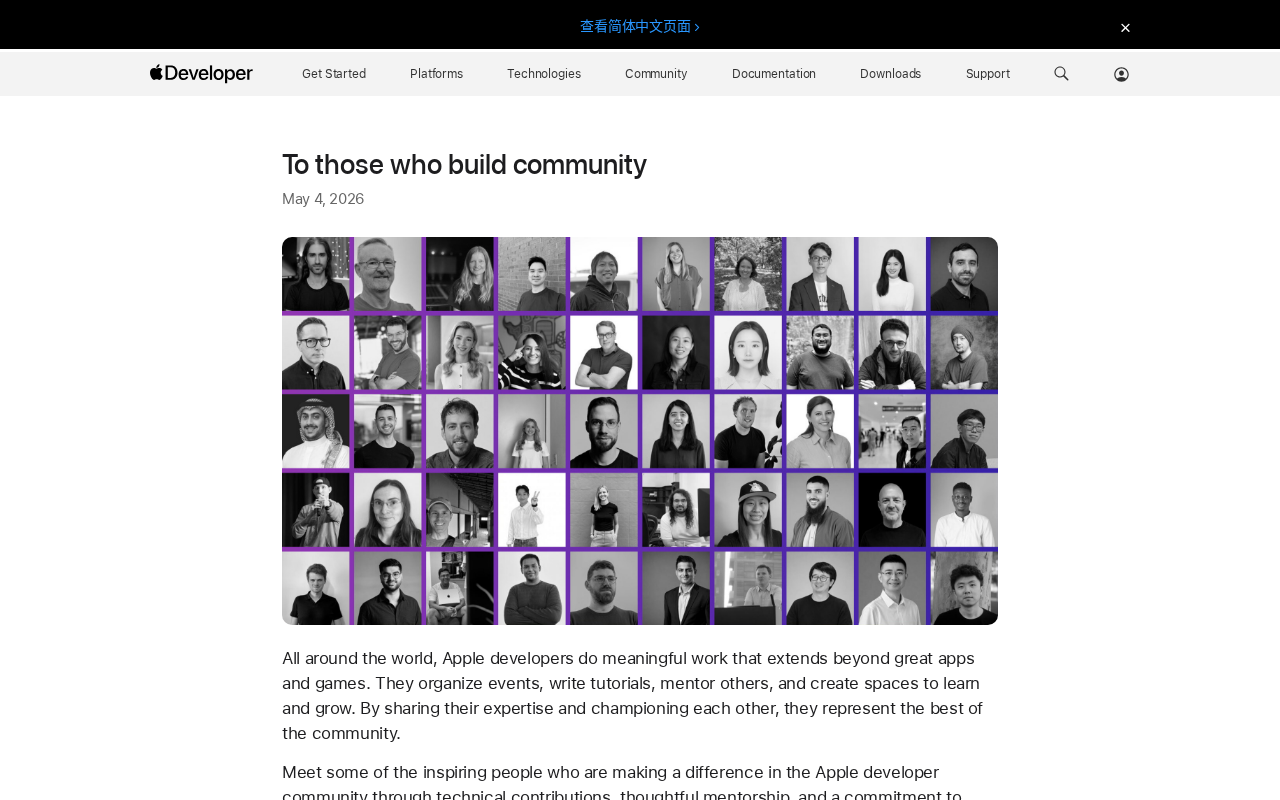
Apple recently published an article titled "To those who build community," paying tribute to individuals around the world who have made outstanding contributions to the Apple developer community. The work of these developers goes far beyond building excellent apps and games — they organize events, write tutorials, mentor others, and create spaces for learning and growth.
The Historical Evolution of Apple's Developer Ecosystem
Apple's developer ecosystem building dates back to the Apple Developer Connection (ADC) in 1997, but the true modern transformation began with the birth of the App Store in 2008. The App Store not only created an entirely new software distribution channel but also gave rise to a massive independent developer economy. As of 2023, the App Store has paid developers over $320 billion in cumulative earnings, with more than 34 million registered developer accounts worldwide. The flourishing of this ecosystem is inseparable from community support — early organizations like CocoaHeads (founded in 2004) and community events such as NSConference took on significant responsibility for knowledge dissemination and talent development during an era when official resources were still incomplete, laying the cultural foundation for today's thriving Apple developer community. It is upon this historical foundation that Apple's community recognition program carries such profound significance.
The Diverse Contributions of Community Builders
According to Apple, the contributions of these community builders are primarily reflected in the following areas:
Technical Content Creation and Open Source Contributions
They help more developers master Apple platform development skills by writing technical tutorials, developing open-source tools, and sharing code examples. This technical content covers everything from SwiftUI fundamentals to advanced architecture design, significantly lowering the barrier to entry for developers.
The Swift language was officially announced at WWDC 2014, and its open-sourcing (December 2015 on GitHub) marked a major milestone in Apple ecosystem history. After Swift went open source, community contributors quickly became a vital force in the language's evolution — the Swift Evolution proposal mechanism allows any developer to submit language improvement suggestions, and hundreds of community proposals have been adopted and implemented to date. Since SwiftUI's release in 2019, community tutorials and open-source example projects have been especially valuable because its declarative programming paradigm represents an entirely new mental shift for many developers. Community creators like Paul Hudson's Hacking with Swift and Sean Allen's YouTube channel have an influence rivaling Apple's official documentation, filling gaps in official learning resources when it comes to practical use cases.
Community Event Organization and Operations
These contributors actively organize both offline and online events, including developer meetups, technical talks, and hackathons. They create opportunities for developers to connect face-to-face, facilitating knowledge sharing and networking. Many regional iOS/macOS developer communities have grown precisely through these events.
Hackathons, as a form of high-intensity collaborative innovation, originated from an OpenBSD developer gathering in 1999 and have since become widely popular in tech communities. In the Apple ecosystem, beyond the official Swift Student Challenge, community-organized hackathons play a unique role: they often focus on specific localization needs or vertical domains, incubating many innovative proof-of-concept projects. More importantly, these events create a "learning pressure environment" — participants are forced to rapidly master new technologies within limited time, often achieving learning efficiency far exceeding self-study. Research shows that weak ties formed during community events can sometimes be even more valuable for knowledge dissemination and career development than strong ties, which is the deeper reason why in-person developer meetups cannot be fully replaced by online communities.
Mentorship and Talent Development
Through one-on-one guidance, workshops, and long-term mentoring relationships, these community builders help novice developers grow, with particular attention to developers from diverse backgrounds. Their thoughtful mentorship is a key driver of sustainable community development.
The Signals Conveyed by Apple's Community Recognition
Apple has specifically established a Community Recognition page showcasing 20 community contributors from diverse ages, genders, and racial backgrounds. This initiative conveys several important signals:
Diversity and Inclusion: From the featured photos, it's clear that Apple has chosen contributors with diverse backgrounds, emphasizing the inclusivity of the developer community.
Diversity in the tech industry has long been a concern. According to the 2023 Stack Overflow Developer Survey, women make up only about 5% of the global developer population, with Black and Latino developers similarly underrepresented. This structural imbalance is not only a social equity issue but directly affects product design quality — teams lacking diverse perspectives are more likely to inadvertently create products that are unfriendly to certain user groups. Apple's deliberate showcasing of contributors from diverse backgrounds in its community recognition program is consistent with its long-standing investment in product Accessibility features. Research shows that diverse developer communities produce more inclusive technical solutions and attract a broader user base, ultimately translating into a richer, more equitable app ecosystem in the App Store.
Value Beyond Code: Apple explicitly states that the community's value lies not only in technical output but also in the connections and mutual support between people. "By sharing their expertise and championing each other, they represent the best of the community."
Global Perspective: "All around the world
Related articles
 Industry Insights
IRS Fully Embraces Claude AI, Accelerating Federal Government's AI Adoption
The IRS is recruiting staff with 24/7 Claude AI access, marking Anthropic's breakthrough into the federal government. Explore the strategic implications and tax use cases.
 Industry Insights
Nadella Introduces the Loopcraft Framework: Building AI Ecosystems Through Feedback Loops
Microsoft CEO Satya Nadella's Loopcraft framework explains how to build frontier AI ecosystems through nested feedback loops across technology, business, and ecosystem dimensions.
 Industry Insights
OpenAI's Internal Codex Usage Surges 56x — AI Coding Is Eating Everything
OpenAI reveals internal Codex usage data: Research up 56x, Customer Support 32x, Engineering 27x, Legal 13x since Nov 2025. AI coding tools are penetrating every department faster than expected.