Apple Keyboard's Hidden 100,000-Word Sensitive Term Blocklist: Autocomplete Accused of Censorship
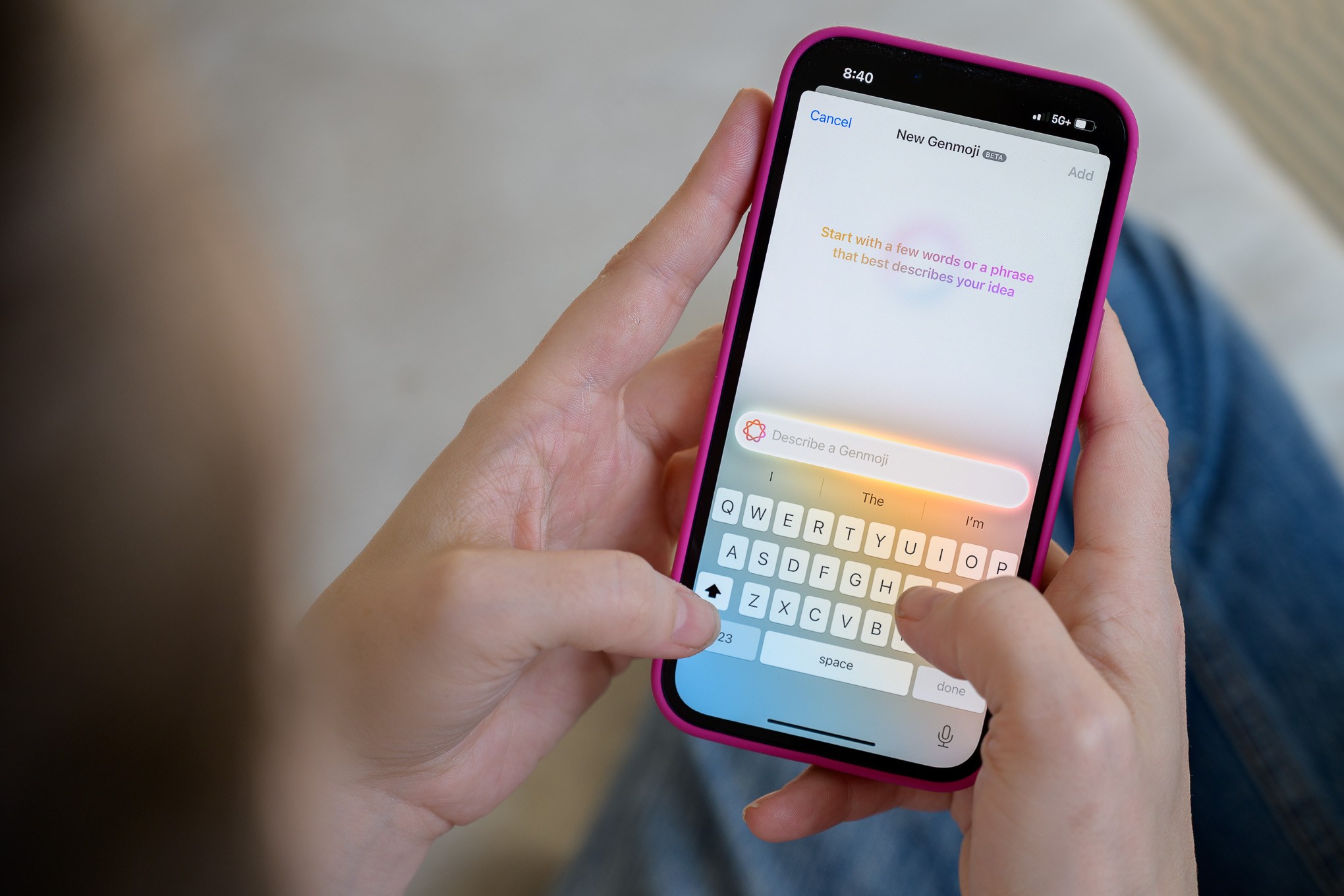
Apple's iOS keyboard found to contain 100,000+ blocked terms; autocomplete won't suggest sensitive words but manual input still works.
A Reuters investigation reveals that security researcher Derik Kauffman extracted a blocklist of over 100,000 terms from iOS, covering every major language. Blocked words don't appear in autocomplete and swipe typing suggestions, but users can still type them manually letter by letter. Examples cited include "dictator Trump" and "covid is a hoax," touching on political and public health controversies. Apple hasn't disclosed the full list or screening criteria, raising concerns about invisible content governance. The analysis suggests this mechanism isn't a complete ban but rather soft filtering through reduced visibility and efficiency, with more noticeable impact on users who rely on predictive text.
Apple's iOS keyboard autocomplete and swipe typing features have long been regarded as powerful tools for boosting typing efficiency, but a Reuters investigation reveals that behind this system lies a blocklist of over 100,000 terms covering "every major language," including many politically sensitive words. Researcher Derik Kauffman found that these words aren't impossible to type—they simply never appear in predictive suggestions. Is this technical filtering, or invisible speech censorship?
The 100,000-Term Blocklist: Technical Details and Discovery Process
According to Reuters, security researcher Derik Kauffman extracted a blocklist containing over 100,000 words and phrases from the iOS system, covering "every major language." These terms are prohibited from appearing in autocomplete and swipe typing candidate suggestions. Kauffman noted that users can still manually type these words letter by letter, but the iOS keyboard won't recommend them as predictive text.
This mechanism means the blocking isn't a complete prohibition on input, but rather reduces the visibility and propagation efficiency of these words during typing. For users accustomed to predictive text, certain expressions may therefore become harder to "recall" or "type out casually."
Autocomplete and swipe typing rely on statistical language models: the system predicts the most likely next word or complete word from a vocabulary based on the letter sequence the user has already typed. Predictive text candidates typically come from a ranked word-frequency table, and the blocklist works by removing these terms when generating candidates, keeping them out of the candidate bar. Therefore, blocking doesn't equal prohibiting input—it makes these words "invisible" during the prediction phase. This mechanism is technically easy to implement, but the scale, source, and maintenance of blocklists are often not disclosed publicly, making them difficult for ordinary users to detect.
Examples of Sensitive Terms: The Intersection of Politics and Public Health Issues
The blocked terms mentioned in the report include "dictator Trump" and "covid is a hoax." These two examples point to American politics and public health controversies respectively, suggesting that Apple's filter list may involve highly sensitive social issues.
It should be clarified that the original report only listed these two phrases as examples and did not publish the complete list. Kauffman claims the list exceeds 100,000 terms, but the specific content and categorization have not been made public. This means we cannot determine the proportion of political terms in the list, nor can we confirm Apple's screening criteria.
Apple's Motivation: Technical Optimization or Content Governance?
Apple has not yet provided a detailed response to the Reuters report. From a technical perspective, keyboard prediction models typically filter out offensive, hateful, or inappropriate content to avoid recommending embarrassing or harmful phrases. But a 100,000-level word list covering "every major language" far exceeds conventional profanity filtering in scale.
This raises a key question: when filter lists include political expressions and controversial public health viewpoints, are tech companies playing the role of content arbiter? Supporters view this as part of platform responsibility, while opponents worry that such opaque mechanisms may restrict freedom of expression.
Platform filtering of predictive text is not unique to Apple. Most input methods and operating systems filter profanity, hate speech, or obviously offensive content to avoid recommending embarrassing phrases. But conventional filtering usually focuses on a limited number of clearly defined word categories, is limited in scale, and is mostly tied to community guidelines or app store policies. When filter lists expand to the 100,000 level, cover all major languages, and include political expressions and controversial public health viewpoints, their nature may shift from "avoiding offense" to "content governance." Content governance typically refers to platforms actively screening and ranking user-visible information, and since input methods serve as the first entry point for user expression, the ranking and removal of candidate suggestions directly affects which expressions are easier to use.
The Boundary of Invisible Censorship: Users Can Still Type, But Efficiency Is Undermined
Kauffman emphasized that these words can still be manually typed. This somewhat alleviates concerns about "complete banning." However, the core value of autocomplete and swipe typing lies in accelerating the input process, and blocking specific words means these expressions are "downranked" in the typing experience.
For users with disabilities or non-native speakers who rely on predictive text, the impact of this downranking may be more pronounced. When certain words no longer appear in the candidate bar, users must expend more cognitive and operational effort to complete input, which in effect constitutes a form of soft filtering.
"Soft filtering" is contrasted with hard banning: hard banning directly prevents users from inputting or publishing certain content, while soft filtering doesn't prevent input but only reduces its visibility, discoverability, and input efficiency in the interface. In predictive text scenarios, whether candidate words appear and their ranking order both affect users' input paths. For users with disabilities or non-native speakers who rely on predictive text, the absence of candidates from the candidate bar means they must spell everything manually, significantly increasing cognitive load and operational cost. Although this impact doesn't manifest as "cannot input," it may in practice change users' expression habits and vocabulary choices.
Lack of Transparency: Apple Has Not Disclosed List Criteria
Currently, Apple has not published the complete content of this blocklist, nor has it explained the inclusion criteria and review process for terms. Researchers extracted the list through technical means, but ordinary users have no way of knowing which words are blocked or why.
This opacity is the core of the controversy. If tech companies can adjust input suggestions without informing users, then the boundaries of free expression are being redrawn invisibly. For a company known for privacy and user protection, there is tension between this secret list and its public image.
Reuters' report has opened a crack for us, but regarding the scale, categorization, and decision-making logic of this list, Apple still needs to provide a clearer explanation.
One-line Summary
Apple's iOS keyboard was found to contain over 100,000 blocked terms; autocomplete won't suggest sensitive words but they can still be manually typed.
Paragraph Summary
A Reuters investigation shows that security researcher Derik Kauffman extracted a blocklist of over 100,000 terms from the iOS system, covering every major language. Blocked words don't appear in autocomplete and swipe typing suggestions, but users can still type them letter by letter manually. Examples cited in the report include "dictator Trump" and "covid is a hoax," involving political and public health controversies. Apple has not disclosed the complete list or screening criteria, raising concerns about invisible content governance. The article's analysis suggests this mechanism isn't a complete ban but rather forms soft filtering by reducing word visibility and efficiency in the typing experience, with more noticeable impact on users who rely on predictive text.
Related articles
 Tech Frontiers
Coldframe: A Honeypot Disguised as a Supermarket Freezer Controller
Coldframe is a honeypot disguised as Danfoss AK-SM 800A and Dixell XWEB freezer controllers, built as a single Python file that detects CVE-2025-41450 attempts and is identified as real devices on Shodan.
 Tech Frontiers
GRFNet: A Lightweight PyTorch Model Designed for Multichannel Time-Series Classification
GRFNet is a lightweight PyTorch model for multichannel time-series classification, originating from EEG decoding research. With only 3,847 parameters, it is based on the ROCKET architecture, combining random convolution kernels with learnable spatial filters, supports arbitrary input lengths, and will soon be evaluated on the PhysioNet dataset.
 Tech Frontiers
CUDA-Accelerated Rocket League Simulator: A Player-Made Hardcore Experiment
A Reddit post shows a "100% Accurate" Rocket League simulator accelerated with CUDA. We analyze its technical context, CUDA's value in game physics simulation, and the significance and limitations of such community projects.