Apple's New Smart Home Lineup Leaked: Smart Locks, Thermostats, and Video Doorbells
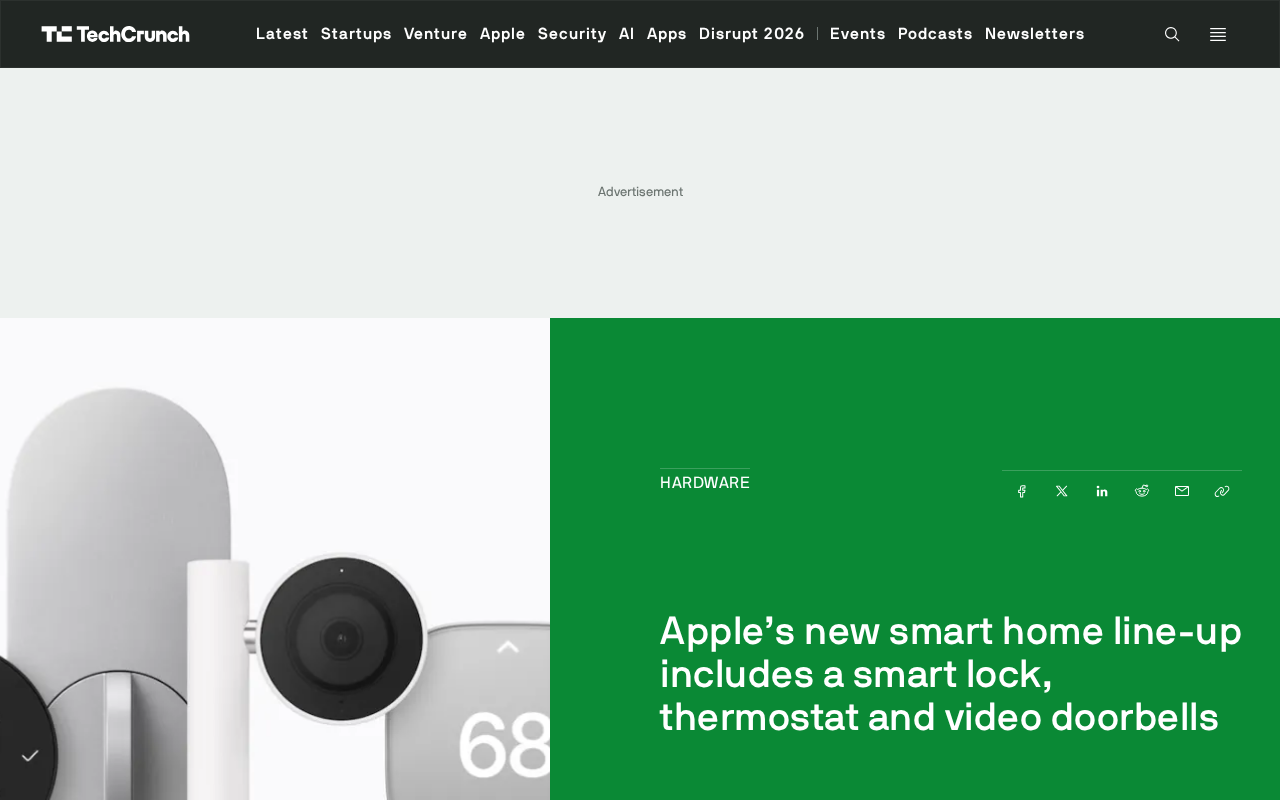
Apple expands its smart home lineup with smart locks, thermostats, and video doorbells, all integrated with the new HomeView hub.
Apple is accelerating its smart home strategy with three new product categories — smart locks, thermostats, and video doorbells — all unified under the new HomeView hub. This marks a shift from HomeKit's protocol support to ecosystem coordination centered on HomeView. HomeView consolidates accessories into a single interface, reducing management costs and enabling device automation. The new products compete directly with Ring, Nest, and August, with Apple's advantages in privacy, ecosystem integration, and unified experience. As Amazon and Google hold first-mover advantages, Apple aims to control the home device hub and user data through HomeView. Pricing and launch dates remain unannounced.
Apple is accelerating its push into the smart home market. The latest reports indicate that its smart home product line is set for a major expansion, covering three core device categories: smart locks, thermostats, and video doorbells. All of these new products will connect to Apple's brand-new smart home hub, HomeView, marking a strategic shift from isolated product launches to ecosystem-wide coordination in Apple's smart home ambitions.
According to RSS feed reports, Apple's new smart home lineup includes smart locks, thermostats, and video doorbells. The key highlight of these devices lies in their deep integration with HomeView — a new smart home hub introduced by Apple that allows users to centrally control various accessories and interact with applications.
From HomeKit to HomeView: Apple's Ecosystem Integration Logic
The launch of HomeView represents a critical step forward for Apple in the smart home space. While HomeKit has long supported a wide range of third-party devices, it lacked a unified hub experience. HomeView is essentially a control layer that consolidates scattered smart accessories under a single interface while also connecting the app ecosystem.
The value of this strategy lies in reducing user management costs. When smart locks, thermostats, video doorbells, and other devices are all orchestrated through HomeView, users no longer need to switch between multiple brand apps, and cross-device automation (such as automatically turning on lights or unlocking doors when the doorbell is triggered) gains a unified scheduling foundation.
HomeKit is a smart home framework protocol Apple introduced in 2014. At its core, it is a certification standard that enables third-party manufacturer devices to be securely controlled by iPhones, iPads, and other Apple devices. HomeKit itself does not provide a unified hardware hub; users typically rely on the "Home" app or devices like HomePod and Apple TV for control, and inter-device automation depends on scenes and automation rules. Due to high certification barriers and limited compatible device types, the HomeKit ecosystem has long expanded more slowly than Amazon Alexa and Google Assistant. HomeView is a hub layer that sits further up on top of this foundation, aiming to unify scattered control entry points, app interactions, and cross-device automation under a single interface. The two are not simply replacements for each other: HomeKit remains the underlying protocol and access standard, while HomeView is more of an upper-layer scheduling and interaction interface for users and developers. Understanding this layering helps clarify why Apple would launch HomeView even with HomeKit already in place.
Product Matrix Breakdown: Smart Locks, Thermostats, and Video Doorbells
The three new product categories each have their own focus, but they collectively point to the core scenario of home security and comfort management. Smart locks handle entry and exit control, video doorbells take on visitor identification and security monitoring, and thermostats manage the indoor environment. Together, they cover the complete chain of the user experience from entering the door to daily living.
One detail worth noting: Apple's decision to enter these categories means it will directly face competitors like Ring, Nest, and August, which already have mature products. Apple's differentiating advantages may lie in privacy protection, seamless connection with iPhone and the Apple ecosystem, and the unified experience brought by HomeView.
Smart locks, thermostats, and video doorbells happen to correspond to the three most typical capabilities in smart homes: identity verification, environmental adjustment, and real-time monitoring. Smart locks typically connect via Bluetooth, Wi-Fi, or Thread protocols, supporting fingerprint, passcode, and near-field phone unlocking methods. Video doorbells integrate cameras, microphones, and buttons, combining visitor calling and recording functions. Thermostats use sensors and algorithms to learn user habits and automatically adjust heating or cooling. Notably, all three device categories are high-frequency, high-stickiness entry-point hardware that users interact with almost daily, making them a focal point in the smart home ecosystem battle. Ring started with video doorbells and security cameras, Nest became famous for thermostats and expanded into cameras and doorbells, while August focuses on smart locks. Apple's choice to enter all three categories simultaneously means it is no longer content with just being a protocol layer — it wants to establish a presence at the hardware nodes users interact with most in their daily lives.
The Competitive Landscape of the Smart Home Market
Apple's expansion comes at a time when competition in the smart home market is intensifying. Amazon holds a first-mover advantage with its Alexa and Ring ecosystem, while Google Nest continues to invest in AI capabilities. Although Apple's entry is not the earliest, its hardware quality, privacy stance, and ecosystem stickiness constitute unique barriers.
HomeView's value as a hub lies not just in control, but in data. Whoever controls the scheduling entry point for home devices controls user behavior data and app distribution channels. Apple clearly hopes to build its own moat at this layer.
Thread and Matter are two key backgrounds for understanding the current smart home competitive landscape. Thread is a low-power, IP-based wireless mesh network protocol designed specifically for smart home devices, featuring self-organizing networks, low latency, and low power consumption. Matter is a cross-platform application-layer standard jointly promoted by Apple, Google, Amazon, and others, with the goal of enabling devices from different brands to recognize and work with each other. Apple is one of the primary initiators of Matter, and its devices typically support HomeKit, Thread, and Matter simultaneously. This background means that Apple's new smart home products may not necessarily be products of a closed ecosystem, but could be compatible with other platforms as well. However, what truly determines user stickiness is often not the underlying protocol, but the control hub and data entry point — which is precisely where HomeView's strategic significance lies. Only by understanding Thread and Matter can one more accurately judge whether Apple's expansion represents open collaboration or ecosystem consolidation.
What It Means for Users and Developers
For ordinary users, the appeal of Apple's new smart home products depends on price, compatibility, and actual experience. If HomeView can truly achieve "one interface to manage everything" while maintaining Apple's consistent privacy standards, it will significantly lower the barrier to smart home adoption.
For developers, HomeView's app interaction capabilities mean new integration opportunities. Apps that can deeply integrate with HomeView will gain greater exposure and user reach within Apple's smart home ecosystem.
Apple has not yet announced specific pricing or launch dates for these new products, but judging from the completeness of the product line, its smart home strategy has moved from the exploratory phase to a full-scale rollout.
One-line Summary
Apple expands its smart home product line with smart locks, thermostats, and video doorbells, all connecting to the new HomeView hub.
Paragraph Summary
Apple is accelerating its smart home push, planning to launch three new product categories — smart locks, thermostats, and video doorbells — all unified under the new smart home hub HomeView. This marks a strategic shift from the protocol-support era of HomeKit to ecosystem coordination centered on HomeView. As a control layer, HomeView consolidates scattered accessories into a single interface, reducing user management costs and providing a scheduling foundation for device automation. The three new categories cover entry control, visitor identification, and indoor environment management, directly competing with established brands like Ring, Nest, and August. Apple's differentiating advantages lie in privacy protection, seamless ecosystem connectivity, and a unified experience. With Amazon Alexa and Google Nest already holding first-mover advantages, Apple hopes to leverage HomeView to control the scheduling entry point for home devices and user behavior data, building its own moat. For users and developers, this means a lower barrier to entry and new integration opportunities, though specific pricing and launch dates have not yet been announced.
Related articles

Understanding DeepSeek in 3 Minutes: The Rise from a Quant Hedge Fund to an Open-Source AI Leader
DeepSeek's history in 3 minutes: from High-Flyer Quant's compute build-up to V2's MLA inference cost cuts, V3's $5.576M training bill, R1's open-source global shock, and V4 with a $7B Series A.

Local Creative Writing Model Showdown: Fine-tuned Qwen3.8 27B Wins, DeepSeek v4.1 Underwhelms
Bilibili creator tests seven local creative writing models: Hemingway and HumanLike Chat based on Qwen3.8 27B perform best, DeepSeek v4.1 is plain, Dongfang Shuo ranks last with confused characters. Includes three test prompts, scores, and usage advice.

Liang Wenfeng's Three Big Bets: Why Did DeepSeek Open-Source Its 82% Gross Margin?
Why did DeepSeek open-source DeepInfer, its 82% gross margin inference framework, and then launch a hundred-billion funding round? An analysis of Liang Wenfeng's three big bets and the open-source strategy.