Apple's Self-Developed AI Agent: An Agent That Can Operate Your Mac Is Coming

Apple is reportedly developing an AI agent capable of operating a Mac, targeting multiple competitors.
The article cites an RSS report that Apple is building an AI agent capable of operating a Mac, directly targeting Meta Muse, Instinct, Claude, and OpenAI Dots. Unlike chatbots, an agent focuses on understanding goals, breaking down tasks, invoking tools, and completing cross-application operations. Apple's structural advantage lies in OS-level permissions, deep app integration, and privacy control—foundational capabilities that third-party products struggle to replicate. The article infers Apple will likely pursue "system-level integration + local-first," leveraging Apple Silicon on-device compute and macOS privacy architecture to reduce latency, and may open APIs to turn third-party apps into the agent's tool library. Reliability is key to productization, as a single mistaken deletion or erroneous submission could erode user trust. Product form, release timing, and whether it is independent of Siri remain unclear.
Apple is quietly making its move in the AI agent race. According to an RSS source, the iPhone maker appears to be building an AI agent capable of operating a Mac, directly targeting products such as Meta Muse, Instinct, Claude, and OpenAI Dots.
Apple's Agent Ambitions: From System Integration to Proactive Execution
Over the past few years, Apple's moves in generative AI have generally been seen as conservative—Apple Intelligence has rolled out more slowly than competitors, and Siri's intelligence upgrades have been delayed multiple times. But this news hints at a different signal: Apple's focus may not be on chatbots, but on agents that can actually "take action."
Unlike conversational AI, the core capability of an AI agent is understanding goals, breaking down tasks, invoking tools, and completing operations. If Apple embeds this kind of capability deeply into macOS, users may no longer need to click through menus one by one or manually move files—instead, a single natural-language instruction could let the system handle cross-application workflows on their behalf.
This is precisely where Apple holds a structural advantage over third-party vendors. Operating-system-level permissions, deep integration between applications, and control over privacy boundaries are foundational capabilities that external agent products find hard to replicate.
AI agent is fundamentally different from what is commonly called a chatbot. A chatbot centers on Q&A interaction and outputs information; an agent is goal-oriented, able to autonomously break down tasks, plan steps, invoke external tools (such as the file system, browser, and APIs), and execute operations—ultimately delivering results rather than suggestions. The industry often splits this capability into three stages: perception, reasoning, and action, with "action" relying on tool use and function-calling mechanisms. This is also where an agent's reliability challenges lie: multi-step execution amplifies single-step errors, and the model must judge at each step whether to continue and whether user confirmation is needed. Most mainstream agent products today use large language models as their reasoning core, layered with planning modules and execution sandboxes.
Competitors Are Already in Place
Several of the rivals named in the report are worth noting: Meta Muse, Instinct, Claude, and OpenAI Dots. These products represent different paths in the current agent race—some rely on the reasoning capabilities of large-model vendors, while others focus on desktop automation and execution.
Apple's choice to enter at this point means agents have moved from the proof-of-concept stage to productized competition. For Mac users, the question going forward is not just "which model is smarter," but "which agent can more reliably complete tasks on your behalf." The reliability bar is actually very high: a single mistaken deletion or a single erroneous submission could cause users to lose trust in the agent.
What Will Apple Do?
Judging from existing clues, Apple's agent will most likely follow a "system-level integration + local-first" approach. macOS's privacy architecture and Apple Silicon's on-device compute provide the conditions for running models of a certain scale locally. This can reduce latency and also fits Apple's long-standing privacy narrative.
Another direction worth watching is the developer ecosystem. If Apple opens interfaces for agents to call system APIs, third-party applications could become a "tool library" that the agent can operate—significantly expanding the agent's capability boundaries, but also introducing difficult permission-management challenges.
Details about this product remain limited for now, and there is still no clear information on release timing, specific form, or whether it will be independent of Siri. What is certain is that Apple does not want to sit out this agent race.
On-device model refers to an AI model that runs directly on the user's device rather than sending requests to the cloud. Its advantages are low latency, offline availability, and keeping data on the device, which aligns with privacy requirements; the trade-off is that it is constrained by memory and compute, so it can usually run only models with fewer parameters, and complex tasks still need to fall back to the cloud. Apple Silicon's unified memory architecture allows Macs to host larger on-device models than phones, which is also the technical precondition that makes Apple's "local-first" approach more feasible on the Mac. A common industry practice is device-cloud collaboration: simple tasks are handled locally, complex reasoning goes to the cloud, and data flows are made explicit at the system level.
The permission model for operating-system-level agents is a key constraint on bringing such products to market. Third-party agents typically can only control applications through accessibility APIs, screen reading, or simulated clicks, which limits their capabilities and makes them fragile; a system-level agent, by contrast, can directly invoke the intent interfaces exposed by applications and system services, enabling more stable execution. But greater permissions mean greater risk: the agent needs to distinguish read-only operations from sensitive operations such as writes, deletions, and payments, and introduce confirmation mechanisms or sandbox isolation for the latter. macOS's existing TCC privacy authorization, App Sandbox, and entitlements mechanisms provide a foundation for fine-grained permission control. How to balance open capabilities with preventing accidental operations will directly determine user trust.
FAQ
What is the difference between Apple's AI agent and Siri? Siri focuses mainly on voice Q&A and single-step commands, while an agent emphasizes autonomous execution of multi-step tasks, such as organizing files and cross-application operations. Whether the two will be merged is unclear.
Will it run only on Mac? Current reports point to the Mac platform. Given Apple's cross-device ecosystem, expansion to other devices is possible in the future, but there is no evidence for it yet.
When will ordinary users be able to use it? The report did not disclose a timeline.
One-line Summary
Apple is reportedly developing an AI agent capable of operating a Mac, targeting multiple competitors.
Paragraph Summary
The article cites an RSS report saying Apple is building an AI agent capable of operating a Mac, directly targeting Meta Muse, Instinct, Claude, and OpenAI Dots. Unlike chatbots, the core of an agent is understanding goals, breaking down tasks, invoking tools, and completing cross-application operations. Apple's structural advantage lies in operating-system-level permissions, deep application integration, and privacy control—foundational capabilities that third-party products find hard to replicate. The article infers that Apple will most likely take a "system-level integration + local-first" approach, using Apple Silicon's on-device compute and macOS's privacy architecture to reduce latency, and may turn third-party applications into the agent's tool library by opening APIs. At the same time, reliability is key to productization success; a single mistaken deletion or erroneous submission could cause users to lose trust. The product form, release timing, and whether it will be independent of Siri all remain unclear.
Related articles
Daybreak Red Deployment Guide: A Reference Architecture for Supervised Security Investigation
A breakdown of the Daybreak Red reference architecture: security control design, deployment configuration process, and runtime monitoring for supervised security investigation.
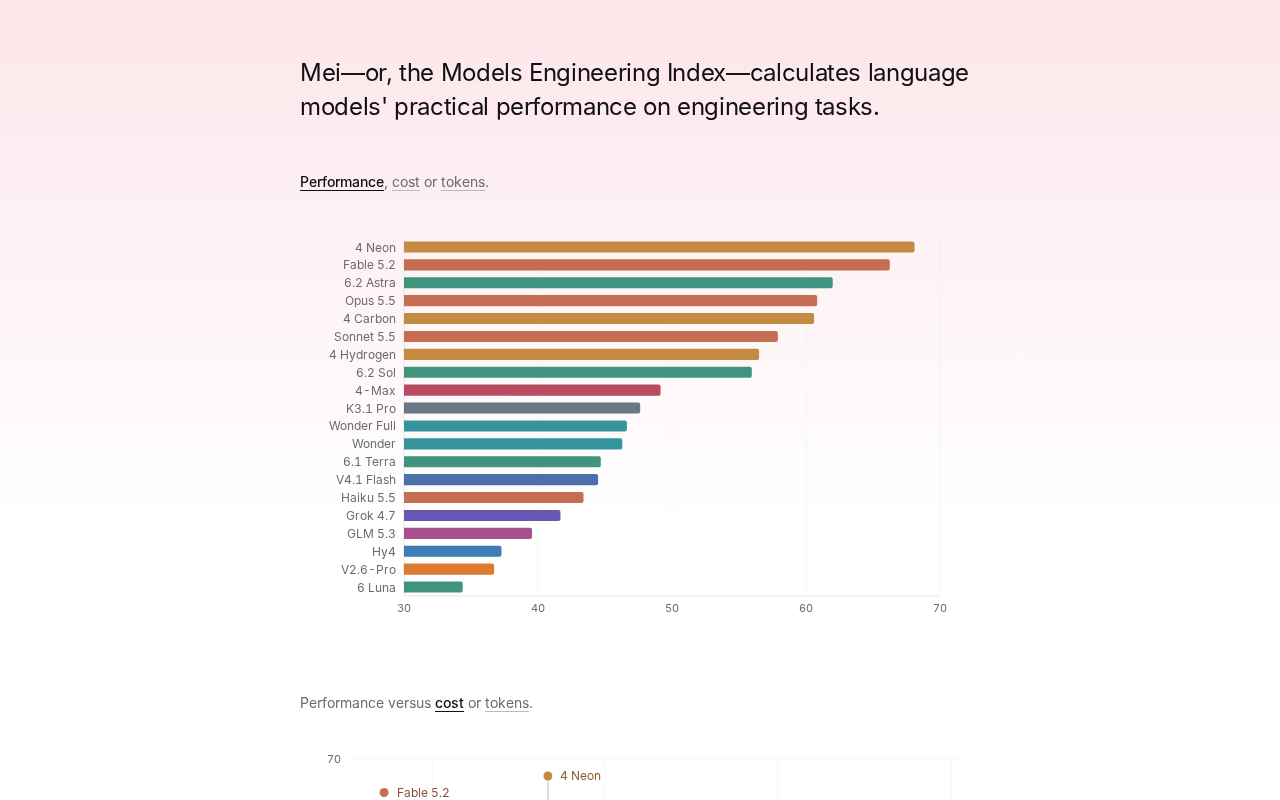
Gemini 4 Neon Tops the Models Engineering Index
Gemini 4 Neon tops the Models Engineering Index, sparking Hacker News debate over ranking credibility and evaluation methods. Here's what it means for developers.
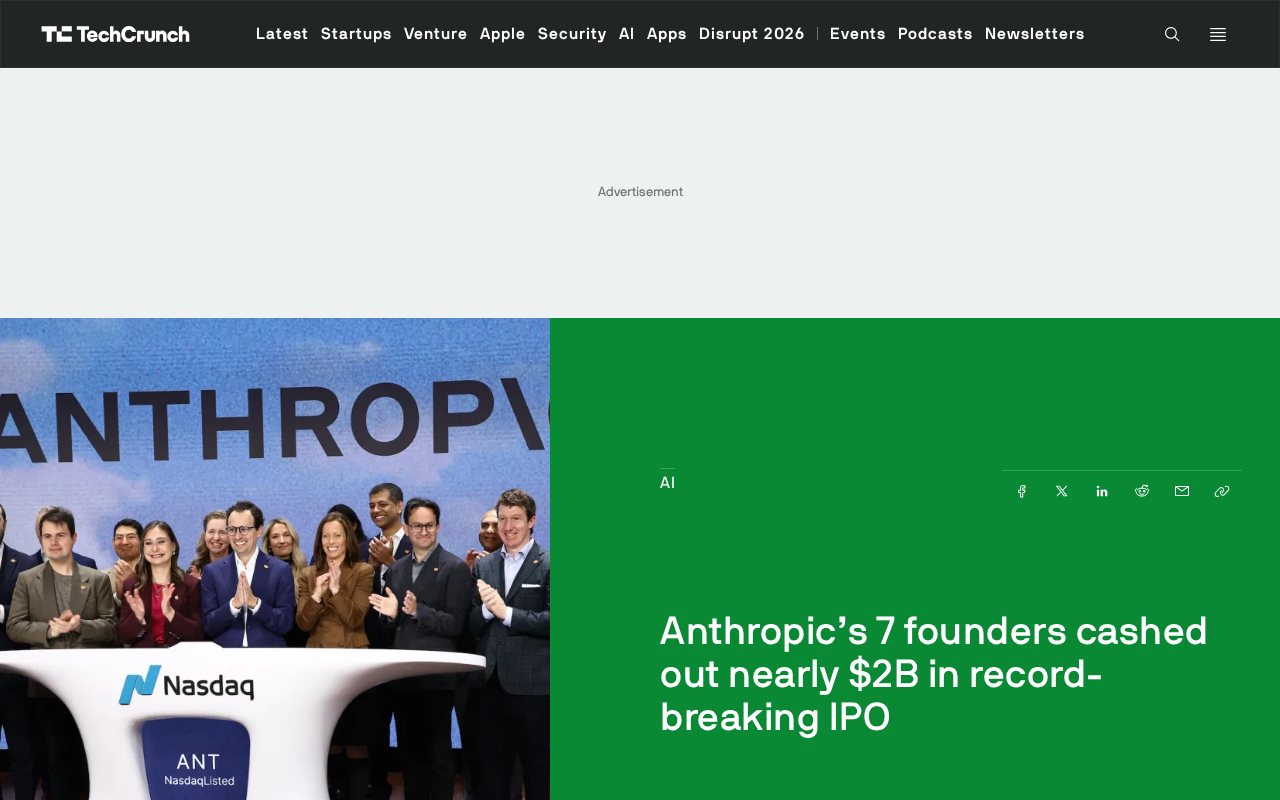
Anthropic Goes Public: Seven Founders Cash Out Nearly $2 Billion
Anthropic completes a record IPO at $83 per share: seven founders cash out nearly $2B ($280M each), company raises nearly $105B. Analysis of AI capital markets.