Gemini 4 Neon Tops the Models Engineering Index

Gemini 4 Neon tops the Models Engineering Index, with the community focused more on evaluation transparency.
According to a Hacker News thread, Gemini 4 Neon has become the new number one on the Models Engineering Index, with 55 points and 24 comments. The leaderboard is seen as a bellwether for model engineering capability, but the post lacks evaluation details. Commenters focus on ranking credibility and transparency. For developers, it offers a new option, but selection should still rely on latency, cost, and small-scale validation.
Leaderboard Shakeup: Gemini 4 Neon Takes the Top Spot
According to a Hacker News discussion thread, Gemini 4 Neon has overtaken the previously leading model to become the new number one on the Models Engineering Index. The post received 55 points and 24 comments, drawing attention in the technical community.
The Models Engineering Index is a specialized leaderboard for measuring model engineering capability, and changes in its rankings are often seen as a bellwether for technical trends. Gemini 4 Neon's rise to the top suggests that Google has made incremental progress in engineering-oriented model deployment. However, the original post only provides the ranking conclusion without disclosing the specific evaluation dimensions or score details, so the real significance of this change still needs more data to substantiate.
The Models Engineering Index is not a widely cited academic benchmark (such as MMLU or HumanEval), but rather an industry leaderboard focused on "model engineering capability," typically assessing model performance on real engineering tasks—for example, code generation and repair, tool calling, multi-step task orchestration, long-context handling, and instruction following. Rankings on such leaderboards often depend on evaluation sets and scoring weights built by the organizers themselves, with varying degrees of public disclosure. As a result, the rankings are a useful reference for model selection but should not be equated directly with an overall capability ranking. Understanding this helps determine whether Gemini 4 Neon's top spot represents a victory in engineering fitness or a fluctuation caused by changes in evaluation criteria.
Community Reaction: Focus on Rankings, but More on Evaluation Methods
Judging by the intensity of discussion in the comments, developers are just as interested in the leaderboard itself as in the model's capabilities. The 24 comments on Hacker News revolve around the credibility of the rankings, whether the evaluation standards are transparent, and how the new model performs on real tasks.
Such discussions reflect a broader industry anxiety about model evaluation: Can a single leaderboard's ranking represent real engineering capability? How is comparability across different evaluation sets ensured? In the absence of a public methodology, being ranked first is more of a signal than a definitive conclusion.
In the field of model evaluation, common credibility issues include whether the evaluation set is public, whether there is contamination with training data (data contamination), whether scoring relies on a single LLM as judge (LLM-as-a-judge) and thereby introduces bias, and whether scores across different leaderboards are comparable. Technical communities such as Hacker News have traditionally been wary of "black-box rankings," tending to demand reproducible evaluation scripts and raw samples. This is why the comments focus on rankings while placing even greater emphasis on methodological transparency—when evaluation dimensions and score details are not public, a ranking can only serve as a weak signal and requires community reproduction or independent third-party evaluation for cross-validation.
What It Means for Developers: Look Beyond Rankings to Real-World Deployment
For frontline developers, the direct value of Gemini 4 Neon's top ranking is that it provides a new option. Changes in the Models Engineering Index rankings typically affect the weight given to references during technology selection, but the final decision still depends on engineering metrics such as latency, cost, and stability in specific scenarios.
Developers are advised to watch for more detailed evaluation reports in the future and to conduct small-scale validation based on their own business workloads. When official data is absent, community reproduction and actual stress testing are more reliable bases for judgment.
A common practice in technology selection is to build an internal small-scale evaluation set (golden set) and use real request samples from one's own business to compare candidate models on accuracy, first-token latency, throughput, per-call cost, and failure rate. Leaderboard rankings can serve as an initial screening criterion, but engineering metrics such as latency and cost depend heavily on deployment method (API vs. self-hosted), region, and concurrent load, and cannot be derived directly from public leaderboards. It is recommended to conduct A/B stress testing and canary releases before formal migration, and to retain a rollback plan to reduce the selection risk brought by ranking changes.
One-line Summary
Gemini 4 Neon tops the Models Engineering Index, while the community focuses more on evaluation transparency.
Paragraph Summary
According to a Hacker News discussion thread, Gemini 4 Neon has overtaken the previously leading model to become the new number one on the Models Engineering Index; the post received 55 points and 24 comments. The article notes that the leaderboard is seen as a bellwether for model engineering capability, and this top ranking suggests that Google has made incremental progress in engineering-oriented model deployment. However, the original post did not disclose specific evaluation dimensions or score details, so the real significance remains to be substantiated. The comments discuss the credibility of the rankings, the transparency of evaluation standards, and actual task performance, reflecting a broader industry anxiety about whether a single leaderboard can represent real engineering capability. For developers, this ranking provides a new option, but technology selection still needs to consider metrics such as latency, cost, and stability, and should be judged through small-scale validation and community reproduction.
Related articles

Daybreak Red Deployment Guide: A Reference Architecture for Supervised Security Investigation
A breakdown of the Daybreak Red reference architecture: security control design, deployment configuration process, and runtime monitoring for supervised security investigation.

Apple's Self-Developed AI Agent: An Agent That Can Operate Your Mac Is Coming
Apple is reportedly developing an AI agent that can operate a Mac, targeting Meta Muse, Claude, OpenAI Dots, and others. This article analyzes Apple's system-level advantages, the competitive landscape, and likely rollout paths in the agent race.
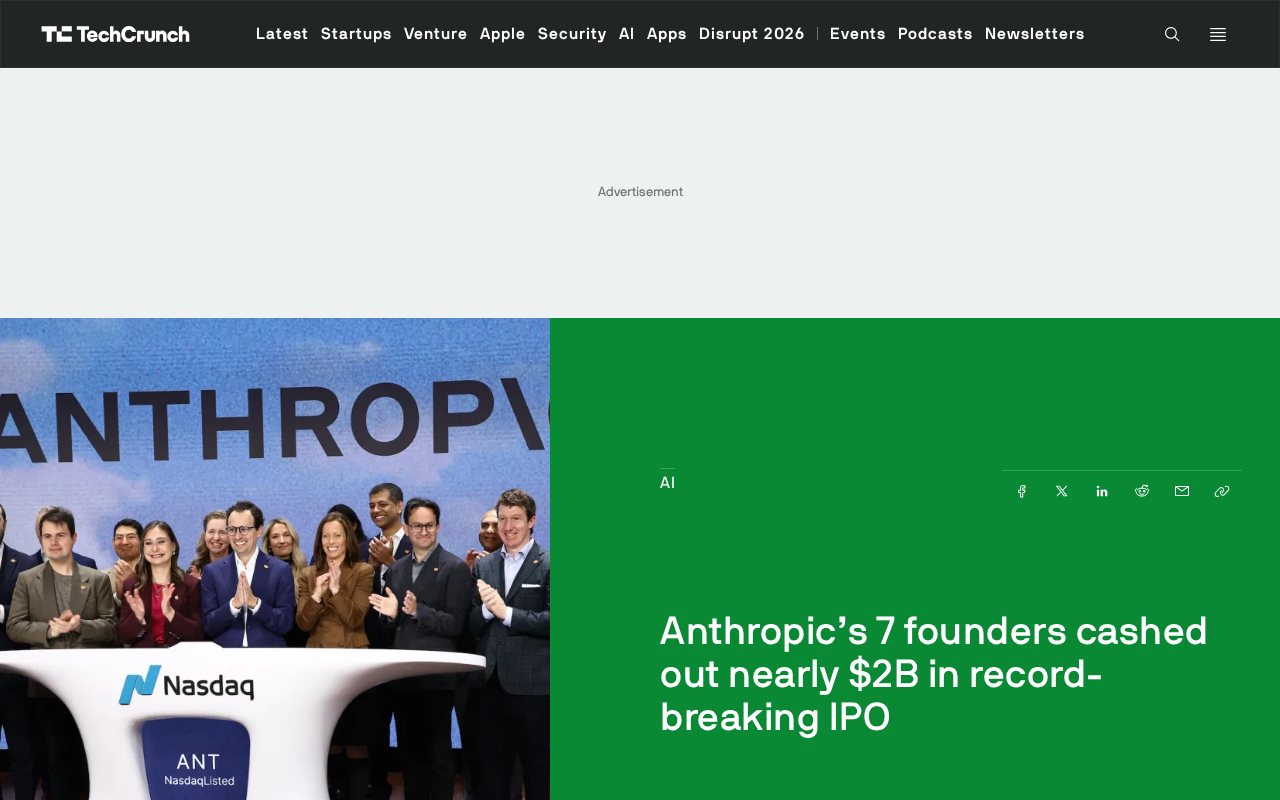
Anthropic Goes Public: Seven Founders Cash Out Nearly $2 Billion
Anthropic completes a record IPO at $83 per share: seven founders cash out nearly $2B ($280M each), company raises nearly $105B. Analysis of AI capital markets.