Apple's Smart Home Comeback: Can Its First-Ever Launch Event Break Through?

Apple will hold its first-ever smart home-exclusive event, with whether it can upset Amazon and Google in the spotlight.
Apple is about to hold the first event in its history dedicated to the smart home—"Welcome Home experience"—in New York, with industry expectations widely centered on new Apple Home hardware. Since HomeKit's 2014 debut, strict certification and a closed ecosystem have kept it lagging behind Amazon Alexa and Google Home. This dedicated event signals that Apple is elevating the smart home to strategic-level importance. Analysts say Apple's breakthrough points lie in on-device AI processing enabled by in-house chips and seamless synergy with over 2 billion active devices, but the Home app experience and cross-brand compatibility remain weaknesses. The spread of the Matter protocol brings both ecosystem expansion opportunities and an erosion of HomeKit certification's unique value.
Title
Apple's Smart Home Comeback: Can Its First-Ever Launch Event Break Through?
Meta Description
Apple holds its first smart home-exclusive event, analyzing whether Apple Home can break through and challenge Amazon and Google's dominance in the smart home market.
Article Content
Apple is about to hold the first event in its corporate history dedicated entirely to the smart home. According to RSS sources, the event—titled "Welcome Home experience"—will take place in New York City. While the company has yet to disclose specifics, industry expectations are widely centered on new Apple Home-related hardware.
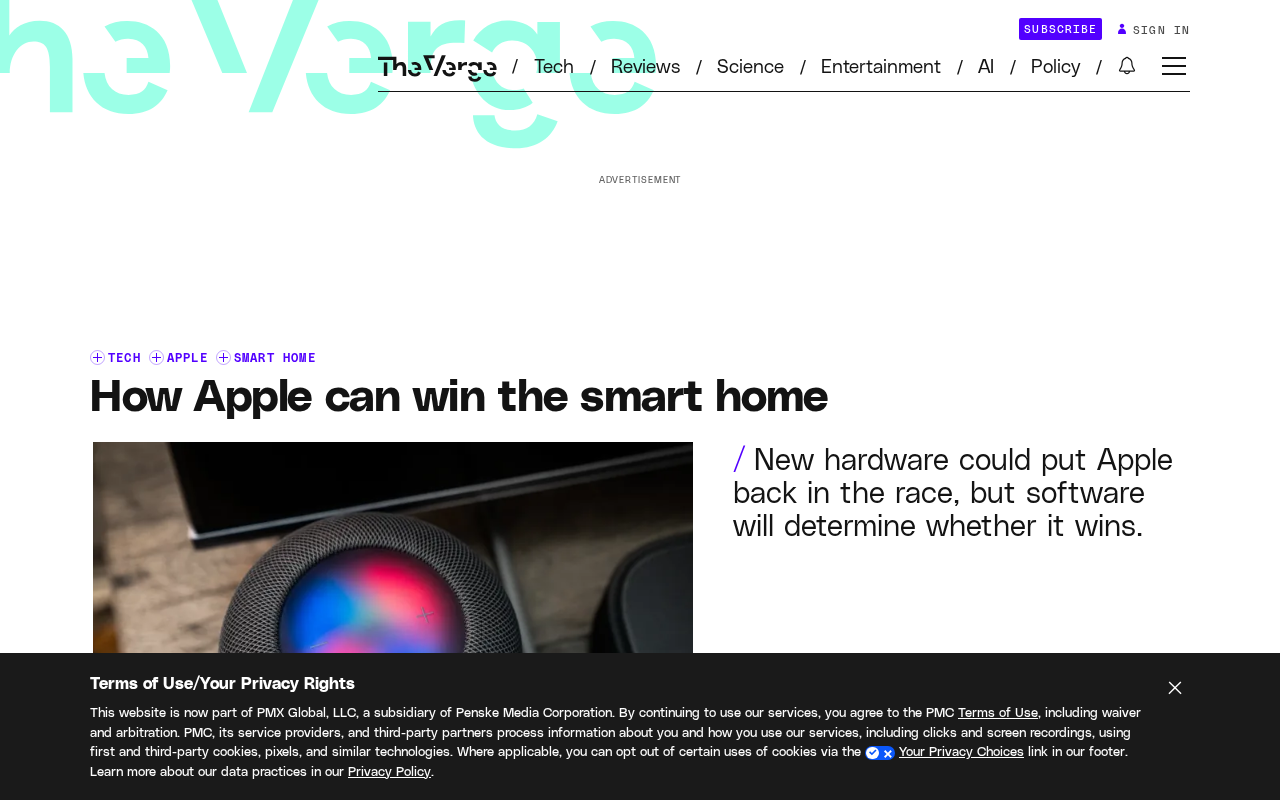
A Latecomer to the Smart Home Market
Apple's entry into the smart home space wasn't actually late—HomeKit debuted back in 2014. But more than a decade on, Apple's presence in this arena still can't hold a candle to Amazon Alexa and Google Home.
The core issue lies in strategy. Apple chose privacy and ecosystem exclusivity as its key selling points, requiring HomeKit devices to pass strict certification. This guarantees security, but it also raises the barrier for manufacturers to join. By contrast, Amazon and Google took a more open approach, rapidly scaling up their device ecosystems.
According to RSS source analysis, Apple holding a smart home-specific event itself sends a signal: the company is re-examining a business line that was once sidelined. A first-ever dedicated launch event means the smart home is no longer an appendage to iPhone events—it's been elevated to strategic-level importance.
HomeKit is the smart home framework Apple introduced in 2014 alongside iOS 8. It's not a hardware product itself, but a set of software protocols and a certification system that connects third-party devices with the Apple ecosystem. For a manufacturer to make a device HomeKit-compatible, it must pass Apple's MFi certification and embed a dedicated security chip in the product. This has two consequences: first, the device's security, encrypted communication, and local processing capabilities are guaranteed, aligning with Apple's privacy narrative; second, the certification cycle is long and costly, which led to early HomeKit devices being expensive and limited in variety. Meanwhile, Amazon launched the Echo speaker in 2014, using the Alexa voice assistant as its core to rapidly attract a large number of third-party manufacturers; Google released Google Home in 2016, quickly expanding by leveraging the Android ecosystem and its search capabilities. The open strategy allowed both companies to aggregate thousands of devices with lower barriers, creating a network effect. Apple's cautious approach had an edge in security and experience, but long lagged behind in ecosystem scale—this is precisely the structural reason for its lackluster presence in the smart home arena.
Where's the Key to Breaking Through on Hardware?
The industry's biggest anticipation for this event centers on hardware. Apple's current first-party smart home hardware consists only of the HomePod series and Apple TV—a lineup far less diverse than its competitors.
According to RSS source speculation, new hardware could involve a smart display or a more deeply integrated HomePod product. If Apple launches a smart home hub device with a screen, it would directly take on the Amazon Echo Show and Google Nest Hub.
Apple's differentiating advantage lies in its chips. The performance-per-watt of its in-house M-series and A-series chips leads the industry. If these chip capabilities were brought down to smart home devices, they could theoretically support more complex on-device AI processing—such as cloud-independent facial recognition, voice understanding, and automated scene judgment. This aligns closely with Apple's long-standing privacy protection narrative.
Ecosystem Integration Is the Real Deciding Factor
One or two pieces of hardware alone can't change the market landscape. Apple's real opportunity lies in its massive active device base—over 2 billion iPhones, iPads, and Macs worldwide.
If Apple can create seamless synergy between these devices and smart home hardware—for example, an iPhone automatically triggering scenes when nearby, or an Apple Watch detecting when the user falls asleep and automatically adjusting lighting and temperature—this kind of cross-device experience is something Amazon and Google would struggle to replicate.
The problem is that Apple has long been criticized for the HomeKit software experience. The Home app's ease of use, the smoothness of device pairing, and cross-brand compatibility all have shortcomings. If a hardware launch event doesn't simultaneously address the software experience issues, new devices will struggle to truly retain users.
Matter is a smart home interoperability protocol led by the Connectivity Standards Alliance (CSA, formerly the Zigbee Alliance), backed jointly by giants including Amazon, Apple, Google, and Samsung. Its goal is to enable devices from different brands to interoperate across platforms through a unified underlying standard (based on IP networking, supporting Wi-Fi, Thread, Ethernet, etc.), so users no longer need to agonize over whether a device "supports Alexa or HomeKit" when buying. For consumers, Matter reduces the risk of being locked into a single ecosystem; for platforms, it means the value of exclusive device resources is diluted. Apple plays an important role in Matter—its HomePod and Apple TV can serve as Thread border routers, allowing Matter-supported devices to connect to the Home app. But this also creates a paradox: when third-party devices can easily connect to Amazon, Google, and Apple simultaneously, the differentiated moat that HomeKit certification once built is weakened, and Apple must find new irreplaceability in privacy, on-device AI processing, and cross-device collaborative experiences.
Can the Latecomer Pull Off an Upset?
The smart home market has moved past the land-grab phase, but it's far from a locked-in landscape. The rollout of the Matter protocol is breaking down barriers between platforms—both an opportunity and a challenge for Apple.
The opportunity: Matter allows more third-party devices to connect to Apple Home, shoring up ecosystem shortcomings. The challenge: protocol standardization also erodes the unique value of HomeKit certification, and Apple needs to find new differentiation points.
From RSS source reports, Apple has clearly recognized the urgency of the problem. A first-ever smart home-exclusive event is a positive signal, but whether it can truly shake the Amazon-Google duopoly depends on whether Apple is willing to compromise on openness while maintaining its traditional strengths in privacy and experience.
The significance of this event isn't in what products it launches, but in whether Apple demonstrates the determination to redefine the smart home experience.
One-line Summary
Apple will hold its first-ever smart home-exclusive event, with whether it can upset Amazon and Google in the spotlight.
Paragraph Summary
Apple is about to hold the first event in its history dedicated to the smart home—"Welcome Home experience"—in New York, with industry expectations widely centered on new Apple Home hardware. Since HomeKit's 2014 debut, strict certification and a closed ecosystem have kept it lagging behind Amazon Alexa and Google Home in device scale and presence. This dedicated event signals that Apple is elevating the smart home to strategic-level importance. Analysts say Apple's breakthrough points lie in the on-device AI processing enabled by its in-house chips and seamless synergy with over 2 billion active devices worldwide, but the Home app experience and cross-brand compatibility remain weaknesses. The spread of the Matter protocol brings Apple both ecosystem expansion opportunities and an erosion of HomeKit certification's unique value. Whether it can ultimately shake the duopoly depends on whether Apple is willing to compromise on openness.
Related articles

Felix Rieseberg Personal Homepage
Felix Rieseberg's personal homepage sparks attention on Hacker News. This article covers the Slack engineer's technical background, the rise and fall of nativefier, and the value of a developer homepage as a tech calling card.

@ai-sdk/vue 3.0.306 Patch Release Syncs with [email protected] Update
@ai-sdk/vue 3.0.306 released, synced with [email protected]. A routine patch release for the Vercel AI SDK ecosystem with no public API changes; the Vue adapter layer stays version-aligned with the core package.

Gemini 4 Argon API Launches: The Era of Million-Token Output Begins
Google launches Gemini 4 Argon with sparse MoE architecture, up to 1M output tokens, and a 68.90% Vals Index score, available across API, AI Studio, and the Gemini app.